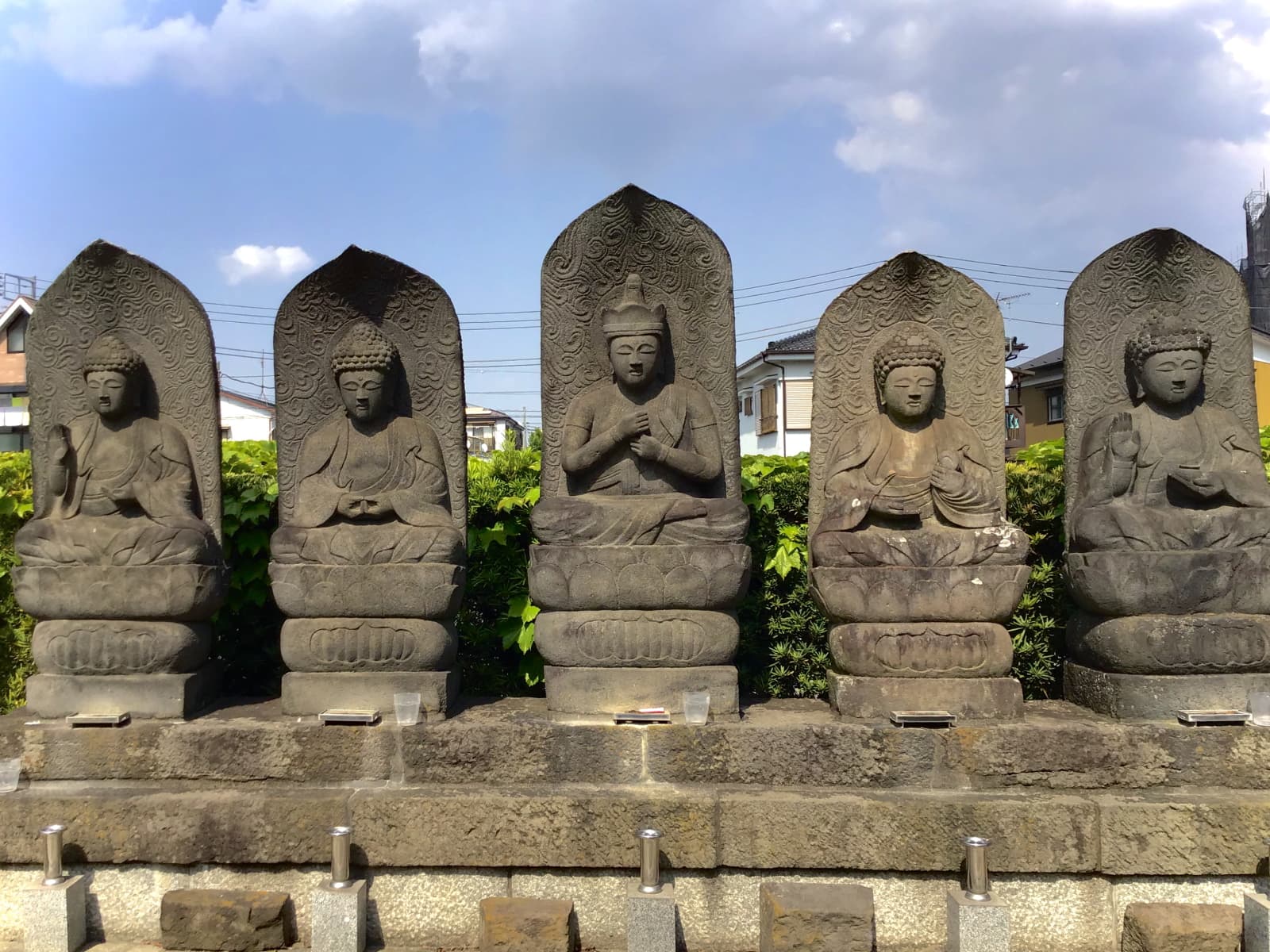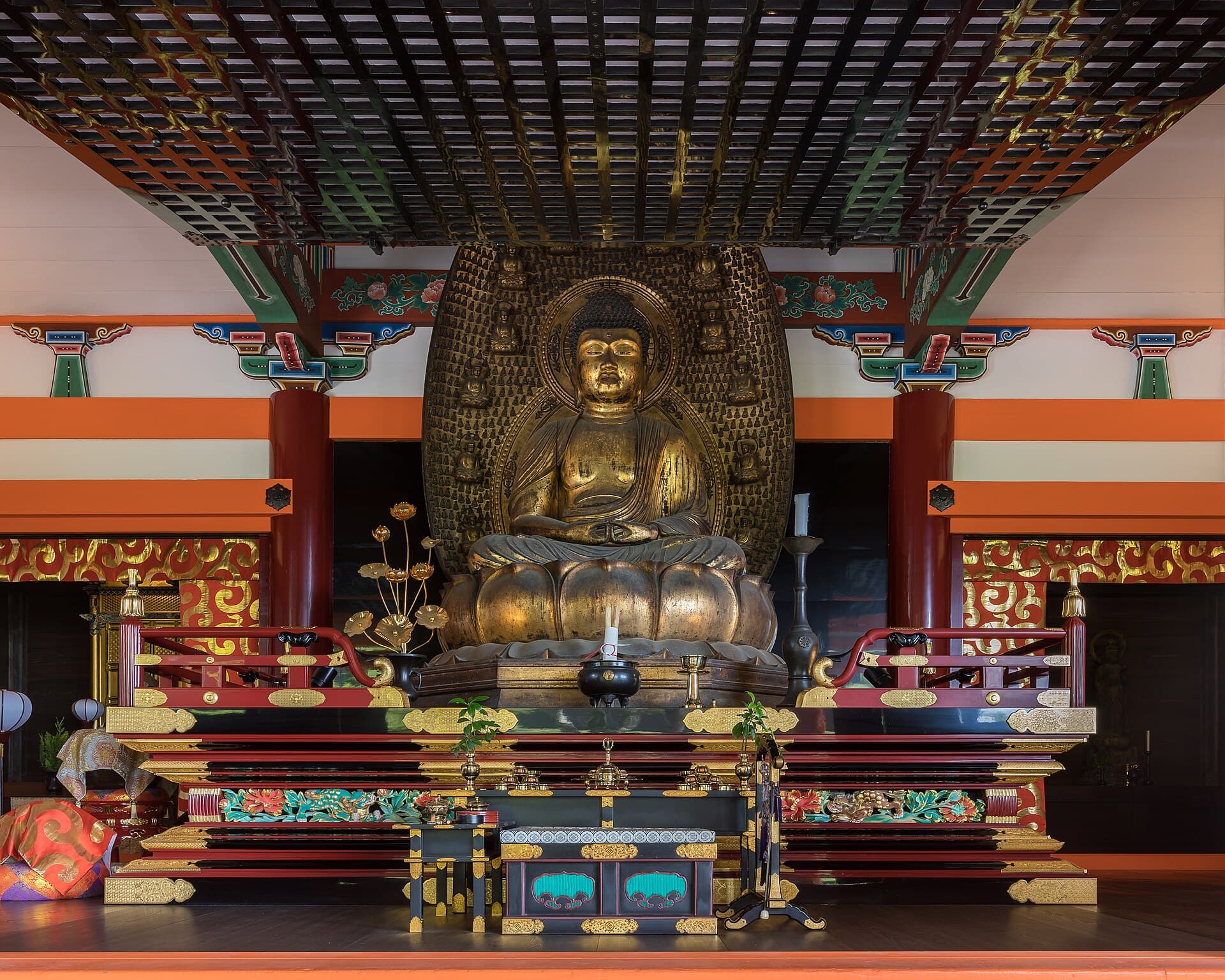
In 552 CE — or 538 in some chronicles — King Seong of Paekche, the Korean kingdom across the strait, sent a gold and bronze image of Sakyamuni Buddha, several volumes of sutras, and a memorial recommending the dharma to the court of Emperor Kimmei of Japan. The Nihon Shoki records the moment with diplomatic care: the gift was received, the emperor consulted his court, the pro-Buddhist Soga clan favored adoption, the pro-Shinto Mononobe and Nakatomi clans opposed it. A plague that followed the installation of the image at the Soga estate was read as the offended native kami; the image was thrown into the Naniwa canal. The plague continued. A subsequent plague was read the other way — as the offended Buddha. After two generations of factional conflict, the Soga prevailed in 587, and the Empress Suiko's regent, Prince Shotoku (574–622), made Buddhism state policy. His Seventeen Article Constitution of 604 placed reverence for the Three Treasures — Buddha, Dharma, Sangha — as the second article, after harmony. The Horyuji temple, built around 607, still stands; its wooden buildings are the oldest surviving wooden structures in the world.
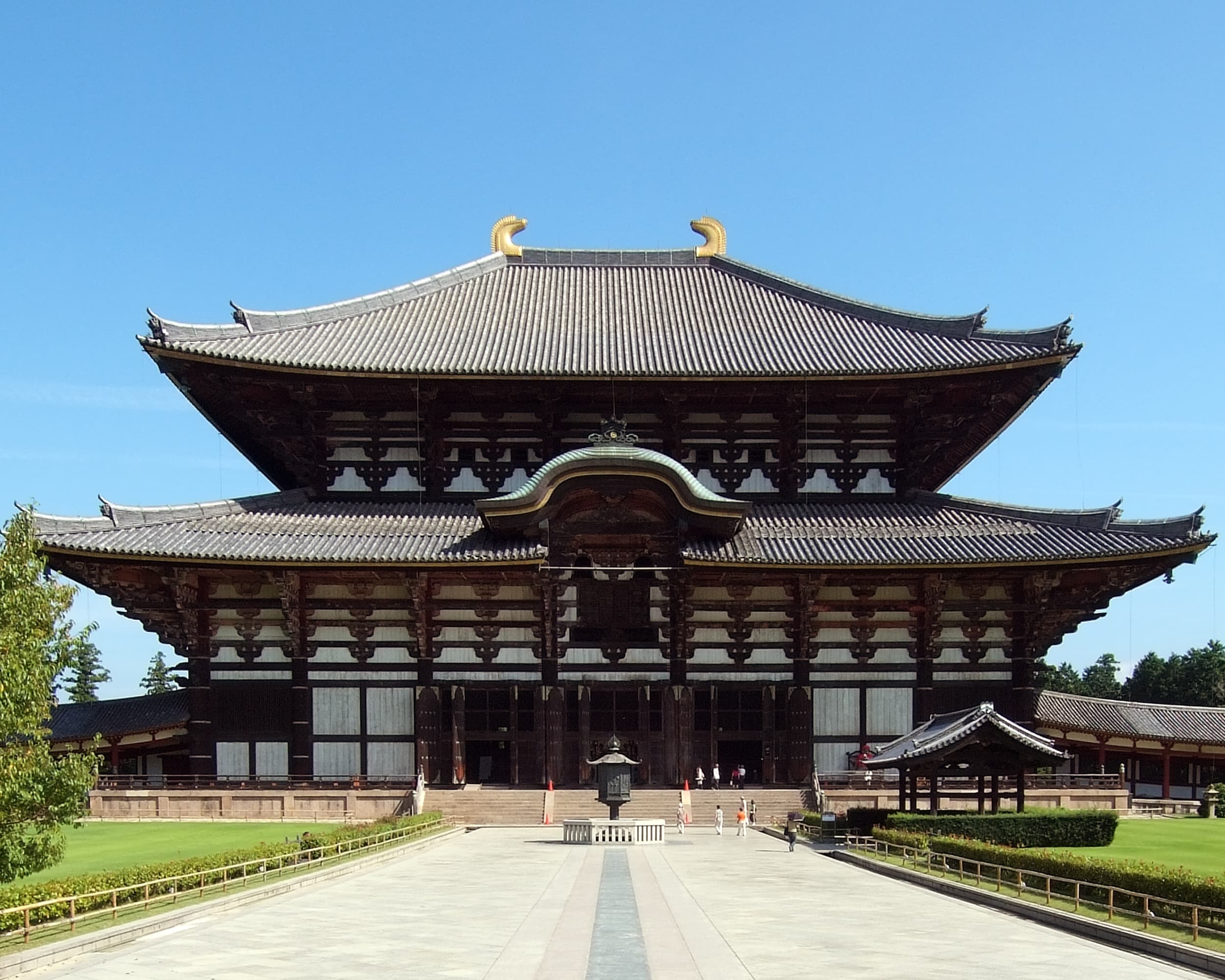
The Nara period (710–794) saw the formal arrival of six scholastic schools (the Nanto Rokushu): Sanron (Madhyamaka), Jojitsu (Satyasiddhi), Hosso (Yogacara/Faxiang, transmitted by Dosho from Xuanzang), Kusha (Abhidharmakosa), Ritsu (Vinaya, transmitted by the Chinese master Ganjin who reached Japan in 753 after five failed crossings and going blind on the way), and Kegon (Huayan, centered at Todaiji). The Great Buddha (Daibutsu) of Todaiji, dedicated in 752 under Emperor Shomu, was the largest bronze statue cast anywhere up to that date; its consecration was attended by an Indian monk, Bodhisena, who painted the eyes in the eye-opening ceremony.
The Heian period (794–1185) added the esoteric and the Tendai schools. Saicho (Dengyo Daishi, 767–822) went to China in 804, studied at Mount Tiantai, and returned to found the Japanese Tendai school on Mount Hiei outside Kyoto. Tendai based itself on the Lotus Sutra, integrated meditation, Vinaya, Pure Land, and esoteric practice in a single curriculum, and became — over the next four centuries — the matrix from which nearly every major Kamakura school would emerge. Kukai (Kobo Daishi, 774–835), Saicho's contemporary, went on the same embassy, studied Mahavairocana Tantra under Huiguo in Chang'an, received full transmission in two years, and returned to found Shingon — the Japanese True Word school — on Mount Koya. Shingon preserved Indian-Chinese Yoga Tantra at a moment when those lineages were fading in China itself; Mount Koya remains today one of the great living centers of East Asian esoteric Buddhism.
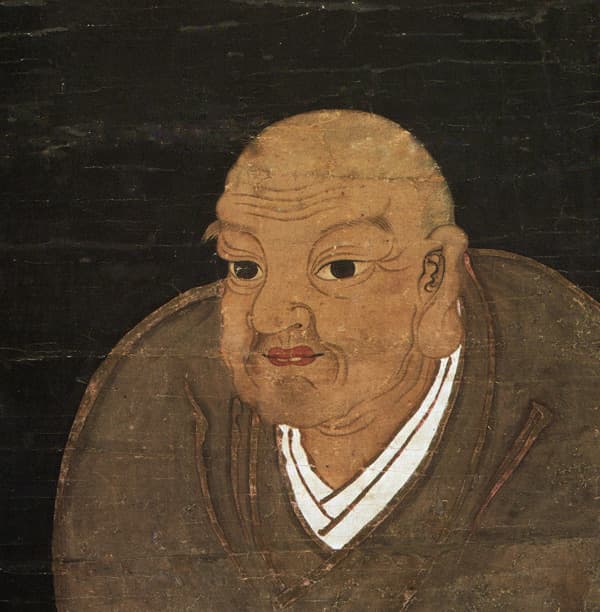
The Kamakura period (1185–1333) is where Japanese Buddhism becomes its own. The Heian aristocratic, monastic-state Buddhism was disrupted by civil war, the rise of the samurai class, and the broad-based suffering of mappo (the latter age of the dharma), and four mass-movement schools emerged, each addressing the lay majority. Honen (1133–1212), a former Mount Hiei monk, founded Jodo Shu in 1175, preaching that nembutsu — Namu Amida Butsu, the recitation of Amitabha's name — was sufficient. His student Shinran (1173–1263) founded Jodo Shinshu, the True Pure Land School, with the most radical doctrine of other-power in any Buddhist tradition. Eisai (1141–1215) brought the Linji Chan transmission to Japan from China in 1191 and founded Rinzai Zen. Dogen Kigen (1200–1253) brought the Caodong transmission in 1227 and founded Soto Zen; his Shobogenzo remains one of the deepest philosophical texts in the Buddhist canon. Nichiren (1222–1282) founded the Lotus-exclusivist Nichiren school, holding that all dharma was contained in the title of the Lotus Sutra — Namu Myoho Renge Kyo. The Obaku Zen line came later, in 1654, with the Chinese monk Yinyuan.
The Edo period (1603–1868) brought Buddhism under Tokugawa state supervision through the danka system, which required every household to register at a Buddhist temple; the temple became the local registry of births, deaths, and travel permits. Numerically Buddhism never had a stronger grip on Japanese society than at this moment, but the religious vitality declined; the Meiji Restoration in 1868 disestablished Buddhism in favor of State Shinto, and a wave of haibutsu kishaku — abolition and destruction of Buddhist images — ran through the early Meiji years.
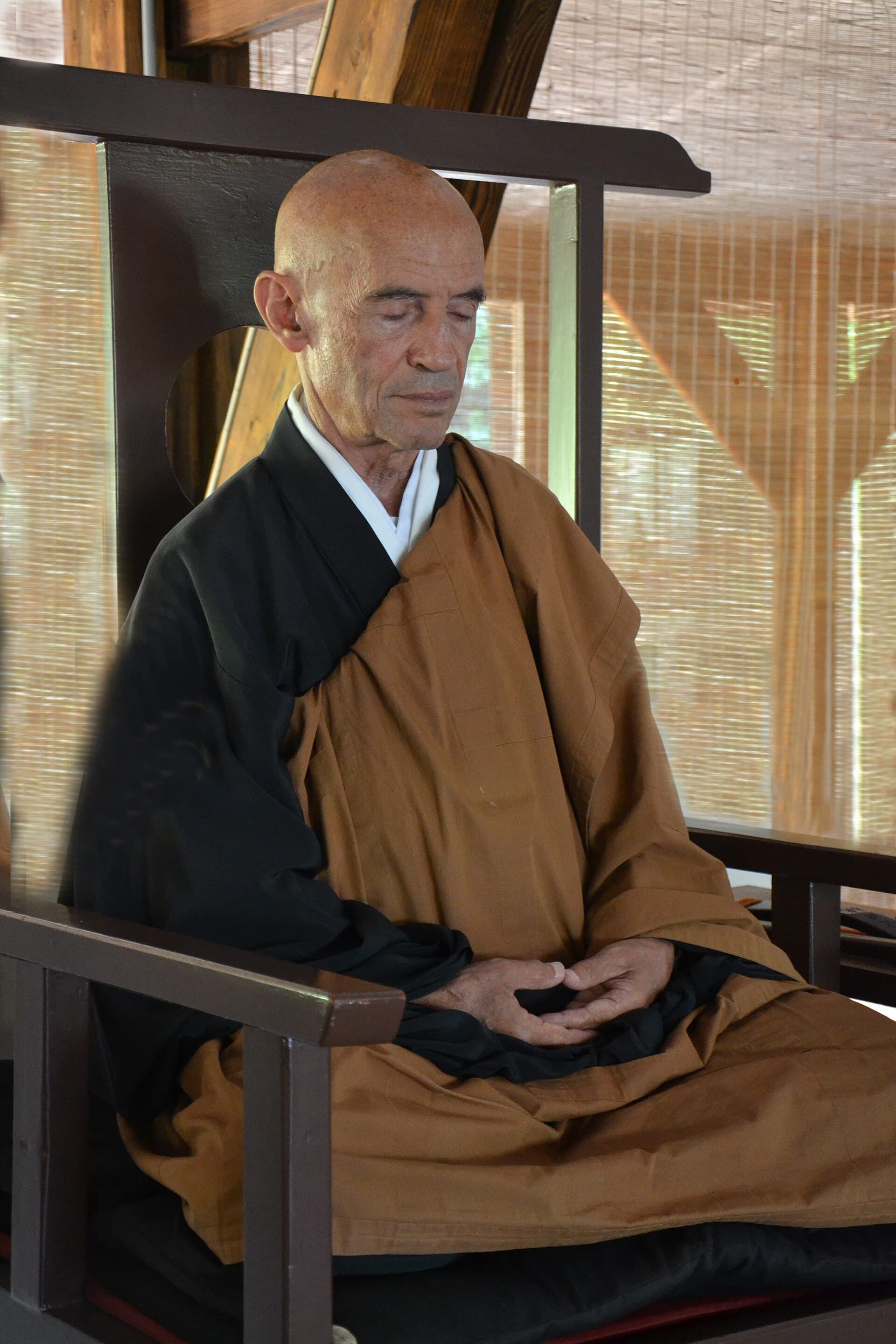
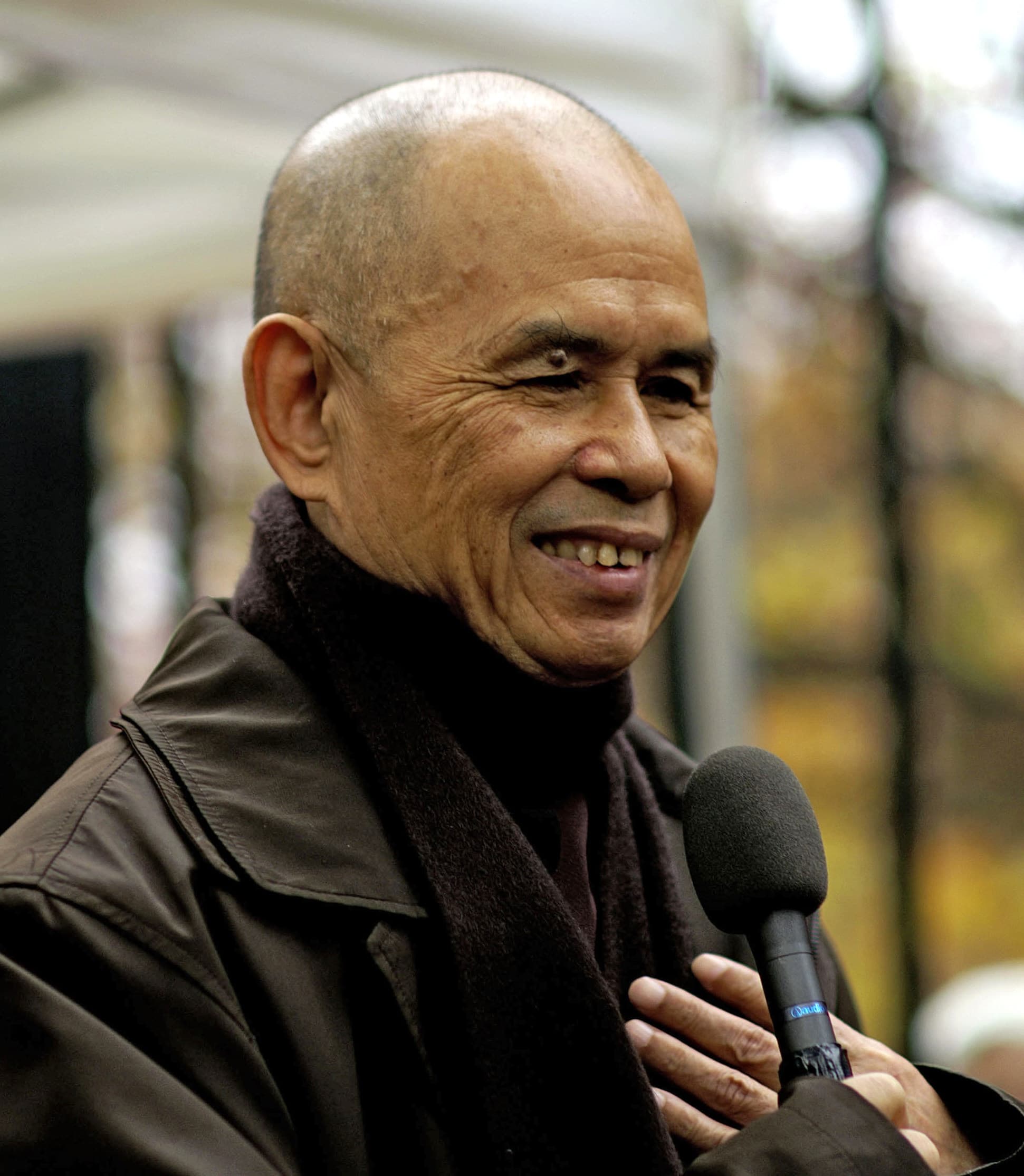
The modern Japanese Buddhist sangha is one of the world's largest. About 85 million Japanese people are nominally Buddhist (often alongside Shinto). The largest single denomination is Jodo Shinshu (the Honganji branches), followed by Soto Zen, Jodo Shu, Nichiren-derived movements (with Soka Gakkai globally the largest), Rinzai, Shingon, Tendai, and the surviving Nara schools. The funerary association of Buddhism — yakuwarii bukkyo, 'funeral Buddhism' — has been criticized as a degeneration; but the meditation, scholarship, and engaged practice strands have re-emerged powerfully in the late twentieth and twenty-first centuries through teachers like Shunryu Suzuki, Daisaku Ikeda, and the global Plum Village transmission. Twelve hundred years on from Saicho and Kukai, Japan is one of the great living Buddhist civilizations.