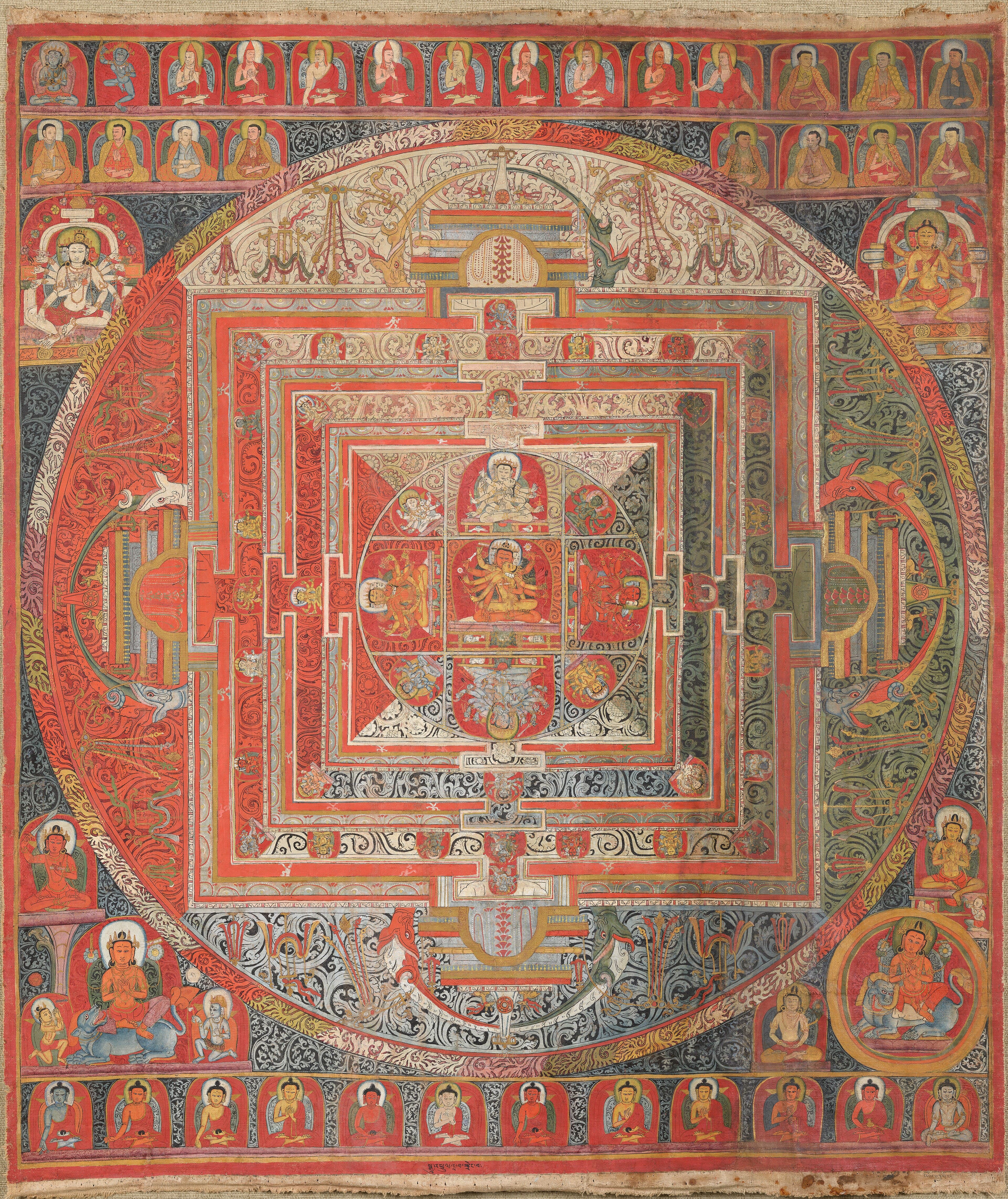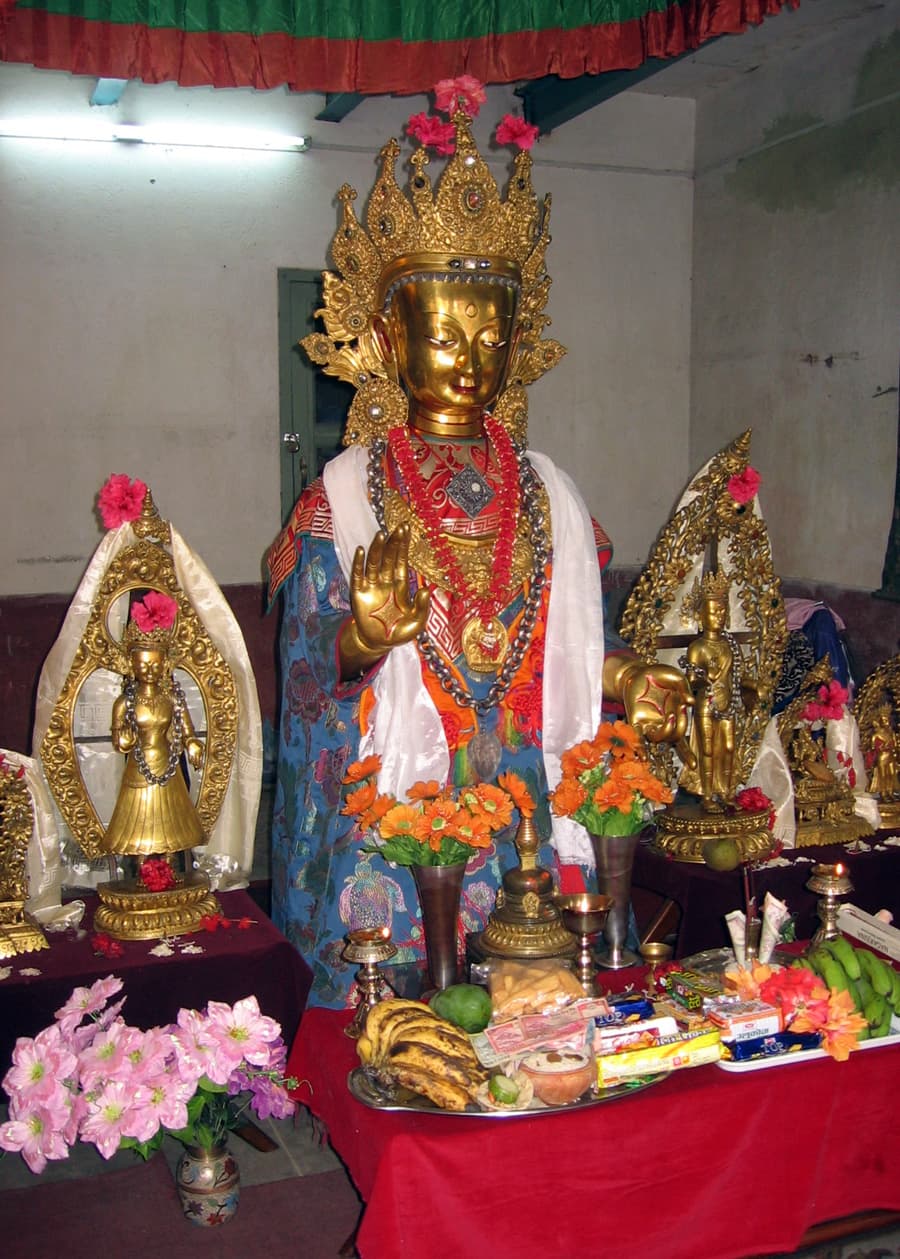
Newar Buddhism is the unbroken thread. When Nalanda was sacked in 1193 and Vikramasila in 1203, the great Indian monastic universities ended, and the Mahayana–Vajrayana that had matured at them was carried in two main directions: north into Tibet, where it was translated and re-rooted, and south through the Himalayan passes into the Kathmandu Valley, where it was carried by Indian panditas fleeing the Turkic incursions and was absorbed into a culture that had been Buddhist since at least Ashoka's daughter Charumati and the Lichchhavi dynasty of the fifth century. The result, after eight centuries of Newar transmission, is the only living tradition that practices Indic Mahayana–Vajrayana in its original Sanskrit, with the original sutras and tantras intact, in the original homeland of late Indian Buddhism's southern transmission. It is the platform's home tradition, and the Kathmandu Valley remains its unique living center.
Newar Buddhism differs from Tibetan Vajrayana in two structural ways. First, when Indian monastic Buddhism died in India, the Newar sangha did what no other surviving Buddhist culture did: it carried the entire Vajrayana on the shoulders of hereditary householder priests rather than celibate monks. The Vajracharyas — the 'vajra masters', the senior priestly caste — and the Shakyas, who carry the same Buddhist heritage in a slightly different sacerdotal role, are initiated through a temporary monastic ordination (the bare chuyegu rite, in which a boy is briefly made a monk and then 'sent home' to live as a householder Vajracharya), and from that point they conduct the entire Vajrayana liturgy as householders. As David Gellner put it in Monk, Householder, and Tantric Priest (1992), the Newar tradition simultaneously holds all three roles — sravakayana renunciate ritual, Mahayana lay bodhisattva discipline, and Vajrayana tantric priesthood — in a single integrated caste system. Second, the laity is structurally Buddhist. The Uray, Maharjan, Tuladhar, Tamrakar, and other Newar Buddhist castes practice household-level dharma — Gunla observance, Pancadana, Samyak, Mha Puja, the Yatras, the Buddhist life-cycle rites — in a way that has no parallel in the celibate-monastic forms of Theravada or Tibetan Buddhism.
The living architecture is the bahas and bahis — courtyard monasteries that punctuate Kathmandu, Patan, and Bhaktapur. Patan alone has the highest density of operational Buddhist monasteries of any city on earth. The two great chaityas are Swayambhunath, the self-arisen stupa whose Sanskrit-language Svayambhu Purana traces the Valley's Buddhist cosmogony to the bodhisattva Manjushri draining the primordial lake, and Boudhanath, the largest stupa in Nepal and the Vajrayana axis of the Valley. The five transcendent Buddhas — the Pancha Buddha (Vairocana, Akshobhya, Ratnasambhava, Amitabha, Amoghasiddhi) — face outward from Swayambhu and define the Newar mandala of devotion. The five Lokesvara forms (especially Bungadyo / Rato Macchendranath of Patan and Janabaha Dyo / Seto Macchendranath of Kathmandu) hold the public-festival heart of the tradition.
The canonical layer is the Navagrantha — the Nine Dharmas of Newar Buddhism: the Astasahasrika Prajnaparamita (the 8,000-line Perfection of Wisdom), the Lalitavistara, the Lankavatara, the Saddharma Pundarika (Lotus), the Suvarnaprabhasa, the Gandavyuha, the Samadhiraja, the Dasabhumika, and the Tathagataguhyaka. These nine Sanskrit Mahayana sutras, recited and revered, are the textual spine of the tradition. The tantric layer overlaps significantly with Indian and Tibetan Vajrayana — Cakrasamvara, Hevajra, Vajrayogini, and the Caryagiti songs of the Indian mahasiddhas are all alive in Newar practice.
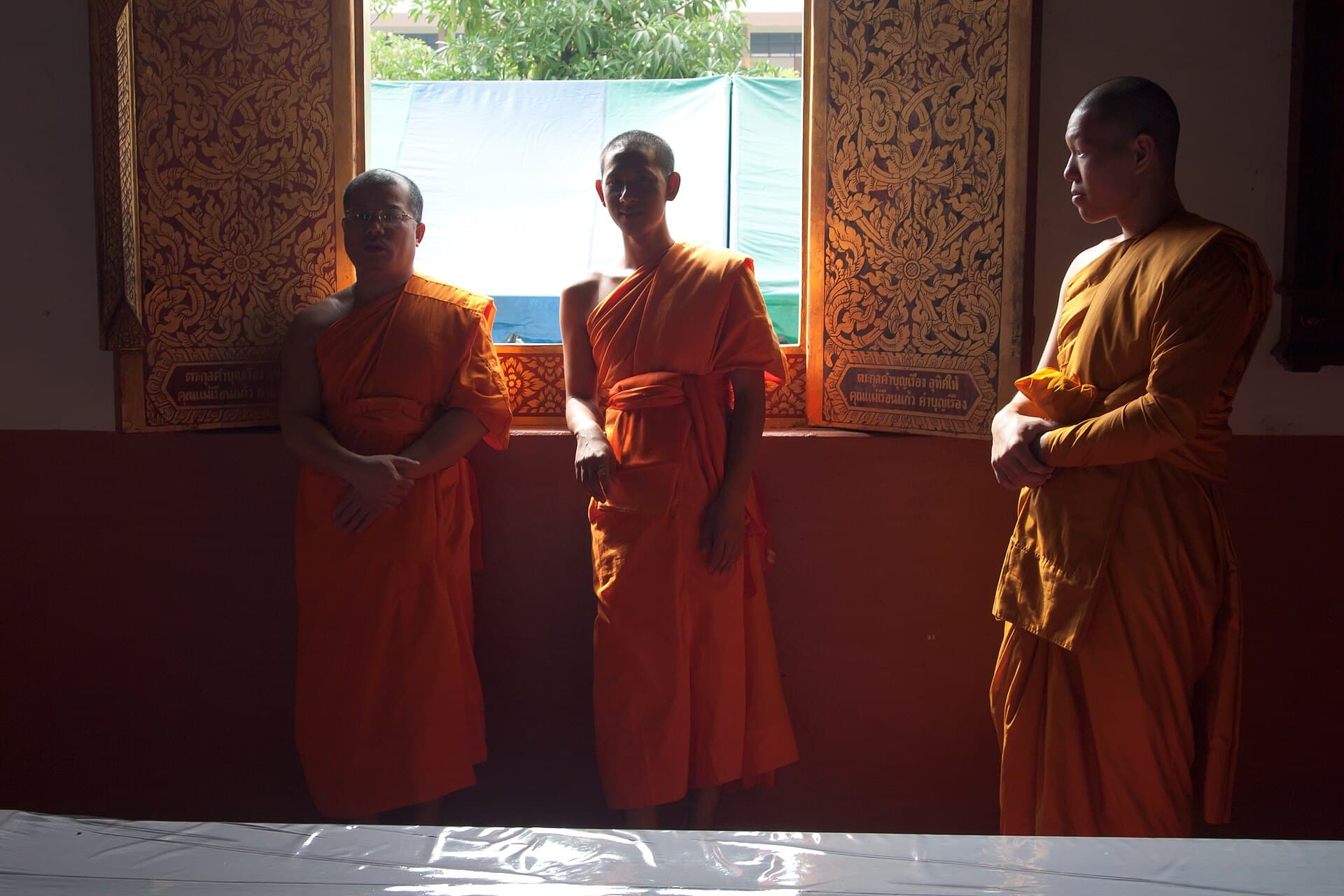
The modern history is a story of reform. From the 1920s a Theravada revival, led by figures like Dharmaditya Dharmacharya, Mahapragya, Pragyananda, Aniruddha Mahathera, and the Dharmodaya Sabha founded in Sarnath in 1944, re-introduced Pali Theravada to the Valley alongside the older Newar Mahayana–Vajrayana tradition, producing the unusual contemporary situation in which Kathmandu hosts both Bajracharya–Shakya Vajracharyas and Theravada bhikkhus and bhikkhunis in the same neighbourhoods. The Vajracharya pandita Naresh Man Bajracharya, the first vice-chancellor of Lumbini Buddhist University, is a representative figure of the modern Newar pandita class working to bring this tradition into rigorous engagement with global Buddhist scholarship.
There are perhaps a million Newar Buddhists, concentrated in the three royal cities and the Newar diaspora. The Valley's Buddhist culture is small in number, but it carries something singular: the last living lineage of Indic Sanskrit Mahayana–Vajrayana, in the place where it was first received from India, by a sangha that never fled.