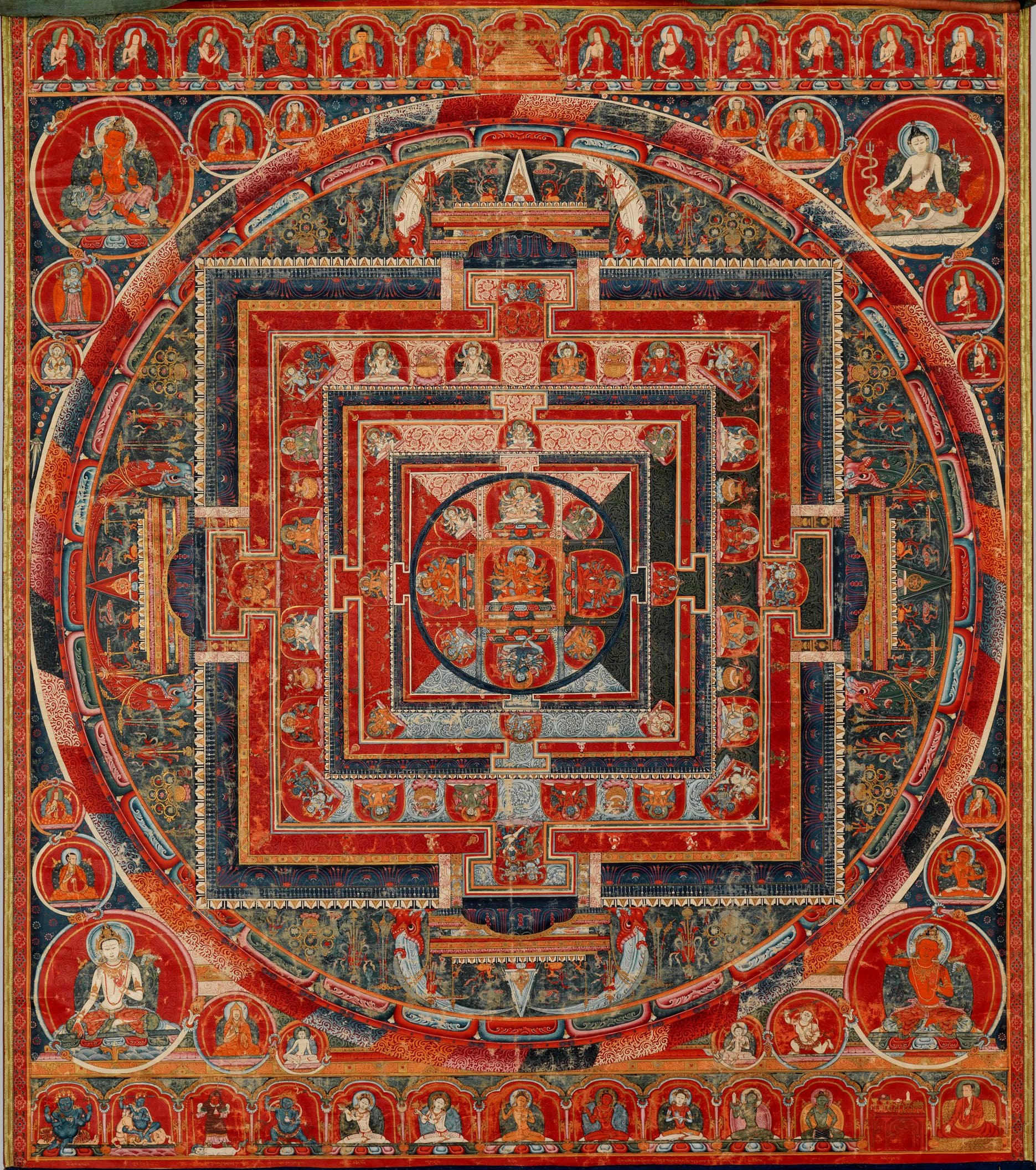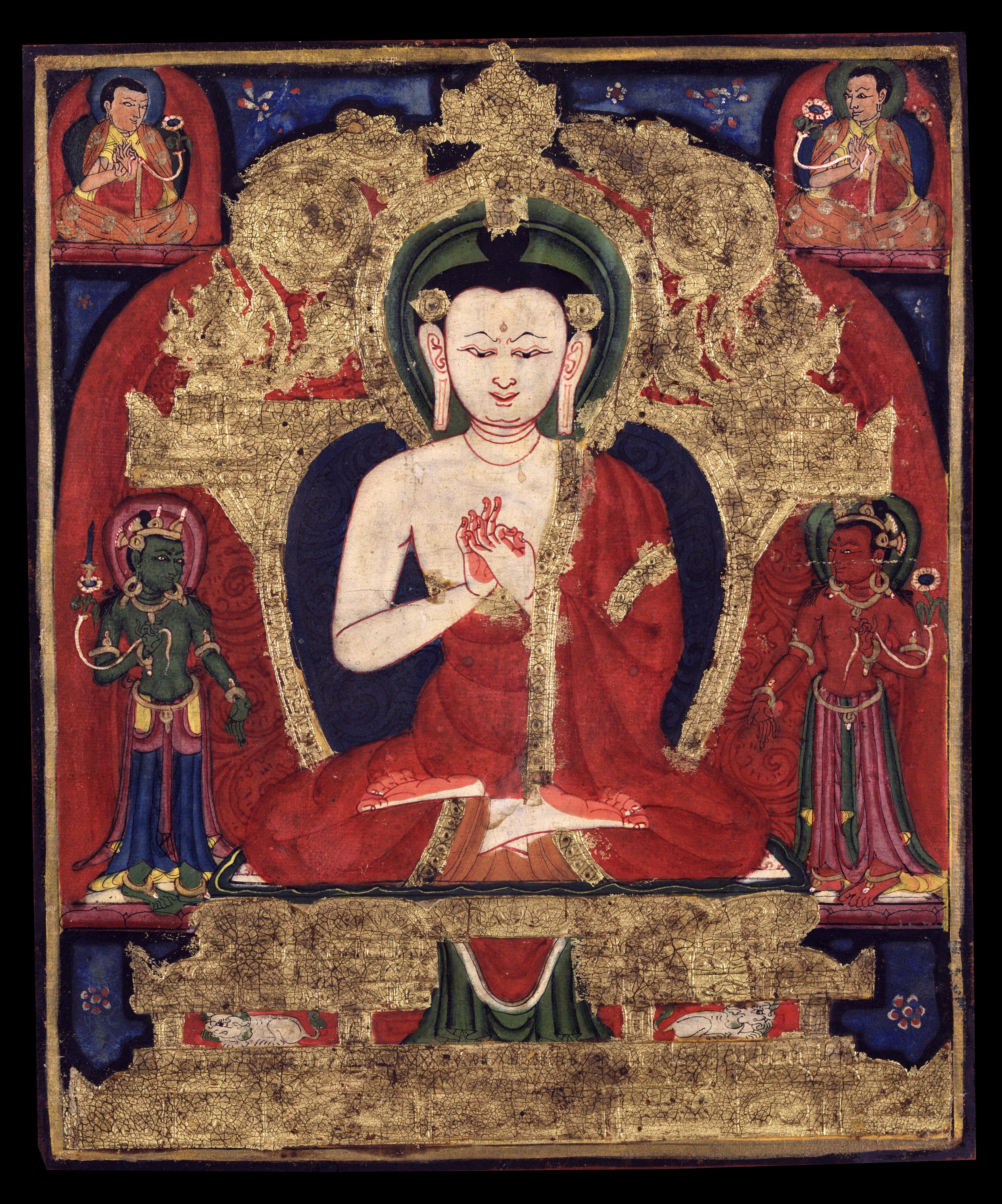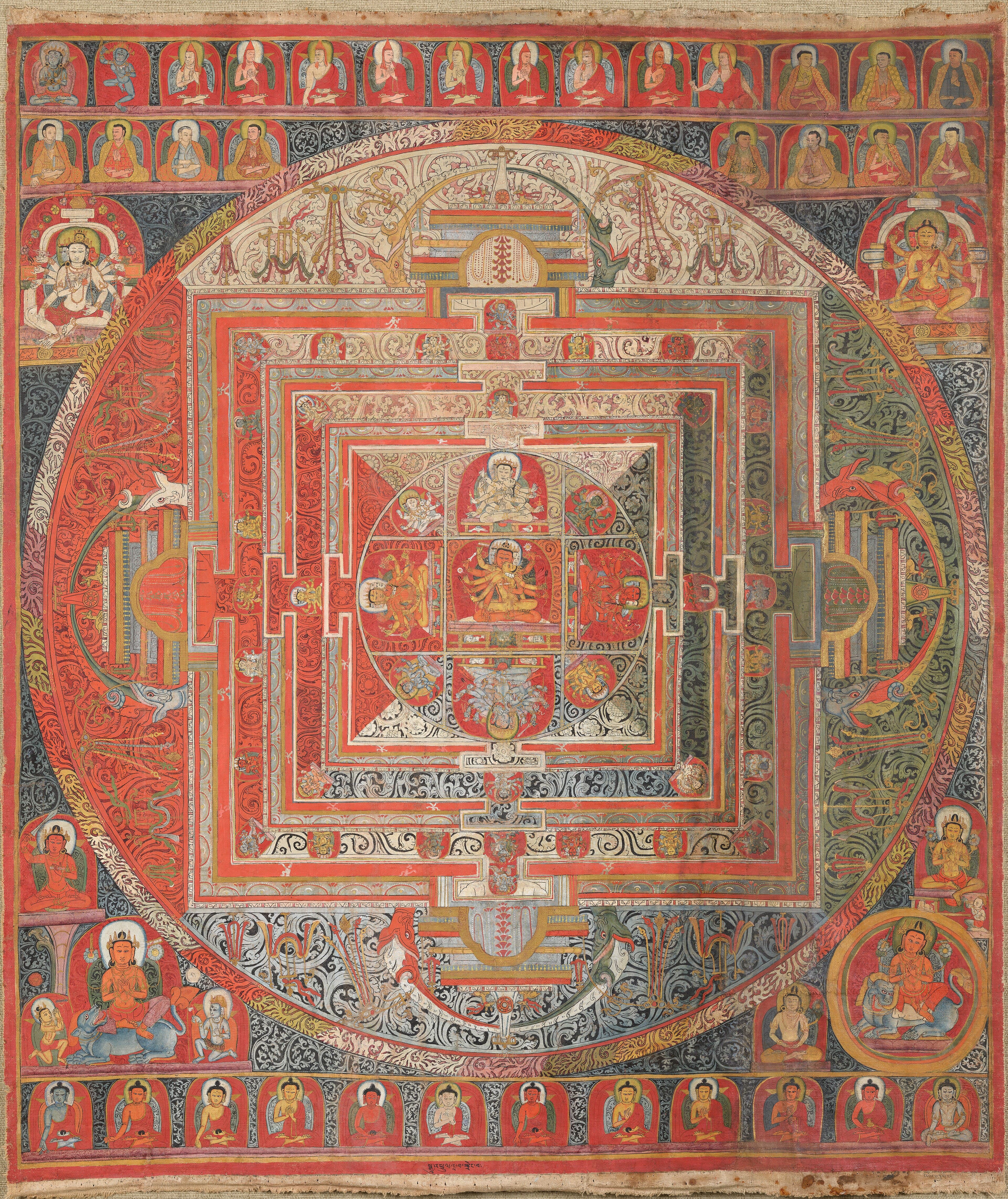
Mandala — Sanskrit for 'circle' or 'completed ring' — is the geometric diagram of a buddha-field. In its simplest form, it is a circle inscribed in a square, the square divided into quadrants, the quadrants colored to correspond to the four directions. In its complex tantric form, it becomes a multi-layered architectural plan: an outer ring of fire and vajras (protection), then a charnel-ground ring (the eight great cremation grounds), then a lotus ring, then the outer walls of the palace, then the four gates (each guarded by a wrathful deity), then the inner courtyards, then the central throne where the principal deity resides surrounded by their retinue.
The mandala is not a decorative image. It is a structural diagram of the universe-as-experienced-by-the-awakened. To enter a mandala, in the tantric practice, is to enter the buddha-field of the deity. The practitioner visualizes themselves as inhabiting the mandala from the inside, identifying with the central deity, recognizing the surrounding retinue as one's own awakened qualities. The practice is sometimes called 'deity yoga' (devata yoga) — the conscious adoption of the deity's form as the practitioner's own.
The most famous form of mandala practice is the sand mandala. A team of monks, working from precise measurements, traces a mandala in colored sand on a flat surface over the course of days or weeks. The Kalachakra mandala — the most elaborate — takes a team of four monks five to ten days to complete. When the work is finished and the rituals concluded, the mandala is deliberately destroyed: the sand is swept up, the colors mixed, and the dust ceremonially poured into a flowing river or stream. The destruction is itself the teaching. The mandala, like everything else, is impermanent.
The earliest Mahayana mandala texts appear in India in the 4th-5th centuries CE. The mature tantric mandalas — the Vajradhatu, Garbhadhatu, Sarvatathagatatattvasamgraha, Hevajra, Cakrasamvara, Kalachakra — emerge between the 7th and 11th centuries. By the 13th century, when tantric Buddhism flourished at Nalanda and Vikramashila, the mandala was the central organizing image of Vajrayana practice.
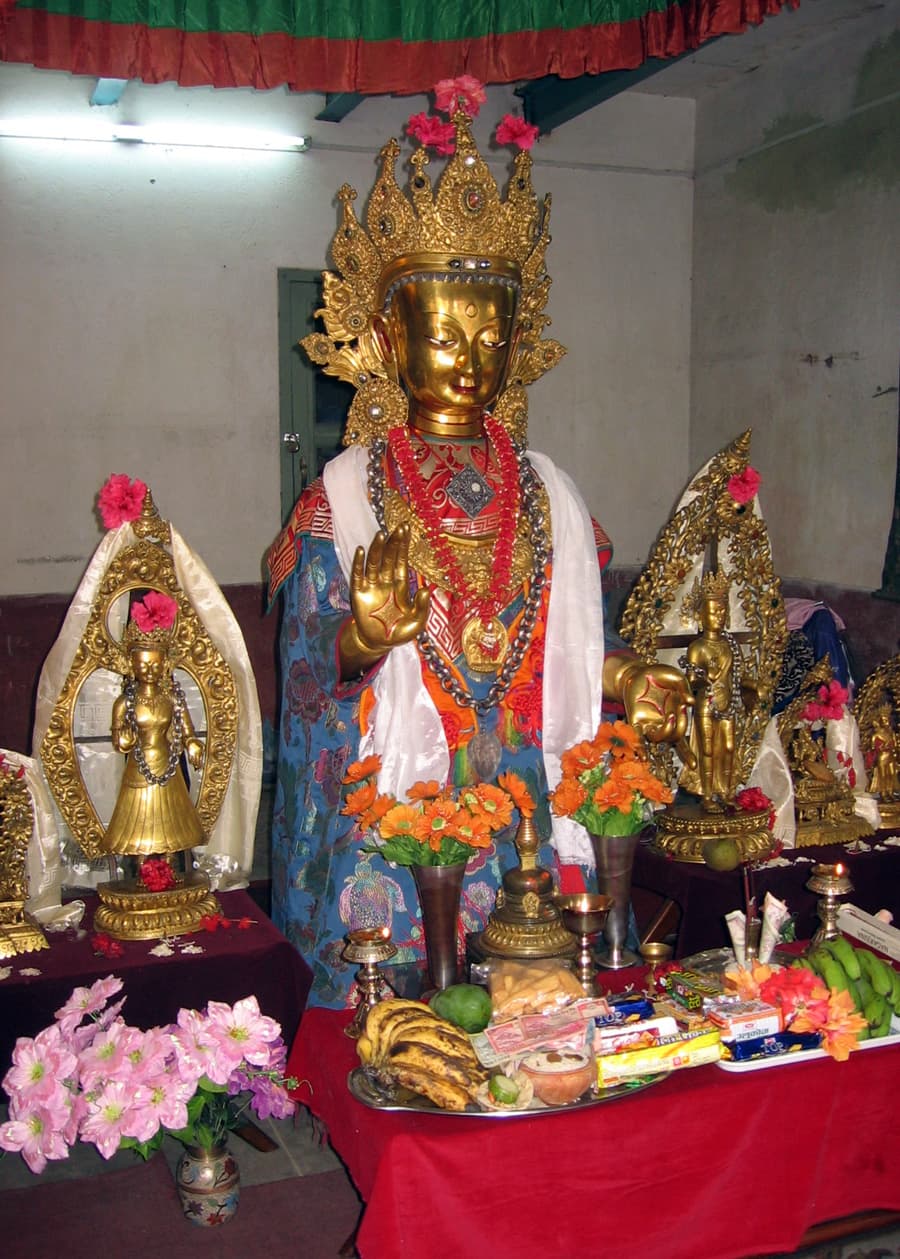
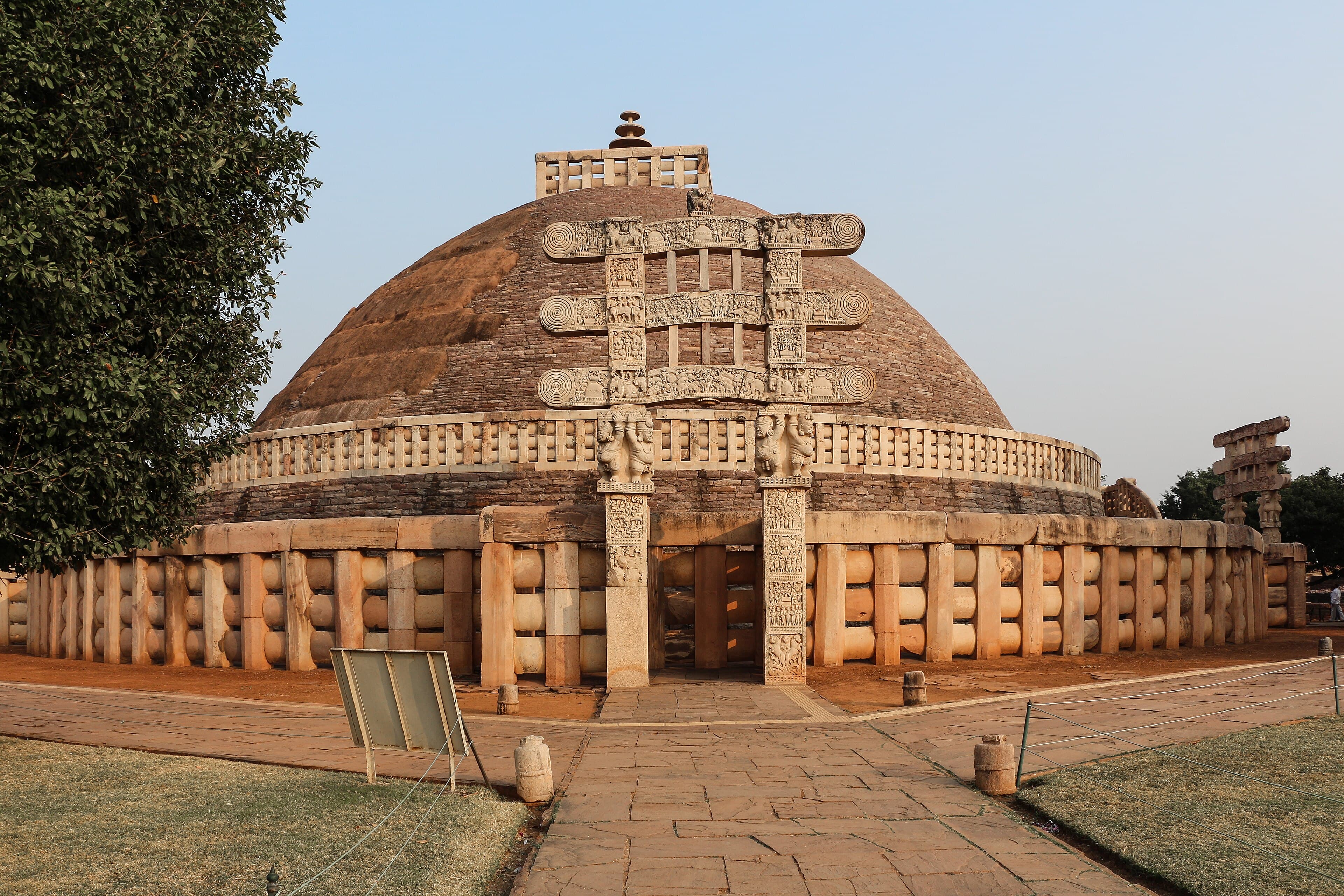
In Newar Buddhism, the mandala is built into the architecture of the Kathmandu Valley. The eight-petalled Pancha Buddha mandala — Vairochana at the center, Akshobhya at the east, Ratnasambhava at the south, Amitabha at the west, Amoghasiddhi at the north — structures the courtyards (bahas and bahis) of the Newar viharas. To walk the Newar pilgrim route through the valley, visiting in sequence the major Pancha Buddha shrines, is to perform a circumambulation of the cosmos.
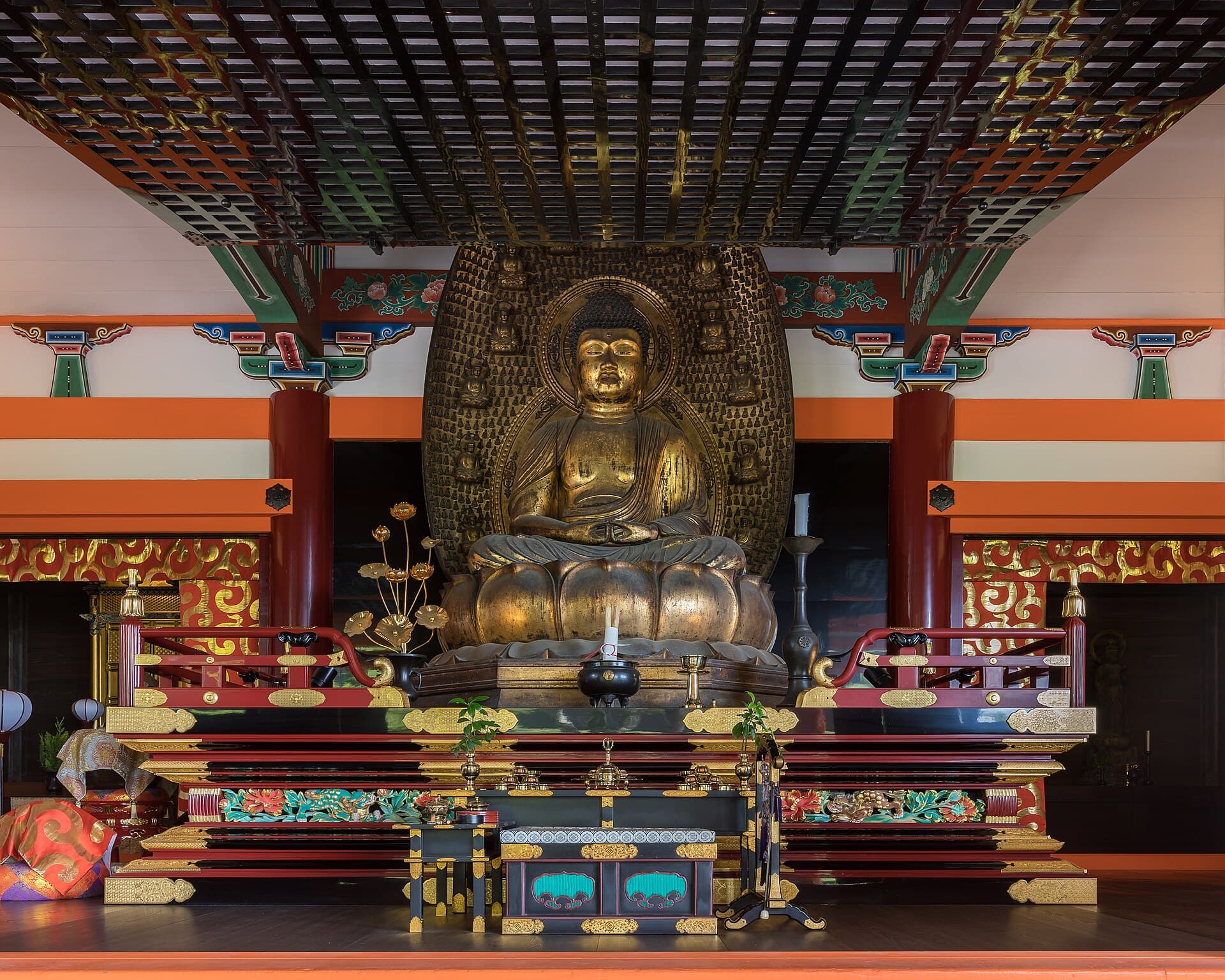
In Japan, the Womb Realm (Taizōkai) and Diamond Realm (Kongōkai) mandalas of the Shingon school, painted on hanging silk scrolls, structure the practice of the school's founder Kukai (774-835) and his successors to the present day.