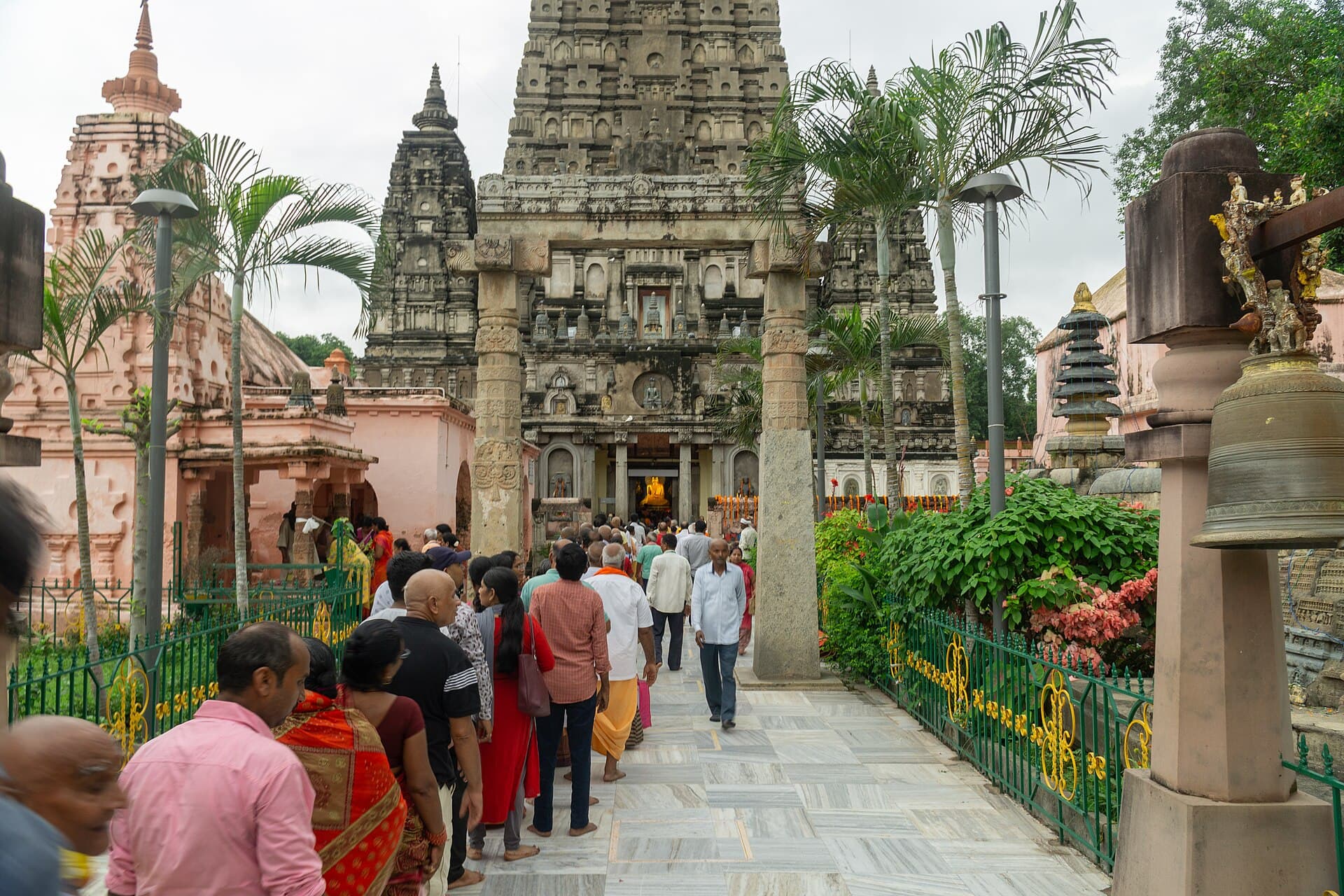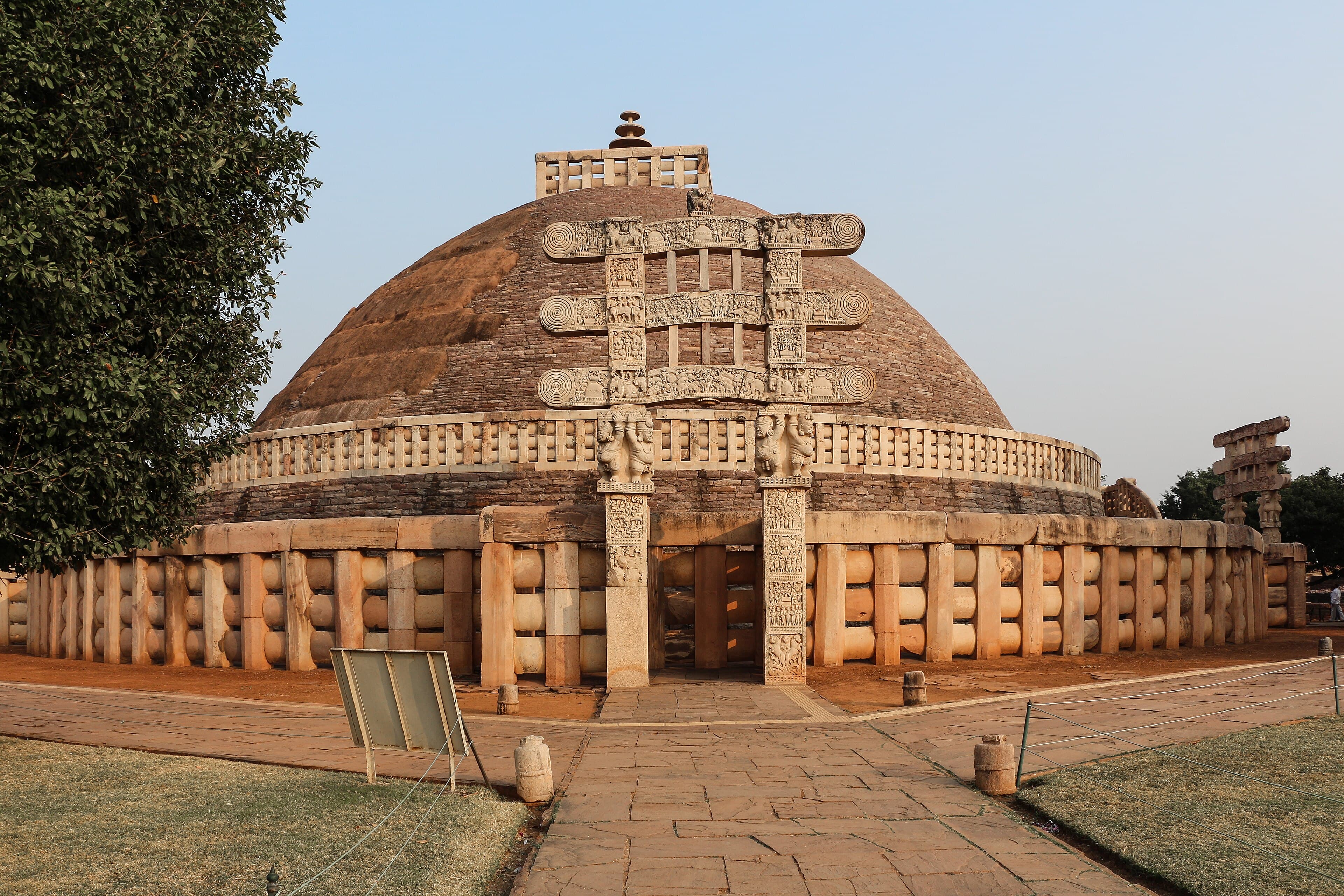
After the Buddha's death at Kushinagar, his body was cremated and the relics divided into eight portions. Each portion was enshrined in a stupa — a hemispherical earthen mound covering the reliquary urn. These were the first eight stupas of Buddhism. One of them, the stupa at Ramagrama in present-day Nawalparasi, Nepal, remains undisturbed to this day — the only original stupa never opened, never relocated, never desecrated. The other seven were opened by Ashoka in the 3rd century BCE, the relics divided again into 84,000 portions (according to tradition), and redistributed across his empire to be enshrined in 84,000 new stupas.
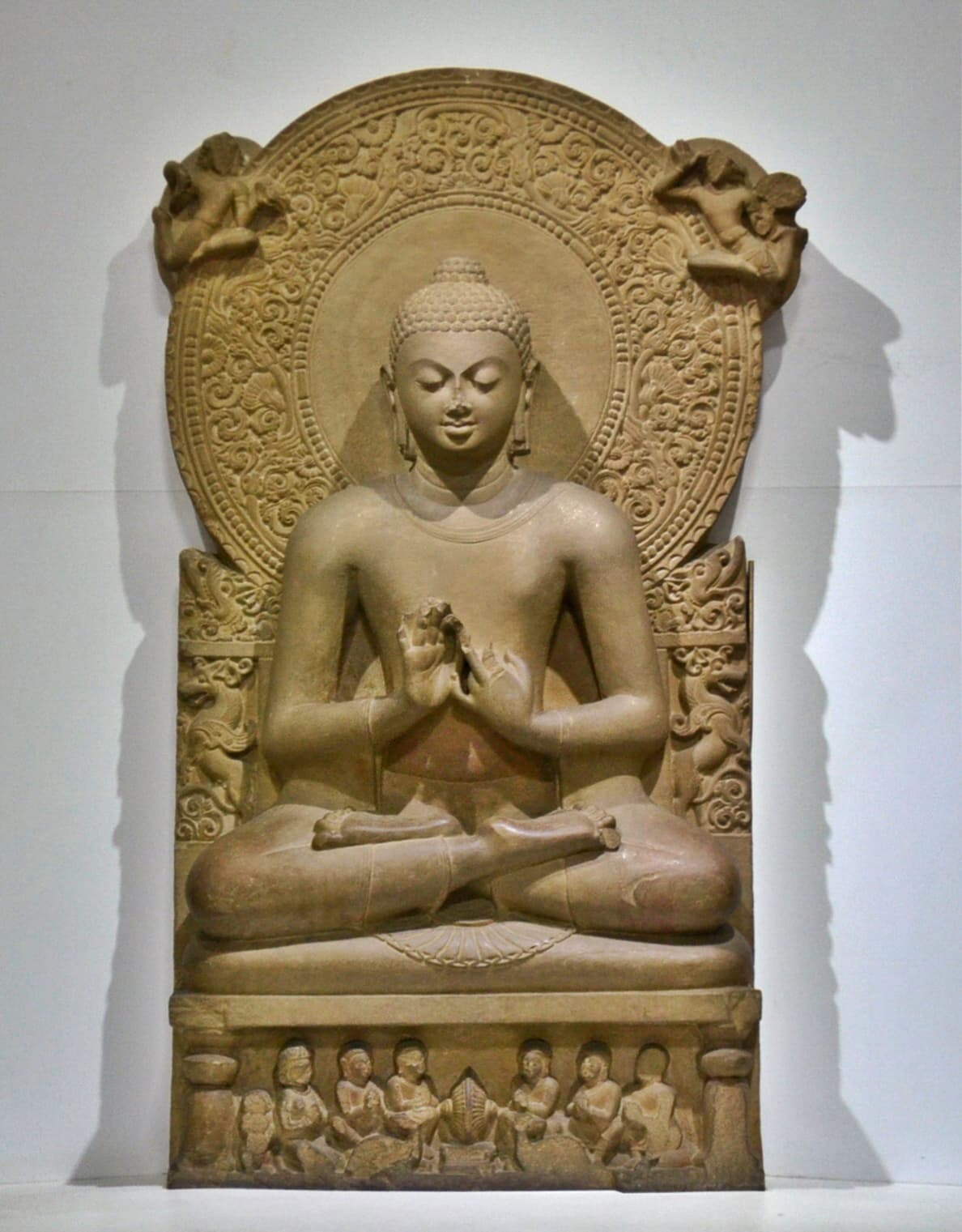
The stupa is the original Buddhist architectural form. It precedes the temple, the monastery, the icon. It is, in the deepest sense, the Buddha himself in monumental form — his body, his relics, his presence. A worshiper at a stupa is in the Buddha's presence as literally as a worshiper at a Catholic basilica is in the presence of the saint whose relics rest under the altar.
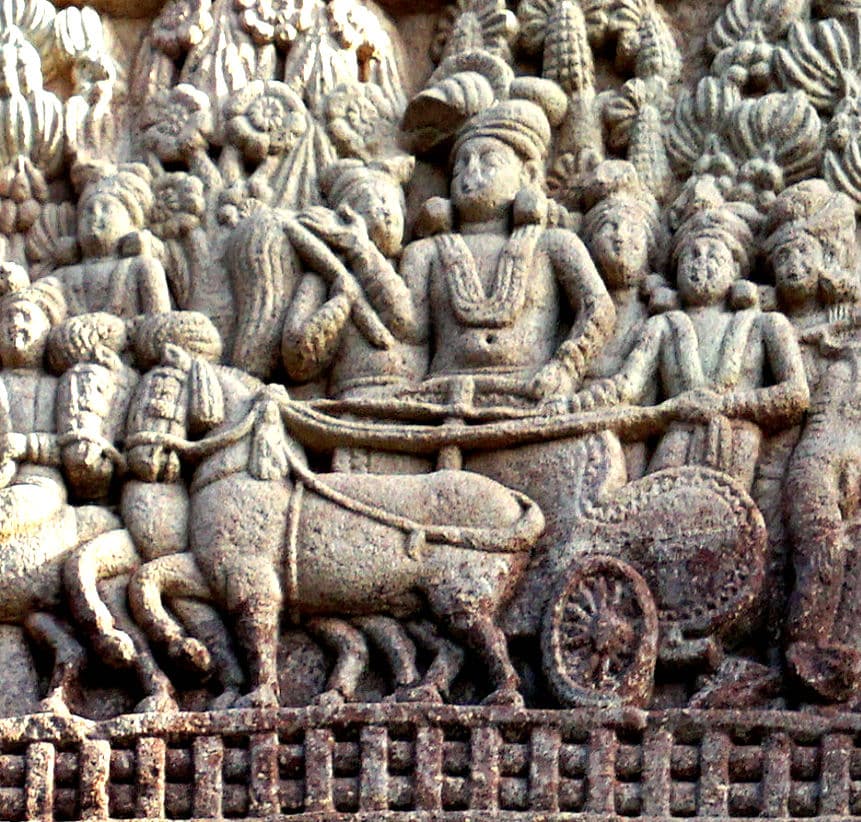
The canonical form develops in stages. The early stupas — Bharhut, Sanchi, Amaravati — are large hemispherical domes (anda, 'egg') set on a circular drum (medhi), surrounded by a railing (vedika) and four toranas (gateways) oriented to the cardinal directions. A pilgrim enters the gateway and circumambulates clockwise around the dome, often on a raised pradakshina path. Above the dome rises a small square railing (harmika) and a parasol (chattra) or series of stacked parasols on a central pole (yashti) — the umbrella that in Indian royal symbolism marks the presence of sovereignty.
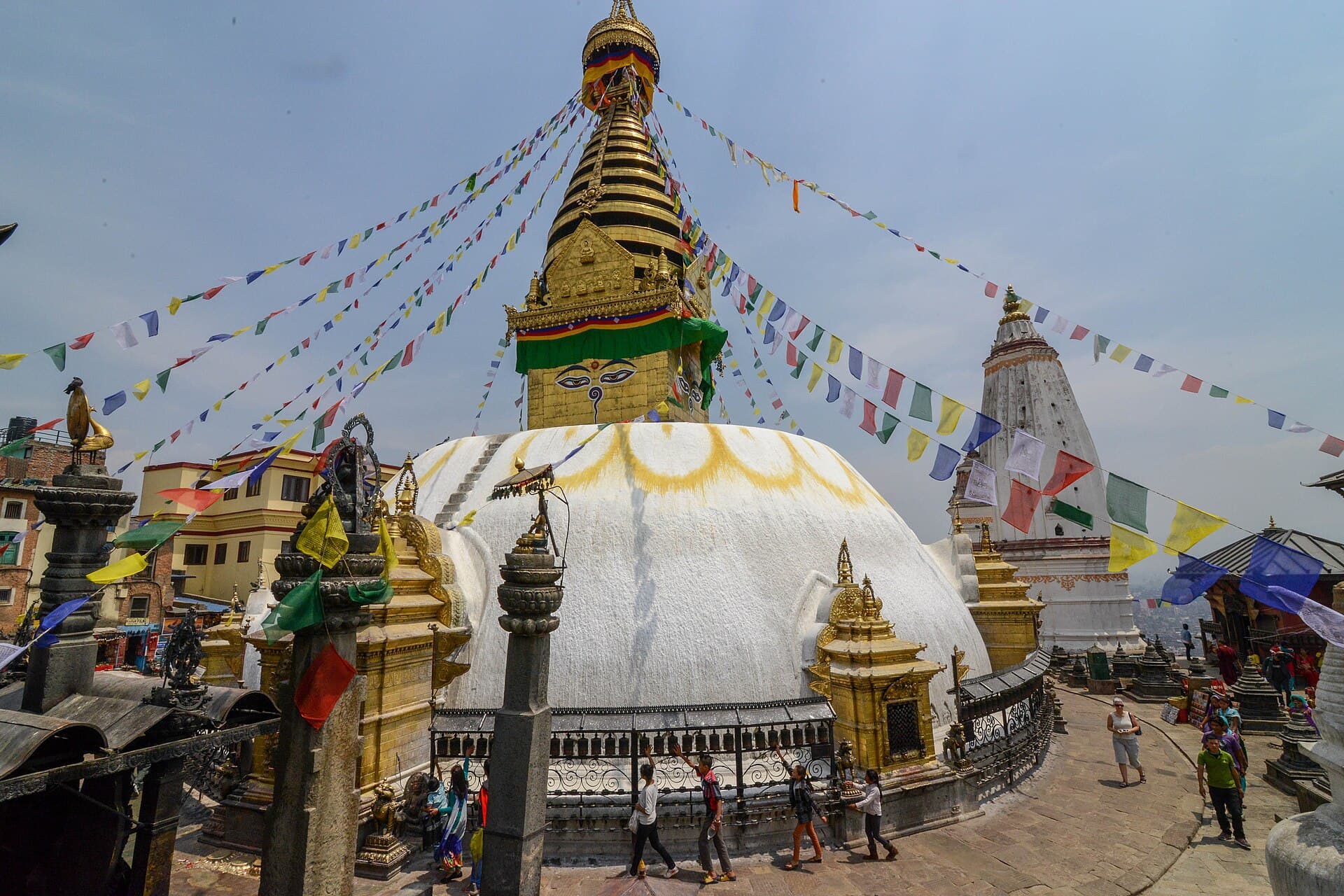
As the form develops, it elaborates. The Sri Lankan dagoba (a contraction of dhatu-garbha, 'relic-womb') becomes a tall bell-shaped structure. The Burmese pagoda becomes a multi-tiered gilded spire (the Shwedagon at Yangon). The Tibetan chorten (mchod rten, 'support of offering') takes its eight standardized forms, each commemorating a moment in the Buddha's life. The Bhutanese chorten is squatter and elaborately painted. The Nepali stupa — Boudhanath, Swayambhu — combines the hemispherical dome with the painted eyes of the Buddha on the harmika, gazing in all four directions.
The symbolic vocabulary is consistent across the regional variations. The dome is the universe. The dome is the womb. The dome is the body of the Buddha. The yashti is the axis mundi — the world-axis around which the cosmos turns. The thirteen parasols of the Tibetan chorten are the thirteen stages of the bodhisattva path. The eyes on the Nepali stupa are the all-seeing wisdom of the awakened mind. To enter a stupa precinct and walk three times clockwise is to circle the universe, the Buddha, and the path simultaneously.