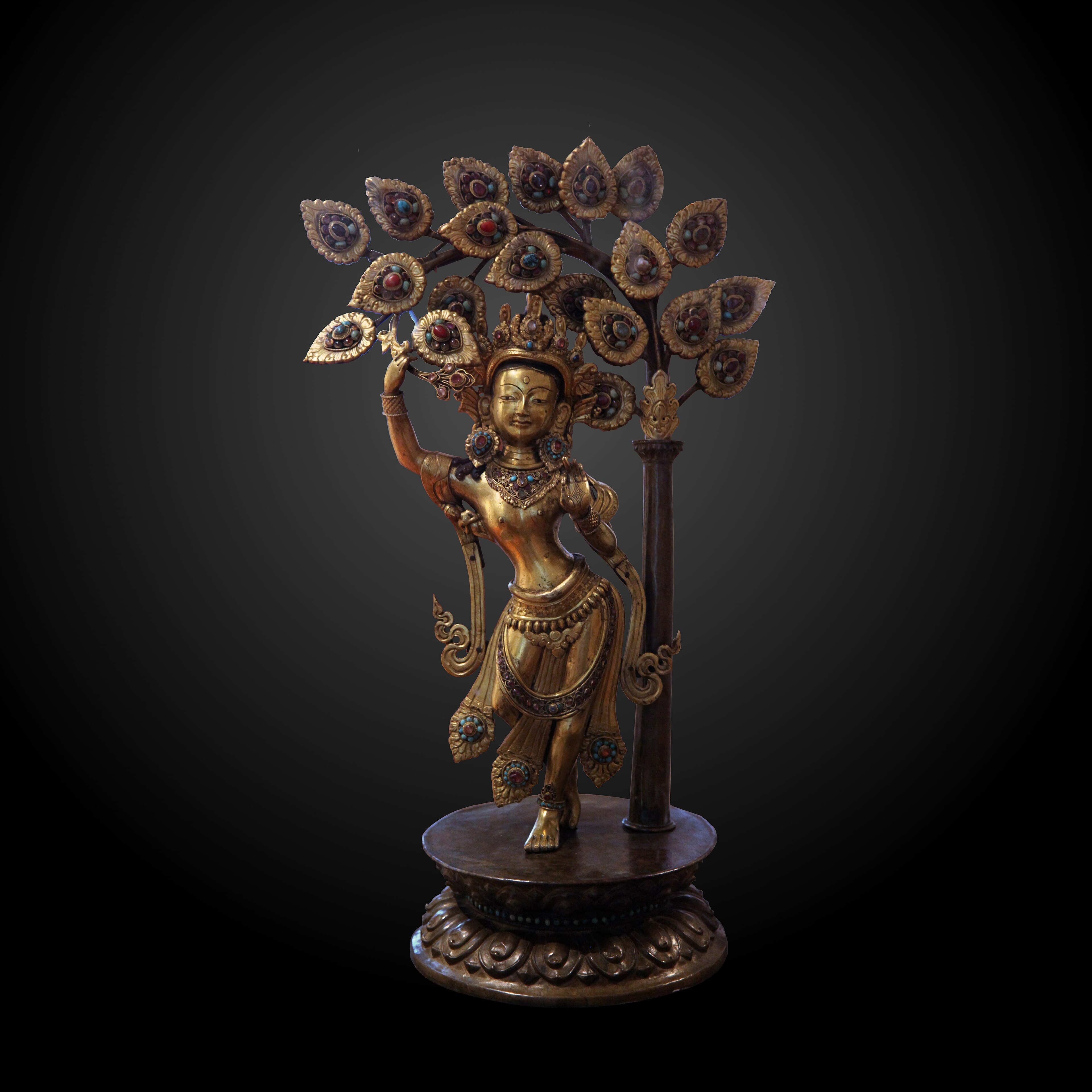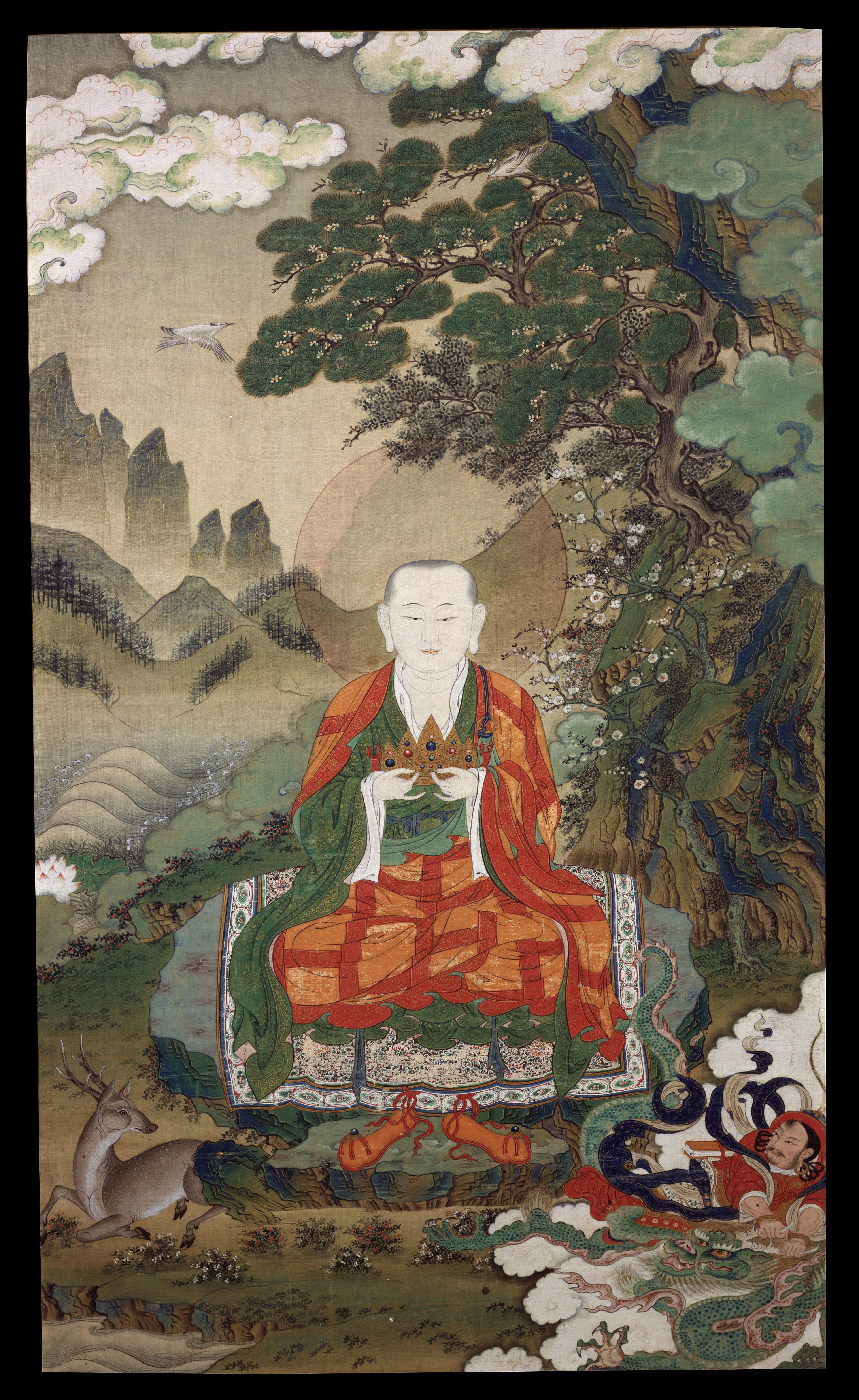
He was born under a sal tree in Lumbini, on the southern Terai of what is today Nepal, in or around 563 BCE, to Suddhodana, raja of the Shakya republic, and Mayadevi of the Koliya clan. His mother died seven days after the birth. His aunt Mahaprajapati Gotami raised him. The kingdom was small — a confederacy more than an empire — and the prince was named Siddhartha, "he whose purpose is accomplished." The seer Asita came down from the Himalaya, examined the child, and wept: this one would either rule the world or renounce it, and Asita would not live to hear the teaching he would give.
The legend gives him a perfect youth — three palaces for the three seasons, a wife Yashodhara of his own clan, a son Rahula, and a father who kept old age, sickness, and death away from his sight. The legend is not history but it is precise. The four sights — an old man, a sick man, a corpse, and a wandering renunciant — are an inventory of what royalty had been built to hide. He saw them, the Lalitavistara records, in his twenty-ninth year, on four successive chariot rides from the palace gates. That same night, he kissed the sleeping Yashodhara and Rahula and left.
The renunciation period — what Pali sources call the years of striving — lasted six years. He studied with Alara Kalama, mastered the meditative attainment of the sphere of nothingness, and walked away because it did not reach the end of suffering. He studied with Uddaka Ramaputta, mastered the sphere of neither perception nor non-perception, and walked away for the same reason. He joined five ascetics in the forest near Uruvela and starved himself, by the famous description in the Mahasaccaka Sutta (MN 36), to the point where his spine could be felt from his belly. He understood that this was not the path. He accepted a bowl of milk-rice from the village girl Sujata. The five ascetics, disgusted, abandoned him.
He sat down beneath a peepul tree at what would become Bodh Gaya, on the eighth day of the lunar month of Vesakha, and did not rise until awakening had been reached. The Padhana Sutta (Sn 3.2) records the conversation with Mara — desire, aversion, fear, doubt, pride — that filled the watches of the night. At dawn, with the morning star, he saw. What he saw, in the canonical formula, was the three knowledges: the recollection of his own past lives, the seeing of the arising and passing of beings according to their kamma, and the destruction of the asavas — the deep currents of sensuality, becoming, and ignorance. He was thirty-five. He was now the Tathagata, the one thus-gone.
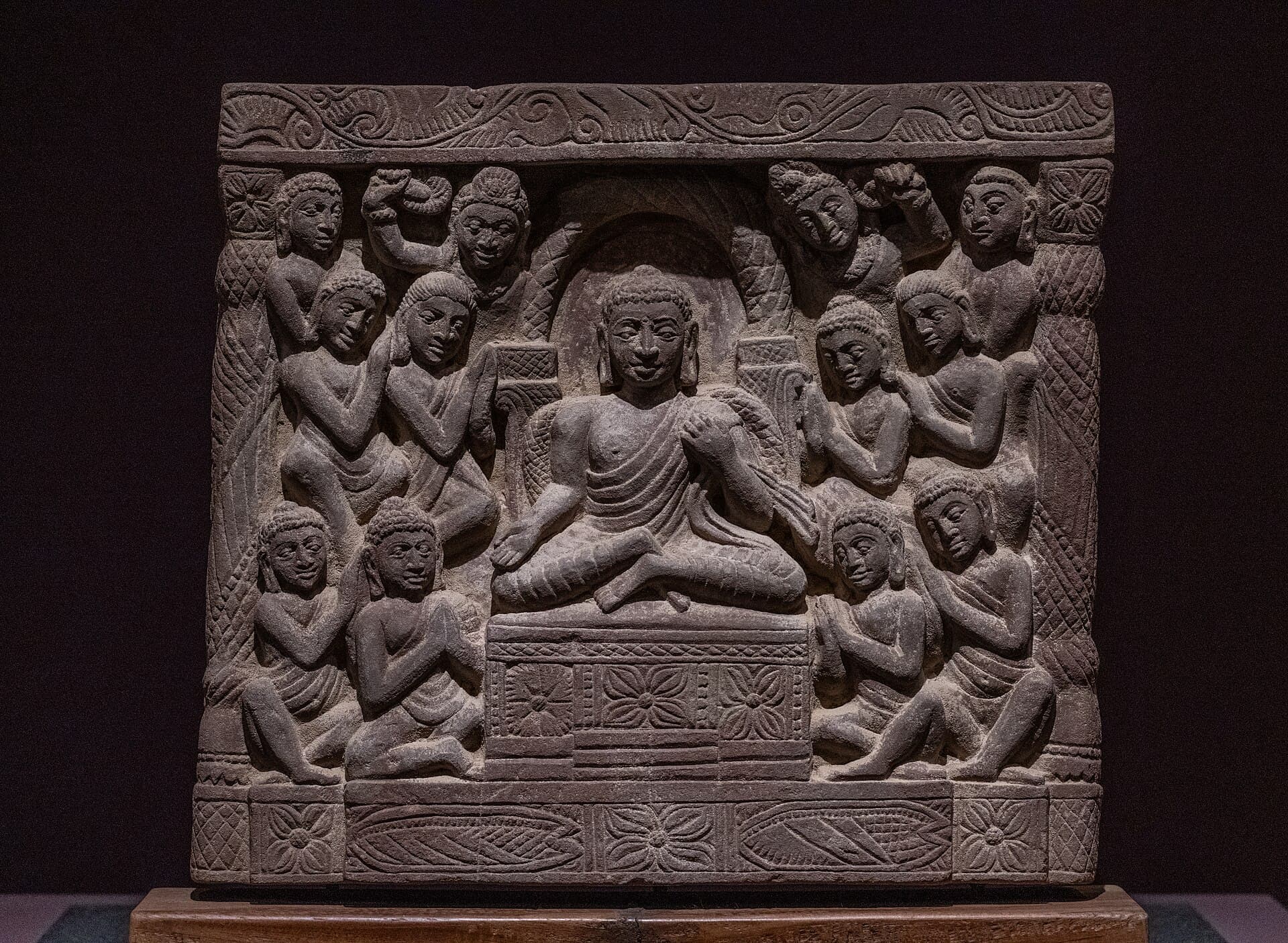
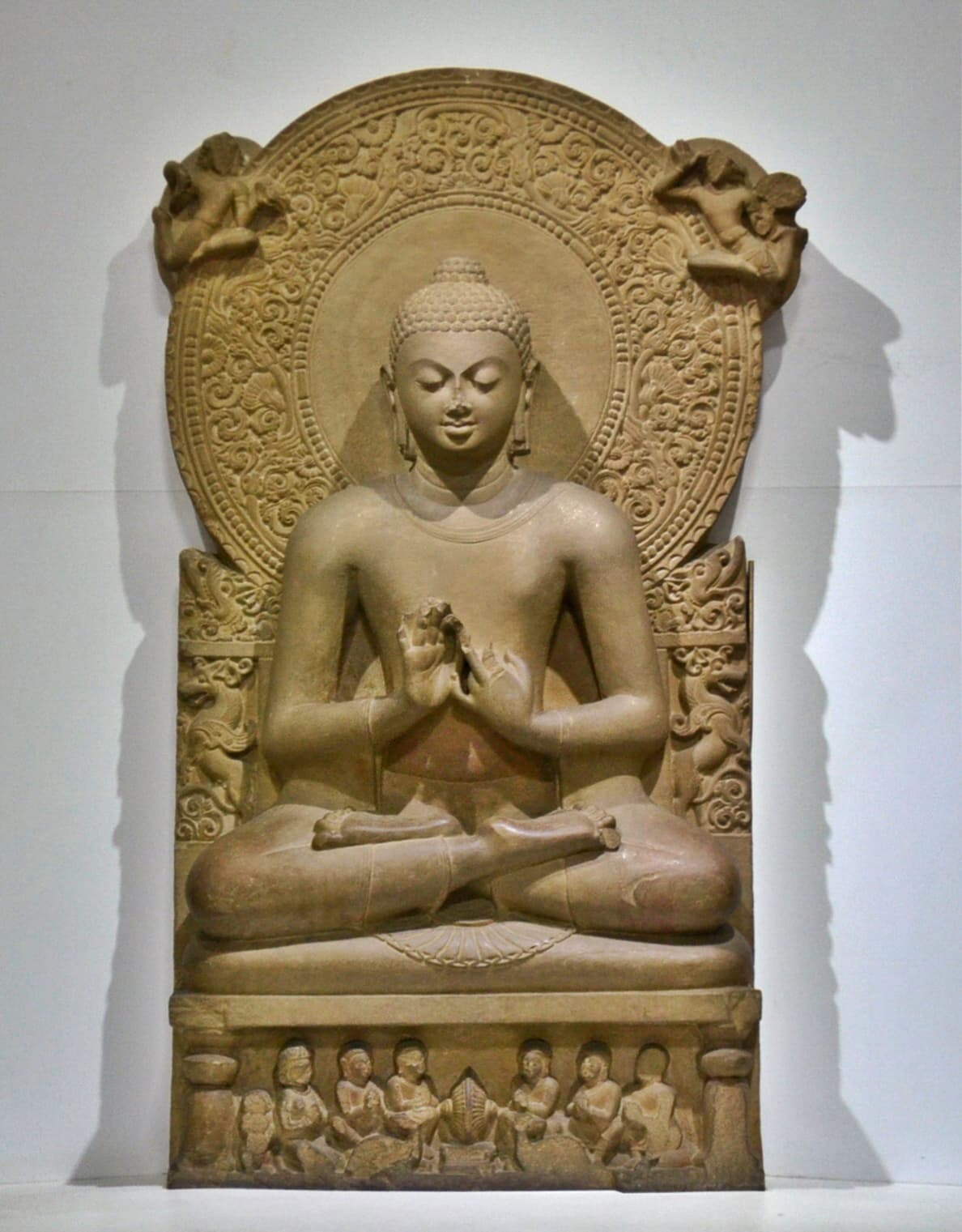
He hesitated to teach. The dhamma was deep, hard to see, against the stream. The Brahma Sahampati, in the canonical account, descended and pleaded with him: "There are beings with little dust in their eyes." He relented. He walked the two hundred and fifty kilometers to Sarnath, found the five ascetics in the Deer Park, and delivered the Dhammacakkappavattana Sutta — the setting in motion of the wheel of the dhamma. The Four Noble Truths. The Middle Way. By the end, the eldest of the five, Kondanna, had become the first sotapanna outside the Buddha himself.
What followed was forty-five years of walking. He established the Sangha — male and (after Mahaprajapati's persistence) female. He ordained his son Rahula at Kapilavastu. He returned to his father's deathbed. He pacified two cousins' kingdoms about to go to war over the Rohini river. He survived an attempt on his life by his cousin Devadatta. The two chief disciples — Sariputta and Mahamoggallana — predeceased him; Sariputta returned to his birth village to teach his mother before his death. The Buddha called him "the marshal of the dhamma."
In his eightieth year, walking north with Ananda, he ate the meal offered by the smith Cunda at Pava and fell ill. He continued as far as Kushinagar, lay down between two sal trees, and died. The Mahaparinibbana Sutta (DN 16) preserves his last words: "vayadhamma sankhara appamadena sampadetha" — all conditioned things are subject to decay; strive on with diligence. The body was cremated. The relics were divided into eight portions among the kingdoms of the region. The wheel he set in motion has not stopped.