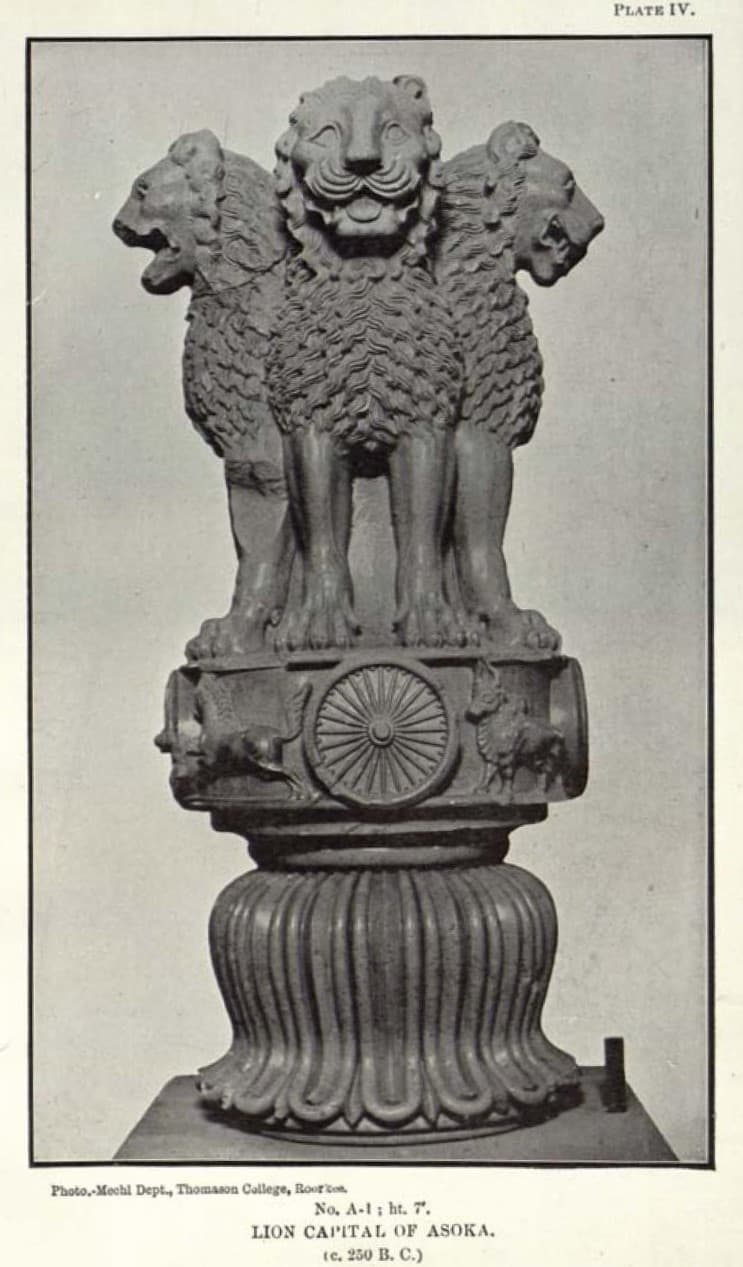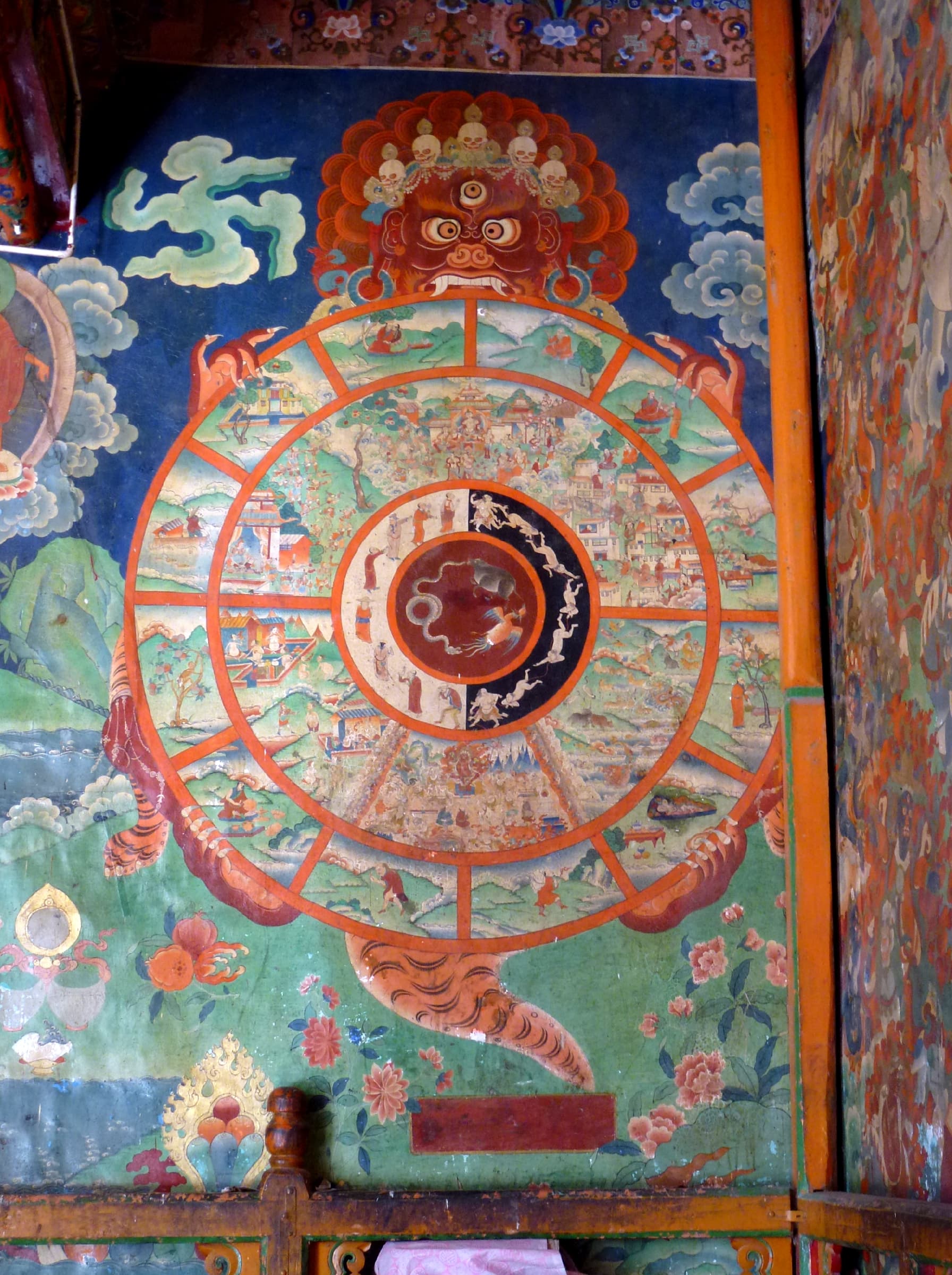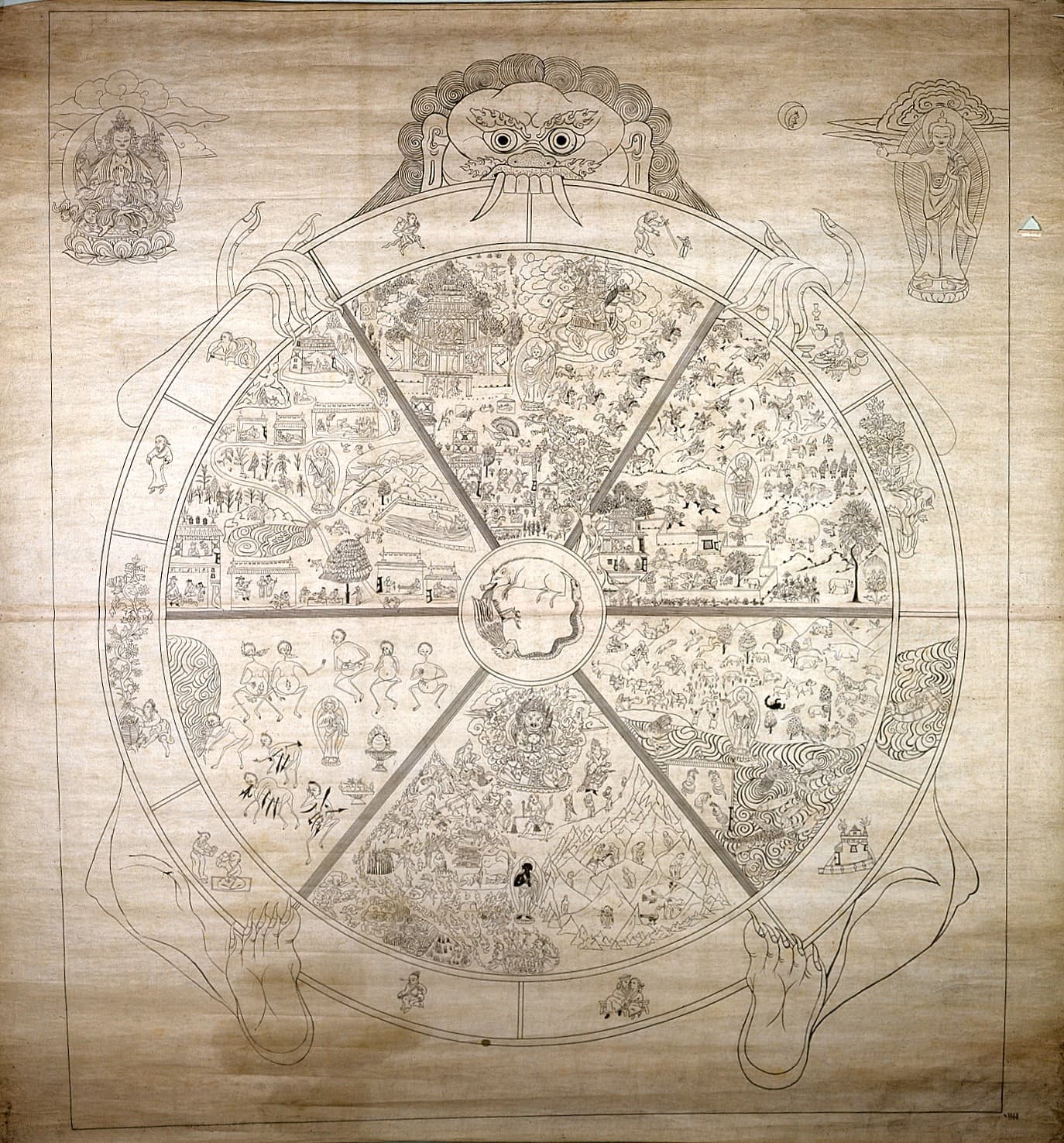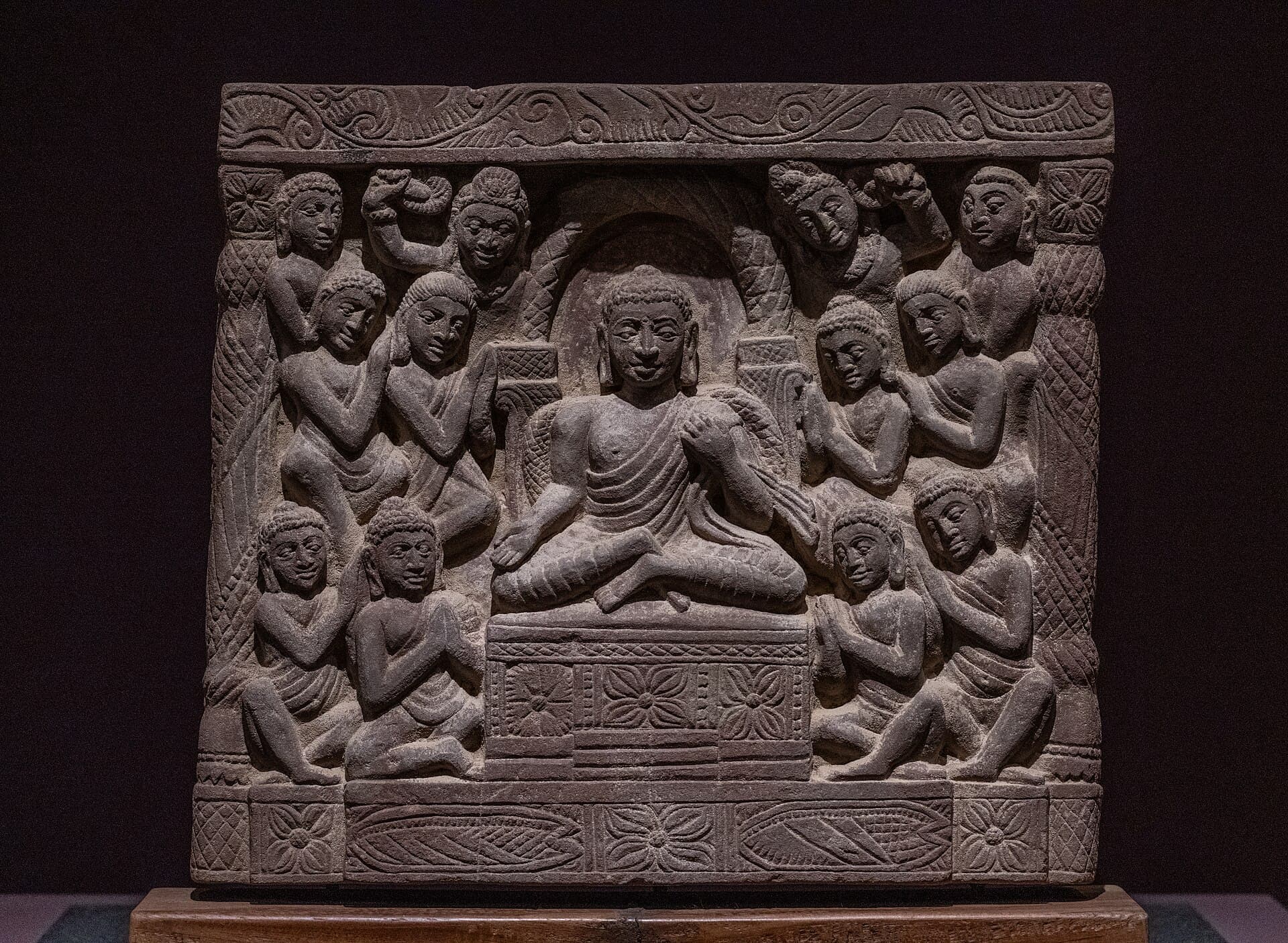
When the Buddha rose from the seat of awakening at Bodh Gaya and walked the two hundred and fifty kilometres west to the deer park at Isipatana, near present-day Sarnath, what he taught the five ascetics he had once practised austerities with was the Four Noble Truths. The discourse is preserved as the Dhammacakkappavattana Sutta — the Setting in Motion of the Wheel of the Dhamma — at Samyutta Nikaya 56.11. It is the first turning of the wheel, and it is the architecture of every teaching that follows.
The truths are framed as a physician's protocol. The first — that there is dukkha — is the diagnosis. The Pali word, often translated as "suffering," carries a wider field of meaning: unsatisfactoriness, stress, the felt friction of conditioned existence. Birth is dukkha, ageing is dukkha, sickness is dukkha, death is dukkha; not getting what one wants is dukkha; getting what one wants and then losing it is dukkha. The five aggregates of clinging — form, feeling, perception, formations, consciousness — are themselves, the Buddha says, dukkha. This is not pessimism. It is precision.
The second truth is the cause: tanha, craving. Threefold — craving for sensual pleasure (kama-tanha), craving for existence (bhava-tanha), craving for non-existence (vibhava-tanha). The fire of dukkha is fed by the fuel of wanting, and the wanting is fed by ignorance (avijja) of the way things actually are.
The third truth is the cure: nirodha, the cessation of craving, and therefore the cessation of dukkha. This is nibbana. The Buddha is explicit in the Dhammacakkappavattana that this cessation is possible — not as a metaphysical hope but as a verifiable end-state, here, in this life, by anyone who follows the path.
The fourth truth is the prescription: magga, the Noble Eightfold Path. Right view, right intention, right speech, right action, right livelihood, right effort, right mindfulness, right concentration. The path is to be developed; the cause is to be abandoned; the cessation is to be realised; the suffering is to be fully understood. The Buddha sets out these four operations — pariññā, pahāna, sacchikiriyā, bhāvanā — as a fourfold task corresponding to the fourfold truth. Each truth has a function. Each function has a verb.
What is striking in the original discourse is the absence of metaphysics. The Buddha does not begin with cosmology or with God or with the nature of the self. He begins with what every human being can verify: that life as it is ordinarily lived is unsatisfying, that the unsatisfaction has a cause, that the cause can be removed, and that there is a method. The structure is empirical, almost clinical. Bhikkhu Bodhi, in his translation and commentary in the Connected Discourses of the Buddha (Wisdom Publications, 2000), calls this the Buddha's "fourfold ennobling reality" — ennobling because to see them clearly is to become noble (ariya), to enter the stream that leads to liberation.
Across traditions, the truths remain the bedrock. The Theravada presents them as the entire frame of the path. The Mahayana, in the Heart Sutra, will famously go on to say that in emptiness "there is no suffering, no origin, no cessation, no path" — a statement not of repudiation but of the second turning, the deepening of the first. Tibetan masters from Tsongkhapa onward have taught that the Four Noble Truths can be understood at progressively deeper levels, each turning of the wheel opening a further horizon onto the same terrain.
What the five ascetics heard in the deer park was not a doctrine to be believed. It was an invitation: to look, to test, to verify. Kondañña, the eldest of the five, is said to have seen the truth as the Buddha spoke. "Whatever has the nature of arising," he said, "has the nature of ceasing." That recognition is the door.