The word nibbāna (Sanskrit nirvāṇa) is a metaphor from the everyday world. It is what happens to a flame when its fuel runs out. The Buddha used this image directly in the Aggi-Vacchagotta Sutta (MN 72). When the wanderer Vacchagotta asks where an awakened being goes after death — east, west, north, south? — the Buddha replies that the question does not apply, as it would not apply to a flame extinguished. The flame did not go anywhere. It went out.
This metaphor sets the basic semantic field. Nirvana is not a place. It is not a heaven. It is not annihilation. It is the extinction of the fires that fuel suffering: greed (rāga), hatred (dosa), and delusion (moha). The Adittapariyāya Sutta — the Fire Sermon, the third discourse, delivered at Gayāsīsa to a thousand ascetic fire-worshippers — is the locus classicus. "All is burning, monks," the Buddha begins, and proceeds through every sense base and every contact and every feeling, all of them burning with the three fires. The path is the cooling, and nirvana is the coolness when the fires are out.
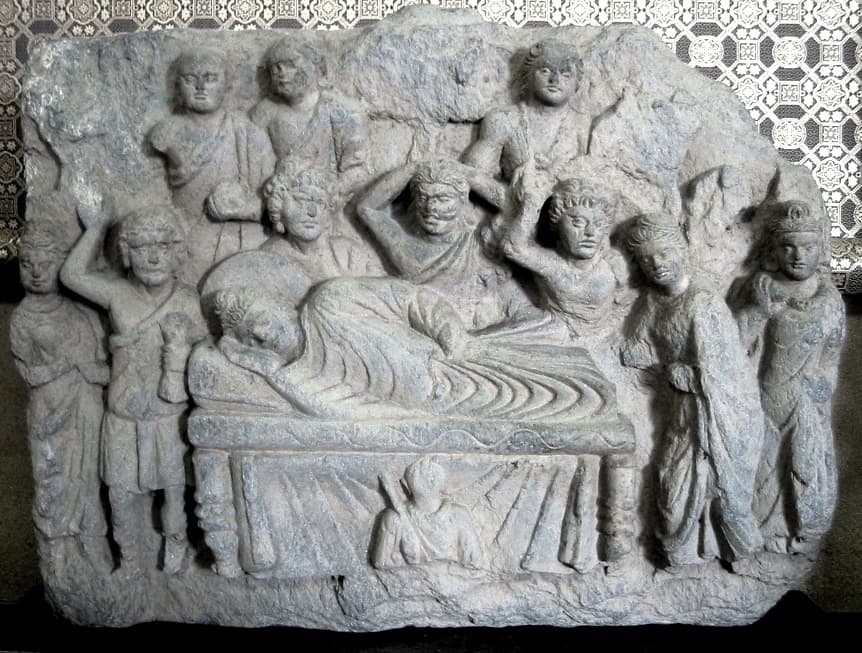
The canon distinguishes two phases. Sa-upādisesa-nibbāna — nirvana "with residue" — is the state of the awakened being in life. The fires are out, the defilements are extinguished, but the five aggregates that constituted the person remain. The Buddha attained this at Bodh Gaya at the age of thirty-five and lived for another forty-five years teaching. An-upādisesa-nibbāna — nirvana "without residue" — is the final passing at death, when the aggregates themselves dissolve and there is no further becoming. This is parinirvāṇa, "complete nirvana," and the Buddha's own passing at Kushinagar is recorded in the Mahāparinibbāna Sutta (DN 16) as the paradigm.
The Theravada presents nirvana as an unconditioned reality — asaṅkhata-dhātu, the unconditioned element. In the Udāna (8.3), the Buddha says: "There is, monks, an unborn, unbecome, unmade, unconditioned. If there were not, monks, an unborn, unbecome, unmade, unconditioned, there would be no escape discernible from what is born, become, made, conditioned." This is among the most cited passages in the canon, the formal assertion that the path leads not only to the absence of suffering but to the realisation of an unconditioned dimension.
What nirvana is not, the Buddha repeatedly insists, is graspable in conceptual terms. In the Mūlapariyāya Sutta (MN 1), even to conceive of nibbana as "mine" or to identify with it is itself a subtle perversion. The Buddha's silence in the Vacchagotta cycle of suttas, when pressed about the metaphysical status of the awakened one after death, is doctrinal silence: the categories do not apply.
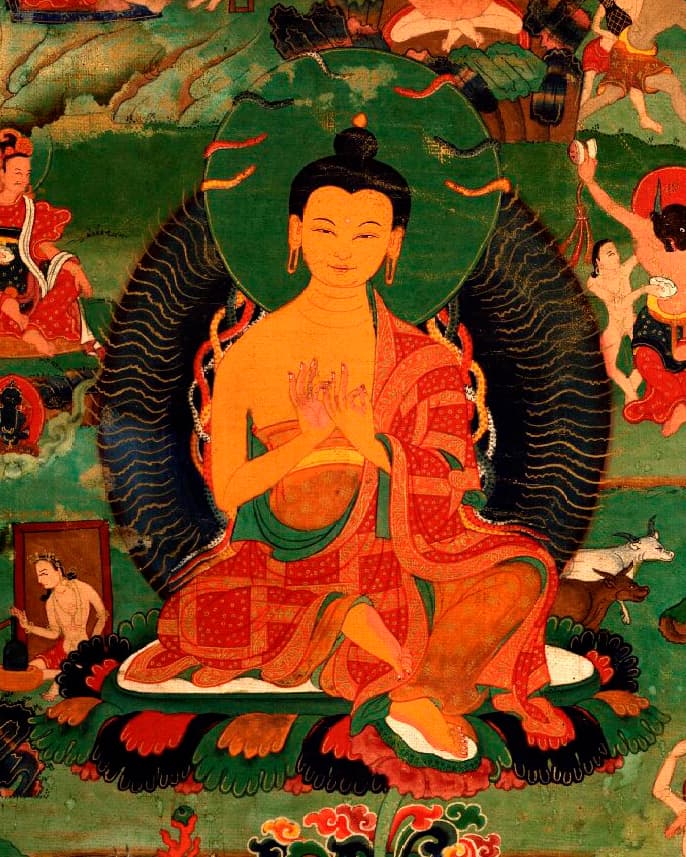
The Mahayana extends and reorients the doctrine. In the Heart Sutra and the broader Prajñāpāramitā corpus, samsara and nirvana are no longer two — they are non-dual, both empty of inherent existence. Nāgārjuna writes in chapter 25 of the Mūlamadhyamakakārikā: "There is no distinction whatsoever between saṃsāra and nirvāṇa; the limit of nirvāṇa is the limit of saṃsāra; between the two there is not even the slightest difference." This is not a denial of nirvana but a deepening: nirvana is not somewhere else, beyond the world; it is the world seen rightly, emptied of the projections that constituted it as samsara.
In the Vajrayana, the teaching folds further. The "natural state" — rigpa in Dzogchen, mahāmudrā in the Kagyu — is recognised as the always-already-present awakened nature, never separate from the practitioner. Mingyur Rinpoche, in The Joy of Living, presents the same recognition in clinical language: nirvana is what is left when the mind stops construing.
What the traditions agree upon is what nirvana is not. It is not death. It is not non-existence. It is not a reward. It is the cessation of the cessation-needing — the extinction of the fires that made cessation necessary. The Buddha's last word, the canon reports, was a reminder: vayadhammā saṅkhārā, appamādena sampādetha. "All formations are subject to vanishing. Strive on with diligence."