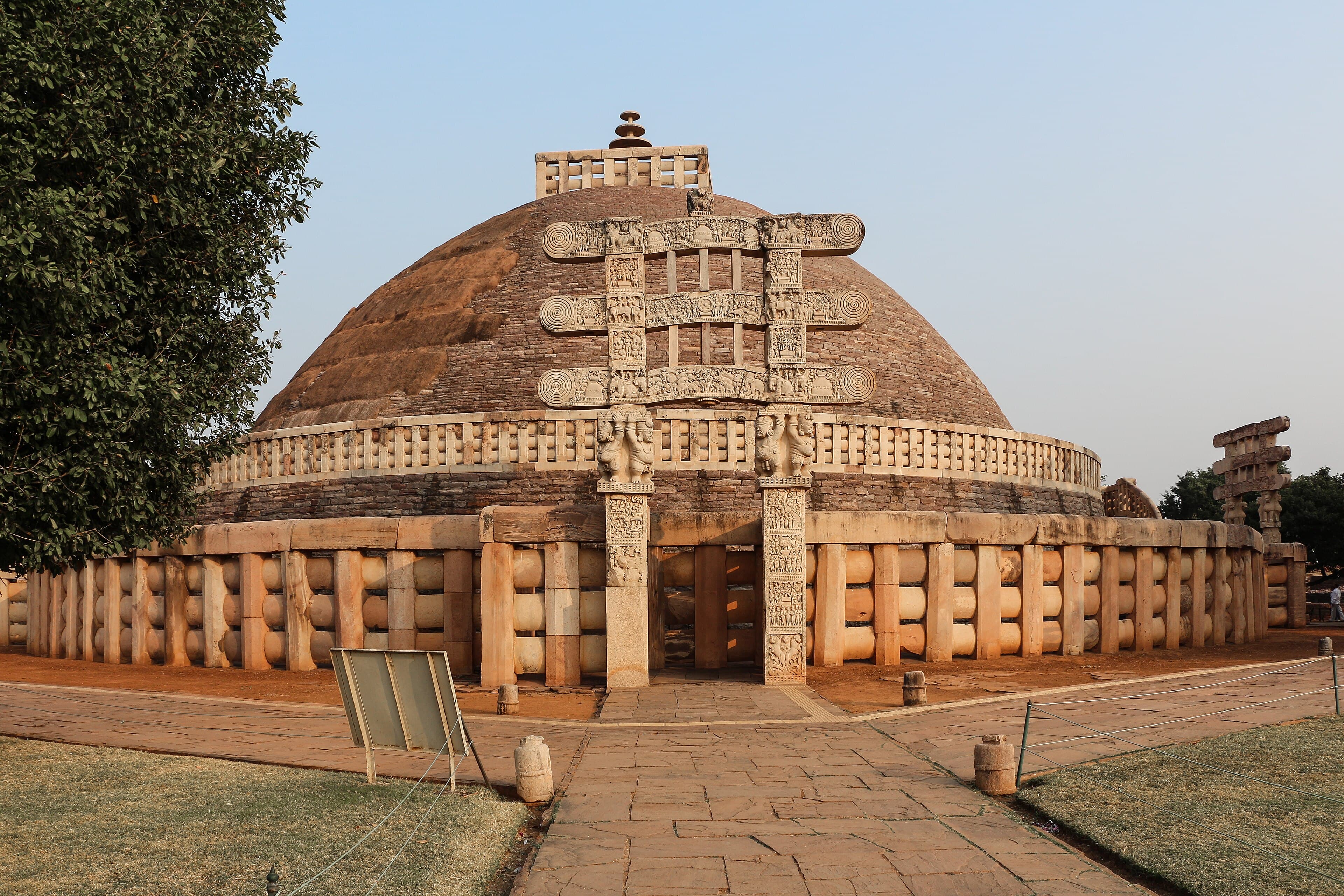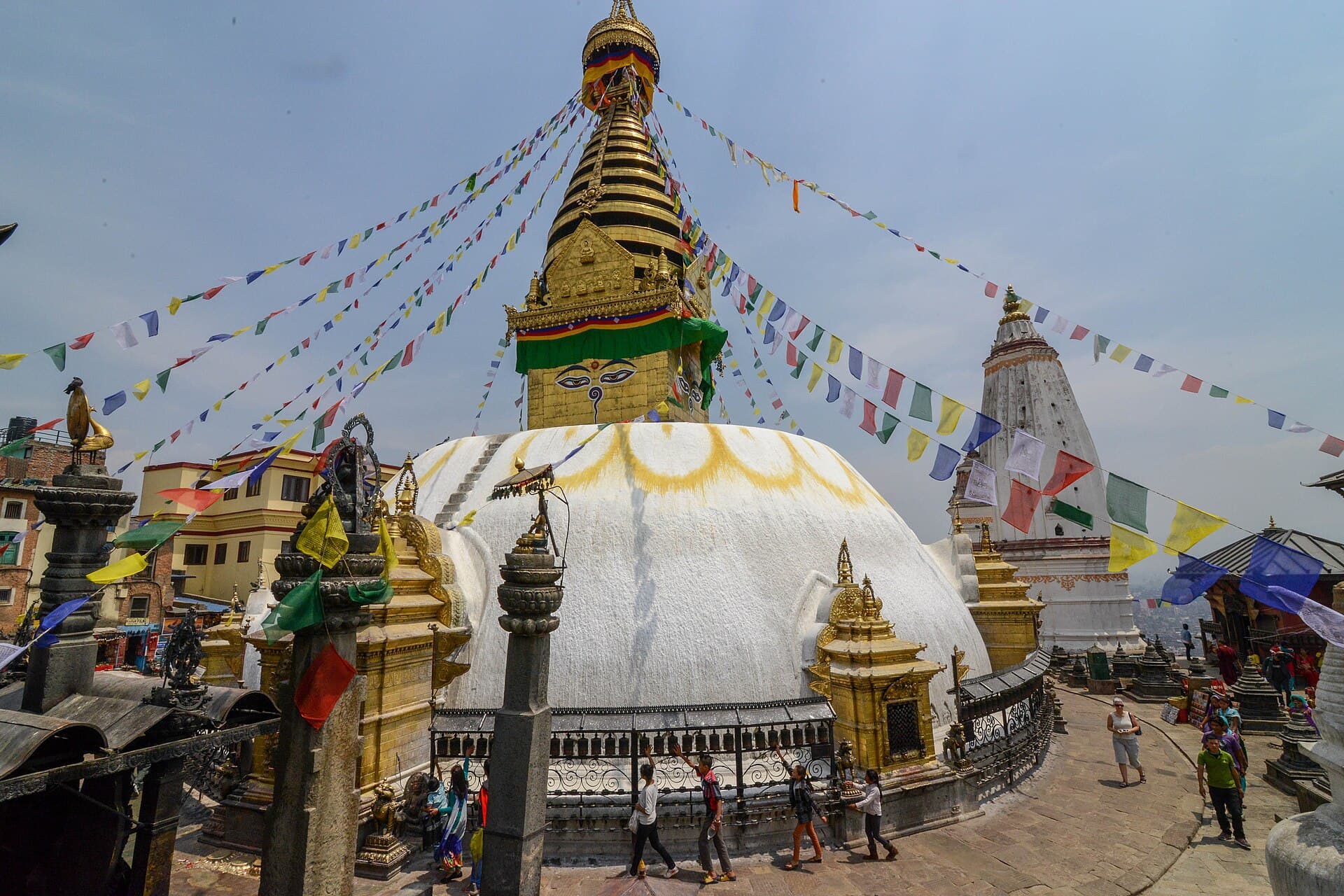
Pradakshina — from the Sanskrit pra (forward) + dakṣiṇa (right, south) — is the practice of walking clockwise around a sacred object. To circumambulate is to keep one's right side toward the sacred — a gesture of respect inherited from pre-Buddhist Vedic practice and adopted into Buddhism from its earliest days. The stupa, with its hemispherical dome containing the relic, is the archetypal object of pradakshina; to walk around the stupa is to walk around the Buddha himself, present in the relics.
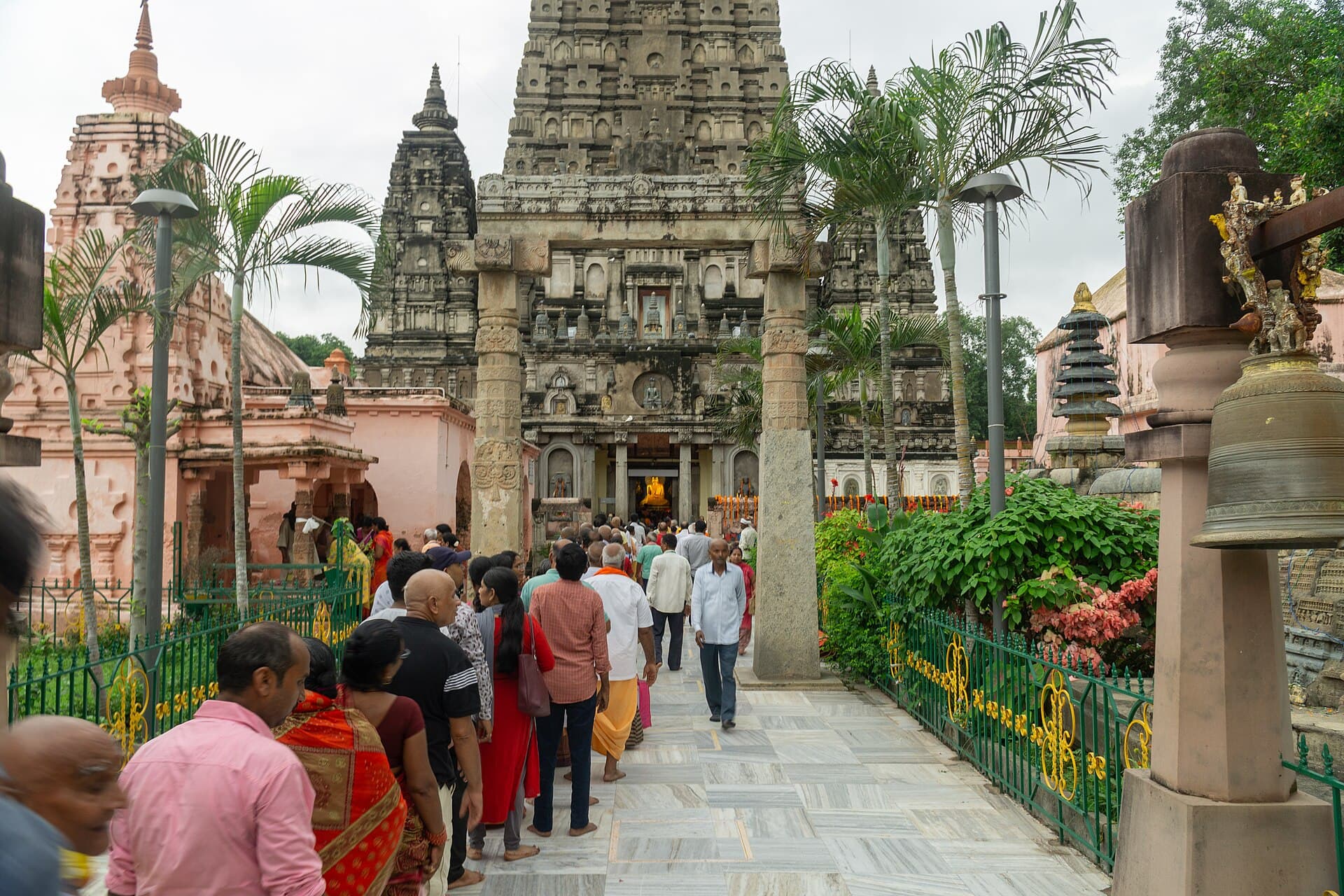
The practice is documented in the earliest Buddhist art. The Bharhut stupa (2nd century BCE) shows reliefs of devotees circumambulating; the Sanchi gateways (1st century BCE) depict pradakshina as one of the central devotional acts; the Ashokan pillars are positioned to allow circumambulation. The path itself — the pradakshina-patha — was often raised, paved, lined with images, designed to slow the walker down and turn the act into a meditation. At Bodh Gaya, the path circles the Mahabodhi temple and the bodhi tree; the Buddha, after his enlightenment, is said to have spent the second week of his post-enlightenment retreat walking pradakshina around the tree in gratitude. The shrine that marks this second week is called the Animeshlochan Chaitya — 'the unblinking gaze.'
At Boudhanath, the great stupa of Kathmandu, pradakshina is a daily practice for the surrounding community. From dawn through evening, the kora (Tibetan: skor ba) — the same practice in Tibetan — is performed by streams of practitioners, each holding mala or prayer wheel, each murmuring Om Mani Padme Hum. The Boudhanath kora is one of the most concentrated displays of contemplative practice on earth — thousands of bodies moving in slow clockwise procession around the stupa whose eyes face all four cardinal directions.
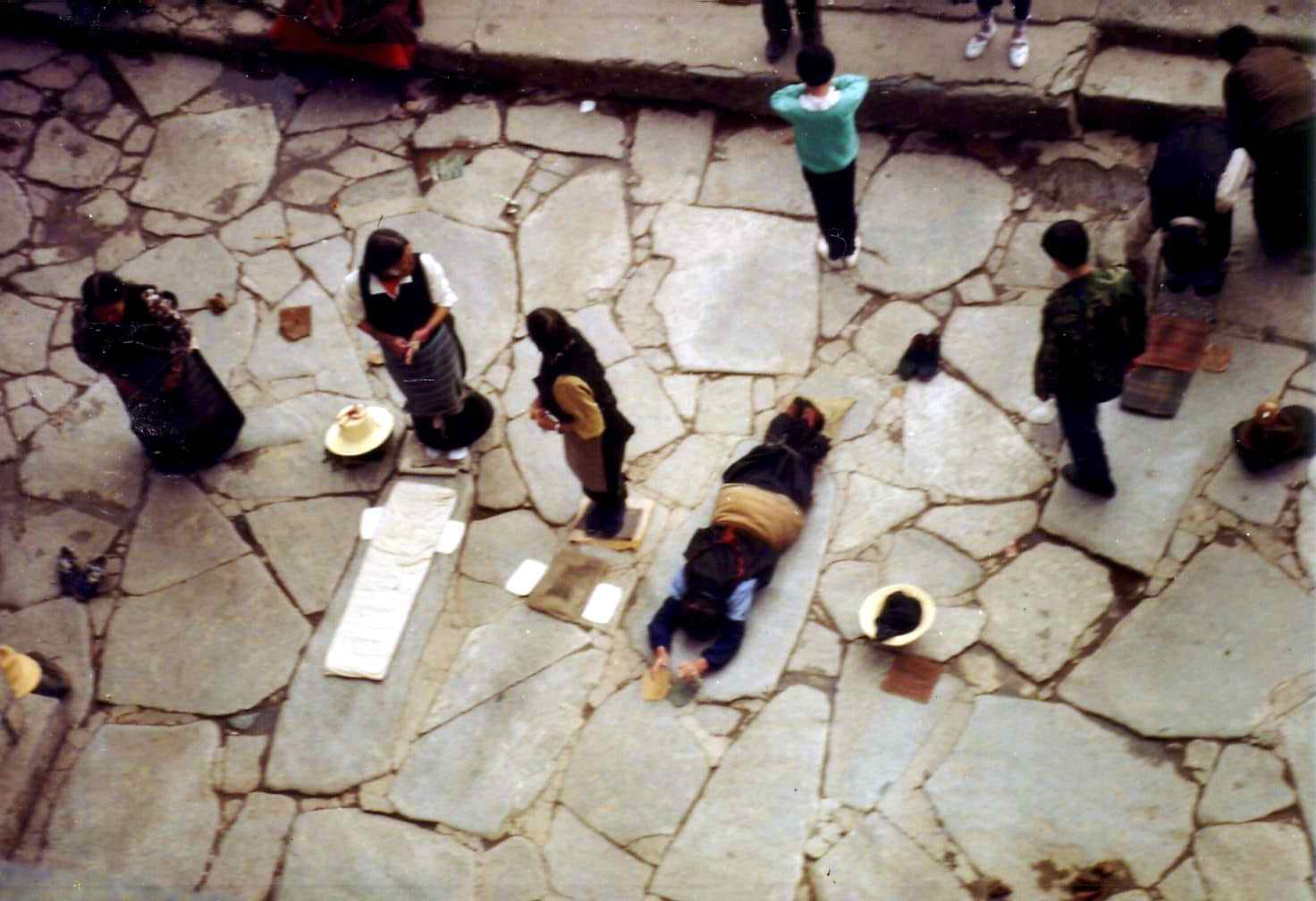
In Tibet, pradakshina takes its most extended form in pilgrimage around holy mountains. The kora around Mount Kailash — sacred to Hindus, Buddhists, Jains, and Bonpos — is fifty-two kilometers, traversed in three days by ordinary pilgrims and in one day by the strong. The most devoted complete the kora as a 'full-prostration kora' — measuring the entire mountain in their body's length, prostrating, rising, taking three steps to where the head touched, prostrating again. A full-prostration kora of Kailash takes three to four weeks. The merit, the practitioners say, is incalculable.
In every tradition, the principle is the same. Devotion that remains in the head dissipates; devotion that takes the body into motion abides.