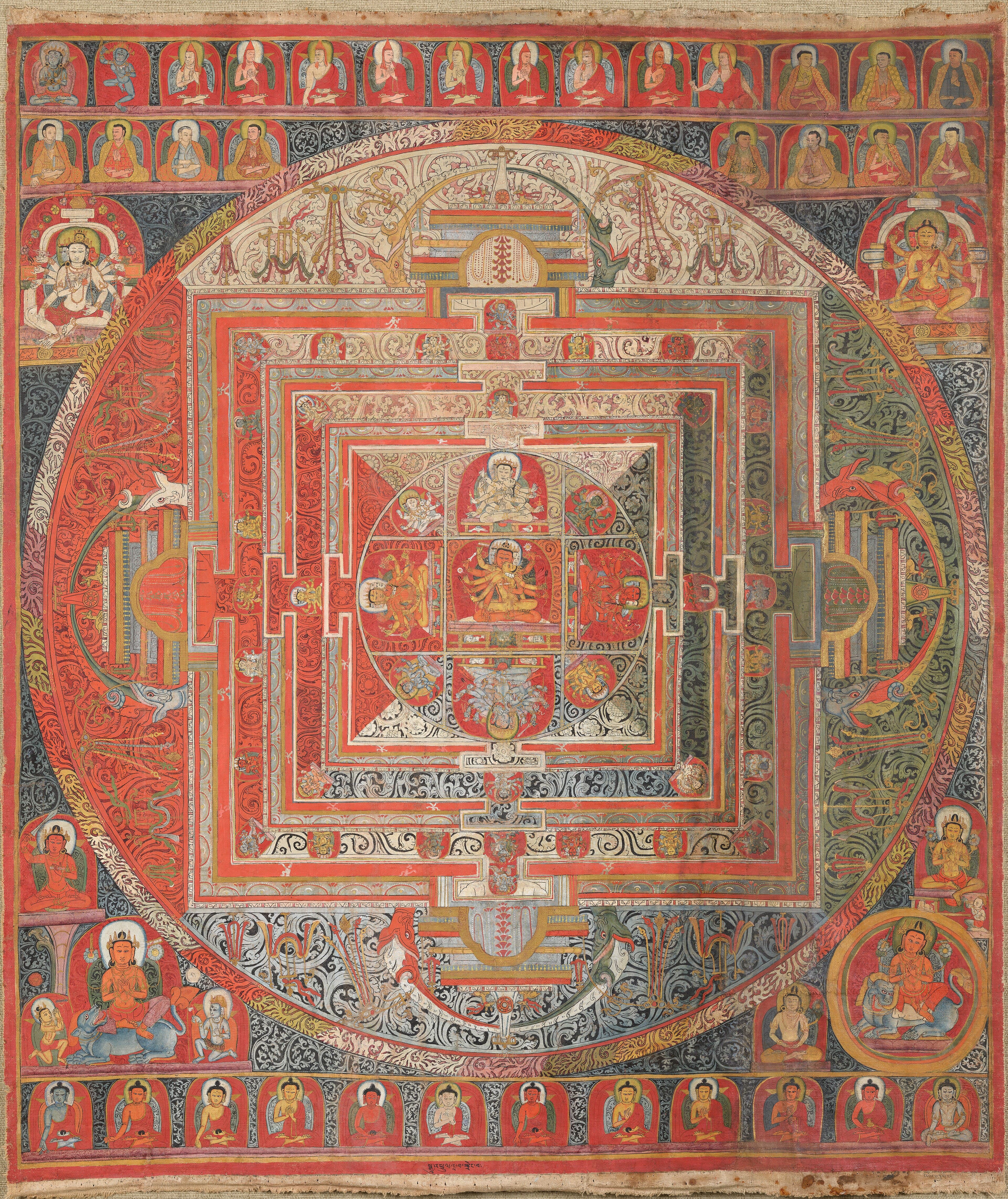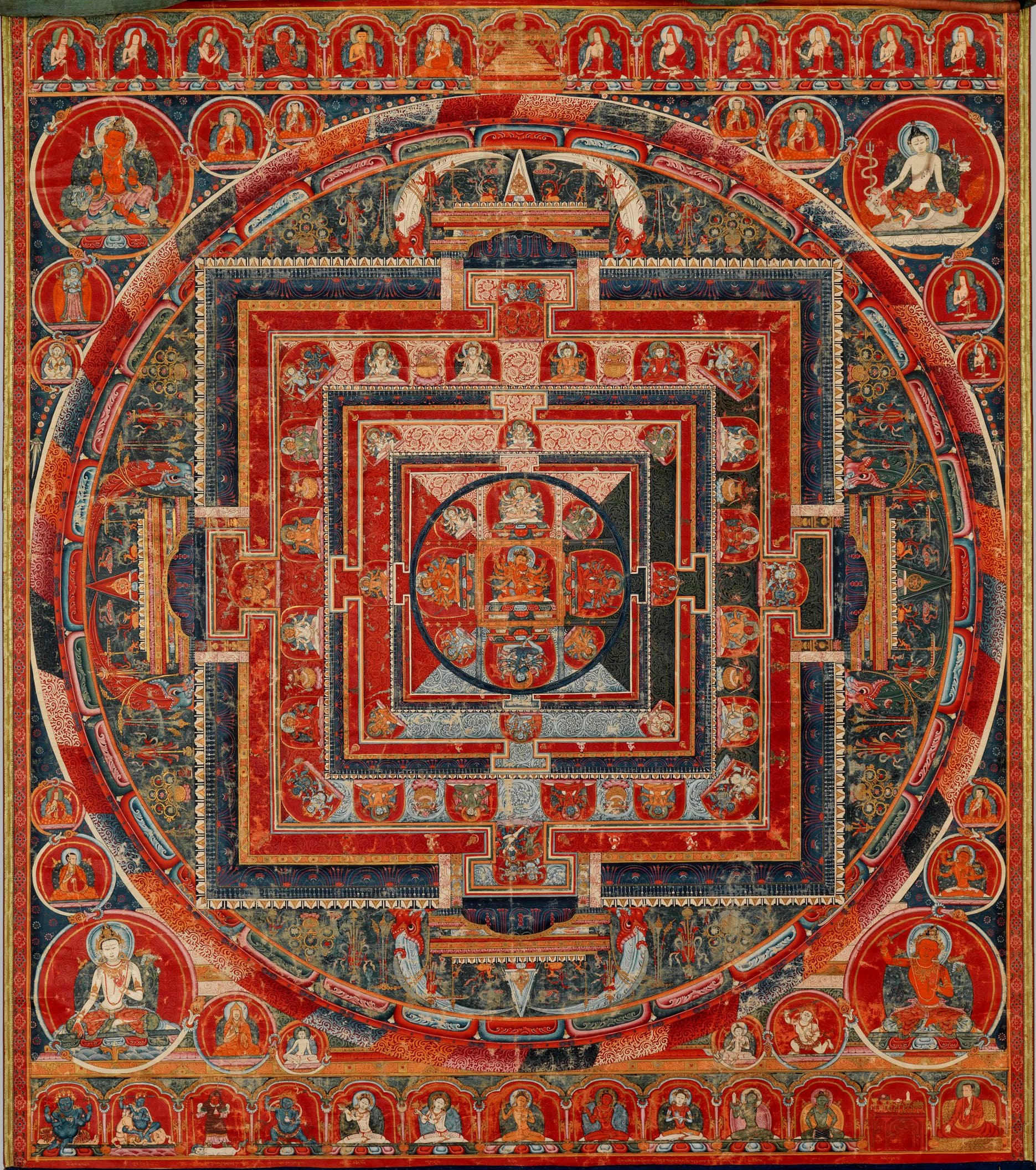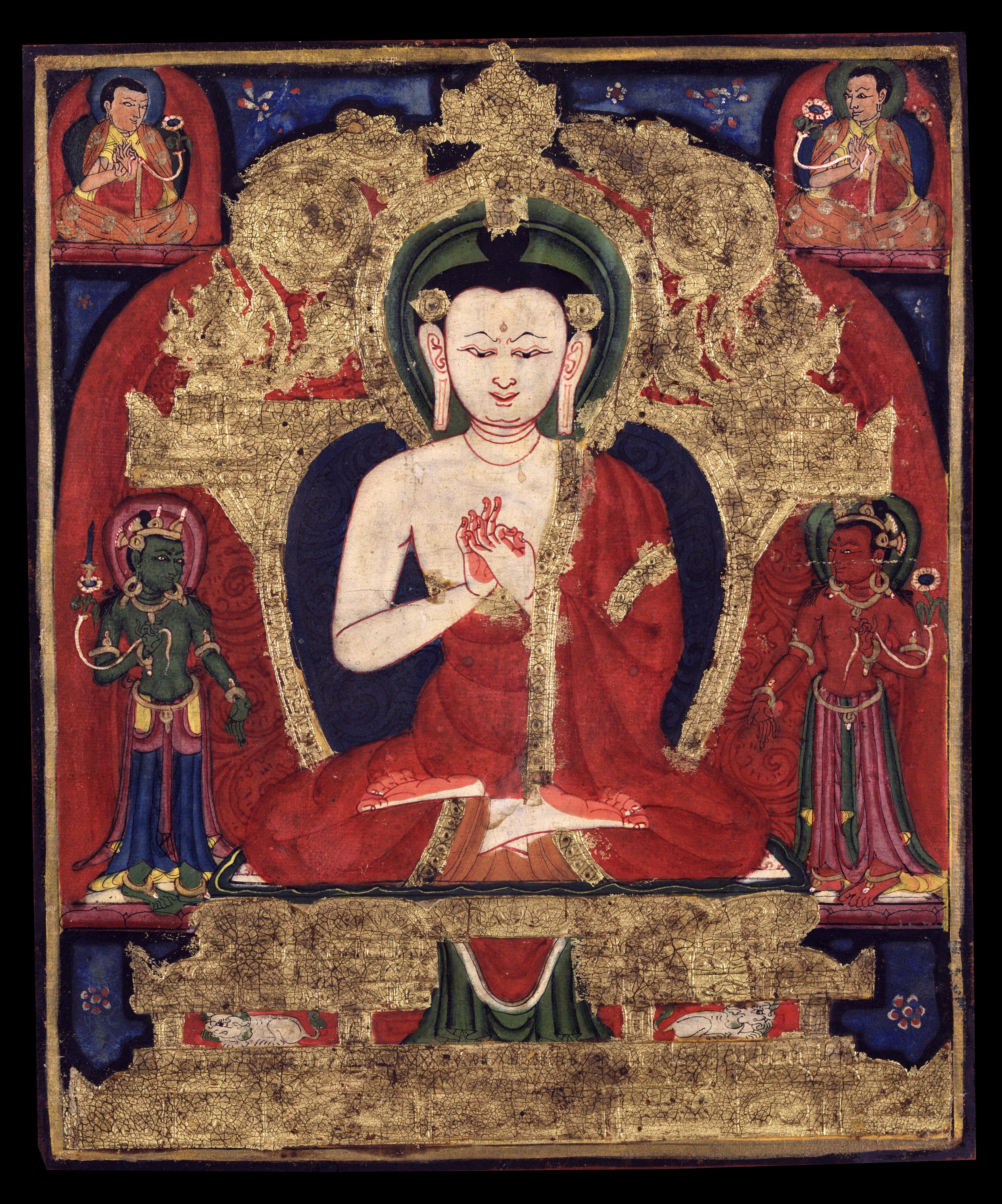
The thangka — Tibetan for 'something rolled up' — is the painted scroll central to Tibetan and Himalayan Buddhist practice. A thangka is a painting on cotton or silk, traditionally framed with brocade borders, that can be rolled and unrolled for transport. The form developed from the Indian pata (painted cloth) tradition that the early Tibetan masters encountered in Nalanda and Vikramashila in the 7th-12th centuries. As tantric Buddhism flourished in India and was transmitted to Tibet, the thangka traveled with the texts — the visualization practices of the tantras required precise iconographic models, and the thangka was the most portable possible form for those models.
The iconography of thangka is strict. Every figure has specific proportions (set out in the canonical Indian iconometric texts and elaborated in Tibet by Menla Dondrup, the 15th-century founder of the Menri school), specific colors (corresponding to direction, family, and function), specific implements (vajra, bell, lotus, sword, skull cup, drum, each with its own symbolic register), specific number of arms and heads (Avalokiteshvara as four-armed, as eleven-headed, as thousand-armed), and specific surrounding figures (the lineage gurus above, the protector deities below, the retinue around). A thangka painter trains for years before being permitted to paint a major deity. The training begins with auspicious symbols (the eight auspicious signs), proceeds to small figures, and only after a decade or more does the apprentice paint a yidam (a tantric deity for visualization practice) on his own.
The materials are traditional. The canvas is cotton primed with a gesso-like preparation. The pigments are ground from minerals — lapis lazuli for the blue of Akshobhya, malachite for the green of Tara, cinnabar for red, gold leaf for the haloes and ornament. The binder is animal-skin glue or, in some traditions, a vegetable-based resin. The brushes are tipped with marmot or cat hair, often hand-cut to a single hair for the finest line work. A major thangka — a Kalachakra mandala, for example, or a thousand-armed Avalokiteshvara — can take a master painter a year or longer to complete.
The four major regional schools — Menri (15th c, central Tibet), Khyenri (15th c, central Tibet), Karma Gardri (16th c, Kham), and Newar (Kathmandu Valley, oldest, the source from which the Tibetan schools developed) — each have distinguishing stylistic conventions. Newar thangka (called paubha in Newari) tends toward more elaborate ornament and a slightly more naturalistic figure. Karma Gardri leans toward landscape and a more open compositional field. Menri is the most iconographically conservative.
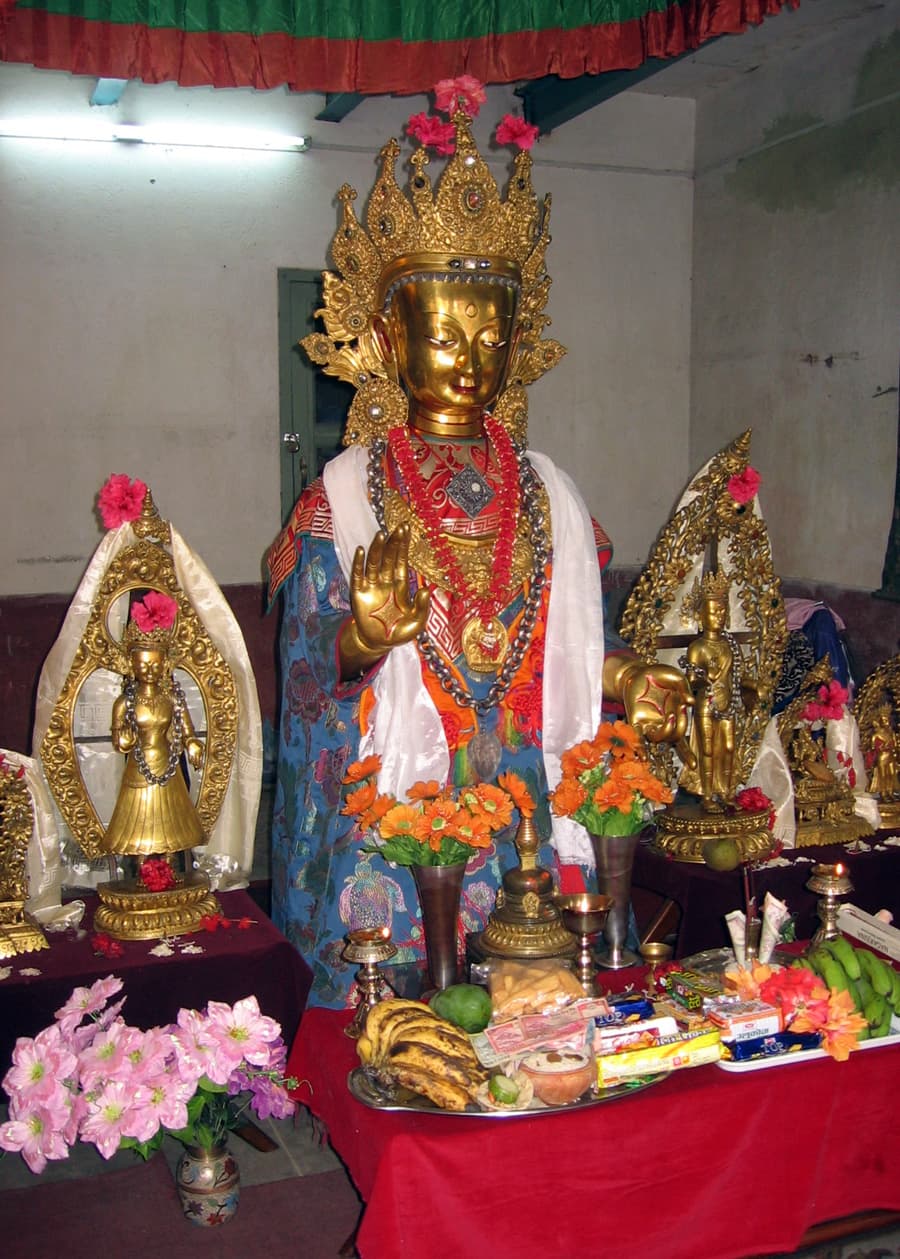
A thangka is consecrated when finished. The painter writes the syllables OM AH HUM behind each of the painted figures, and a lama performs the consecration ritual that 'invites' the deity to inhabit the image. From that moment, the thangka is not a representation but a presence — to bow before the painted Vajrasattva is to bow before Vajrasattva.
The practice of using a thangka is structured. The practitioner sets the thangka on a shrine, makes offerings of water, incense, light, and flowers, recites the sadhana text, and, holding the thangka in awareness, generates the deity in visualization with the iconographic precision the thangka itself models. The thangka is the support. The practice is the journey from looking-at the image to becoming-the-image.