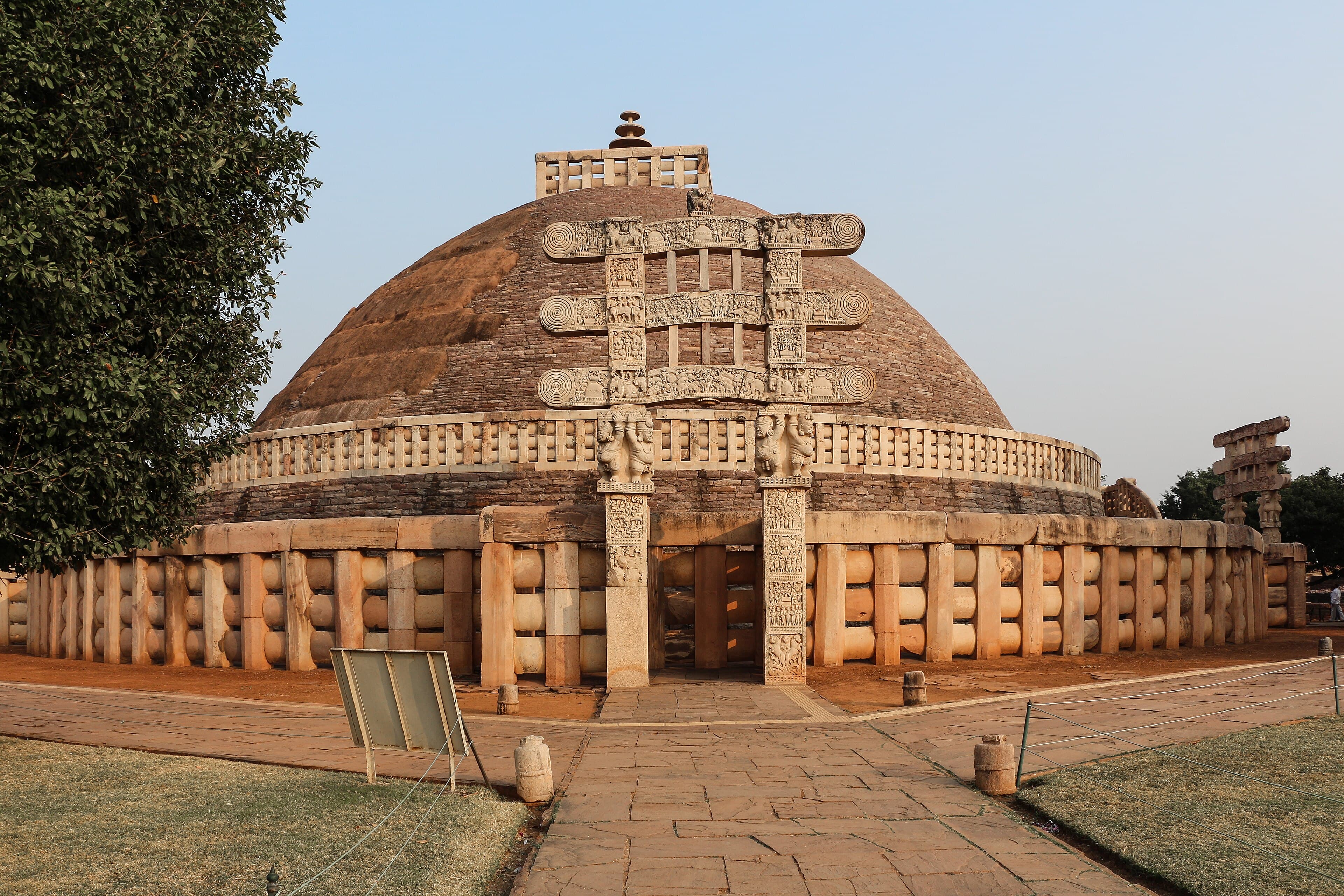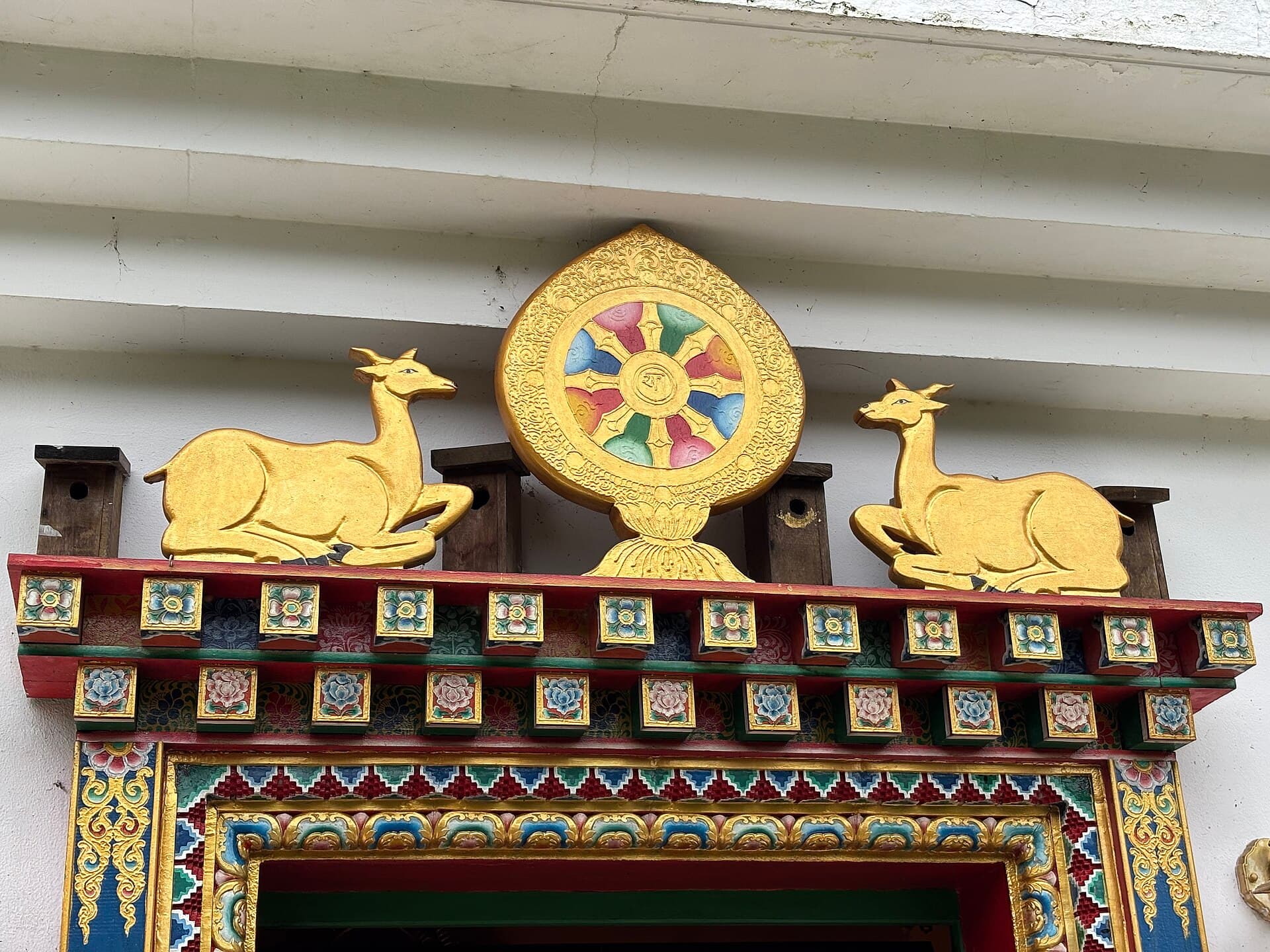
For the first three centuries after the Buddha's death, Buddhist art did not depict him in human form. The earliest stupas — Bharhut, Sanchi, Amaravati — represent his presence through symbol: the empty throne, the bodhi tree, the dharma wheel, the footprints, the parasol. To carve the Buddha as a human figure was, it seems, considered inappropriate, perhaps because he had transcended the human condition, perhaps because the early sangha had a different aesthetic discipline.
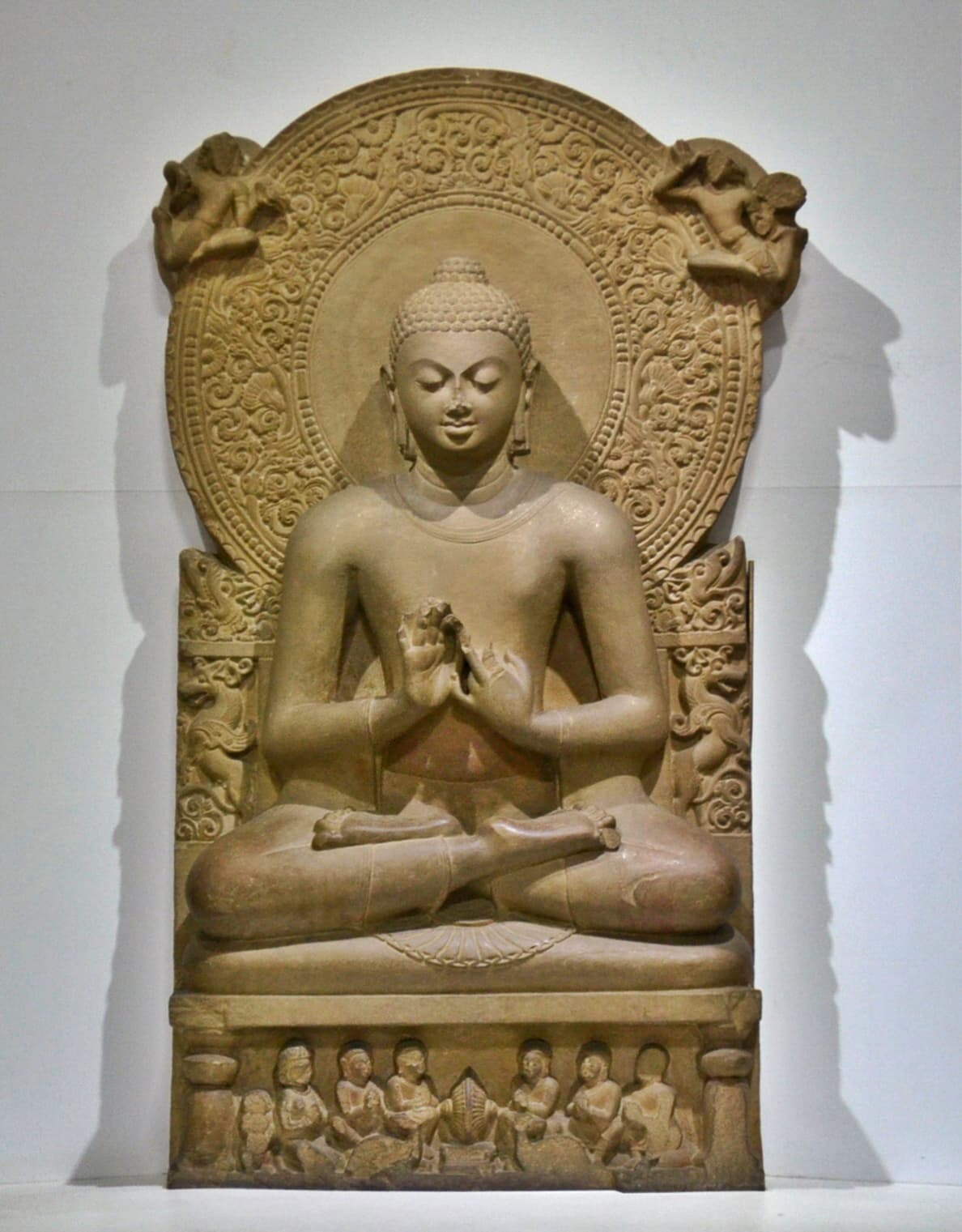
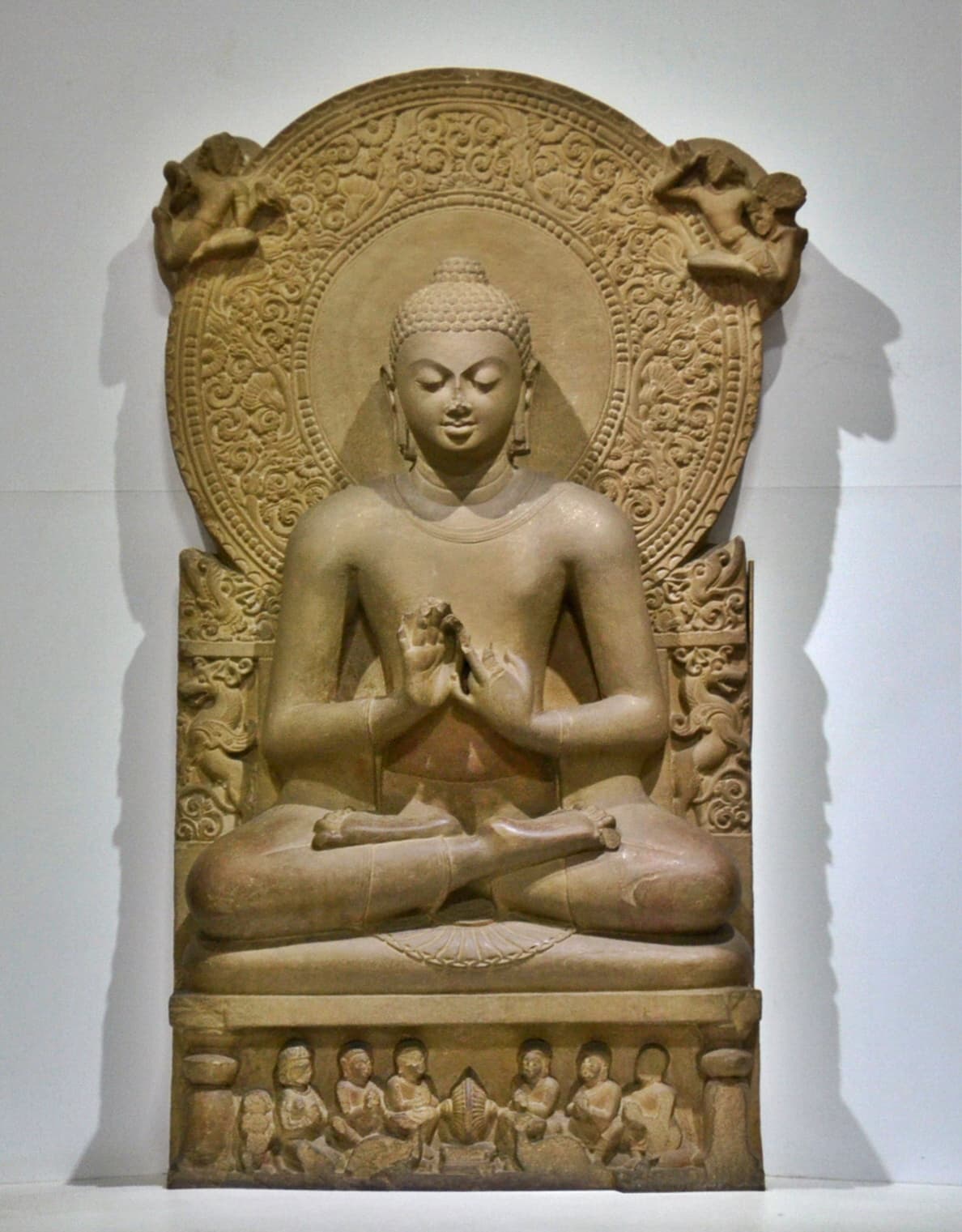
This changed in the 1st-2nd centuries CE. In two regions almost simultaneously — Mathura on the Yamuna and Gandhara in the northwest, the latter under heavy Hellenistic Greek influence from Alexander's successor kingdoms — sculptors began to carve the Buddha in human form. The Gandharan Buddha, with his wavy hair, draped Roman-style robes, and Apollonian features, looks Mediterranean. The Mathuran Buddha, with shorter snail-curl hair, simpler robes, and a fuller Indian face, looks Indian. The two traditions converged in the Gupta period (4th-6th centuries) into the classical Indian Buddha image that has structured every Buddhist iconographic tradition since.
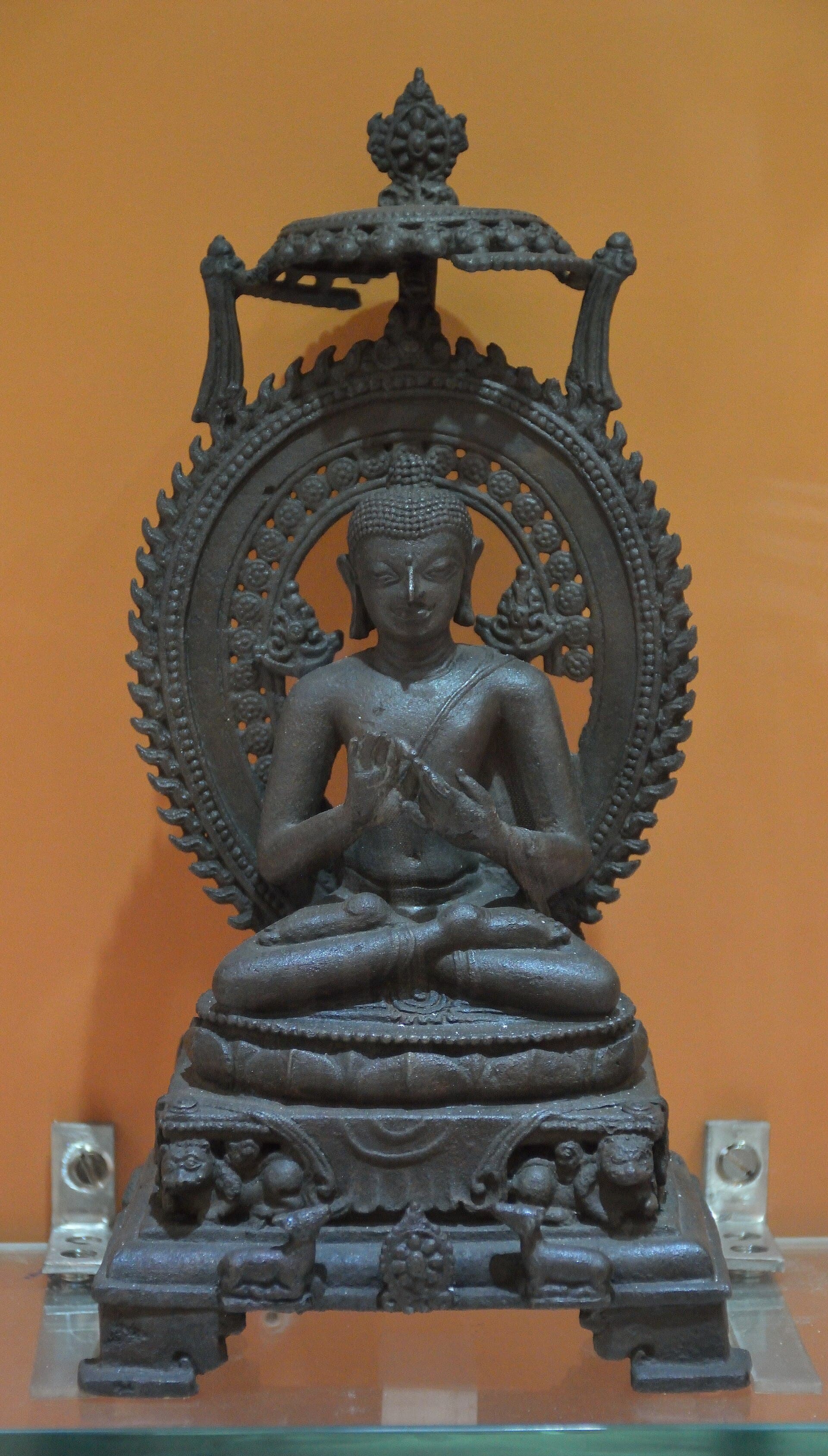
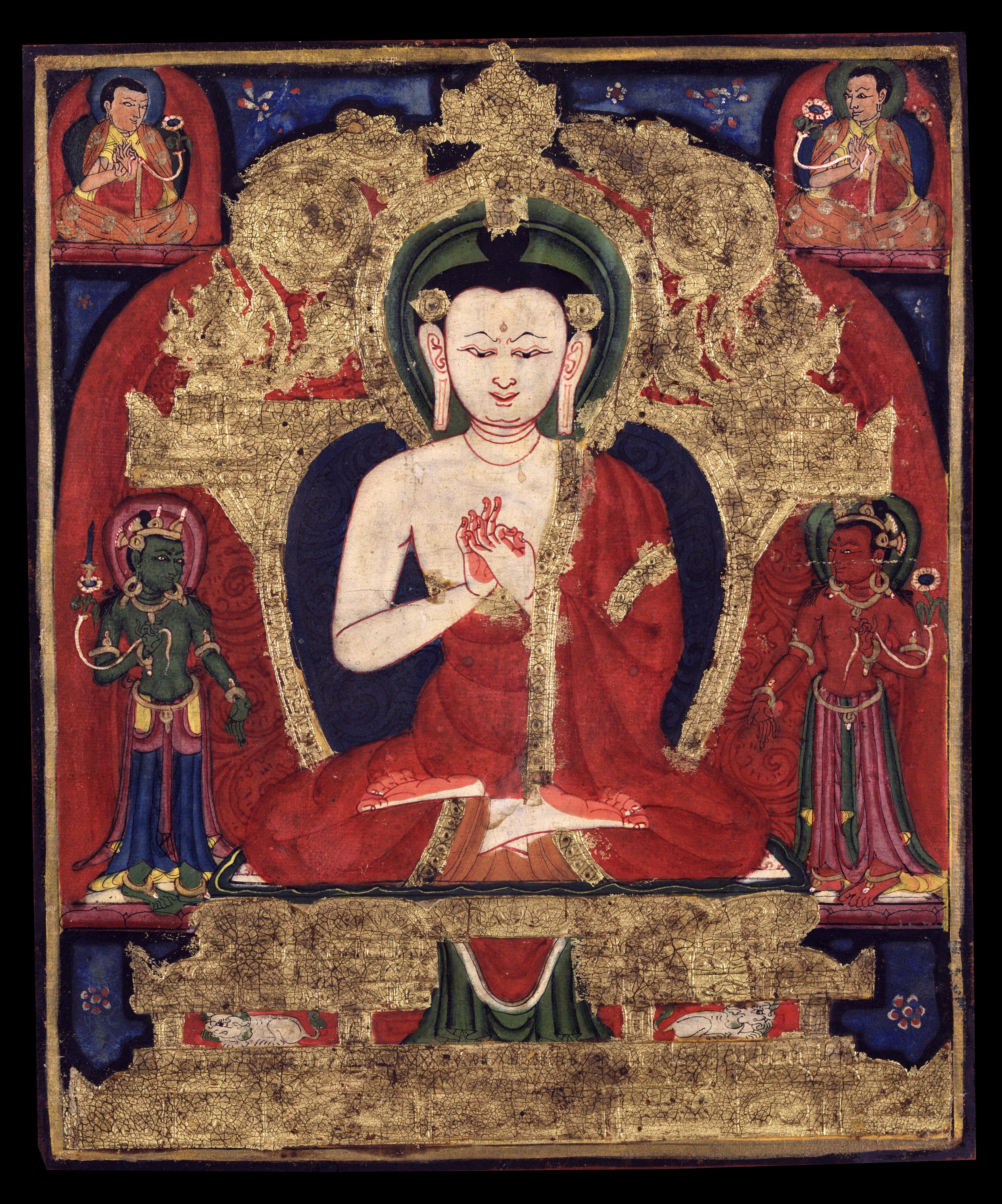
The canonical form is structured by the thirty-two marks of a great being (mahapurusa-laksana), a list elaborated in the Lakkhana Sutta (DN 30) and across the Mahayana sutras. The marks include: long fingers; arched feet; webbed digits; a wheel pattern on the soles; smooth and golden skin; the body proportioned by the cubit-rule; the ushnisha (cranial protuberance suggesting expanded wisdom); the urna (white tuft between the eyebrows); long earlobes (the legacy of princely earrings, now empty); forty teeth; a long tongue; the divine voice; dark blue eyes; eyelashes like an ox; the thousand-spoked wheel on the foot. Not all marks are visible in every image, but the major ones — the ushnisha, the urna, the elongated earlobes, the half-closed contemplative eyes, the gentle smile — are universal.
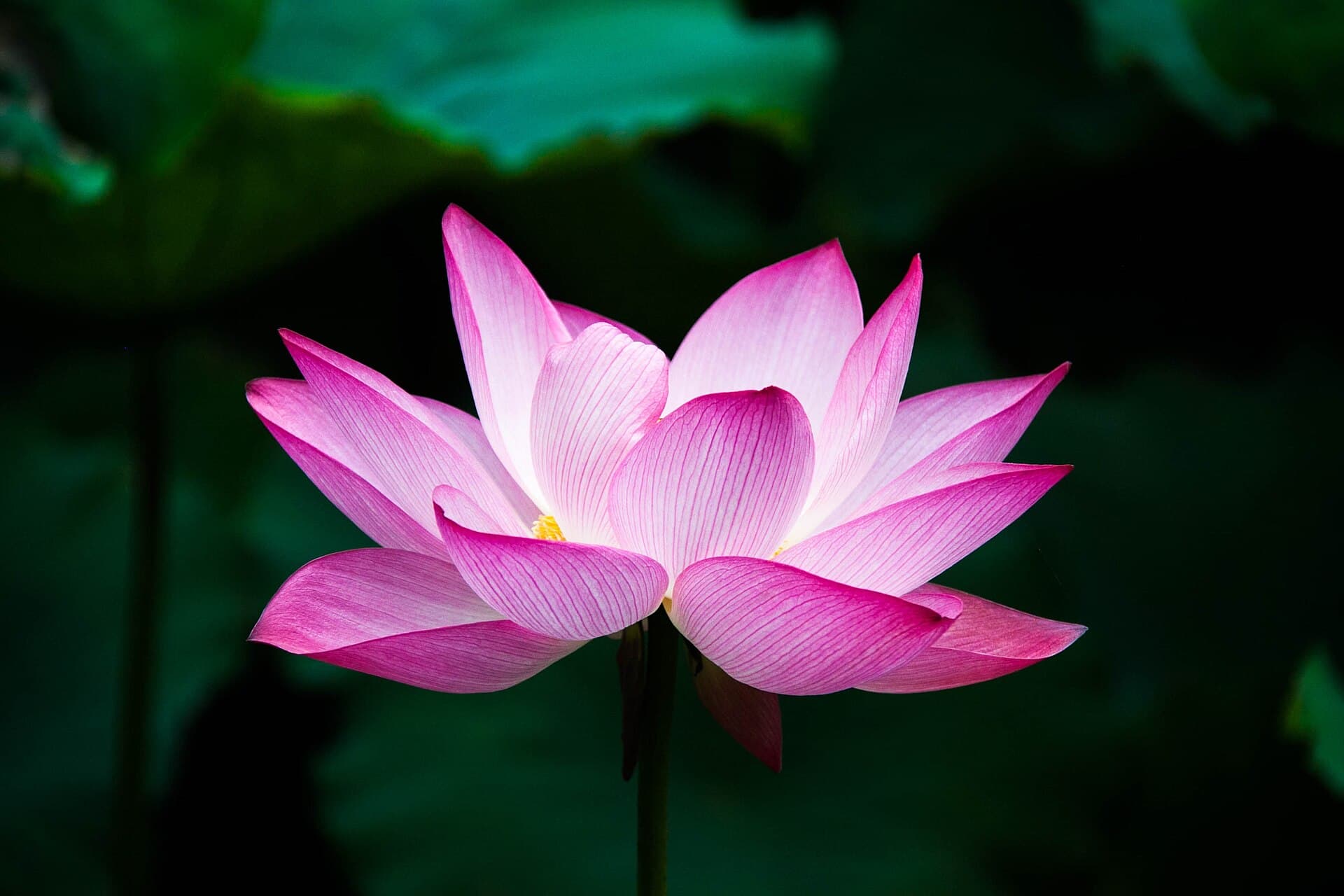
The Buddha is depicted in several canonical postures: seated in lotus posture (padmasana, the meditative posture associated with Bodh Gaya); seated in a regal posture with one foot down (rajalilasana, the 'royal ease'); standing erect (sthanaka); walking; or reclining (parinirvana, the lying-down posture of death). Each posture is paired with a mudra (the hand gesture), and the combination of posture + mudra identifies the specific biographical or doctrinal moment depicted.
The robes are equally canonical: the Buddha wears three robes (the antaravasaka, uttarasanga, and sanghati), simply draped, with one shoulder bare or both shoulders covered depending on the tradition (the Theravada bhikkhu typically bares the right shoulder; the Mahayana Buddha often has both covered). The robes' color varies — saffron in Theravada, ochre or red in Mahayana, often elaborately patterned in Tibetan painted images.
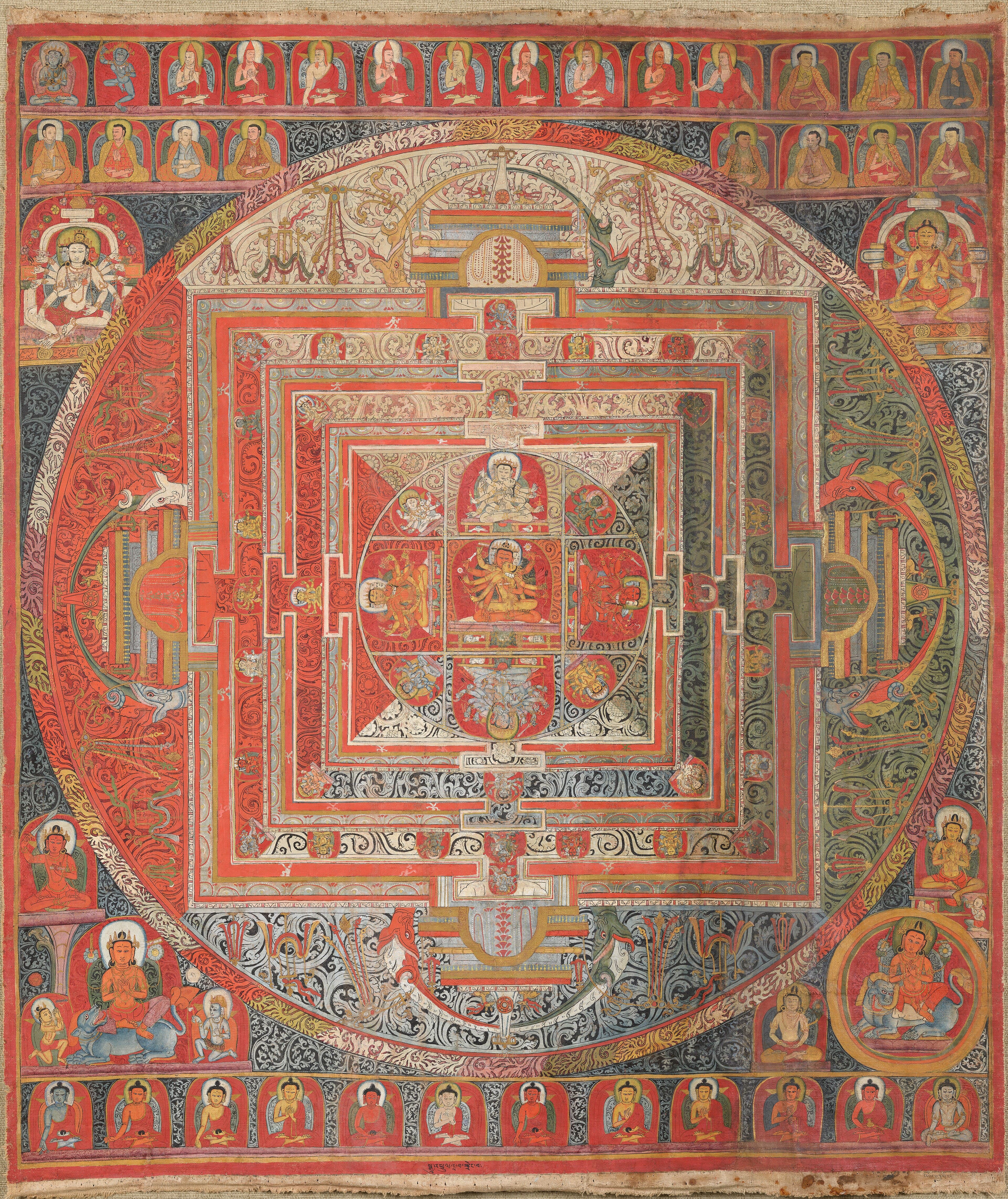
As the iconographic tradition develops, regional variation flourishes. The Sri Lankan Buddha (the Avukana standing Buddha, 5th c CE) is tall, slender, with a particular elongated proportion. The Thai Buddha of the Sukhothai period (13th-14th c CE) emphasizes a flame-like ushnisha and a particular elegance of finger and toe. The Tibetan Buddha, painted in thangka, is highly ornamented when depicted as Sambhogakaya (the celestial form) but plainer when depicted as Nirmanakaya (the historical form). The Japanese Buddha of the Kamakura period is monumental and contemplative; the Korean Buddha is austere; the Chinese Buddha is rounded and serene.
Beneath the regional variation, the canonical form persists. To know how to recognize a Buddha image — the ushnisha, the urna, the elongated earlobes, the mudra, the lotus throne — is to be able to read the iconographic vocabulary of two thousand years of Buddhist art in every country it touched.