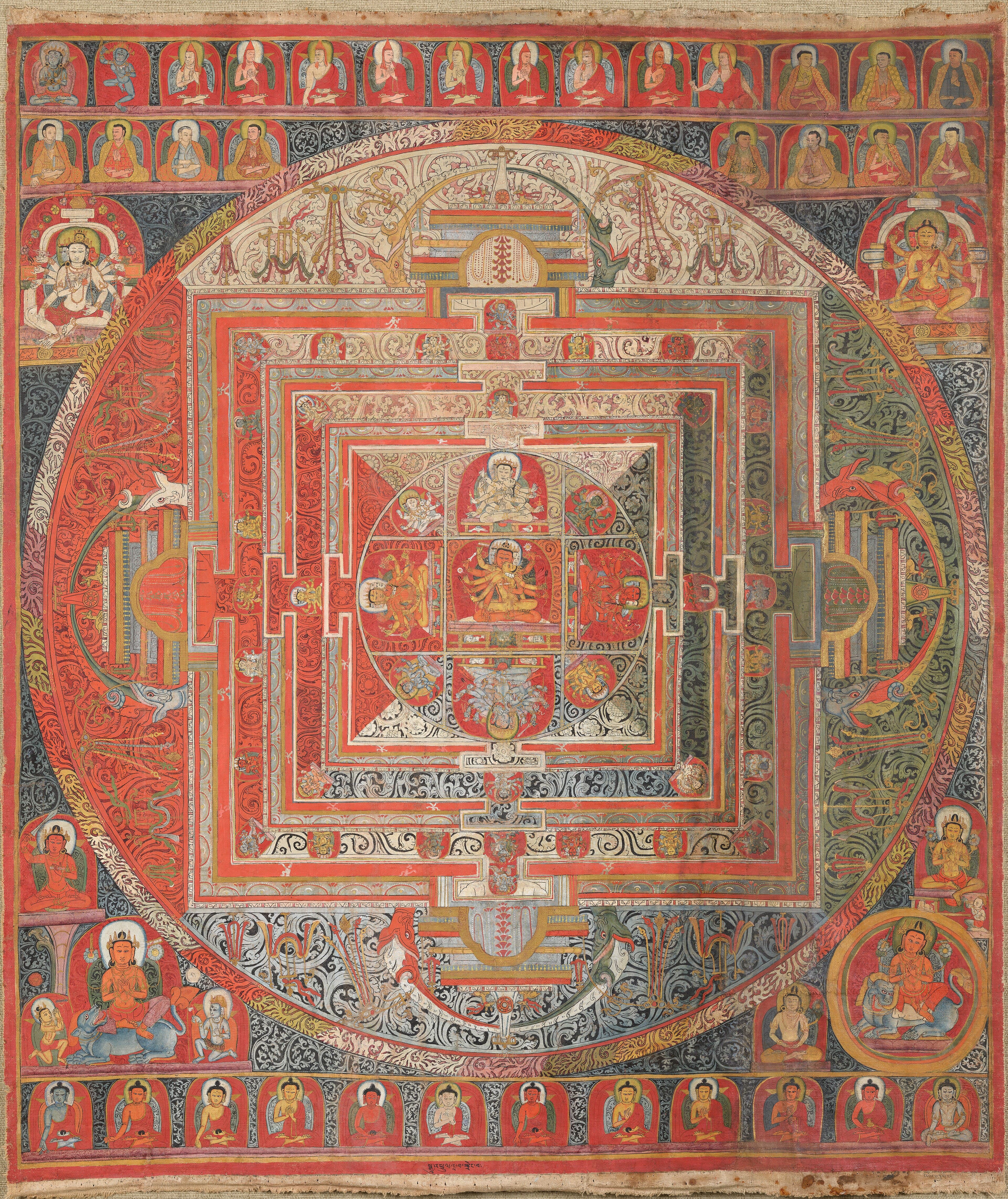
Every depiction of the Buddha is structured around a small set of canonical hand gestures called mudras (Sanskrit, 'seal'). The gestures are not arbitrary. Each marks a specific moment or state in the Buddha's biography and dharma, and each is an instruction the viewer is implicitly receiving. To learn to read mudras is to learn to read Buddhist iconography.
**Bhumisparsha mudra** — the 'earth-touching gesture' — depicts the Buddha at the moment of his enlightenment beneath the bodhi tree. Seated in lotus posture, the right hand reaches down and touches the earth with the tips of the fingers. The gesture commemorates the moment Mara challenged the Buddha to call a witness for his right to the seat of awakening; the Buddha, instead of calling any deity, touched the earth and asked the earth itself to bear witness. The earth shook in confirmation. This is by far the most common Buddha image in Asia — bhumisparsha is the iconographic signature of Bodh Gaya and the moment of awakening.
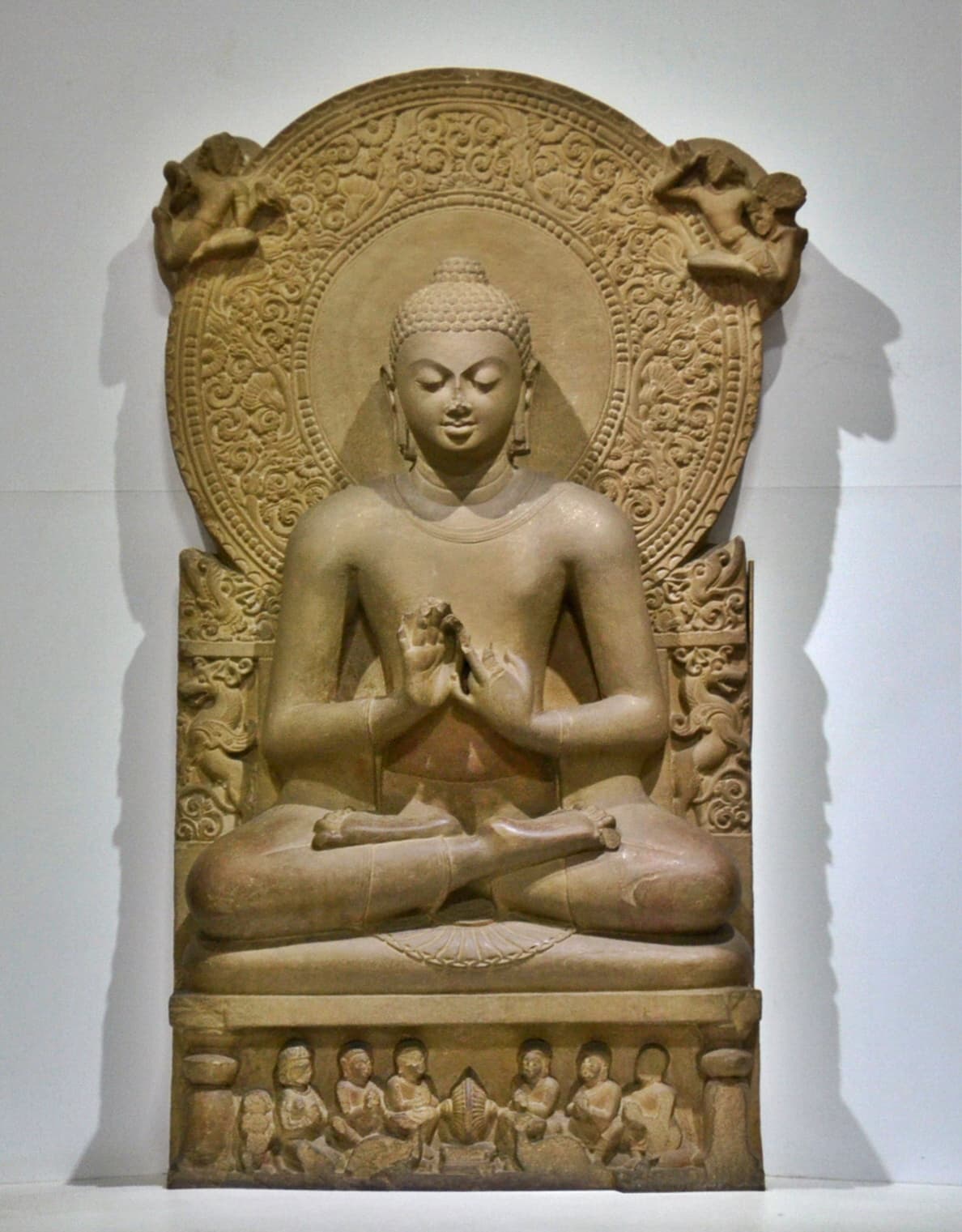
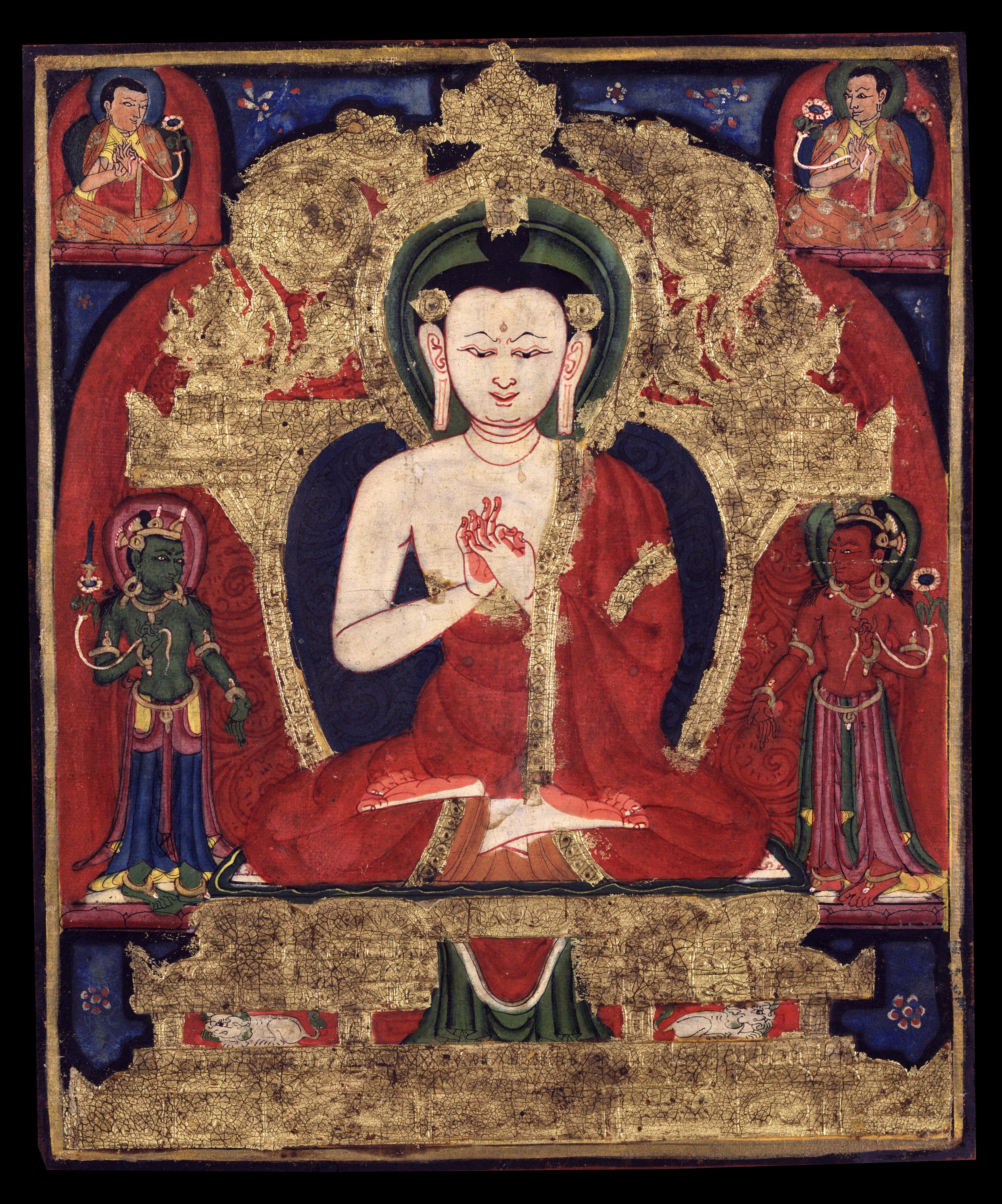
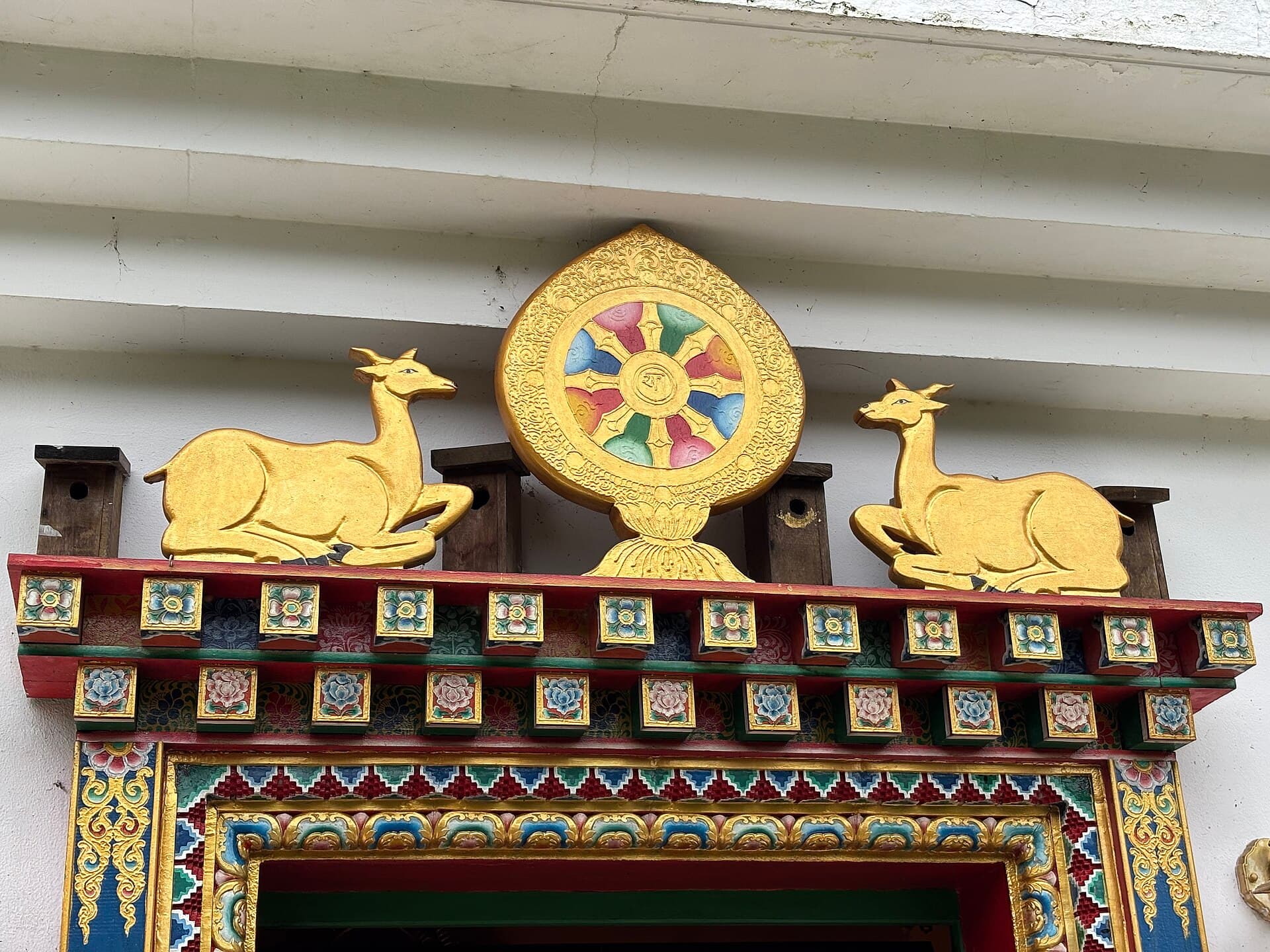
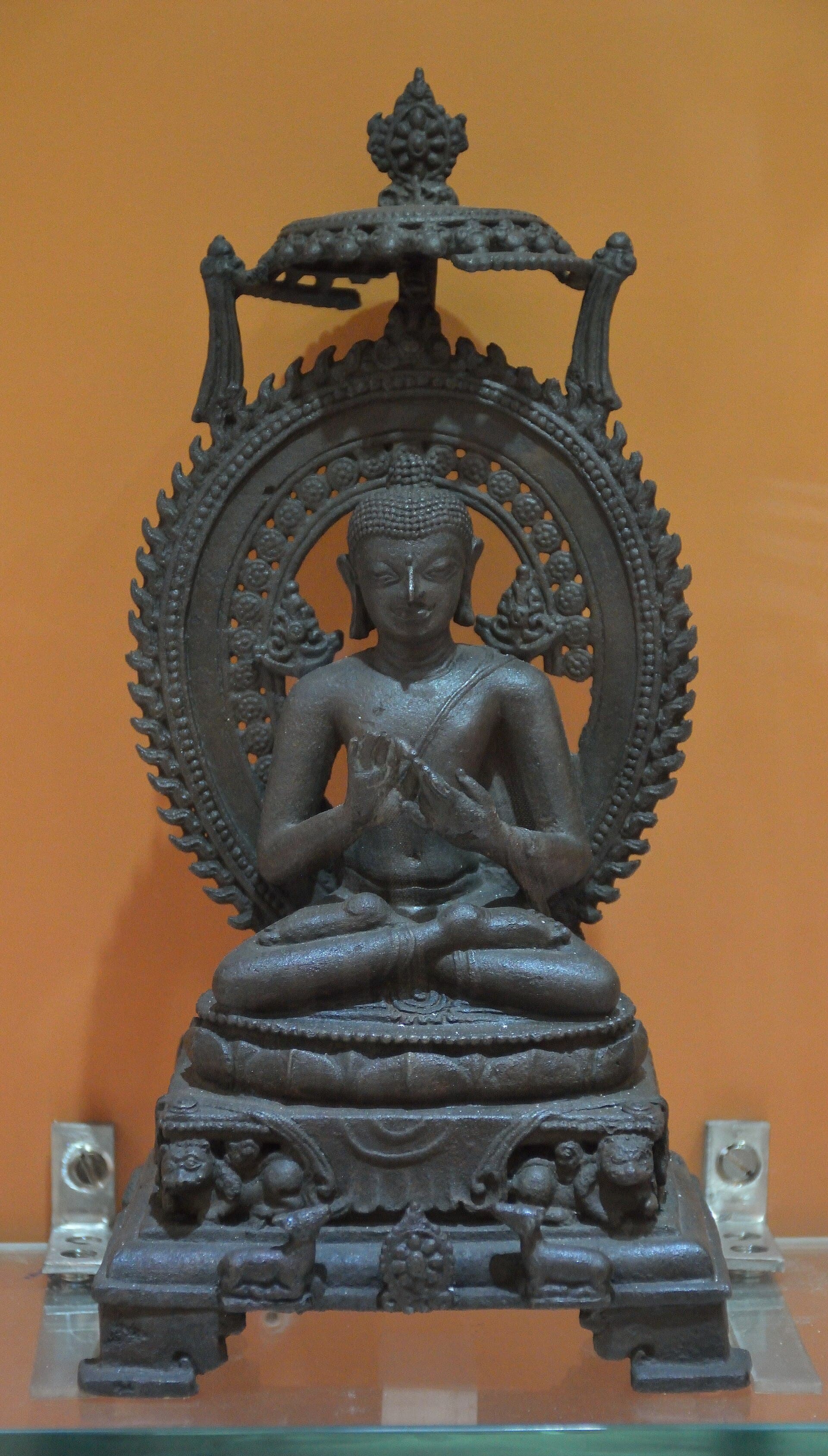
**Dharmachakra mudra** — the 'wheel-turning gesture' — depicts the Buddha at Sarnath, giving the First Sermon. Both hands are at chest height, the right palm facing outward, the left facing inward, the thumb and forefinger of each hand touching to form a circle (representing the wheel), the remaining fingers fanned out (the spokes). The Sarnath Buddha image is the canonical example.
**Dhyana mudra** — the 'meditation gesture' — depicts the meditating Buddha. Both hands rest in the lap, palms upward, the right hand resting on top of the left, the thumbs lightly touching. The earliest Buddhist images at Mathura and Gandhara use dhyana mudra to represent the Buddha in the moment before enlightenment, sitting beneath the bodhi tree.
**Abhaya mudra** — the 'fearlessness gesture' — depicts the Buddha bestowing protection. The right hand is raised to shoulder height, palm facing outward, fingers extended upward. The gesture echoes the universal human gesture of greeting and reassurance: 'do not fear.' It is associated with the Buddha's pacification of the mad elephant Nalagiri (released against him by his cousin Devadatta) and with the protection-giving aspect of the bodhisattva path.
**Varada mudra** — the 'boon-giving gesture' — depicts the Buddha bestowing a gift or wish. The right hand hangs at the side, palm facing outward, fingers extended downward. The gesture echoes the act of pouring out gifts or water in donation.
Other mudras occur with particular deities: **anjali** (joined palms at the heart — offering and devotion), **vajra-humkara** (crossed arms holding vajra and bell — the gesture of Vajradhara), **tarjani** (raised forefinger — the wrathful warning gesture). The full lexicon, catalogued in S.K. Saraswati's foundational 'Iconography of Buddhist Sculpture in Ancient India' (1957), runs to several dozen distinct gestures.
In meditation practice, mudras are not only iconographic conventions but contemplative instructions. To sit in dhyana mudra is to physically perform the gesture of the meditating Buddha. The body, by the mudra, takes the shape of the mind it wishes to cultivate.