KNOWLEDGE/PRACTICES/MANTRA RECITATION
PracticesVajrayana

Mantra Recitation

Sacred sound as practice

The recitation of seed-syllables and sacred phrases — speech-mind training that pervades the Vajrayana, Pure Land, and Newar traditions. Om mani padme hum. Namo Amituofo. The Heart Sutra mantra.

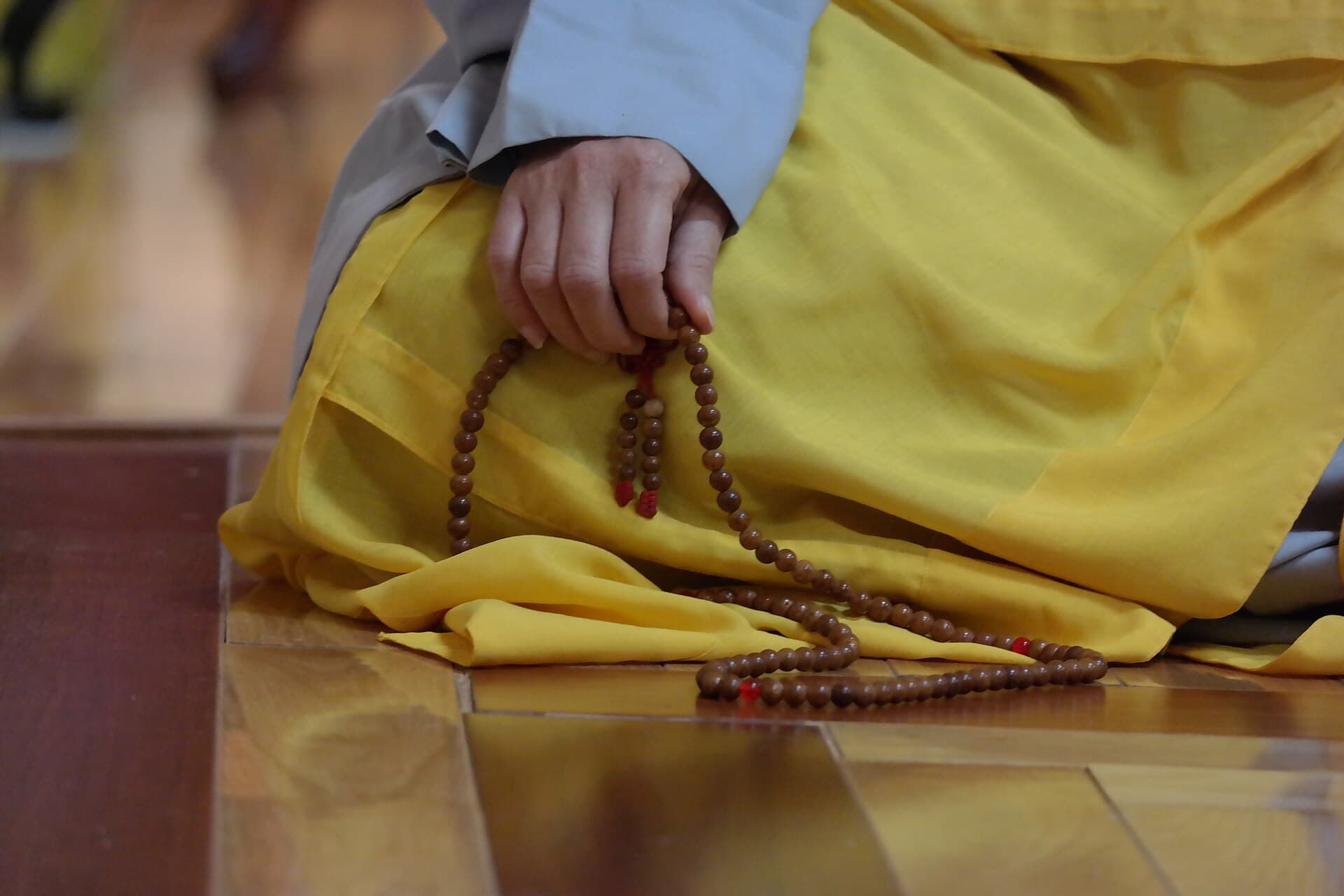
A Buddhist nun's hand holding mala beads used for mantra recitation
Photo: Beelerb, CC BY-SA 3.0, via Wikimedia Commons

Mantra — from the Sanskrit man (mind) + tra (instrument or protection) — is a syllable, word, or phrase whose recitation is itself the practice. In the Vajrayana, mantra is one of the three doors of practice (body, speech, mind), alongside mudra (gesture) and visualization. The recitation is held to align the practitioner's energy with the deity or quality that the mantra invokes; the syllables themselves, in the tantric understanding, are not arbitrary signifiers but vibrations whose direct effect on consciousness is the practice.

The most widely recited mantra in Buddhism is Om Mani Padme Hum (oṃ maṇi padme hūṃ), the six-syllable mantra of Avalokiteshvara, the bodhisattva of compassion. Tibetan tradition holds that each syllable corresponds to one of the six realms of samsara, and that recitation purifies rebirth in each. The mantra is recited continuously by lay practitioners, inscribed on prayer wheels (in spinning, the mantra is recited mechanically), painted on stones (mani stones), printed on prayer flags, carved into the cliffsides of the Tibetan plateau.

In the Pure Land tradition, the practice is recitation of the name of Amitabha Buddha — Namo Amituofo in Chinese, Namu Amida Butsu in Japanese, Namo A Di Da Phat in Vietnamese. The practice (nianfo, nembutsu, niệm Phật) consists of recitation, sometimes counted on the mala, sometimes called out aloud, sometimes silent. The intention is single-pointed: that at the moment of death, Amitabha will appear and lead the practitioner to rebirth in the Pure Land of Sukhavati, where awakening is assured.

In the Nichiren tradition, the recitation is of the title of the Lotus Sutra in Japanese: Namu Myoho Renge Kyo — 'Homage to the Wonderful Dharma Lotus Sutra.' Nichiren held that the recitation of the title alone, in the degenerate age, is sufficient for awakening.

In the Newar tradition, the recitation includes the Sanskrit mantras of the Pancha Buddha — Vairochana, Akshobhya, Ratnasambhava, Amitabha, Amoghasiddhi — and the dharanis of the Mahayana sutras. The mantras are recited in the morning and evening pujas at the bahas and bahis of the Kathmandu Valley.

In every tradition where mantra is practiced, the count matters. The traditional commitment is 108 repetitions (one mala), 100,000 repetitions (for a deity practice), or one million repetitions (for foundational practices like the Vajrasattva hundred-syllable mantra in the ngondro of Tibetan Buddhism). Time spent reciting is time not spent in distraction. The mind that has recited Om Mani Padme Hum one hundred thousand times is not the mind that began.
Cross-reference

Related entries

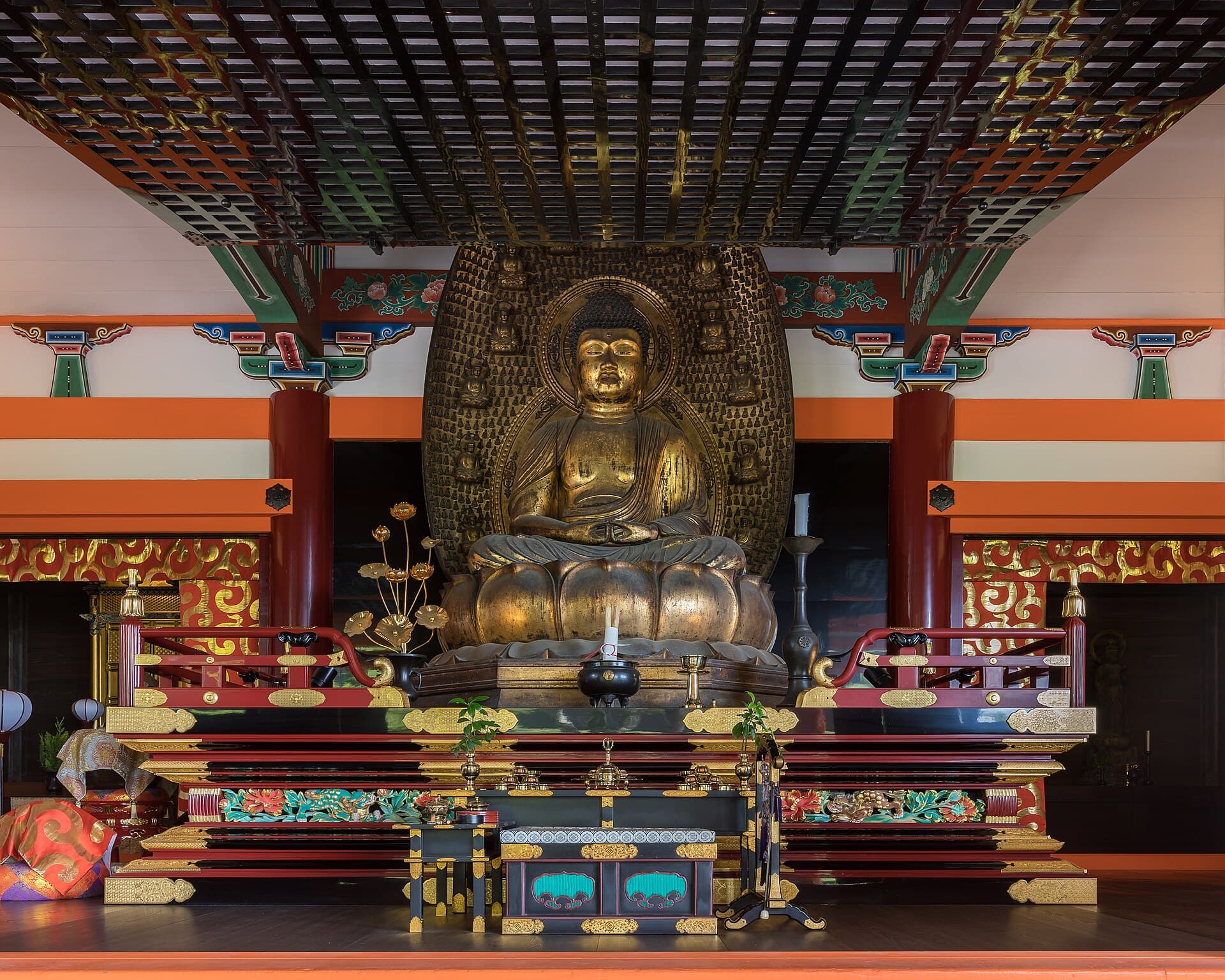
Interior of a Pure Land Amida hall with a golden seated statue of Amitabha Buddha, Kyoto
TraditionsPure Land

Pure Land

The largest devotional school in East Asian Buddhism — the path of rebirth in Sukhavati, the Pure Land of Amitabha, accessed not by self-power but by the saving vow of the Buddha himself, recited as Namo Amituofo, Namu Amida Butsu.

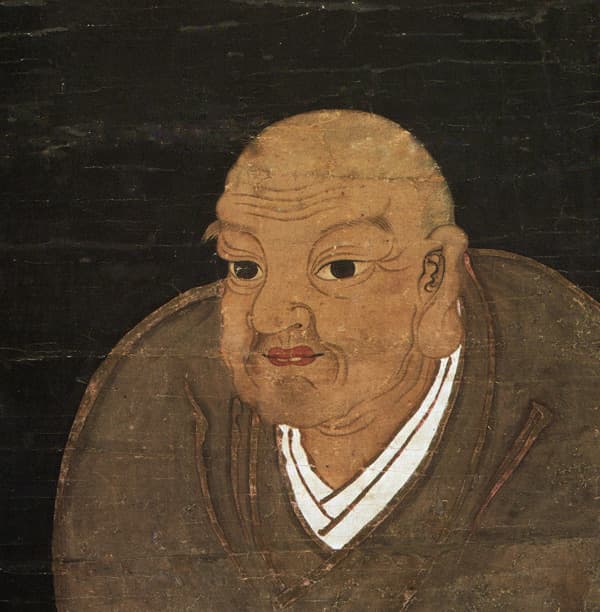
Historical portrait painting of Nichiren, founder of the Lotus Sutra school
TraditionsMahayana

Nichiren

The thirteenth-century Japanese reform movement of Nichiren (1222–1282), which holds the Lotus Sutra to be the supreme and final teaching of the Buddha and recitation of its title — Namu Myoho Renge Kyo — to contain the entire dharma.

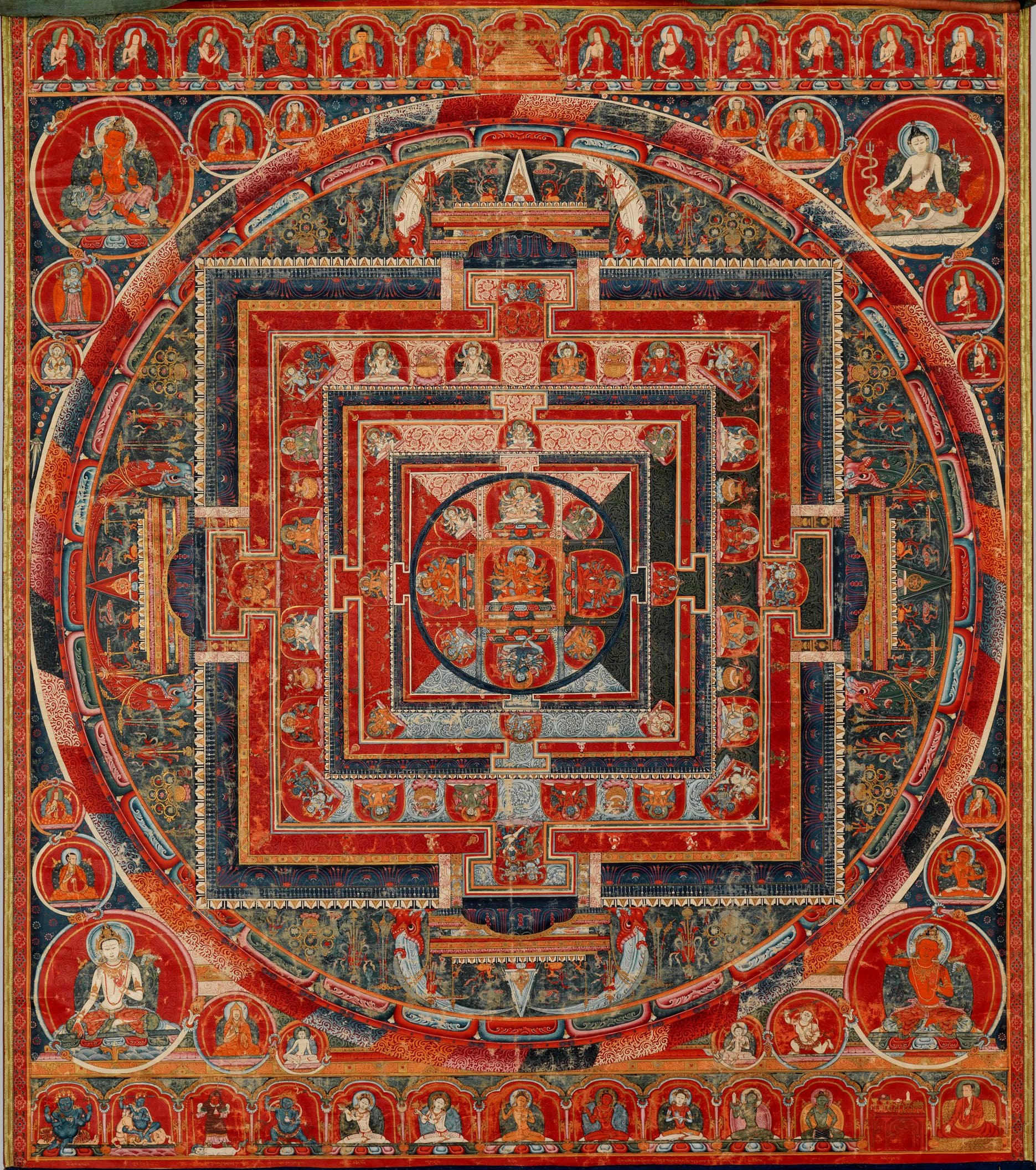
Tibetan tantric mandala of the forms of Manjushri, the bodhisattva of transcendent wisdom
TraditionsVajrayana

Vajrayana

The Diamond Vehicle — the tantric path that uses mantra, visualization, deity yoga, and direct transmission to make buddhahood possible in a single lifetime, in this very body, provided one has the right empowerment from a qualified lineage holder.

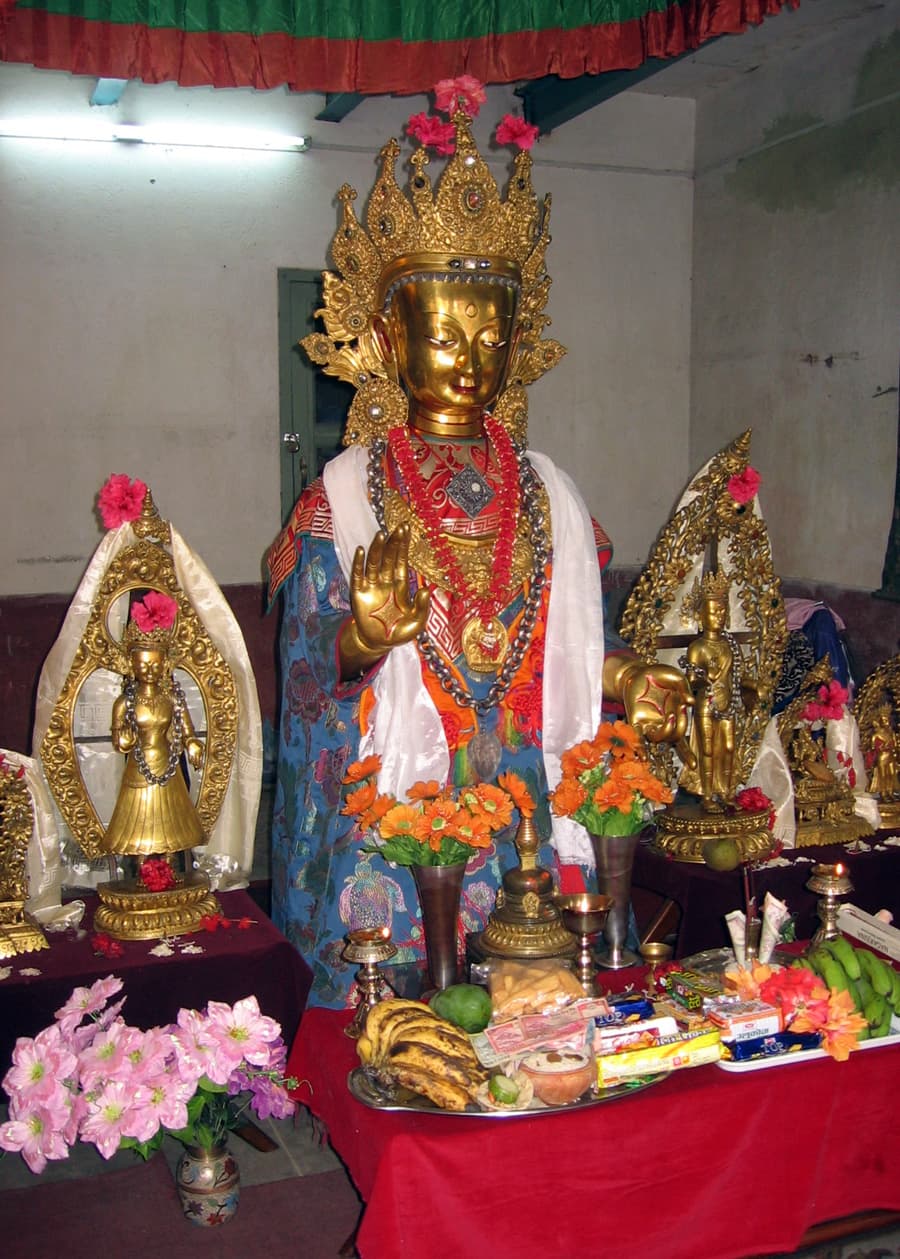
A gilded Newar Buddhist deity shrine with offerings in the Kathmandu Valley
TraditionsNewar

Newar Buddhism

The only surviving form of Indic Mahayana–Vajrayana Buddhism — preserved in the Kathmandu Valley for over a millennium through hereditary Vajracharya and Shakya priesthood, Sanskrit liturgy, and lay devotion to Swayambhu and the Pancha Buddha.

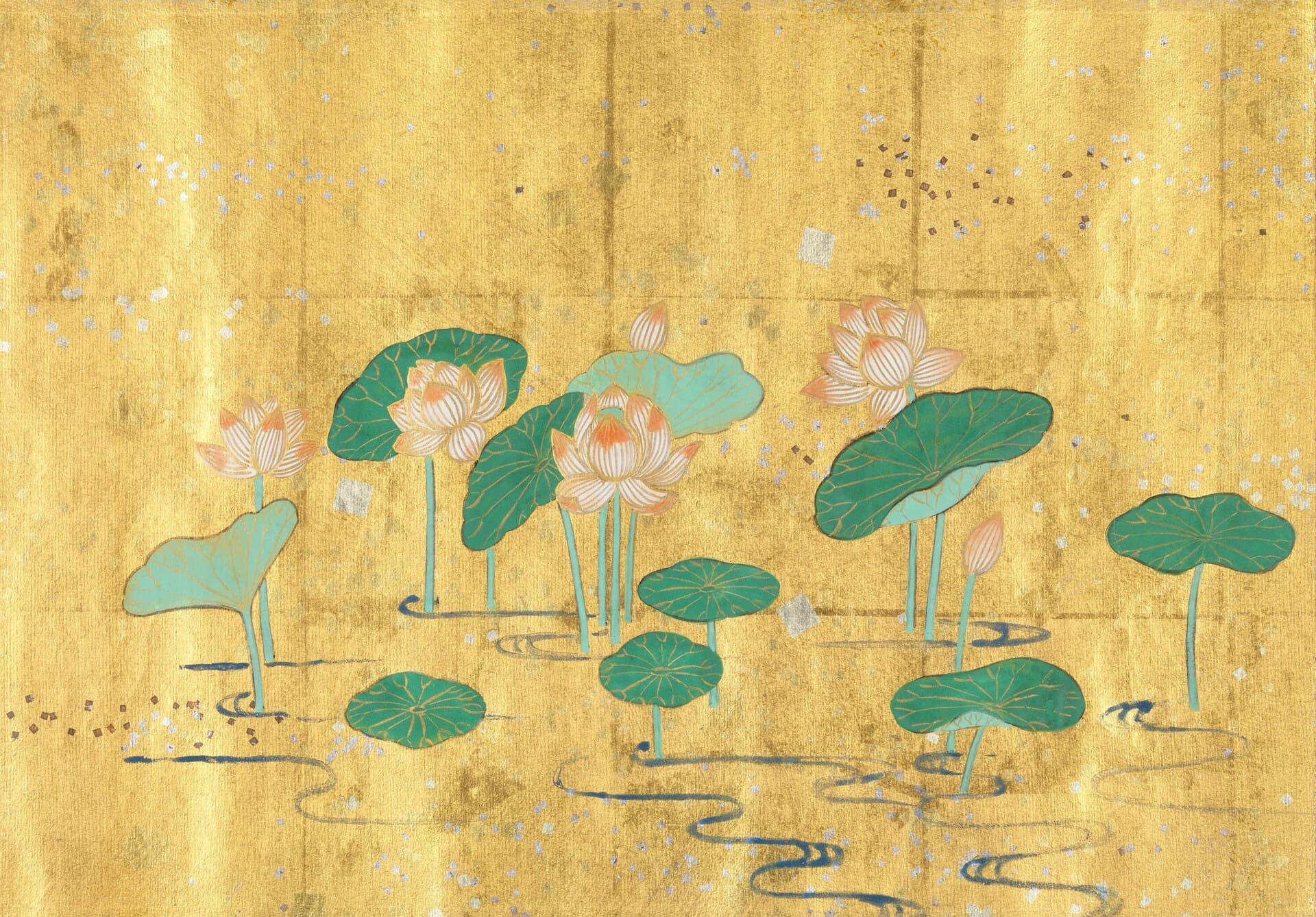
Gold-ground Japanese painting of lotus flowers illustrating the Lotus Sutra
TextsMahayana

The Lotus Sutra

The most influential Mahayana sutra in East Asia. The teaching of the One Vehicle, the eternal Buddha, and the universal possibility of buddhahood. Composed c. 1st century BCE to 1st century CE.

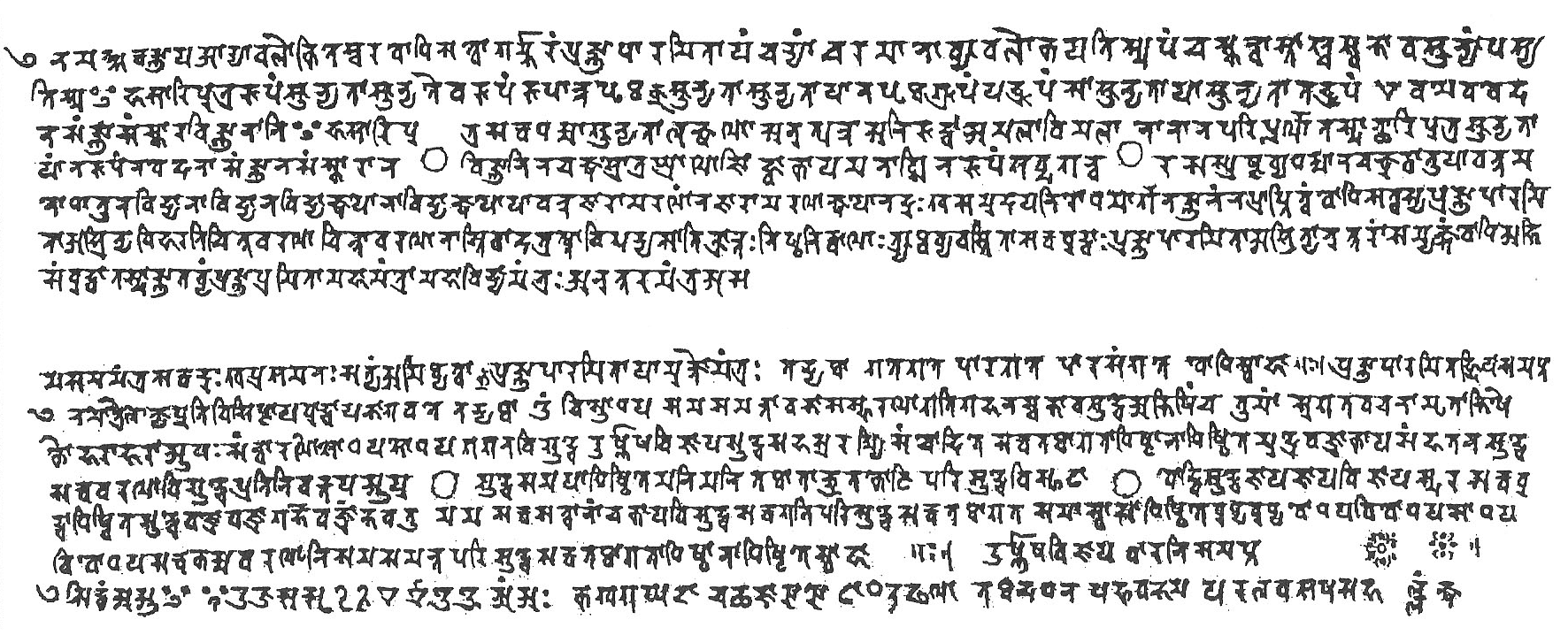
Sanskrit manuscript facsimile of the Heart Sutra
TextsMahayana

The Heart Sutra

The most chanted Mahayana scripture — 260 Chinese characters in Kumarajiva, fewer in the Tibetan, distilling the entire Perfection of Wisdom literature into the single declaration that form is emptiness, emptiness is form.

Pilgrimage

Related sacred sites

Library

Further reading

  • Mantras: Sacred Words of PowerJohn Blofeld
    Allen & Unwin
  • A Garland of Immortal Wish-Fulfilling TreesKhenchen Konchog Gyaltshen
    Snow Lion
Reflections

The sangha responds.

0
Add your reflection
Comments are public to the sangha.