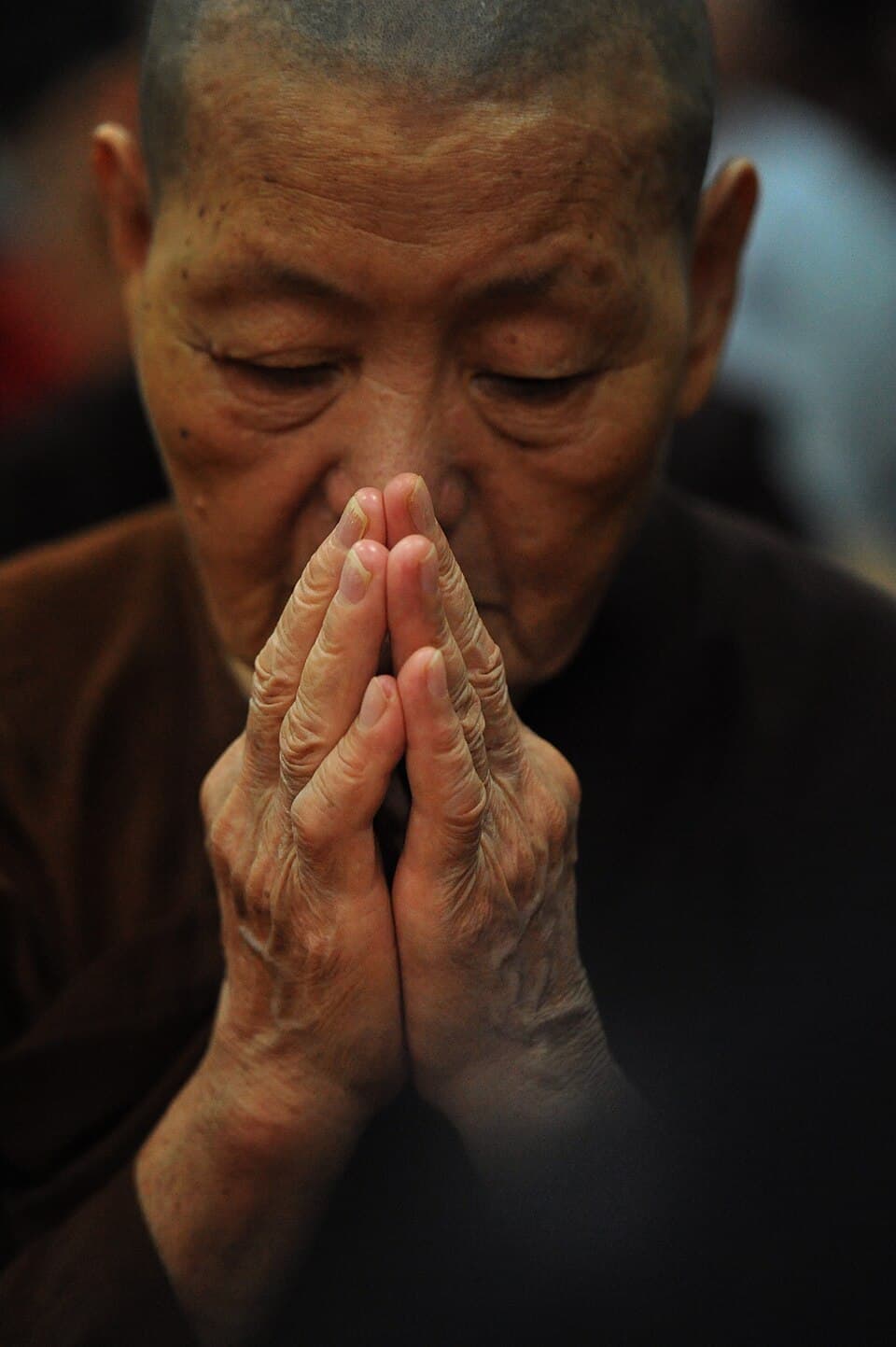
Ven. Dharmavati Guruma is one of the most important figures in the twentieth-century revival of Theravada Buddhism in the Kathmandu Valley and the senior-most living teacher in the Newar bhikkhuni tradition. Born into a Newar Buddhist family in Kathmandu in 1934, she ordained as a sramanera in Burma at the age of fifteen — at a time when the Rana regime in Nepal had effectively suppressed monastic Buddhism within the country and any aspiring monastic had to travel abroad to ordain.
She returned to Nepal in the early 1950s with a generation of Newar monastics — including the Theravada bhikkhus who would go on to lead the Dharmodaya Sabha — and began teaching meditation and dhamma to lay Newar Buddhists at a time when public Buddhist practice was being re-established after the fall of the Rana regime.
In 1965 she founded Dharmakirti Vihara in Kathmandu, which became the principal centre of women's Theravada practice in Nepal and one of the spiritual homes of the Newar Buddhist revival. The vihara has been continuously active for over six decades and has trained generations of Newar women — both monastic and lay — in vipassana practice and Pali study.
She is the recipient of the Pali language and meditation lineage from the Mahasi tradition of Burma, where she returned for advanced training in the 1960s. She combines this with a deep grounding in the indigenous Newar Buddhist traditions of the valley, including the Pancha Buddha and Avalokiteshvara devotional cycles particular to Newar Buddhism.
Now in her early nineties, Guruma continues to receive students at Dharmakirti Vihara and to teach the Gunla observance — the lunar month of Newar Buddhist intensive practice — each year. The Bodhi Television archive of her Dharmakirti teachings is one of the most important video records of Newar Theravada teaching in existence.


