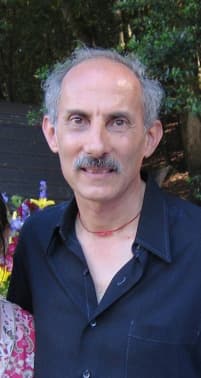
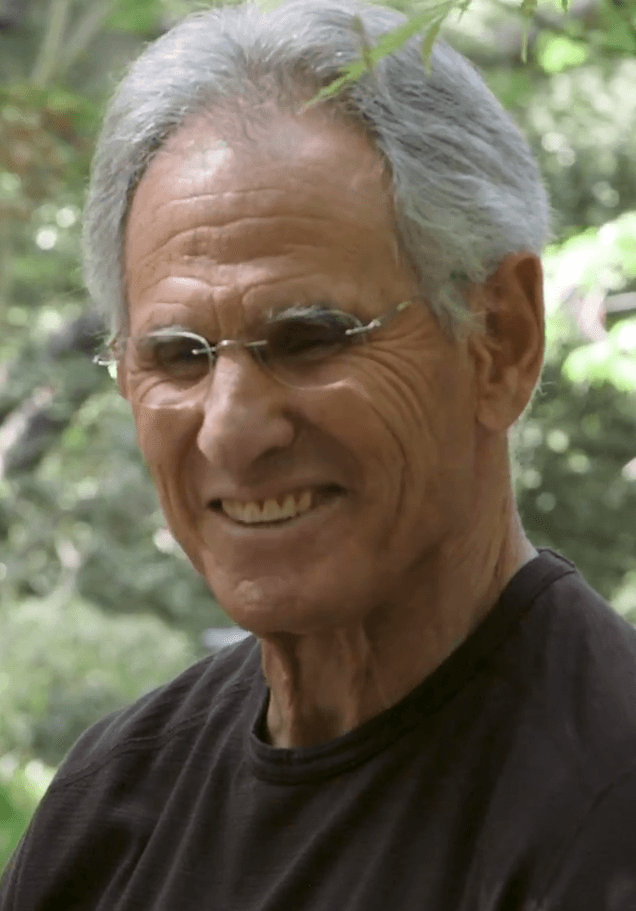
He was born in 1944 in the Catskill Mountains of New York to a Jewish family. He read philosophy at Columbia, joined the Peace Corps in Thailand after graduation in 1965, and there encountered both the lay culture of Theravada Buddhism and his first formal meditation course. He travelled on to India in 1967, settled in Bodhgaya, and met Anagarika Munindra — the Bengali lay teacher whom Mahasi Sayadaw himself had authorized to teach. He studied with Munindra in Bodhgaya for seven years, with Sayadaw U Pandita and Tungpulu Tulku Rinpoche later, and returned to the United States in 1974.
In 1976, with Sharon Salzberg, Jack Kornfield, and Jacqueline Schwartz, he co-founded the Insight Meditation Society on a former Catholic monastery in Barre, Massachusetts. IMS became the institutional centre of the American vipassana movement. Its long retreats — three-month silent intensives every autumn modelled on the Mahasi method — have trained thousands of practitioners, including most of the teachers now active in the broader American insight movement. In 1989 the founders also opened the Barre Center for Buddhist Studies for textual training and in 2003 added the Forest Refuge for advanced solo retreat.
His own contribution has been pedagogical and synthetic. Mindfulness: A Practical Guide to Awakening (2013) is the most thorough treatment in English of the Satipatthana Sutta from the perspective of an actively-practicing Theravada teacher — running 460 pages, working through the sutta sentence by sentence, integrating the perspectives of every major contemporary vipassana lineage. The Experience of Insight (1976) was for a generation the standard accessible introduction to vipassana in English. One Dharma (2002) is a careful argument for what he calls a Western Buddhism that draws non-defensively from Theravada, Mahayana, and Vajrayana sources.
His teaching style is conversational, almost donnish, with a particular gift for making subtle technical points feel like the most obvious thing in the world. His standing three-month retreats at IMS are still the closest equivalent in the West to the Burmese training that produced him.