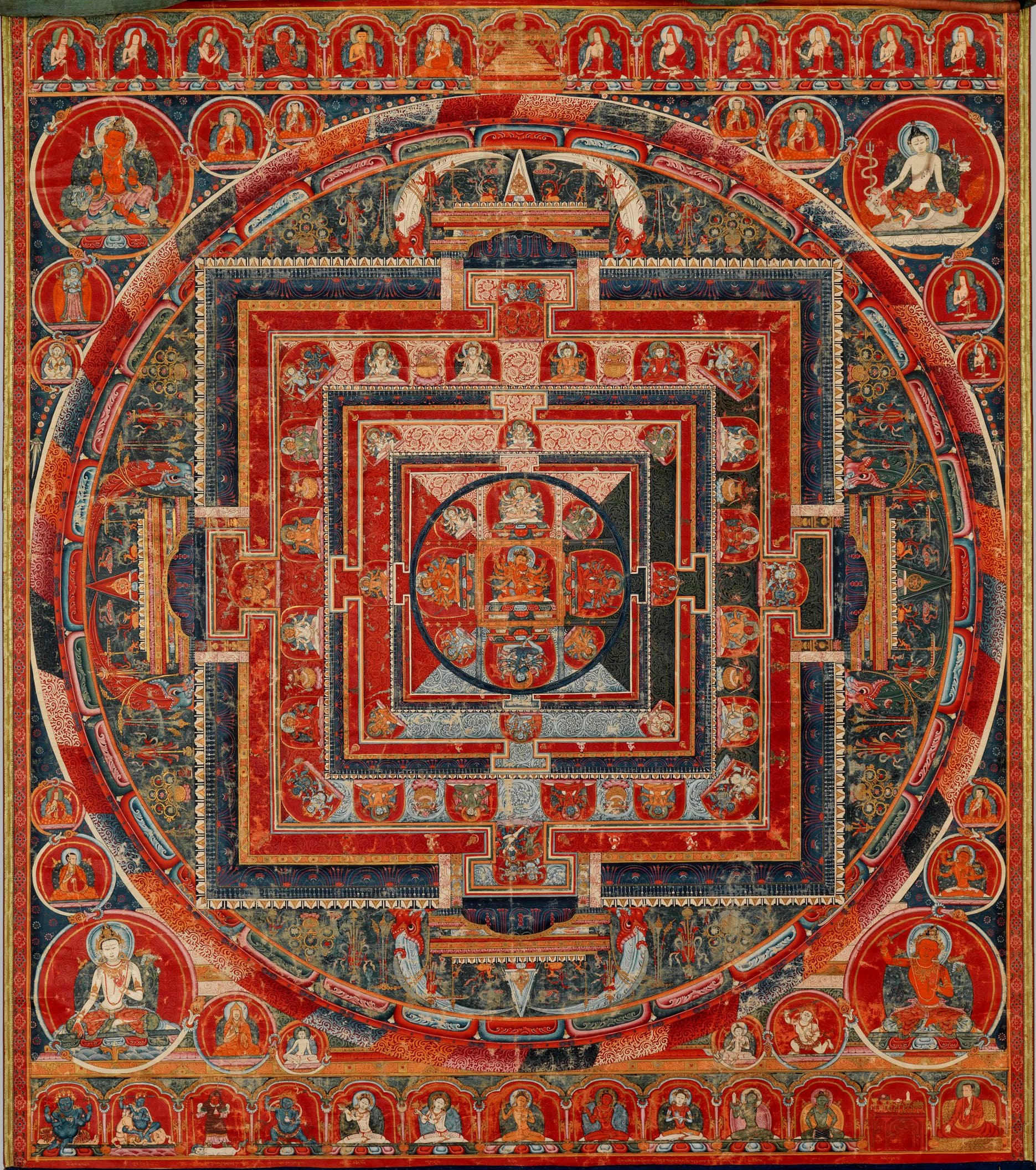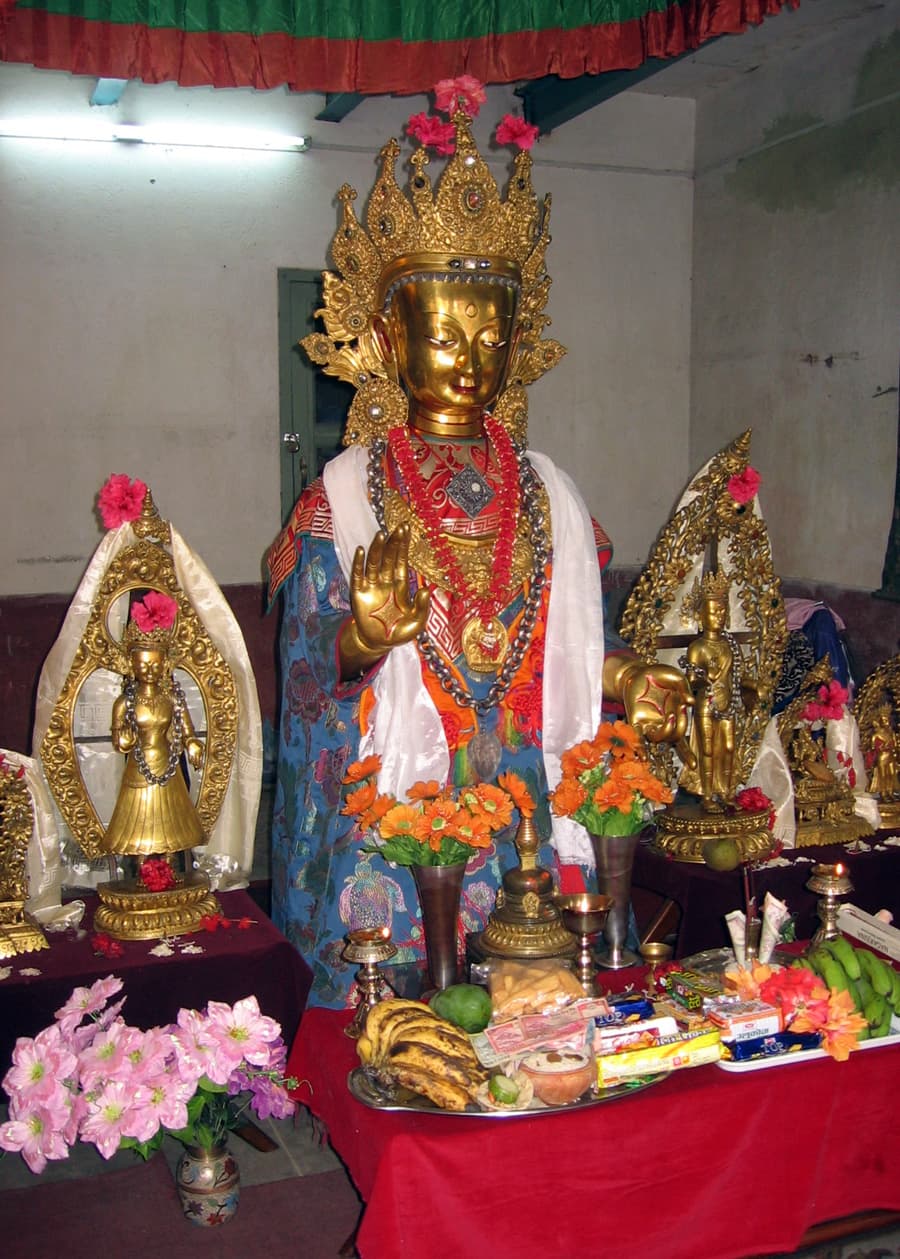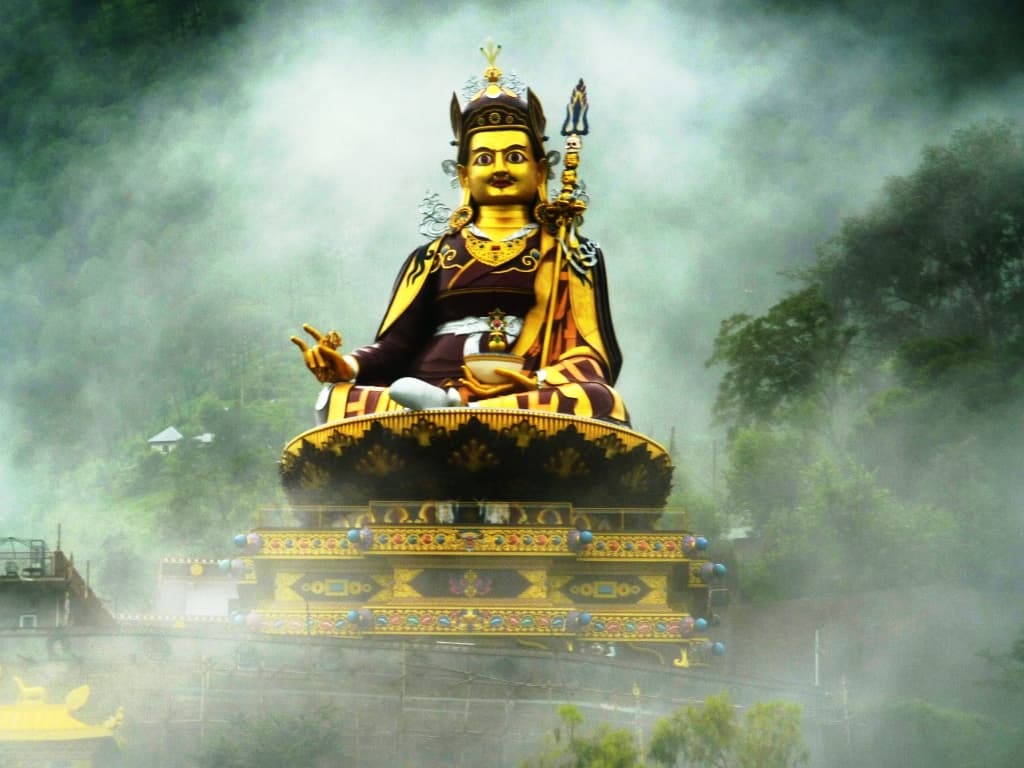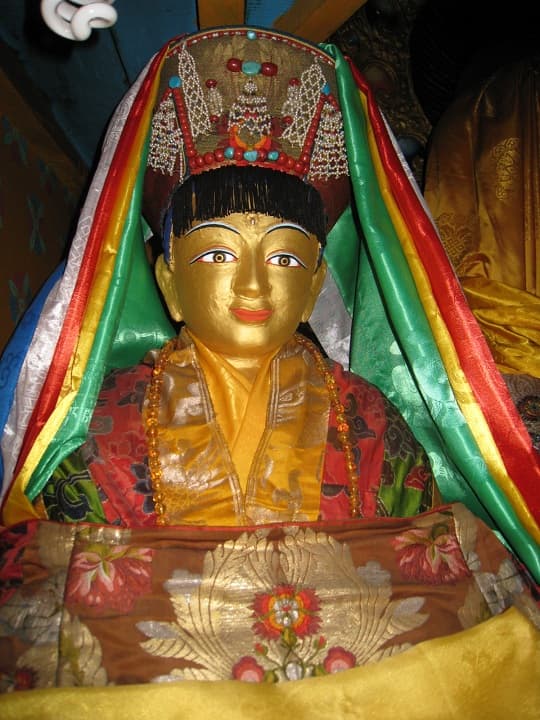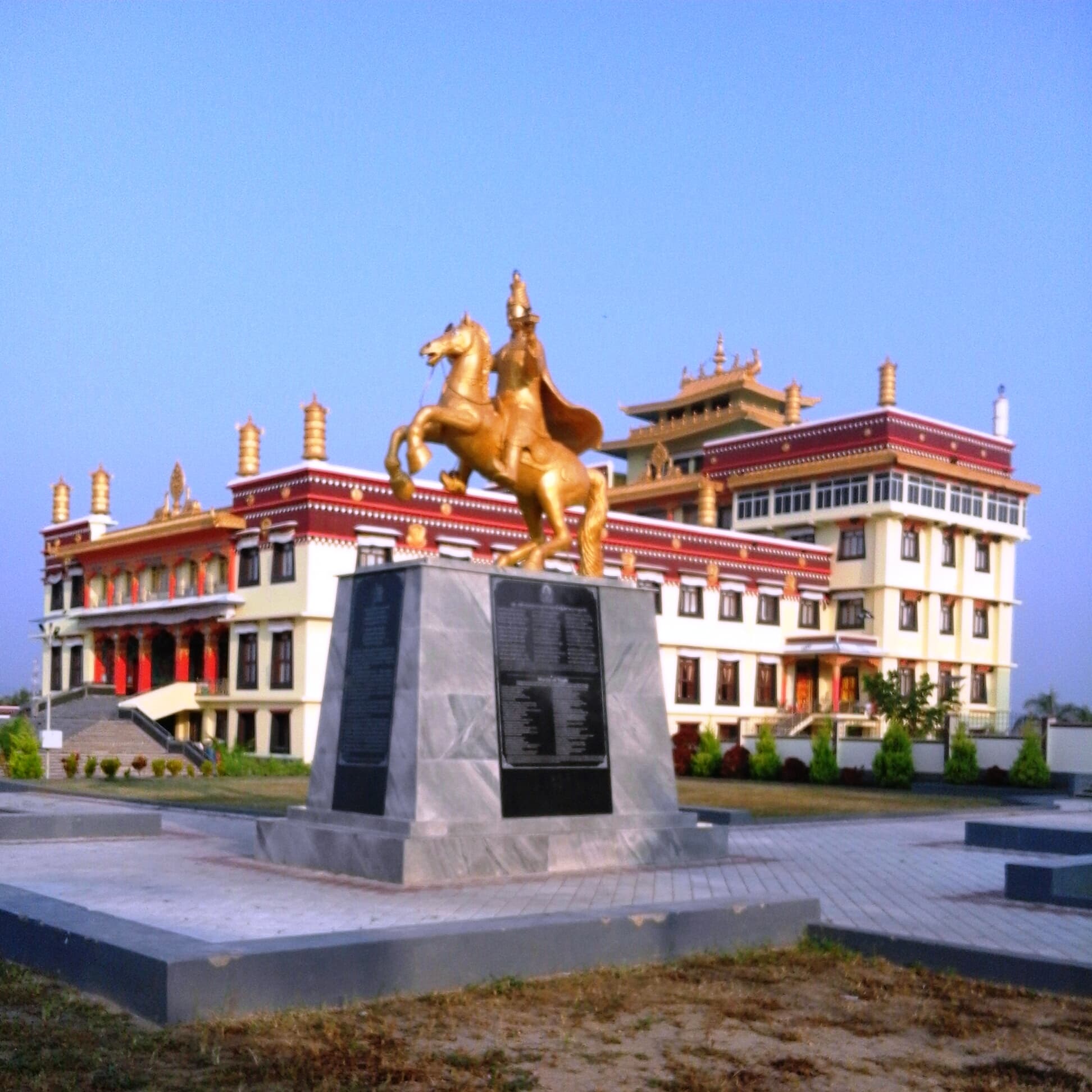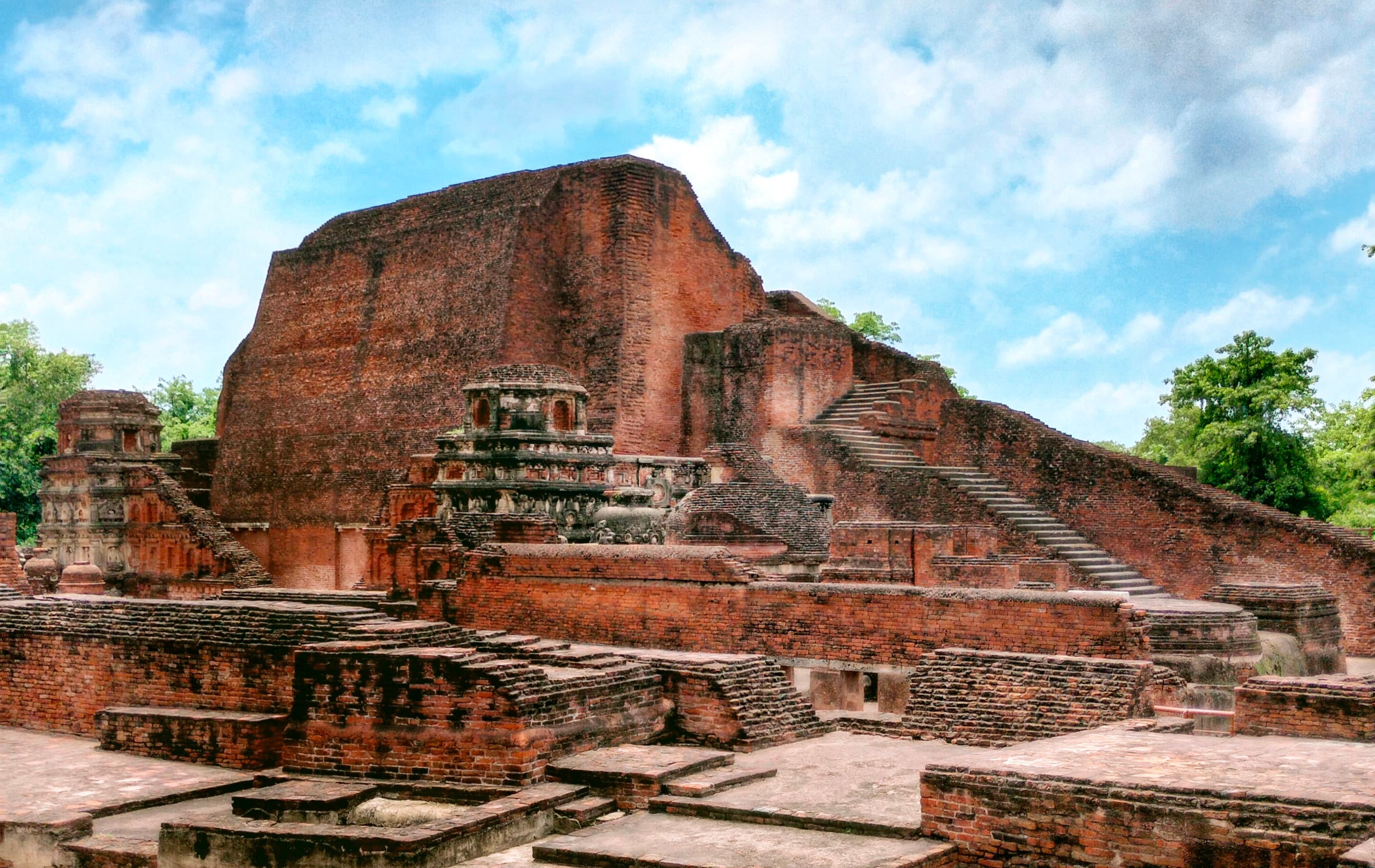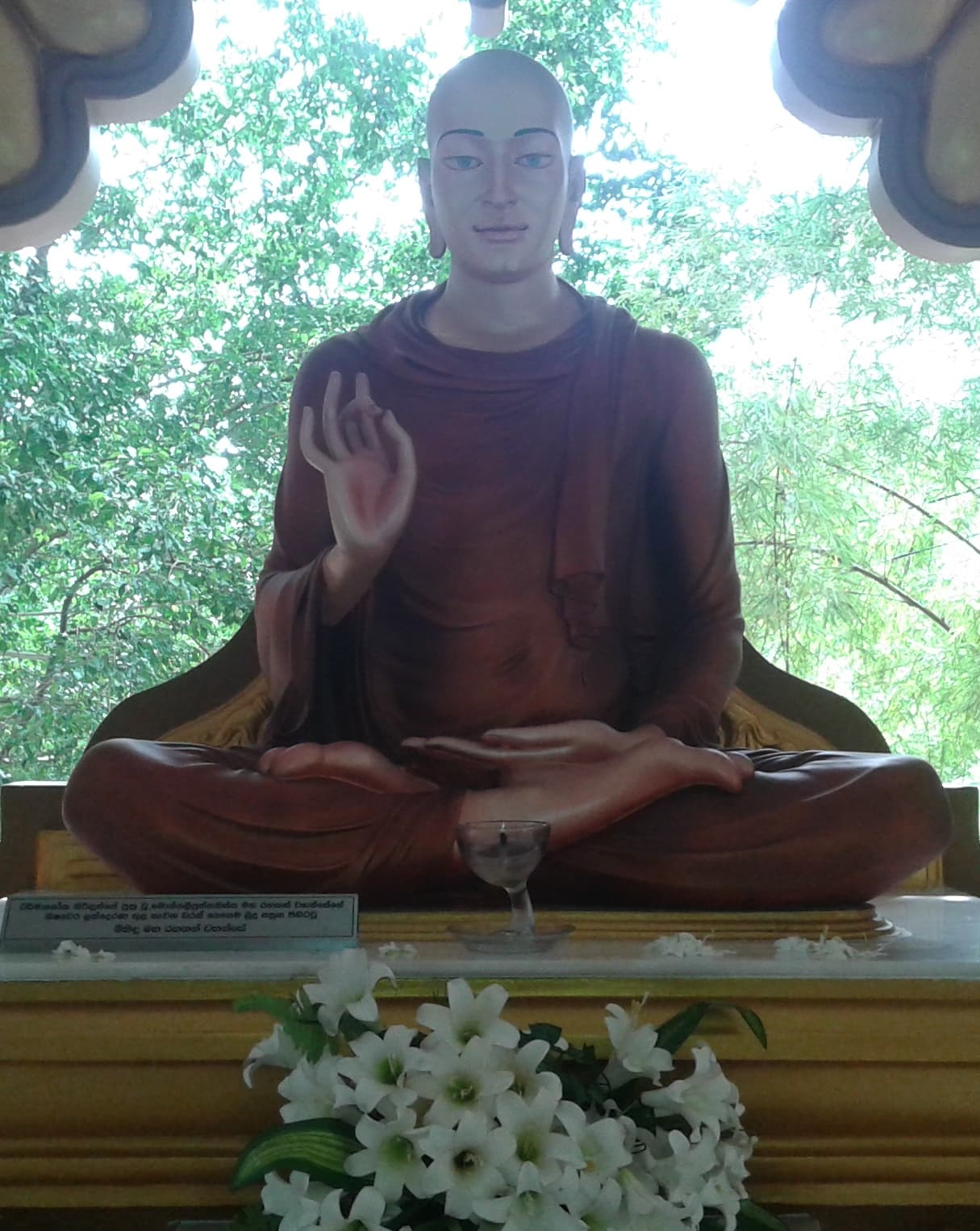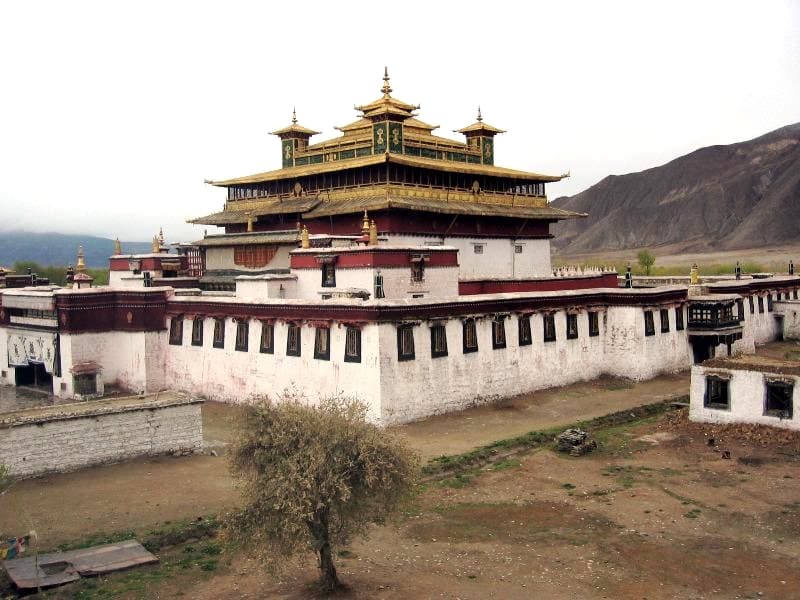
In 779 CE, the Tibetan king Trisong Detsen invited two masters from India to establish the dharma on the plateau: the abbot-scholar Santaraksita from Nalanda, and the tantric master Padmasambhava from Oddiyana. Tradition records that obstacles to the construction of Samye, Tibet's first monastery, arose from local protector spirits hostile to the new teaching; Santaraksita's monastic vinaya was insufficient to subdue them. Padmasambhava — Guru Rinpoche, the Lotus-Born — was summoned. He arrived, bound the spirits not by conversion but by oath, and the monastery was completed. The transmission was double from the beginning: the sutra path of Nalanda monastic scholarship under Santaraksita, and the tantric path of Indian siddha tradition under Padmasambhava.
The story of the Tibetan dharma is usually told in two diffusions. The first diffusion (snga dar, 'earlier spread') runs from the seventh century to the persecution of 842, when the apostate king Lang Darma assassinated his pro-Buddhist brother Ralpacan and turned royal patronage against the monasteries. Three kings define this period: Songtsen Gampo (r. c. 618–649), who unified the Tibetan empire, married a Chinese Buddhist princess (Wencheng) and a Nepalese Buddhist princess (Bhrikuti), and built the Jokhang and Ramoche temples in Lhasa; Trisong Detsen (r. 755–797), who institutionalized the dharma at Samye and presided over the Samye Debate of 792–794 in which the Indian gradualist position of Kamalasila prevailed over the Chinese sudden-enlightenment position of Heshang Moheyan, fixing Tibetan Buddhism in the Indian Madhyamaka lineage; and Ralpacan (r. 815–838), who systematized the translation of Indian texts through the great translator-bureaucracy known as the lotsawas, including Vairocana, Kawa Paltsek, and Chokro Lui Gyaltsen. The Mahavyutpatti — a Sanskrit-Tibetan lexicon — was compiled in 814 to standardize the rendering of Buddhist terminology, and the result is that Tibetan translations of Indian texts have a near-perfect lexical fidelity to their originals.
Lang Darma's persecution scattered the Sangha. For nearly a century the dharma in Tibet survived in pockets, in particular through the Vinaya line preserved at Dantik in Amdo by the so-called Three Wise Men (Mar Sakyamuni, Yo Gejung, Tsang Rabsel), from whom the upper monastic ordination eventually returned to central Tibet.
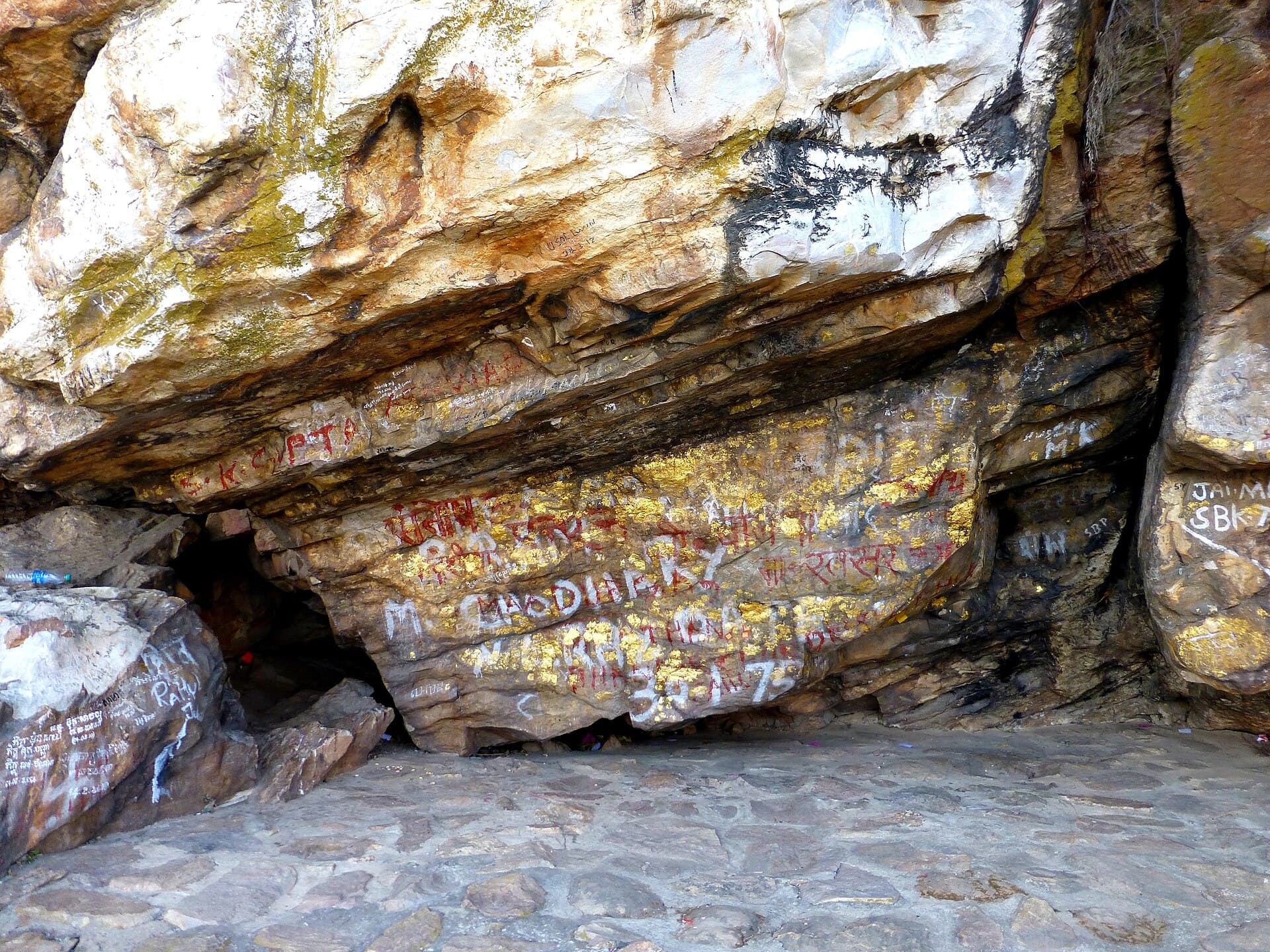
The second diffusion (phyi dar, 'later spread') began around 978 and ran through the eleventh and twelfth centuries. It is the period in which the schools as they exist today were formed. The translator Rinchen Zangpo (958–1055) rendered hundreds of new texts. The Bengali master Atisa Dipankara Srijnana (982–1054), invited from Vikramasila, came to Tibet in 1042 and taught the Lamrim — the graduated path — that became the framework for all subsequent Tibetan systematization; his student Dromtonpa founded the Kadam school. Marpa the Translator (1012–1097) studied with Naropa at the Pullahari monastery near Nalanda, returned to Tibet with the Mahamudra and the six yogas of Naropa, and transmitted them to Milarepa (1052–1135), whose cave-yogi life and songs of realization (the Mila Grubum) are the most beloved corpus in Tibetan literature; Milarepa's student Gampopa (1079–1153) synthesized the Kadam and Mahamudra streams and founded what became the Kagyu school, with its sub-branches including the Karma Kagyu of the Karmapas, Drikung, Drukpa, and Shangpa. Khon Konchog Gyalpo founded Sakya monastery in 1073, and the Sakya school developed around the Lamdre (Path and Fruit) cycle of the Hevajra Tantra. The Nyingma school crystallized around the rediscovered terma cycles of Padmasambhava, transmitted by tertons (treasure-revealers) such as Nyangral Nyima Ozer and Guru Chowang in the twelfth and thirteenth centuries.
The final school, the Gelug, was founded in the late fourteenth and early fifteenth centuries by Je Tsongkhapa (1357–1419), whose massive synthesis — the Lamrim Chenmo (Great Treatise on the Stages of the Path) and the Ngagrim Chenmo (Great Treatise on Tantra) — re-grounded Tibetan Buddhism in Prasangika Madhyamaka philosophy, Vinaya discipline, and the highest tantras. His student Gedun Drupa founded Tashilhunpo Monastery, and the Gelug school achieved eventual political primacy in central Tibet by the seventeenth century.
Four schools — Nyingma, Sakya, Kagyu, Gelug — plus the pre-Buddhist Bon tradition still define Tibetan Buddhism. The Rime (non-sectarian) movement of the nineteenth century, led by Jamyang Khyentse Wangpo, Jamgon Kongtrul, and Chokgyur Lingpa, made it possible to receive transmissions across all four schools, an ecumenism that survives in the modern teachers — the 41st Sakya Trizin, the 17th Karmapas, Dzongsar Khyentse Rinpoche, Chokyi Nyima Rinpoche, and many others — who carry the tradition into the twenty-first century.
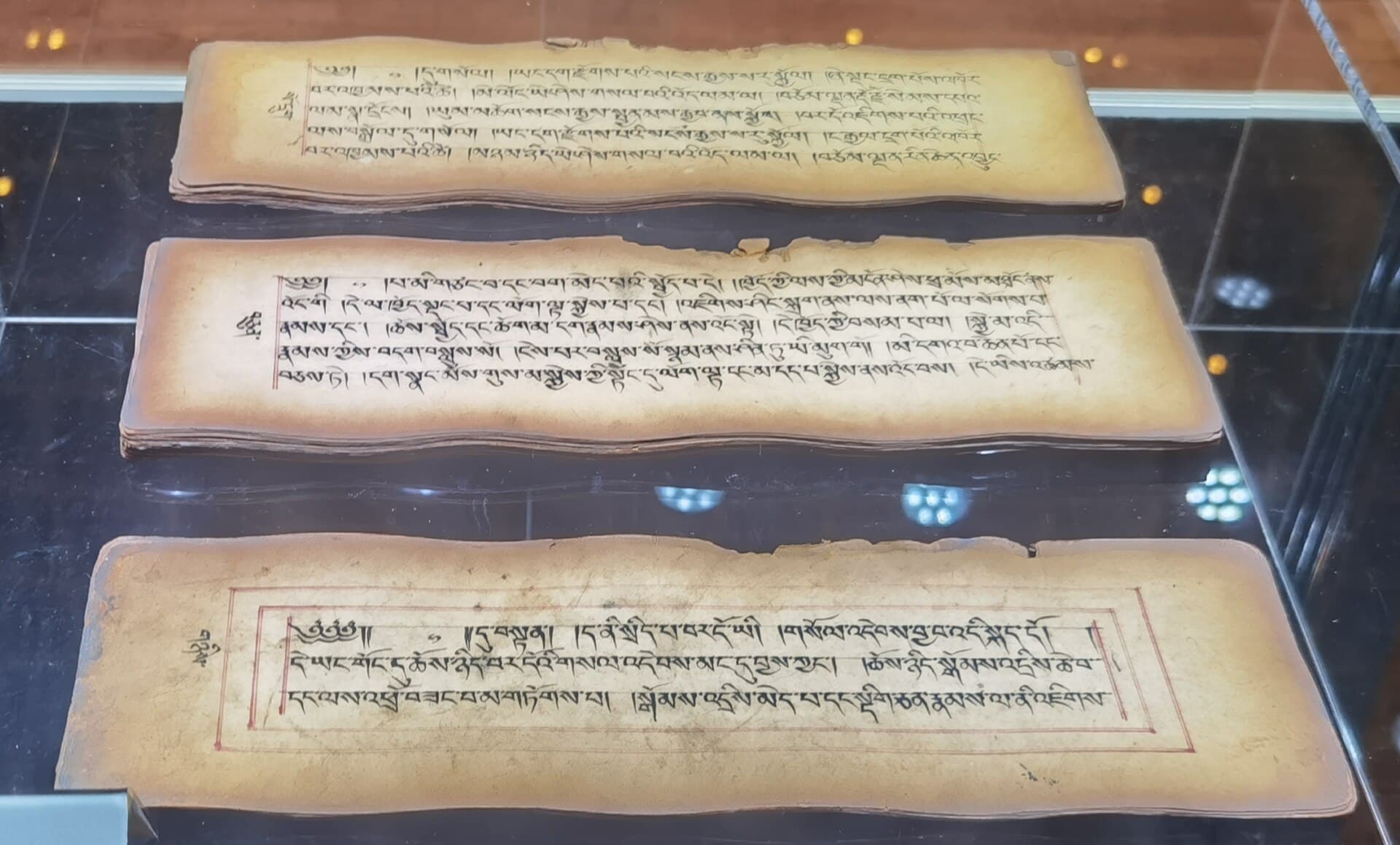
The pattern, established at Samye, has held for twelve centuries: every Tibetan teaching lineage traces itself back to a named Indian master, and every Indian text was translated into Tibetan with such fidelity that, after Nalanda's destruction in 1193, the Tibetan canon — the Kangyur (translated word) and Tengyur (translated treatises) — became the most complete surviving record of Indian Mahayana Buddhism that exists.