KNOWLEDGE/TEXTS/THE TIBETAN BOOK OF THE DEAD
TextsVajrayana

The Tibetan Book of the Dead

Bardo Thödol — Liberation through Hearing

A 14th-century Tibetan terma text revealed by Karma Lingpa — instructions to be read aloud to the dying and the dead, guiding consciousness through the bardo states between death and rebirth.

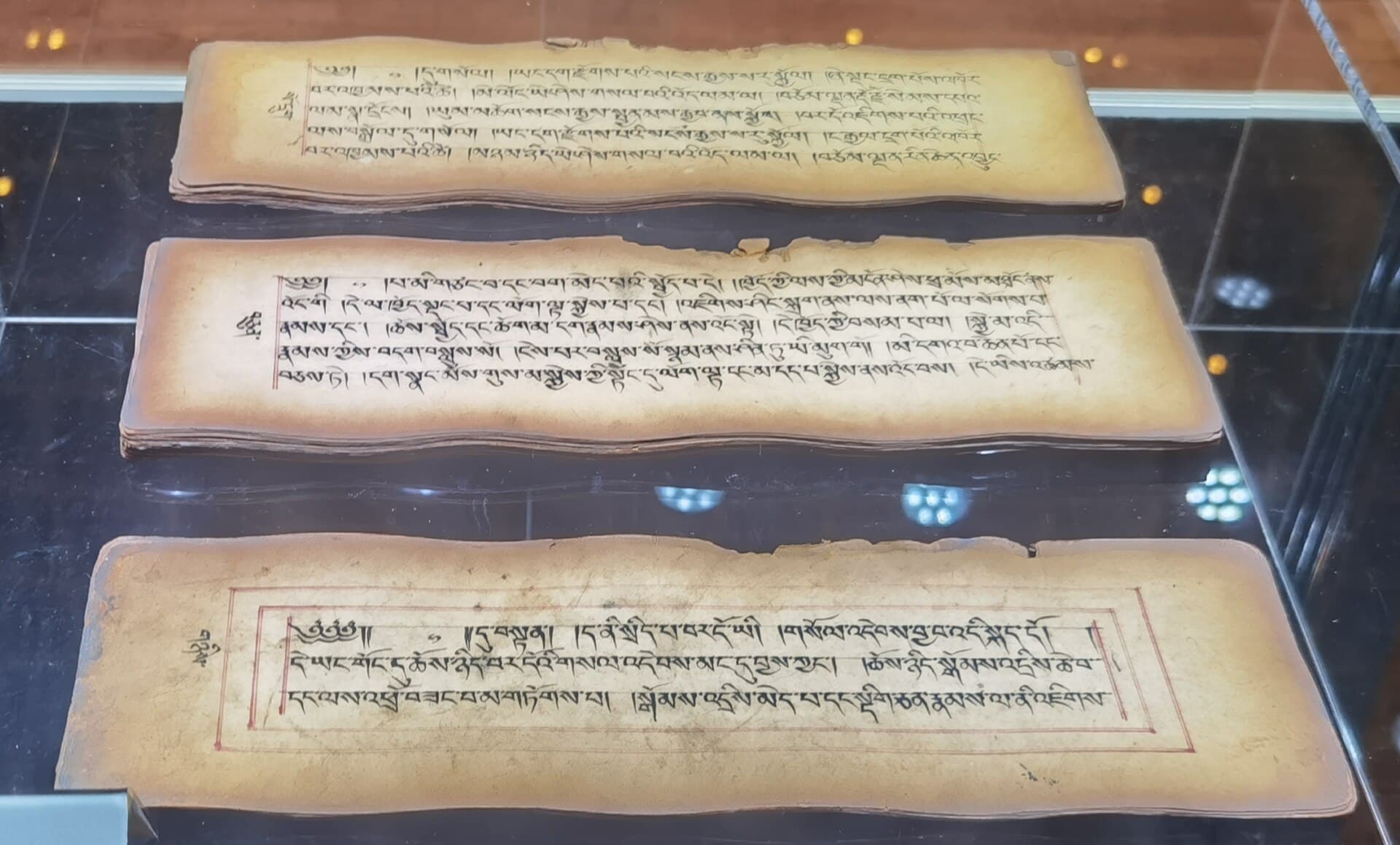
Tibetan manuscript pages of the Bardo Thödol on display
Photo: CatOnMars, CC BY-SA 4.0, via Wikimedia Commons

The Bardo Thödol — 'Liberation through Hearing in the Intermediate State' — was revealed by the 14th-century Nyingma treasure-revealer (terton) Karma Lingpa (1326-1386) on Mount Gampodar in central Tibet. It belongs to a larger cycle of teachings called the 'Self-Liberated Wisdom of the Peaceful and Wrathful Deities' (Karling Zhitro). Tradition holds that the text had been concealed by Padmasambhava in the 8th century, to be revealed when the time was right. The text is intended to be recited at the bedside of the dying and continuously over the forty-nine days after death — the maximum length of the intermediate state (bardo) before the next rebirth.

The Tibetan word bardo means 'between' — the gap, the interval. The Bardo Thödol describes six bardos: the bardo of birth and life, the bardo of dream, the bardo of meditation, the bardo of dying, the bardo of dharmata (the immediate post-death state of luminosity), and the bardo of becoming (the period of seeking the next rebirth). The text concentrates on the latter three — the death process, the encounter with luminosity, and the journey toward rebirth.

At the moment of death, the text says, the consciousness experiences the 'clear light' — the unconditioned luminosity that is the ground of mind itself. If recognized, liberation occurs in that instant. If not recognized, the consciousness moves into the bardo of dharmata, where it encounters first the peaceful deities and then the wrathful deities — projections of one's own mind in symbolic form. If still not liberated, the consciousness enters the bardo of becoming and is drawn toward a new rebirth, the text describing in detail the signs that indicate each of the six realms.

The Bardo Thödol entered Western consciousness through Walter Evans-Wentz's 1927 translation, prepared with Kazi Dawa-Samdup, which framed the text in the spiritualist vocabulary of its time and gave it the misleading title 'Tibetan Book of the Dead' (modeled on the Egyptian Book of the Dead). The more accurate Francesca Fremantle/Chögyam Trungpa translation (1975) corrected many of Evans-Wentz's interpretations. The most complete English version is Gyurme Dorje's 2005 translation (Penguin Classics), edited by Graham Coleman.

The text is not a 'book of the dead' in any morbid sense. It is, as Sogyal Rinpoche put it, a guidebook for the living. By practicing now with the instructions of the bardo, one prepares for the moment of death not as terror but as the highest opportunity for awakening.
Cross-reference

Related entries

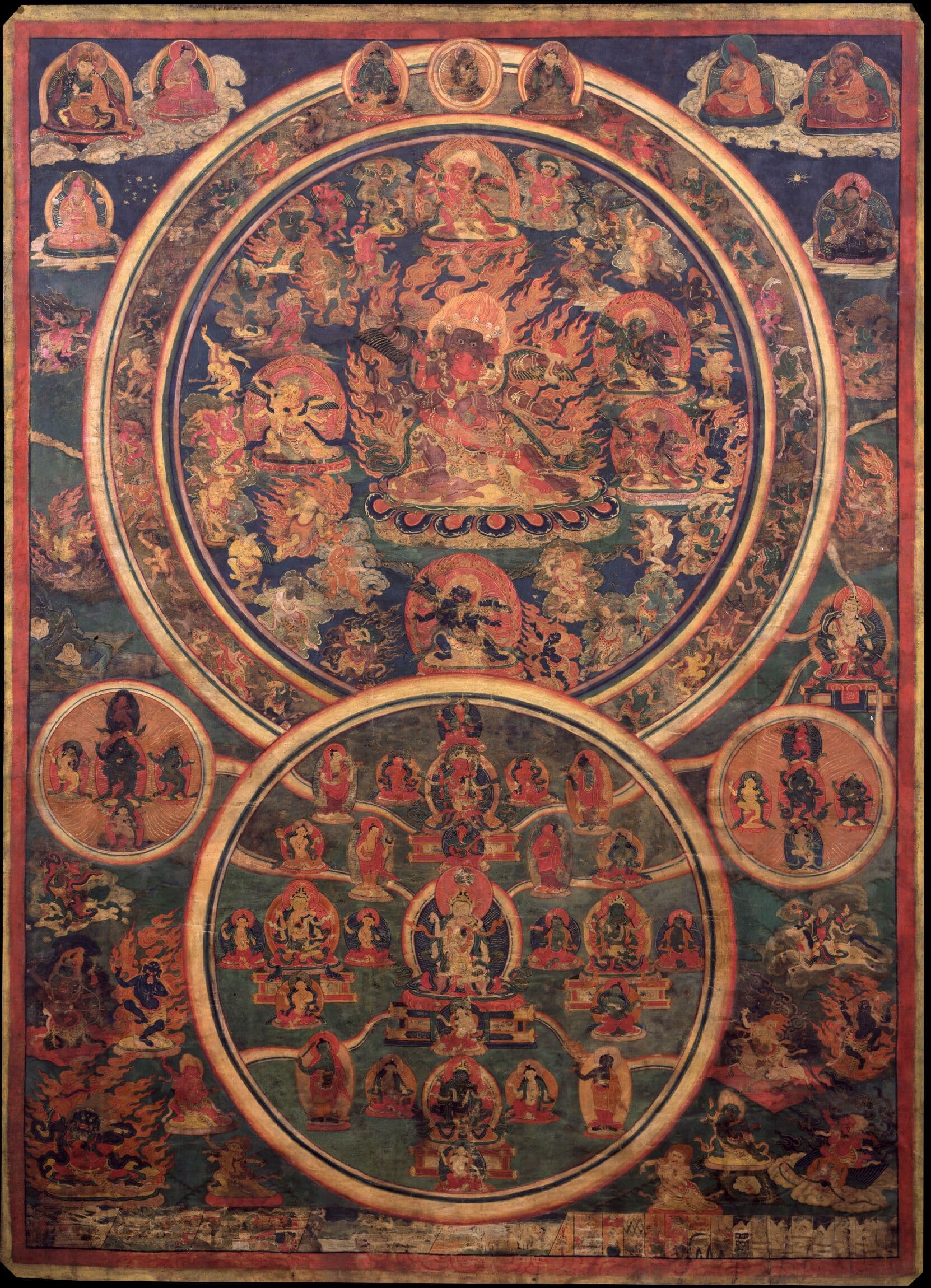
Tibetan thangka depicting the Peaceful and Wrathful Deities of the Bardo, from the Nyingma tradition of the Bardo Thodol
ConceptsVajrayana

The Bardo

In Tibetan Buddhism, the bardo is the intermediate state between death and the next rebirth — but more broadly, any transitional state. The Bardo Thödol maps these states as terrains of practice and recognition.

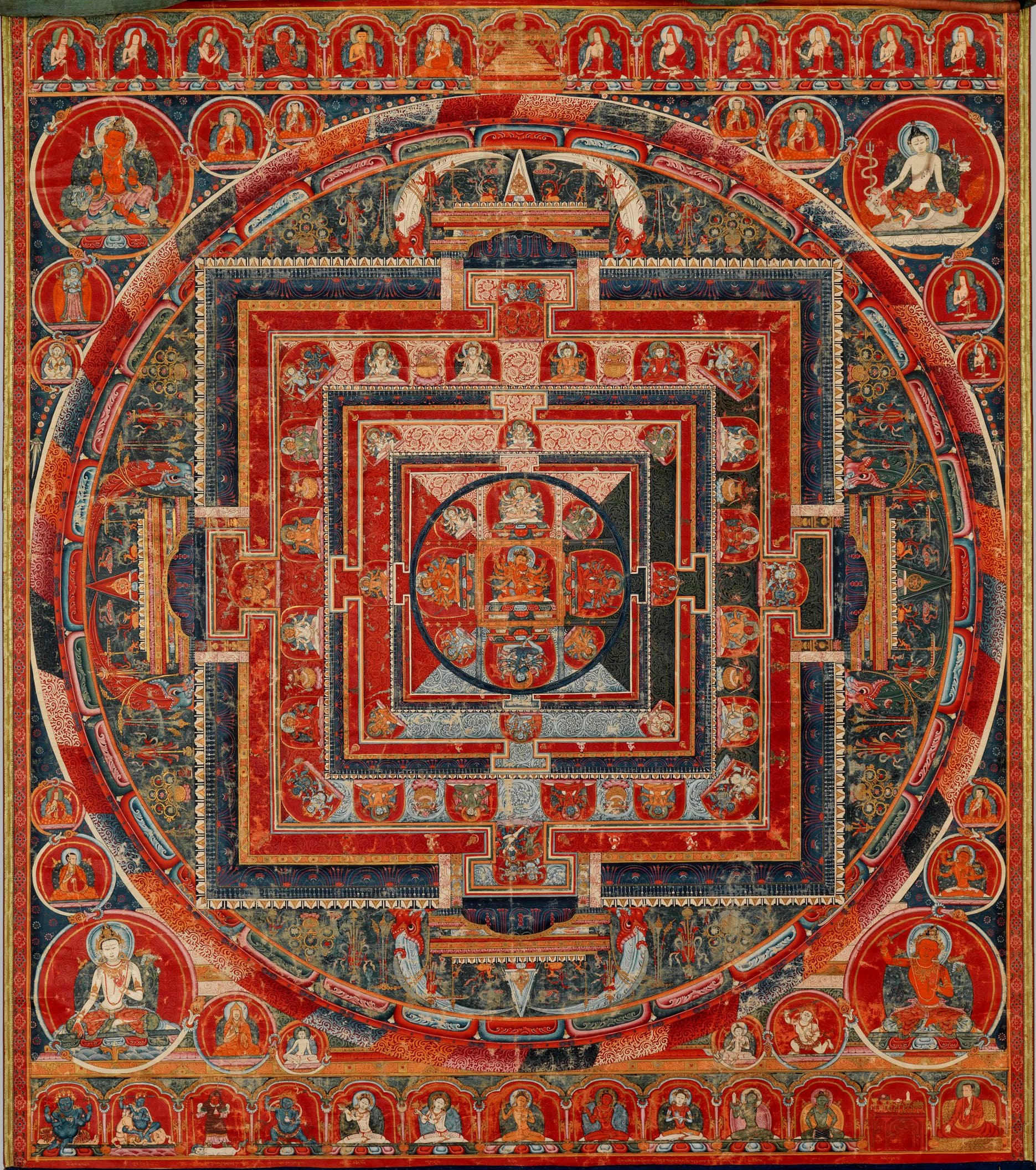
Tibetan tantric mandala of the forms of Manjushri, the bodhisattva of transcendent wisdom
TraditionsVajrayana

Vajrayana

The Diamond Vehicle — the tantric path that uses mantra, visualization, deity yoga, and direct transmission to make buddhahood possible in a single lifetime, in this very body, provided one has the right empowerment from a qualified lineage holder.

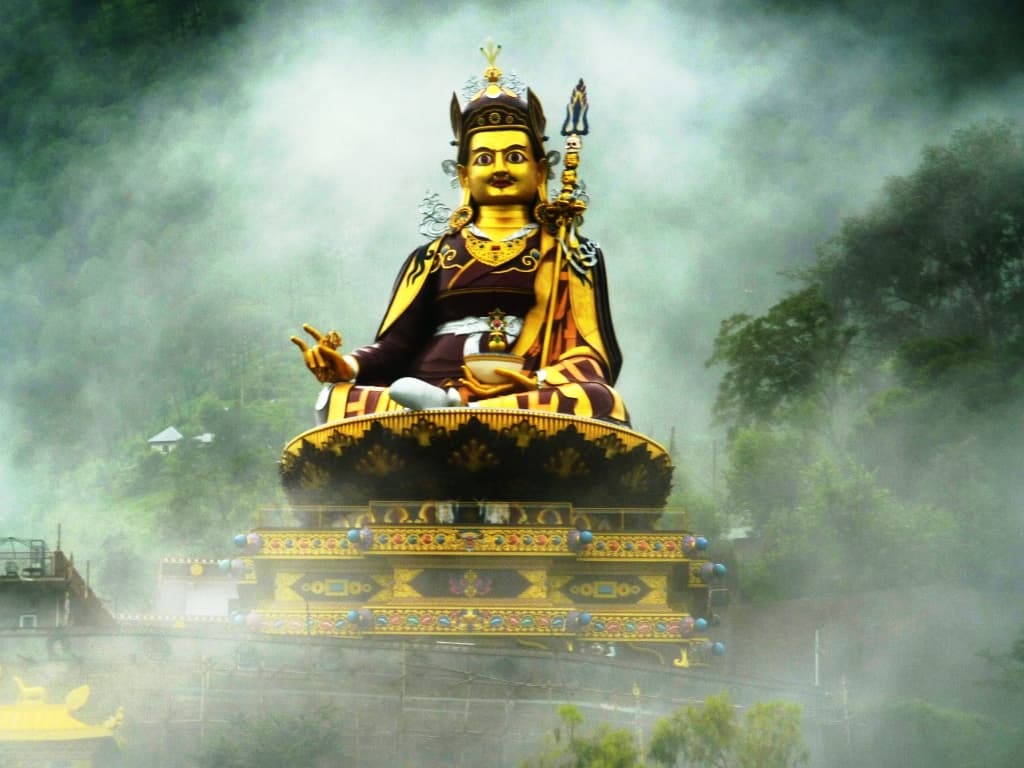
Large golden statue of Padmasambhava (Guru Rinpoche) enthroned on a lotus, crowned and holding a vajra and skull cup, rising above mist-covered hills
FiguresVajrayana

Padmasambhava

Eighth-century tantric master from Uddiyana who brought Vajrayana to Tibet at the invitation of King Trisong Detsen, founded Samye monastery in 779 CE, subdued the protector spirits of the Himalayan land, and concealed teachings — the terma — for retrieval by future generations. The founding figure of the Nyingma school and, in the Tibetan imagination, a second Buddha.

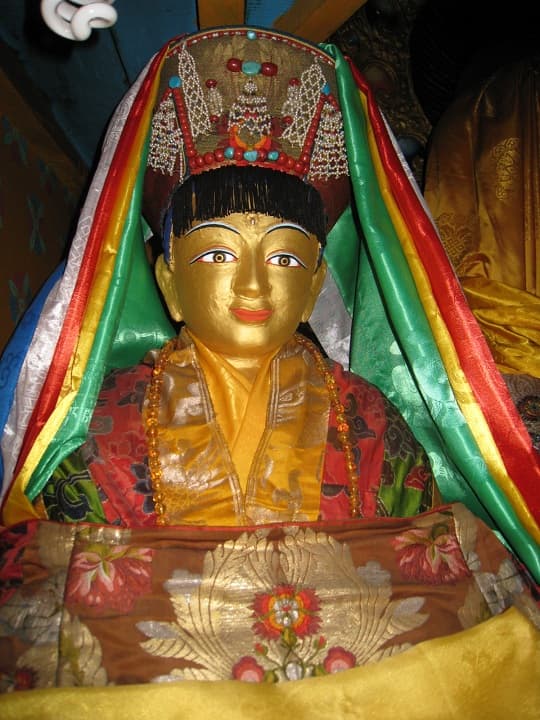
Gilded devotional statue of the yogi-poet Milarepa, dressed in ceremonial brocade and a jeweled crown, made by his root student Rechungpa
FiguresVajrayana

Milarepa

Tibetan yogi (1052-1135) who began life as a black-magic sorcerer, killed thirty-five of his relatives by hailstorm, repented, sought the lama Marpa the Translator, and after twelve years of brutal apprenticeship achieved enlightenment in a single lifetime. His Hundred Thousand Songs and his autobiography are the most beloved texts in Tibetan literature.

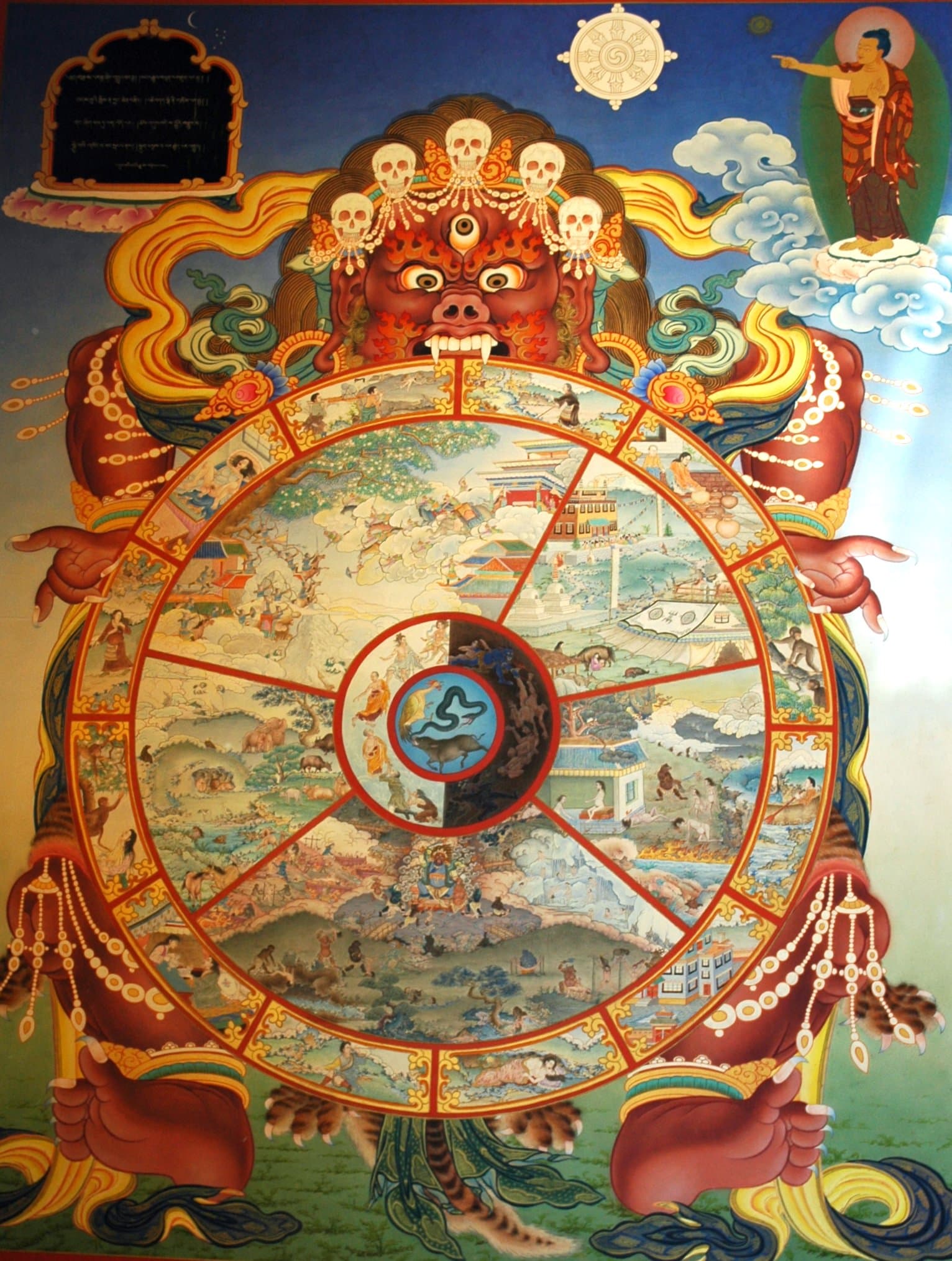
A traditional Bhavacakra wall mural showing Yama holding the wheel of life, with the six realms of rebirth and the Buddha pointing the way out
Core Teachings

Karma and Rebirth

Karma, in the Buddha's usage, is volitional action — and the law that intentional acts of body, speech, and mind carry consequences that ripen in this life or the next. Rebirth is the continuation of the stream of consciousness driven by craving and clinging.

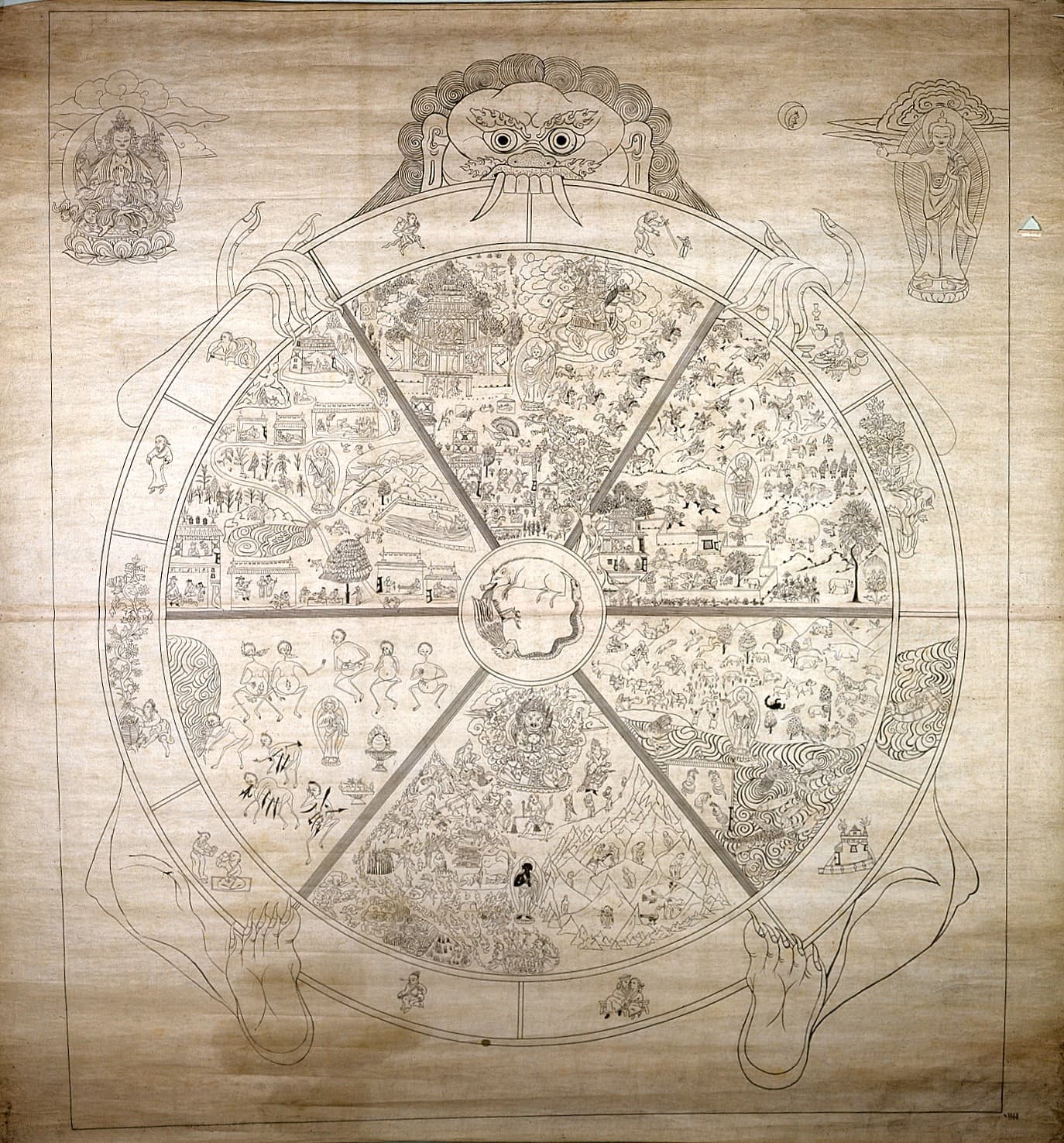
Antique ink drawing of the Bhavacakra — the Wheel of Life — held by Yama, Lord of Death, from the Wellcome Collection
Concepts

Samsara

The beginningless round of birth, aging, death, and rebirth, driven by ignorance and craving. Samsara is the predicament from which the dharma offers release.

Pilgrimage

Related sacred sites

Library

Further reading

  • The Tibetan Book of the Dead: First Complete TranslationGyurme Dorje, ed. Graham Coleman
    Penguin Classics, 2005
  • The Tibetan Book of the DeadFrancesca Fremantle & Chögyam Trungpa
    Shambhala, 1975
  • The Tibetan Book of Living and DyingSogyal Rinpoche
    HarperCollins, 1992
Reflections

The sangha responds.

0
Add your reflection
Comments are public to the sangha.