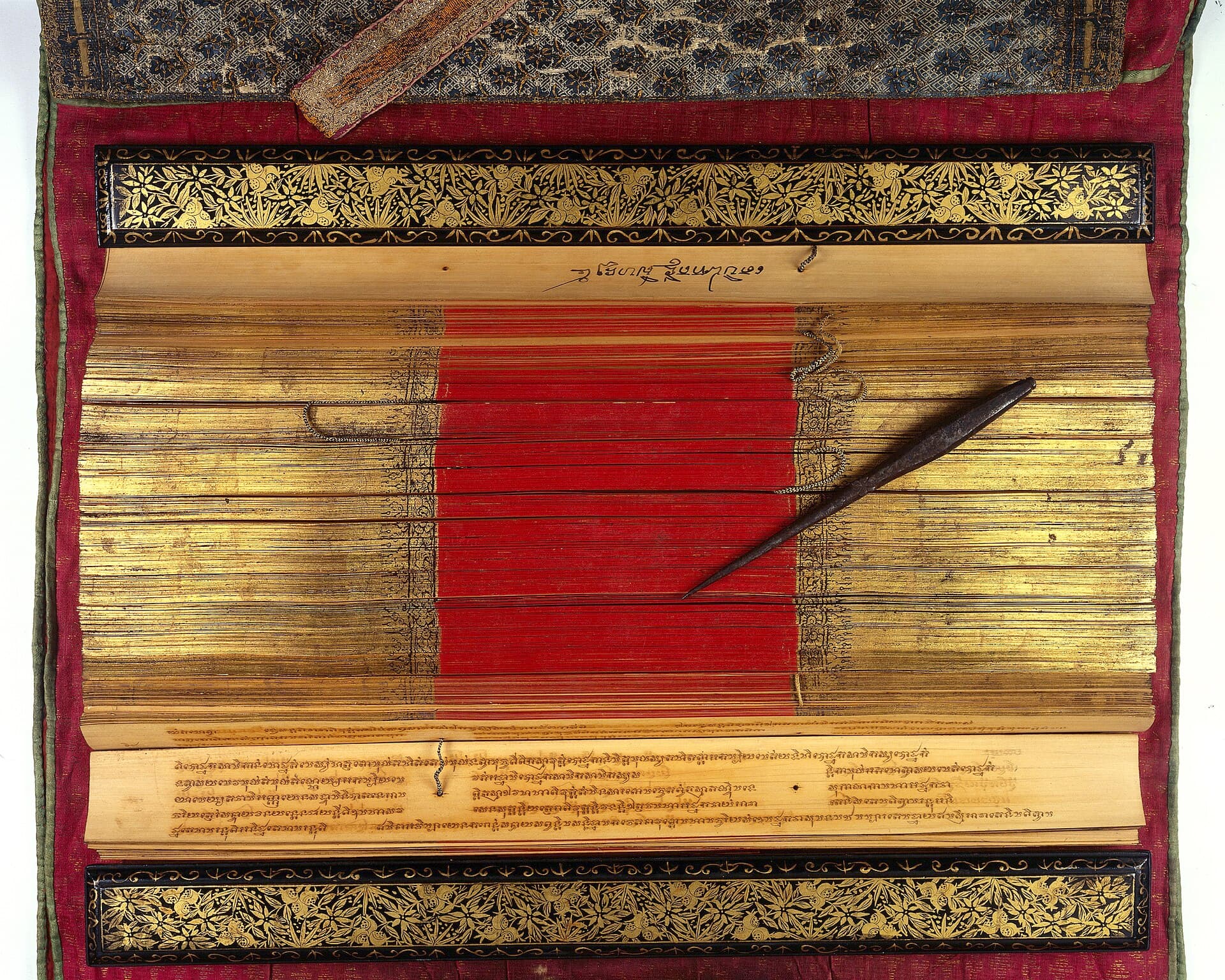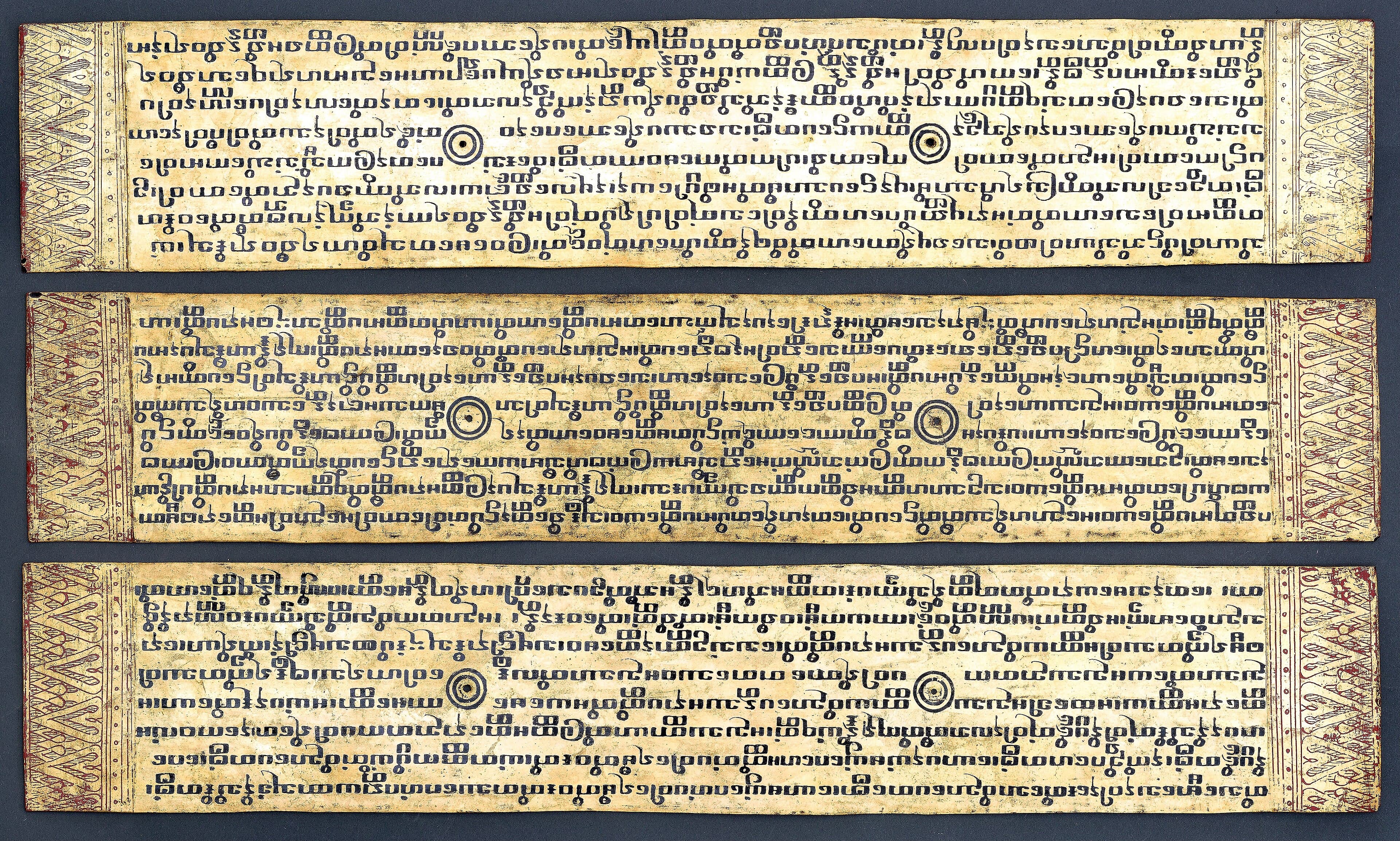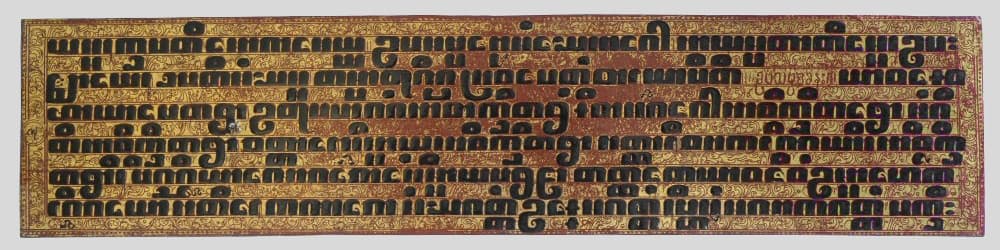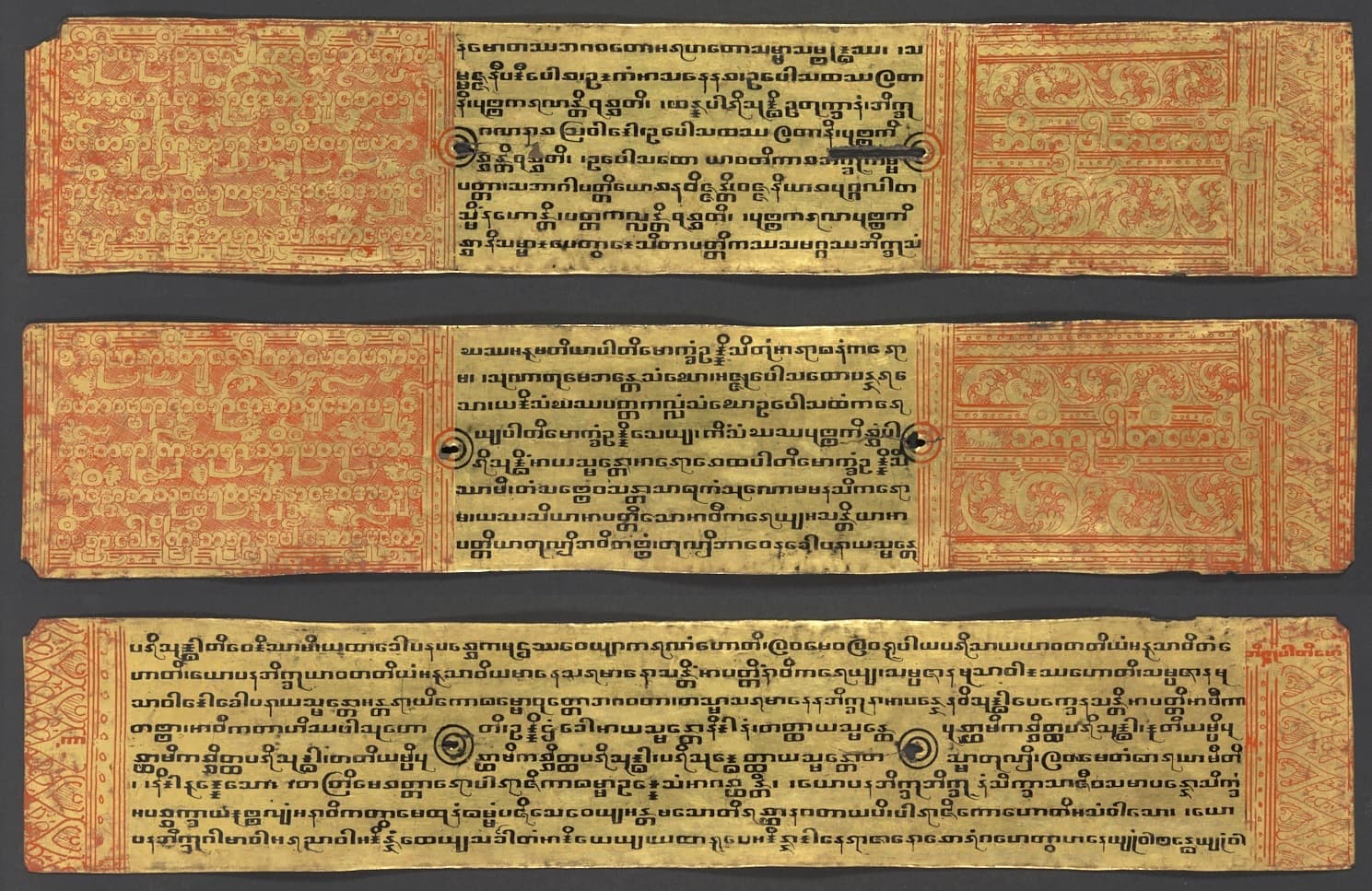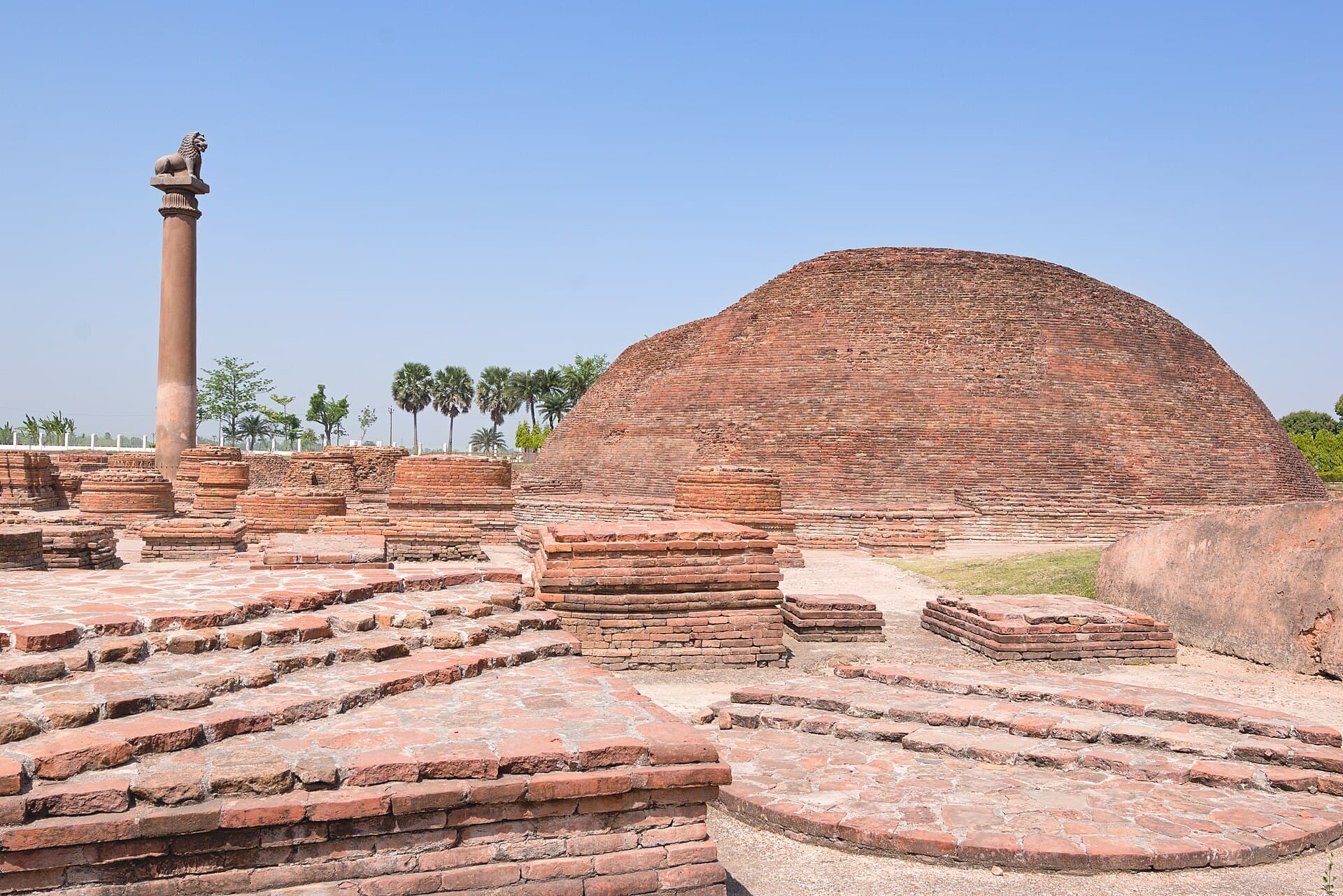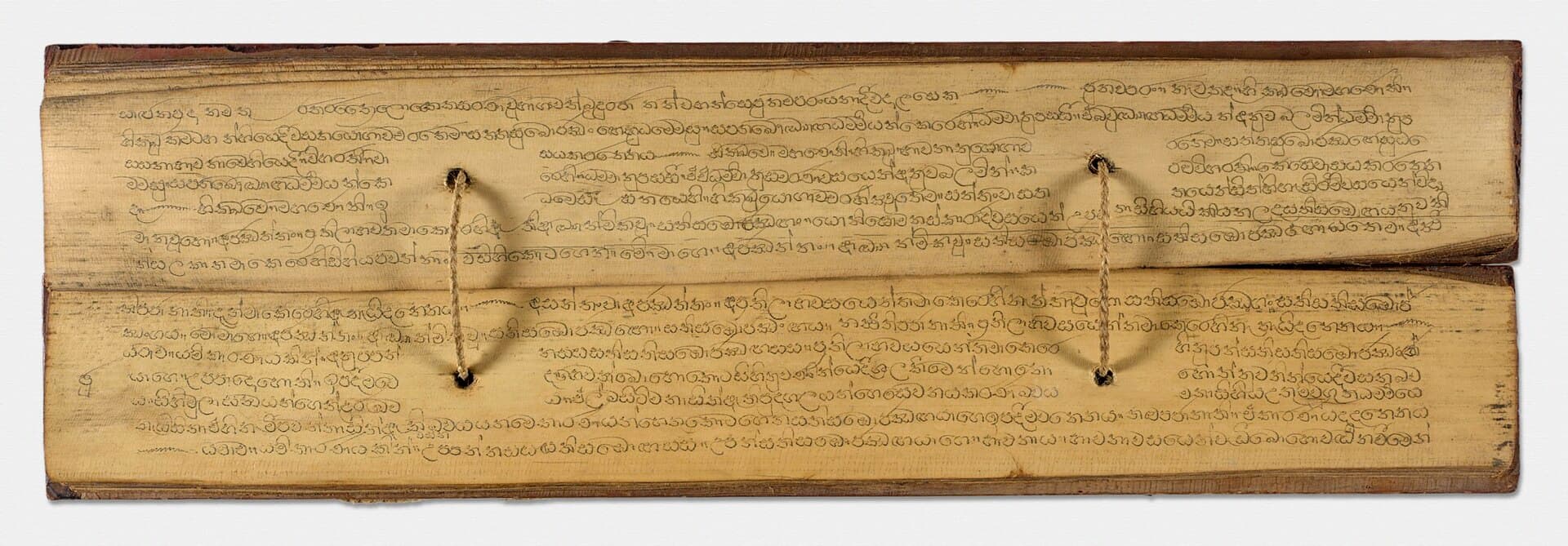
Three months after the Buddha's parinirvana at Kushinagar in 483 BCE, five hundred enlightened monks gathered in the Sattapanni cave above Rajgir to recite everything he had taught. The Vinaya — the monastic rules — was recited by Upali. The Sutta — the discourses — was recited by Ananda, who began each recitation with the words 'evaṃ me sutaṃ' — 'thus have I heard.' This was the First Council. What was recited there, refined at the Second Council a century later, and finally committed to ola-leaf manuscripts at the Aluvihara monastery in Sri Lanka during the reign of King Vattagamani in 29 BCE, became the Pali Canon — the earliest complete Buddhist scripture.
The canon is called the Tipitaka — the Three Baskets. The Vinaya Pitaka contains the 227 rules of the bhikkhu sangha and the 311 of the bhikkhuni sangha. The Sutta Pitaka contains the discourses, organized into five collections: the Long Discourses (Digha), the Middle-Length (Majjhima), the Connected (Samyutta), the Numerical (Anguttara), and the Minor Collection (Khuddaka) which holds the Dhammapada, the Udana, the Theragatha, the Therigatha, and other beloved smaller works. The Abhidhamma Pitaka contains seven books of systematic philosophy — a complete map of mind and matter.
The language is Pali — a Middle Indo-Aryan vernacular closely related to but distinct from the Magadhi the Buddha himself likely spoke. The canon was preserved orally for over four centuries before being written down, transmitted through trained reciter-lineages (bhanakas). The textual stability achieved by oral transmission is remarkable: comparison of the Pali against the Chinese Agamas (preserved by the Sarvastivada and other early schools) shows that the same suttas, in nearly the same form, were preserved across schools that had not been in direct contact for centuries.
The Pali Canon is not merely a Theravada document. It is the closest thing the dharma has to a primary historical record of the Buddha's teaching. Every later Buddhist tradition — Mahayana, Vajrayana, Zen, Pure Land — rests on its foundation. The Heart Sutra negates the categories of the Abhidhamma; Nagarjuna quotes the Kaccayanagotta Sutta; Dogen reads the Samyutta Nikaya. The canon is the bedrock under all the later flowering.