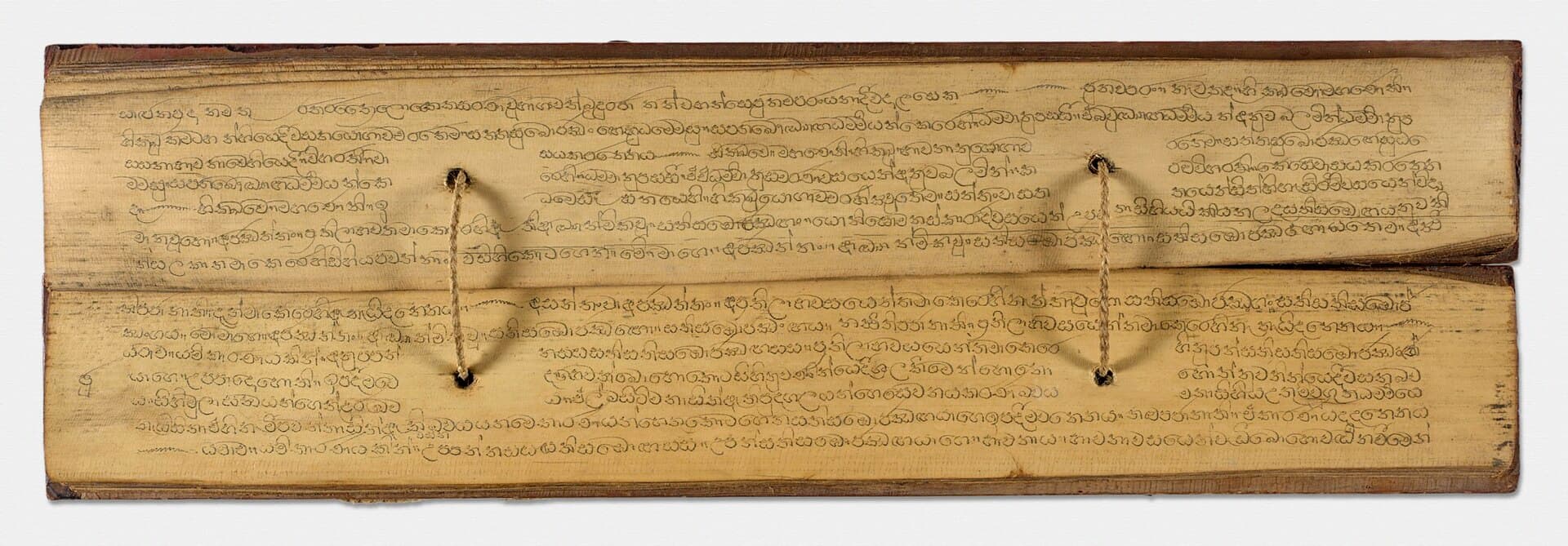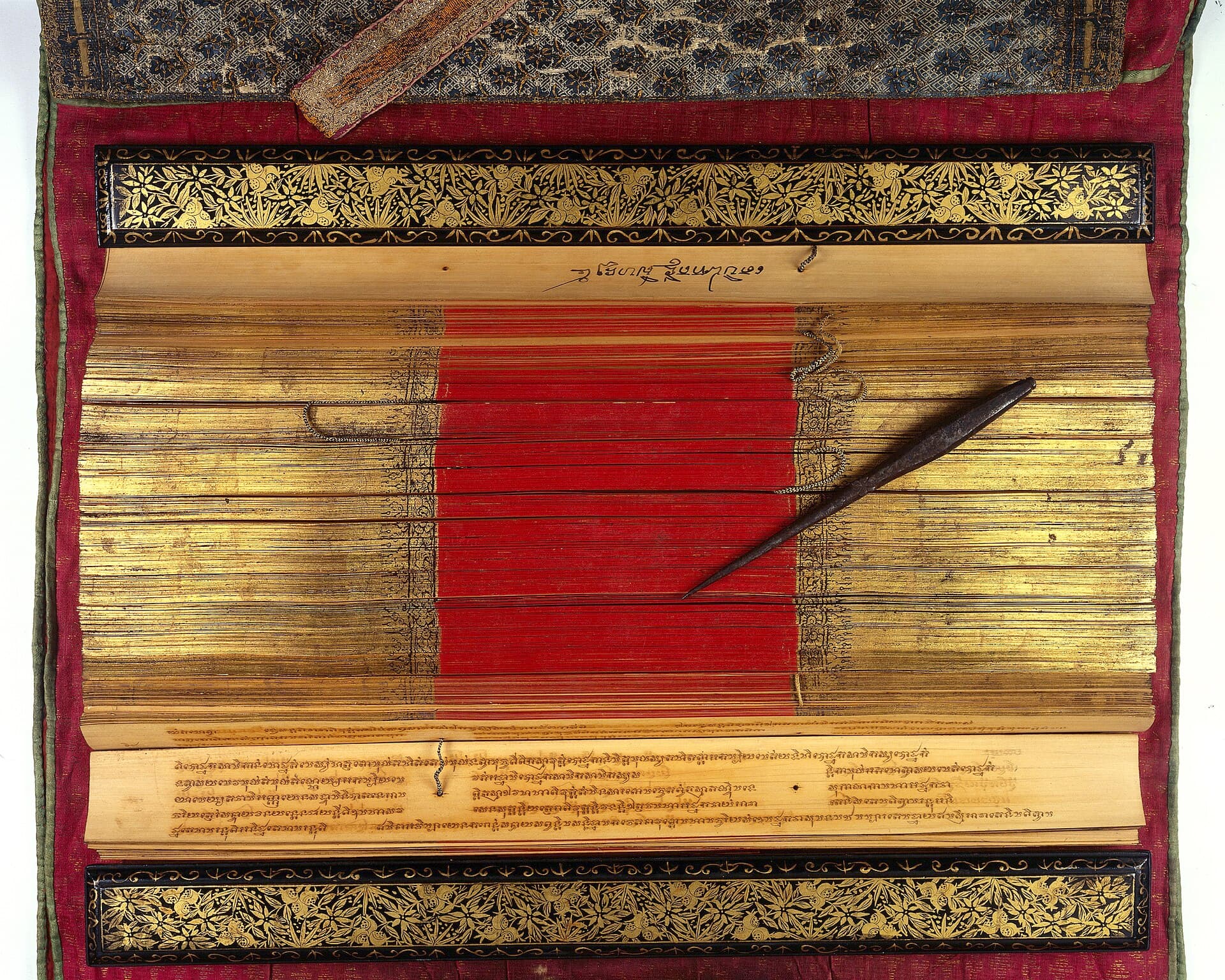
The Dhammapada is the most read, most translated, most quoted, and most beloved text in the entire Pali Canon. It belongs to the Khuddaka Nikaya, the Minor Collection of the Sutta Pitaka. But its compactness is its power. Four hundred and twenty-three verses, organized into twenty-six chapters thematically: 'The Pairs,' 'Heedfulness,' 'The Mind,' 'Flowers,' 'The Fool,' 'The Wise,' 'The Arahant,' 'The Thousands,' 'Evil,' 'Punishment,' 'Old Age,' 'The Self,' 'The World,' 'The Buddha,' 'Happiness,' 'Pleasure,' 'Anger,' 'Impurity,' 'The Just,' 'The Path,' 'Miscellaneous,' 'The Hells,' 'The Elephant,' 'Craving,' 'The Bhikkhu,' 'The Brahmin.' Each verse is short — often just a couplet — and stands on its own as a complete teaching.
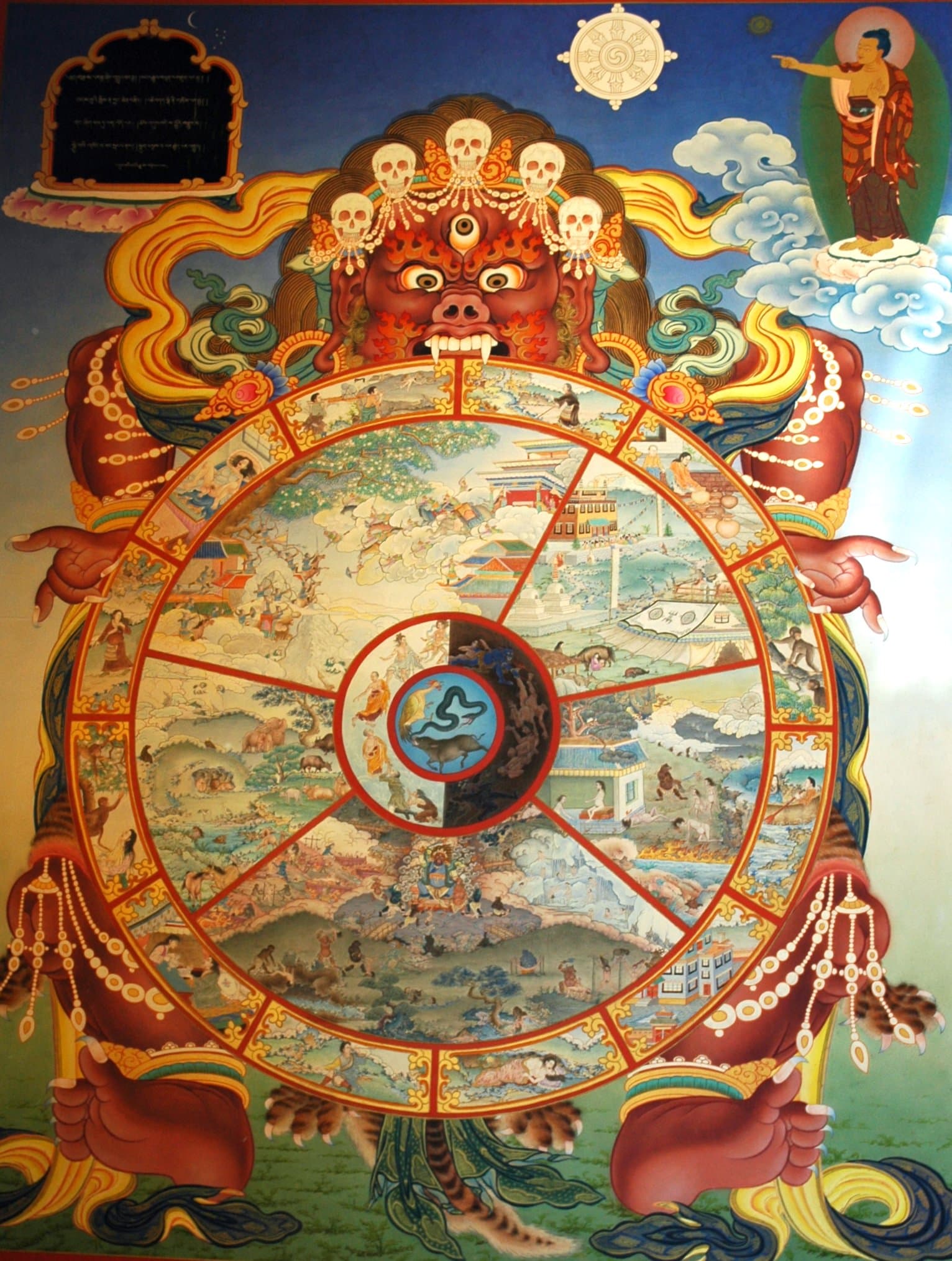
The text opens with what may be the most famous verses in Buddhist literature: 'Mind precedes all things. Mind is their chief; they are all mind-wrought. If with an impure mind a person speaks or acts, suffering follows him as the wheel that follows the foot of the ox. Mind precedes all things. Mind is their chief; they are all mind-wrought. If with a pure mind a person speaks or acts, happiness follows him as his never-departing shadow.' This is the entire teaching of karma compressed into eight lines.
The traditional commentarial literature — the Dhammapada-atthakatha attributed to Buddhaghosa (5th century CE) — preserves the narrative context (atthavatthu) for each verse: who the Buddha was speaking to, what circumstance prompted the teaching. These commentaries are themselves a treasury of Pali narrative, preserving stories of disciples (the conversion of Patacara, the awakening of Khema, the death of Cunda) that appear nowhere else in the canon.
The most widely-read English translations are Buddharakkhita's 1959 rendering (Buddhist Publication Society), the literal Acharya Buddharakkhita / Bhikkhu Bodhi Pali-English edition, Gil Fronsdal's contemplative 2005 translation (Shambhala), Glenn Wallis's 2007 modern poetic version (Modern Library), and Thanissaro Bhikkhu's freely available online translation. The Dhammapada exists in parallel versions in Sanskrit (the Udanavarga), Gandhari, Tibetan, and Chinese — testifying to its centrality in every early Buddhist school.
On The Promised Studios, one verse from the Dhammapada is broadcast each day. Verse five — 'Hatred is never appeased by hatred in this world. By non-hatred alone is hatred appeased. This is the eternal law' — is the verse most frequently cited as the heart of the dharma. It was the Buddha's response, in the commentarial frame, to a feud that had run for seven generations. He stopped it with twenty words.