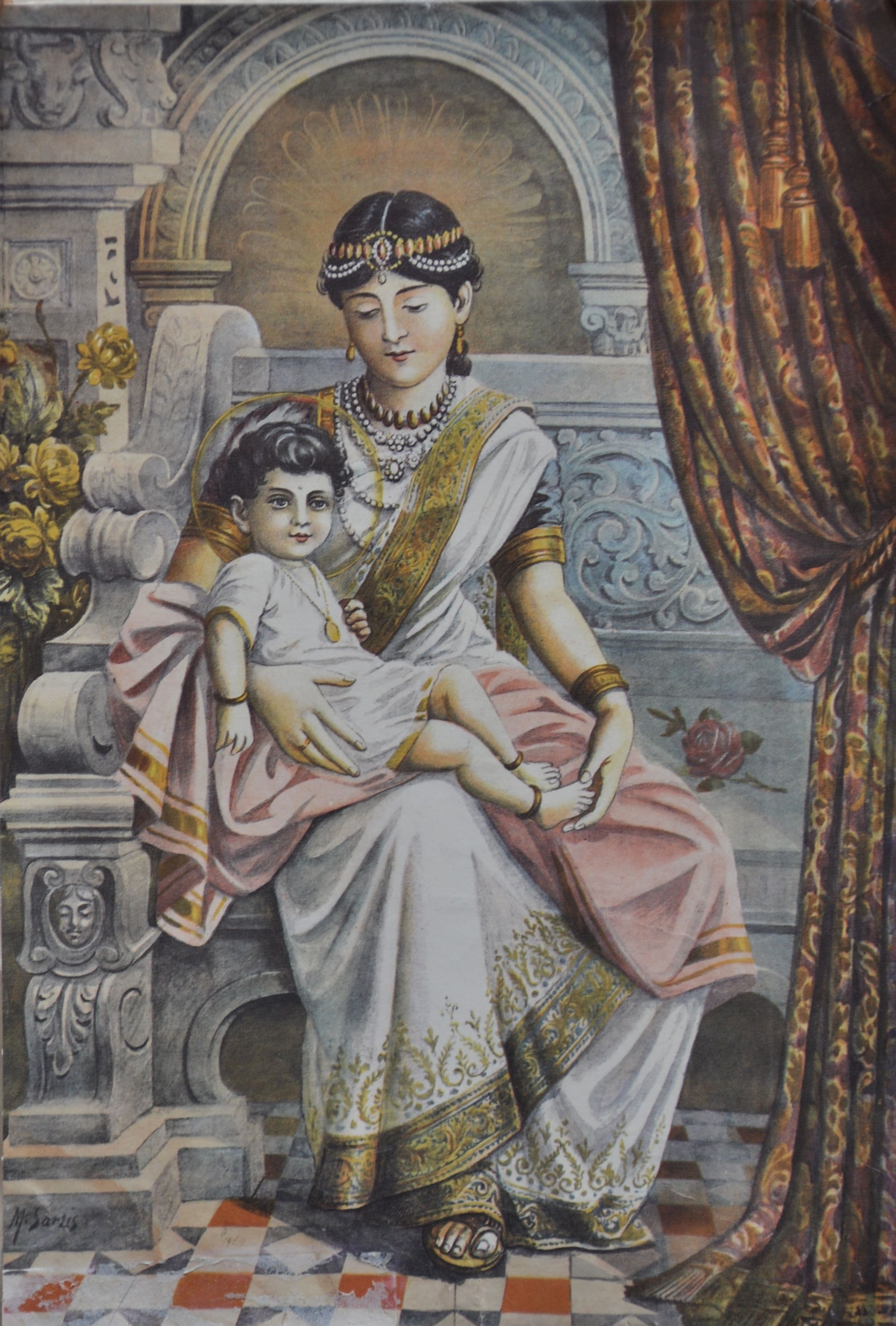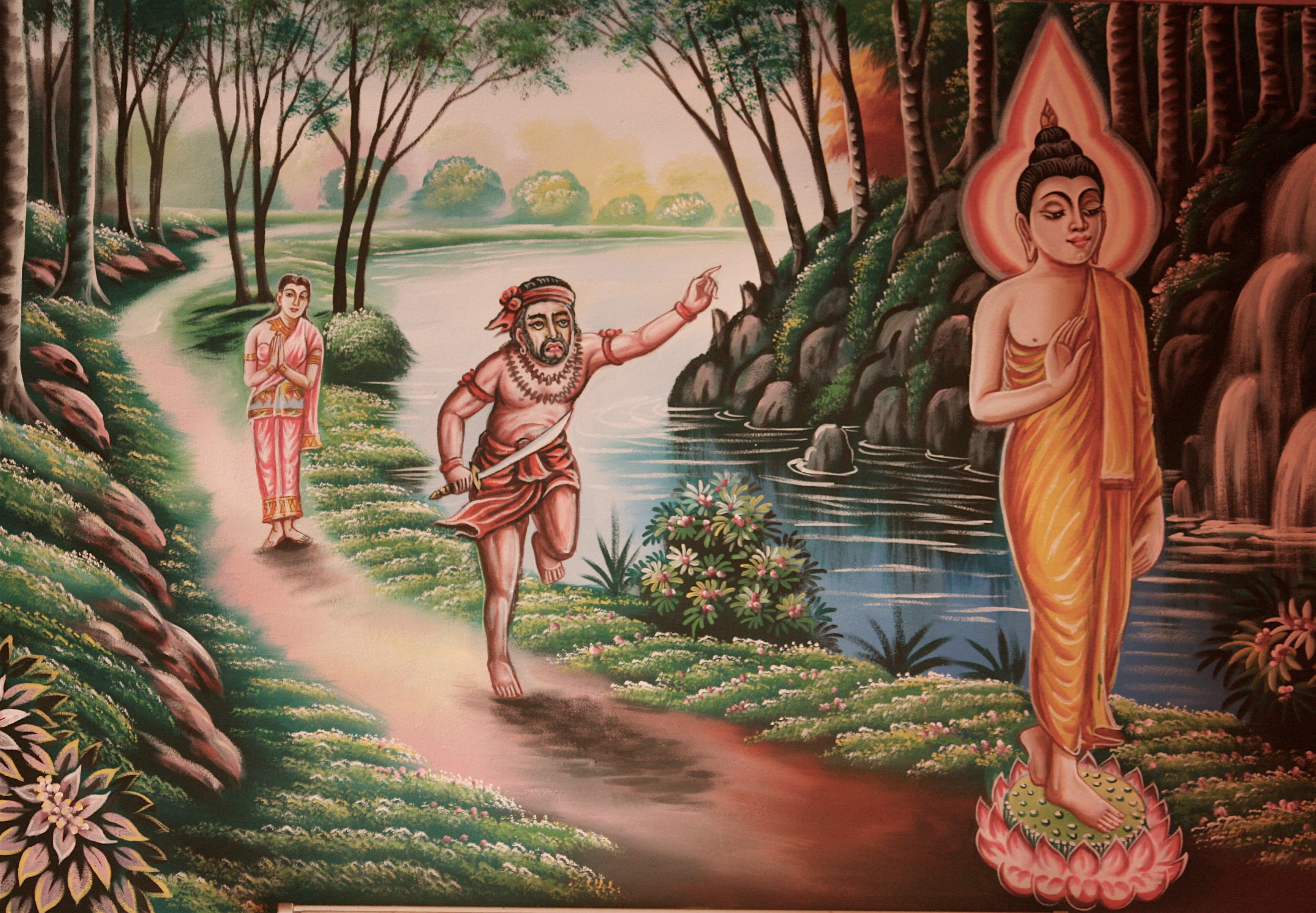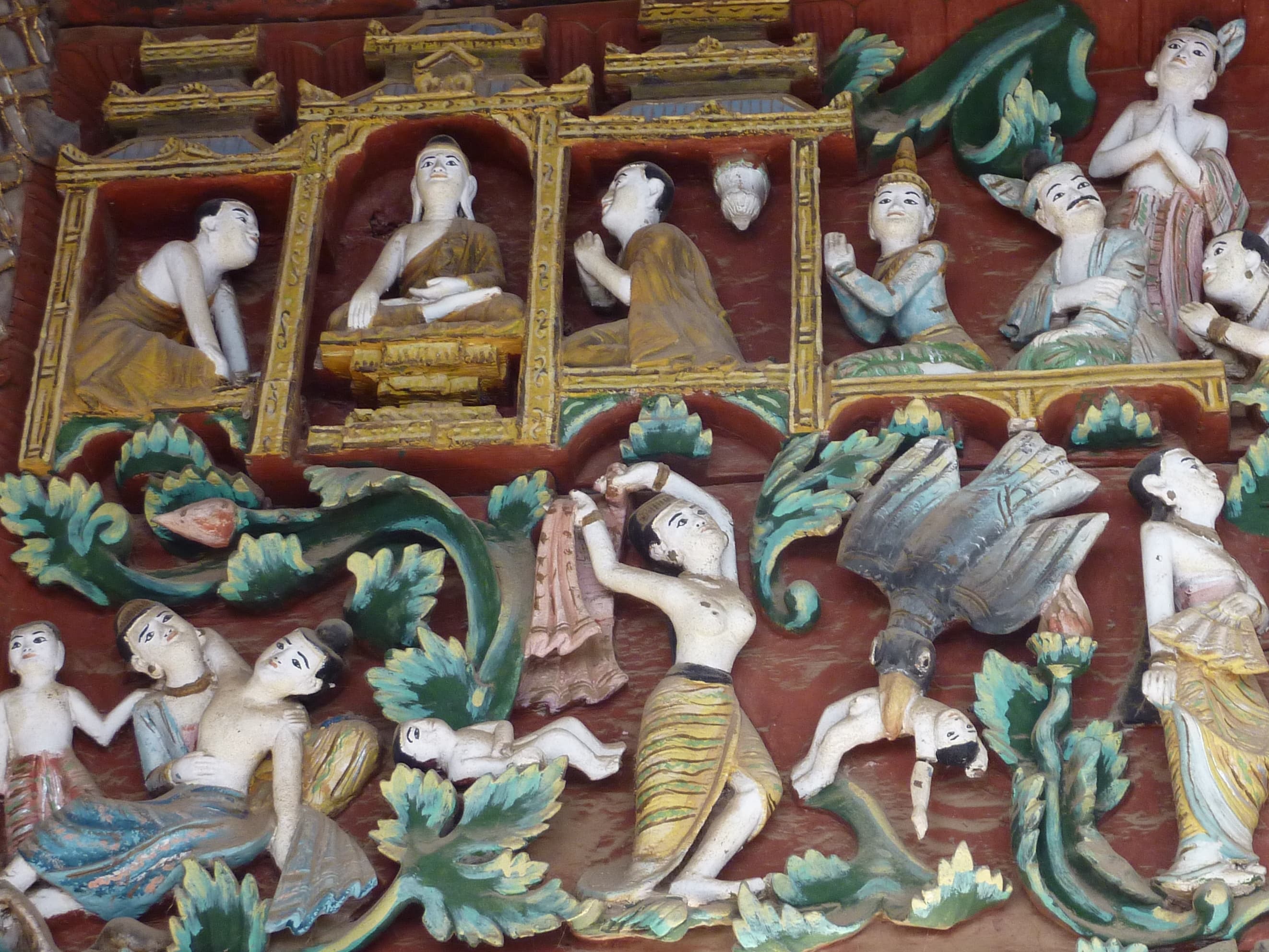
The story of Patacara is told as a series of losses. The daughter of a wealthy Savatthi merchant, she eloped with a servant against her family's wish; they fled into the forest. The first child was born during a thunderstorm; her husband, building shelter, was killed by a snake. She continued on alone with her two children toward Savatthi. At the Aciravati river, she crossed first with the infant, then returned for the older boy. Midstream, a hawk seized the infant on the far bank; she shouted; the older boy, hearing her shout from the near bank, ran toward her and was swept away by the current. She reached Savatthi to find that her parents and brother had died the night before in a house collapse. By the time she met the Buddha at Jetavana, she had lost everything and her mind. She had walked the streets naked, hair disheveled, weeping, until the children threw stones at her and called her crazy-cloak — pāṭacarā, "she who walks in rags." That is the name the tradition kept.
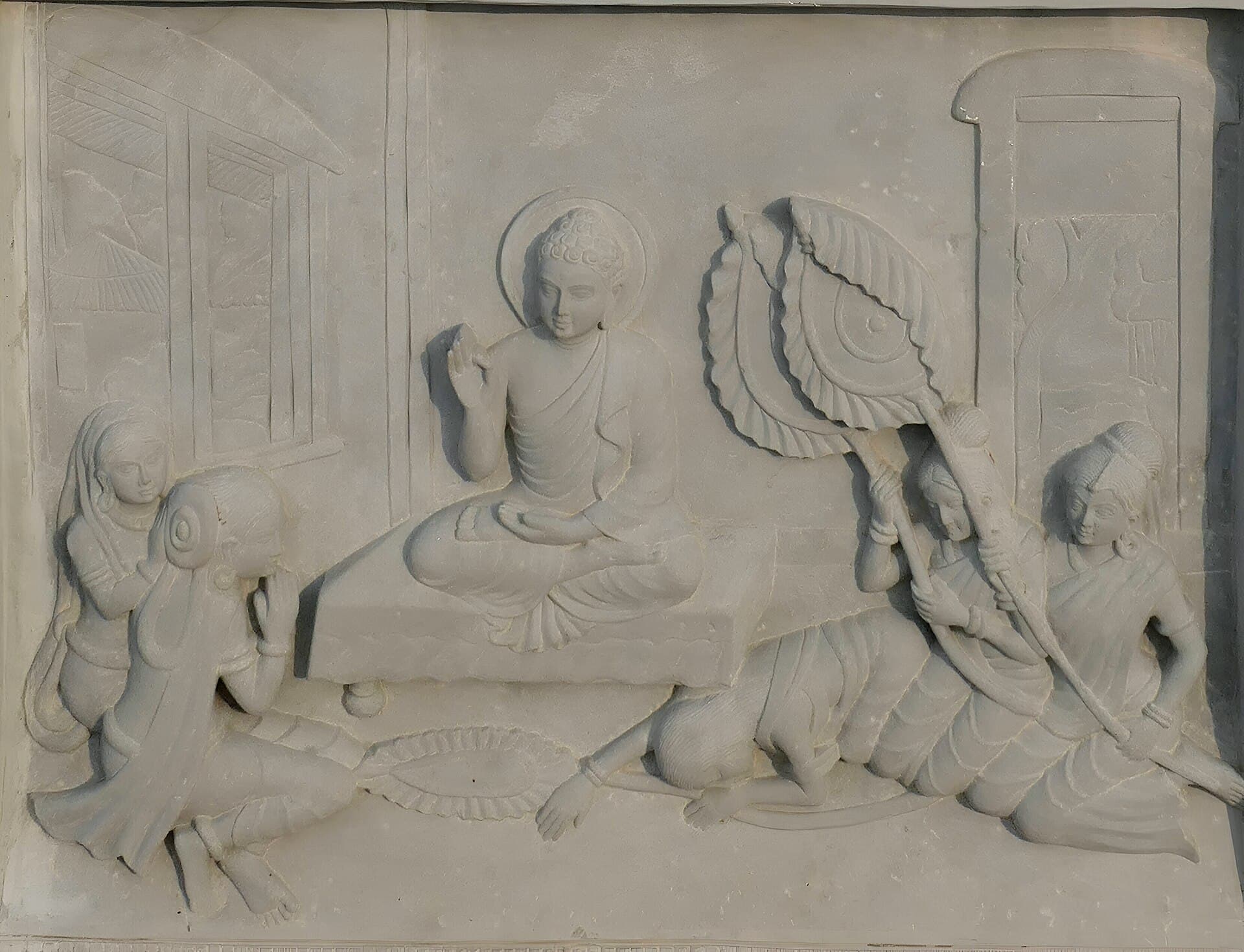
She wandered into the Jetavana grove almost by accident. The lay people tried to drive her out. The Buddha said: "Let her come." She came near; she had walked in unaware she was naked, the texts record. A man in the assembly threw her a cloak. She wrapped herself and stood. The Buddha said only: "Sister, recover your senses" — bhaginī satiṃ paṭilabha. The four words. Tradition records that those four words returned her. The Dhammapada-atthakatha (Dhp-A 113) gives the dialogue that followed. He told her: "You have wept for your son, your husband, your parents in this life. But for the death of those dear to you in the round of rebirth, you have shed more tears than the waters of the four oceans. Why do you not grieve for that?" She bowed. He gave her the dhamma. She entered the stream as he spoke.
She asked to be ordained. Mahaprajapati, by that point, was already running the bhikkhuni order at Savatthi. Patacara entered. The Therigatha records her own account of her awakening (Thig 112-116). She had been washing her feet at the well of the bhikkhuni quarters. She poured the water from her bowl. The first stream sank into the dry earth not far from where she had poured it. She poured a second stream; it ran further. She poured a third; it ran further still. She watched the water disappear into the parched ground at three different distances. "And through that observation," her verses say, "I understood the nature of beings — that they too die in childhood, in middle age, in old age, just as the streams sank at different distances into the earth. And in that moment I made the lamp of my mind go out as one extinguishes a wick." The verb she uses is precise — paṭipajjati — to enter onto the path. The mind that lost everything found the unborn.
Within months — or some texts say years — she became one of the chief bhikkhunis of vinaya, the Buddha himself declaring her foremost in mastery of the monastic discipline (vinaya-dharā). The Anguttara (AN 1.236) places her as foremost among the bhikkhunis in this domain — the women's order counterpart of Upali in the men's. The choice is not random. She had lost the entire fabric of household life — husband, children, parents, the structure of marriage and inheritance — and the Buddha gave her, in compensation, the structure of the monastic discipline, the rules that hold the dhamma in form. She was the keeper of those rules. Many of the senior bhikkhunis came to her for ordinations and resolution of disputes. The commentaries record that she trained five hundred bhikkhunis who went forth on hearing her story.
The Therigatha preserves three sets of verses associated with her: her own (Thig 112-116), an extended set attributed to her group of five hundred disciples (Thig 117-121), and a second long set ascribed to bhikkhunis ordained through her teaching (Thig 122-126). Her instruction to those women is repeated in the texts: take this body apart in your contemplation, watch the streams sink into the earth, do not weep for those who are following the path you all must follow. She is the most empirical of the bhikkhunis — her dhamma is observation, the watching of water on dry ground, the seeing of what is and what passes. She died, the tradition records, at a great age, in the company of the disciples she had trained. She is the bhikkhuni the Therigatha returns to most frequently, and the patron, in modern Buddhist consciousness, of all those whose spiritual life begins from total loss.