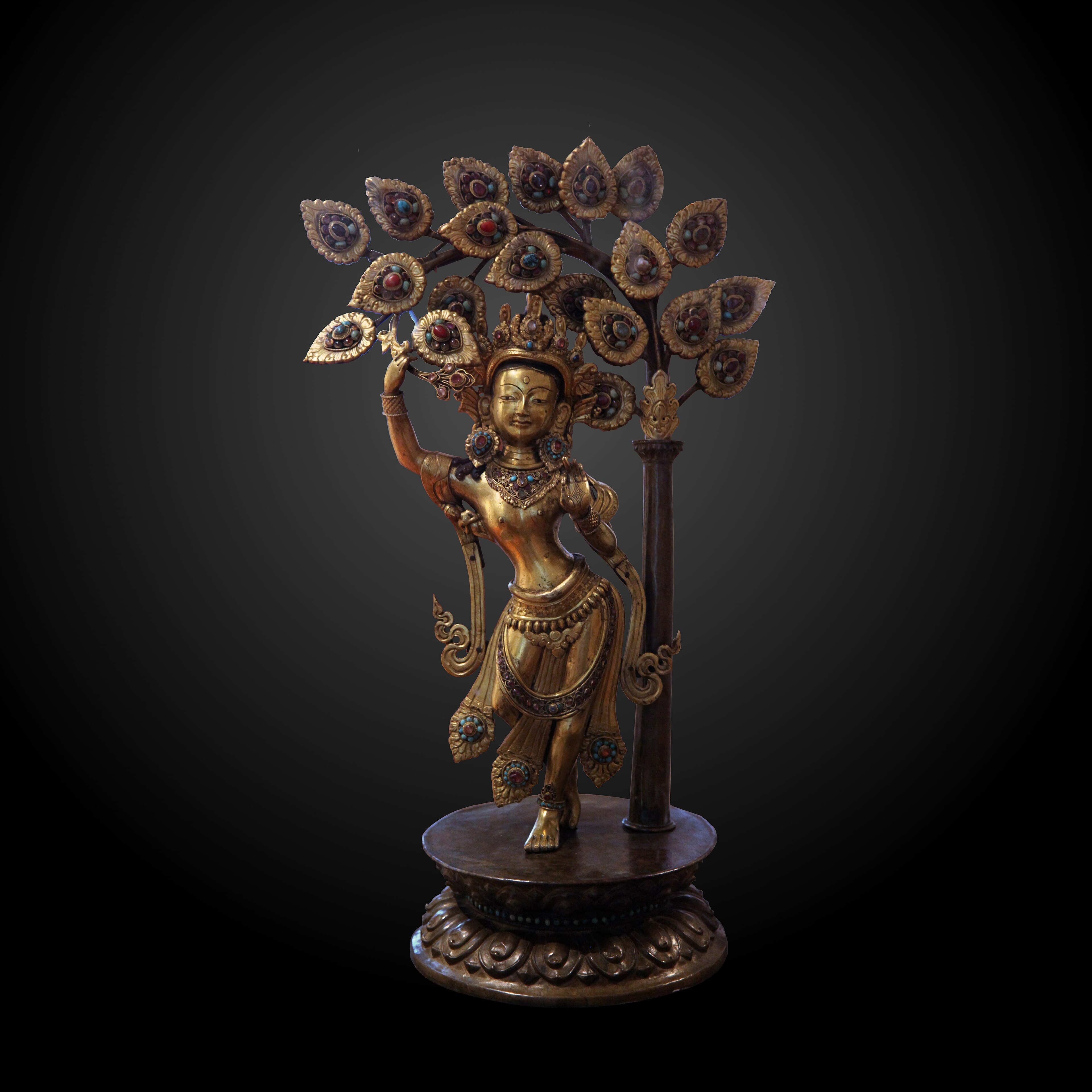
His given name was Ahimsaka — "the harmless one." His father Bhaggava was a brahmin in the service of King Pasenadi of Kosala; his mother was Mantani. The texts record that he was born under inauspicious astrological signs — that the weapons in his father's house rattled the night of his birth, and Pasenadi's own weapons in the palace armory glowed. The court astrologers consulted; the boy, they said, was born under the sign of the bandit. Bhaggava, advised to expose the infant, refused; he named him Ahimsaka in defiance of the omens and sent him, when he was old enough, to Takkasila — the great brahmanical university — to study under the most renowned teacher of the time.
At Takkasila, Ahimsaka excelled. He was, the commentaries say, the most gifted of his teacher's students — quick, devoted, hard-working, physically strong, and unfailingly obedient. The other students grew jealous. They went to the teacher with whispered slander: that Ahimsaka was sleeping with the teacher's wife, that he was plotting to inherit the school, that he was already telling the other students he would surpass the master. The slander accumulated. The teacher — who could not, by brahmanical law, kill a student — set Ahimsaka a final assignment in lieu of his graduation gift: bring a thousand human right index fingers as the teacher's fee. The teacher expected, the commentaries say, that Ahimsaka would die in the attempt and the problem would resolve itself.
Ahimsaka took the assignment. He fled the school, went into the forests of Kosala, and became the bandit Angulimala — "garland of fingers" — wearing his trophies on a string around his neck. He killed for years. The Angulimala Sutta (MN 86) says that by the time the Buddha entered Kosala, the bandit had killed close to a thousand people. The villages near his forest stretch had been abandoned. Pasenadi, at the urging of his court, was preparing a five-hundred-soldier expedition to bring him in. Mantani — the bandit's aged mother — heard the news from the palace. She set out alone, into the forest, to warn her son before the troops arrived. The thousandth finger Angulimala needed; he had nine hundred and ninety-nine. He saw a figure approaching through the trees. He raised his sword.
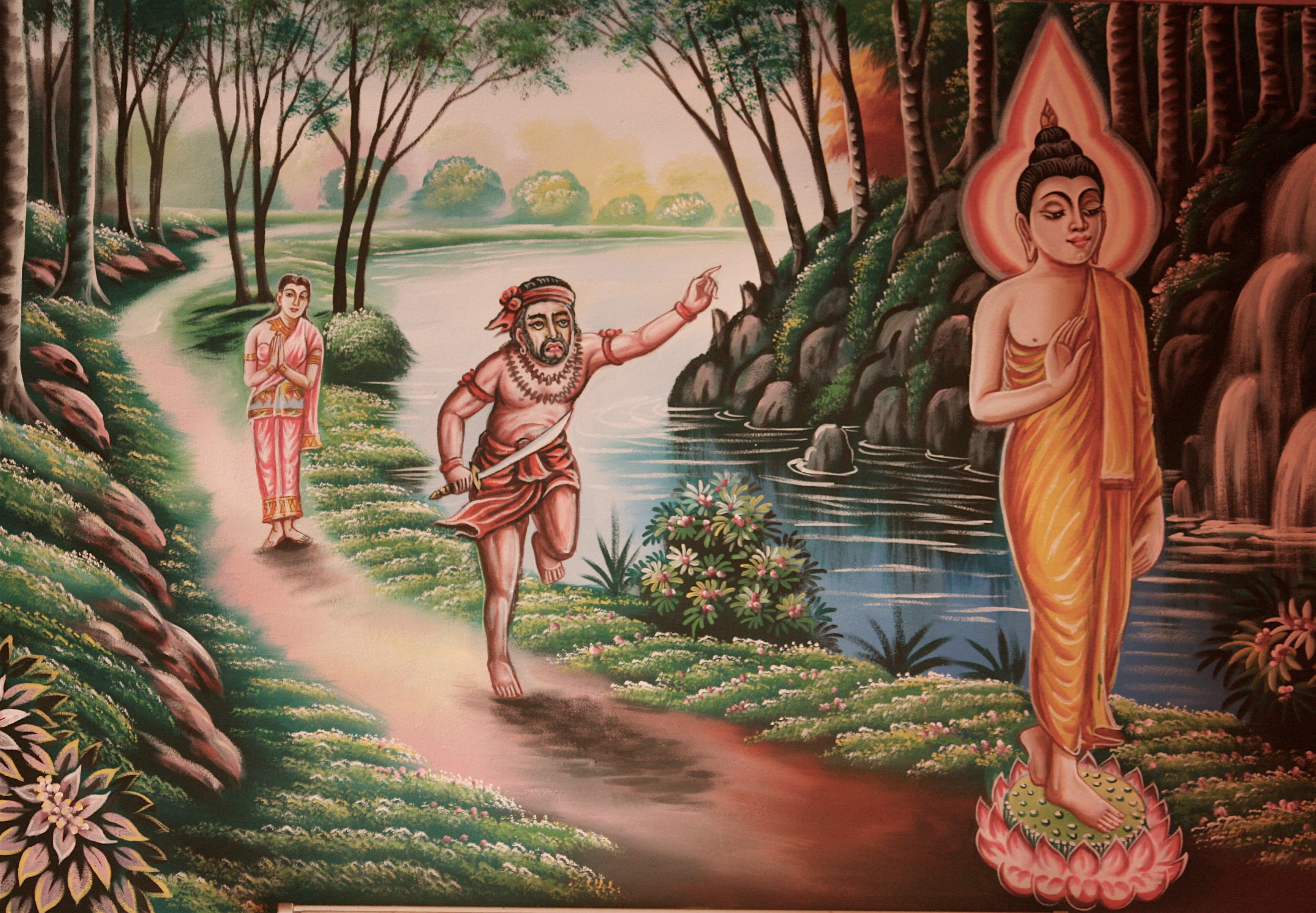
The Buddha, the Mahaparinibbana Sutta places this in the twelfth or thirteenth year of the dispensation, walked into the forest the same morning. The villagers had warned him not to enter. He continued. Angulimala saw, from his hiding place, the brahmin walking on the road. He decided his mother could wait; the recluse would do. He drew his sword and ran. The Angulimala Sutta records the chase as the canon's strangest piece of miracle: the Buddha walked at an ordinary pace; Angulimala, the fastest runner in the kingdom of Kosala, sprinted with all his strength and could not catch up. He ran until he was exhausted. He shouted: "Stop, recluse!"
The Buddha, walking on, said over his shoulder: "I have stopped, Angulimala. It is you who has not."
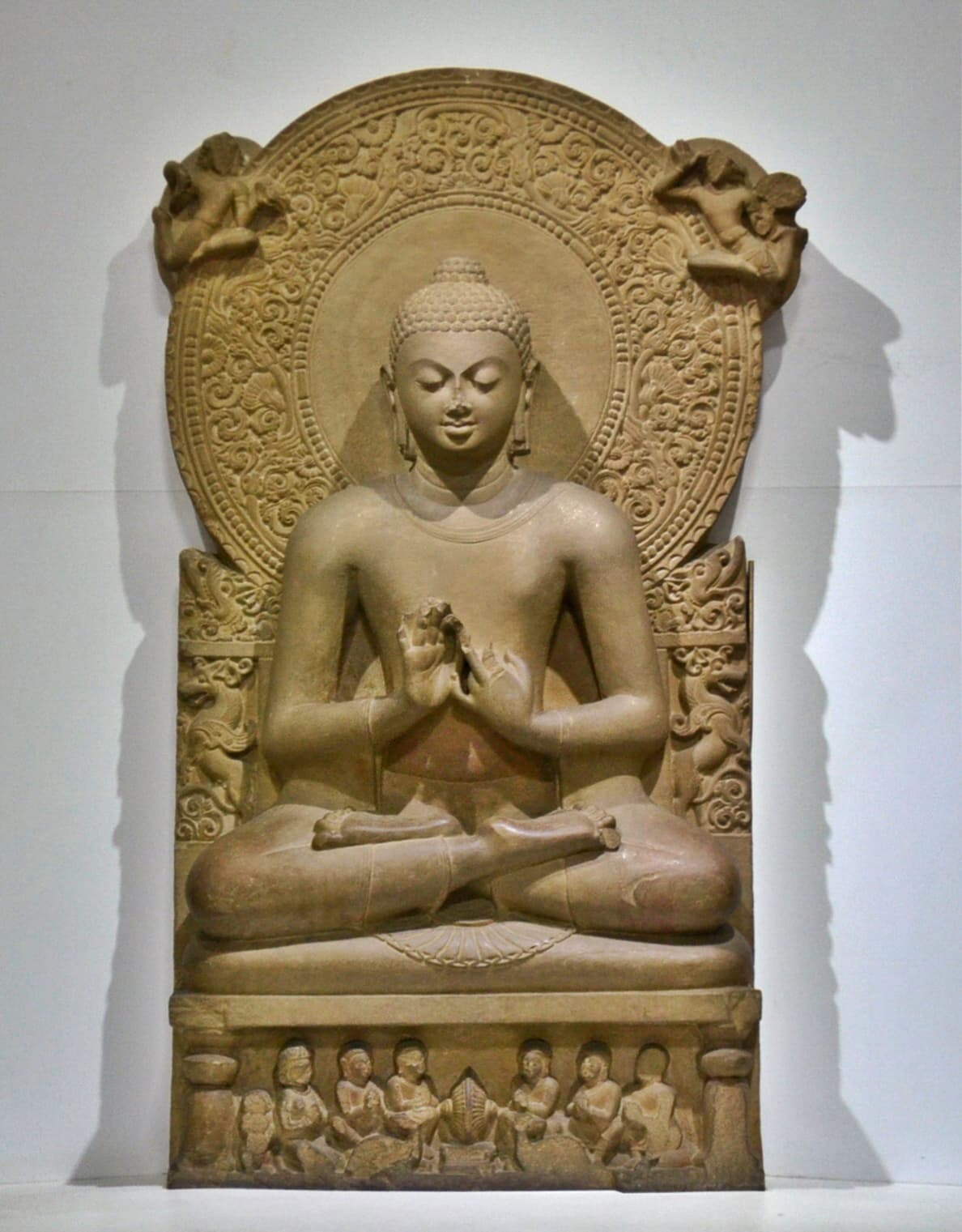
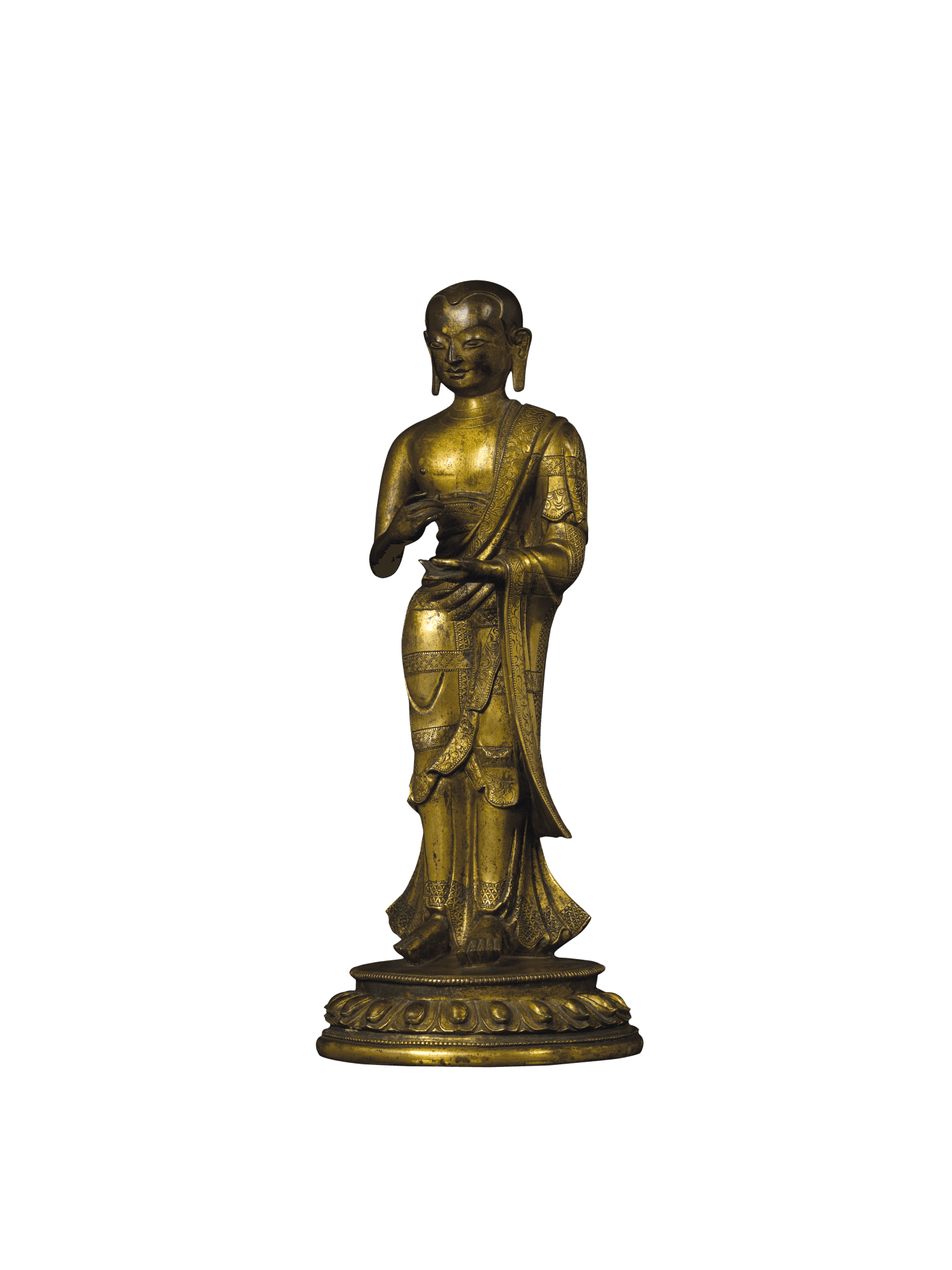
Angulimala stopped. He asked what the recluse meant. The Buddha replied: "I have stopped — I have laid down the weapon against all beings. You have not. That is the difference." Angulimala, hearing this, threw his sword over a cliff into a chasm, fell at the Buddha's feet, and asked for ordination. The Buddha said: "Come, bhikkhu." The bandit walked back with him into Savatthi, head shaven, in the yellow robe.
What happened in the city is part of the sutta's power. Pasenadi himself, arriving the next day with his army to discuss the bandit problem, was told by the Buddha that Angulimala had been ordained. Pasenadi, the texts say, "his hair stood on end, his throat dried up." He went to the bhikkhu, who was sitting near the Buddha, and could not believe him to be the same man. Some weeks later, on his alms round, the bhikkhu Angulimala was stoned by the families of those he had killed. He returned to the monastery bleeding. The Buddha said: "Bear it, Angulimala. You are experiencing now, in this life, the result of kamma that would otherwise have ripened over hundreds of thousands of years in the lower realms." He bore it. Some commentaries record him dying not long afterward from the cumulative injuries.
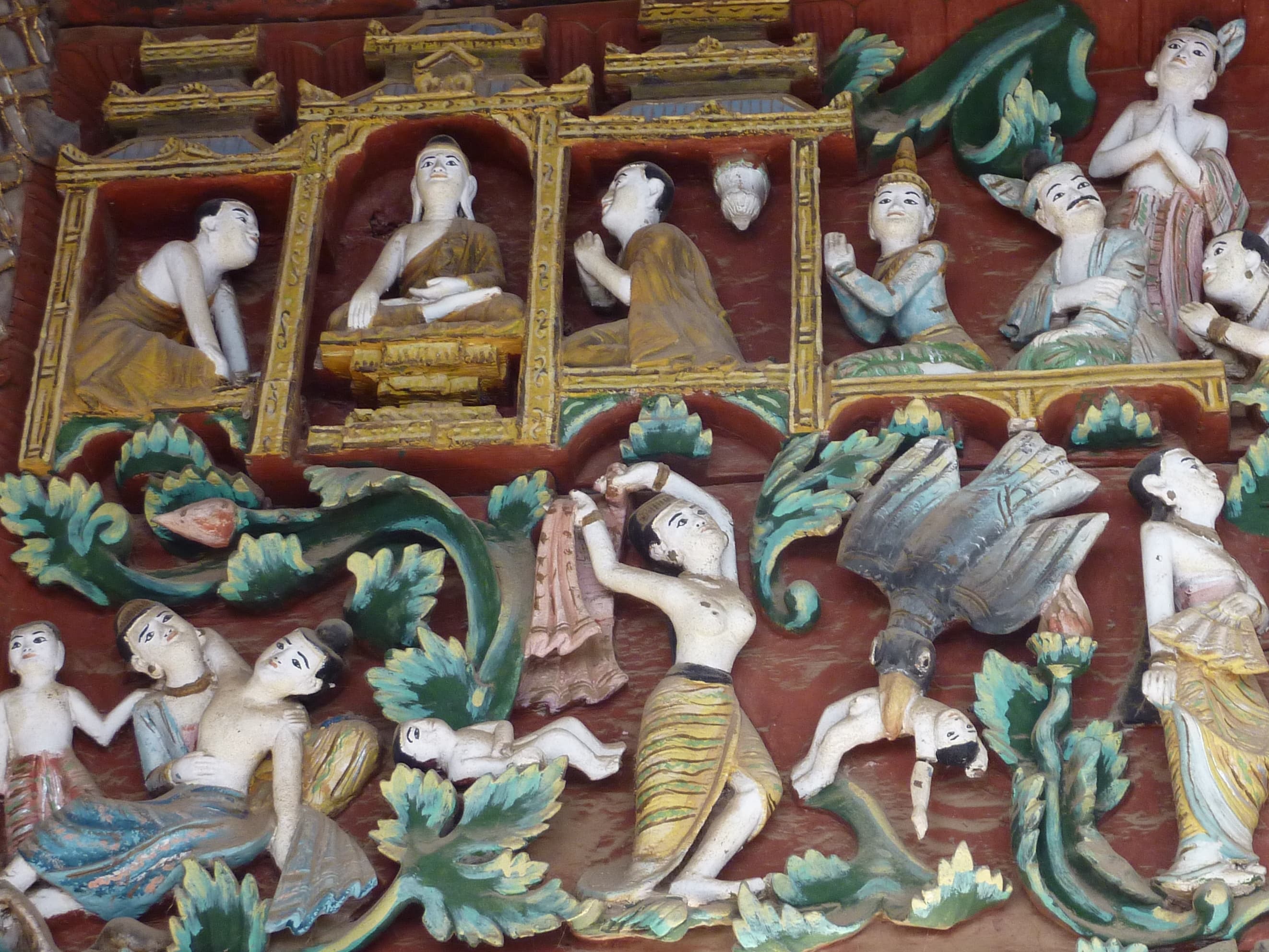
Before he died, he attained arahantship. The Angulimala Sutta records the famous moment on alms round when he encountered a woman in obstructed labor, returned to the Buddha, and was told to go back and say to her: "Sister, since I was born in the noble birth, I am not aware of having intentionally deprived any being of life. By this truth, may you and your child be well." The woman delivered safely. The verse — the "Angulimala paritta" — is recited in Theravada countries to this day for women in difficult childbirth. The bandit who killed nine hundred and ninety-nine became the protector of birth. The Theragatha preserves his verses (Thag 866-891): "Whoever does an evil deed and covers it over with a good one — like the moon, free of cloud, he illuminates the world."