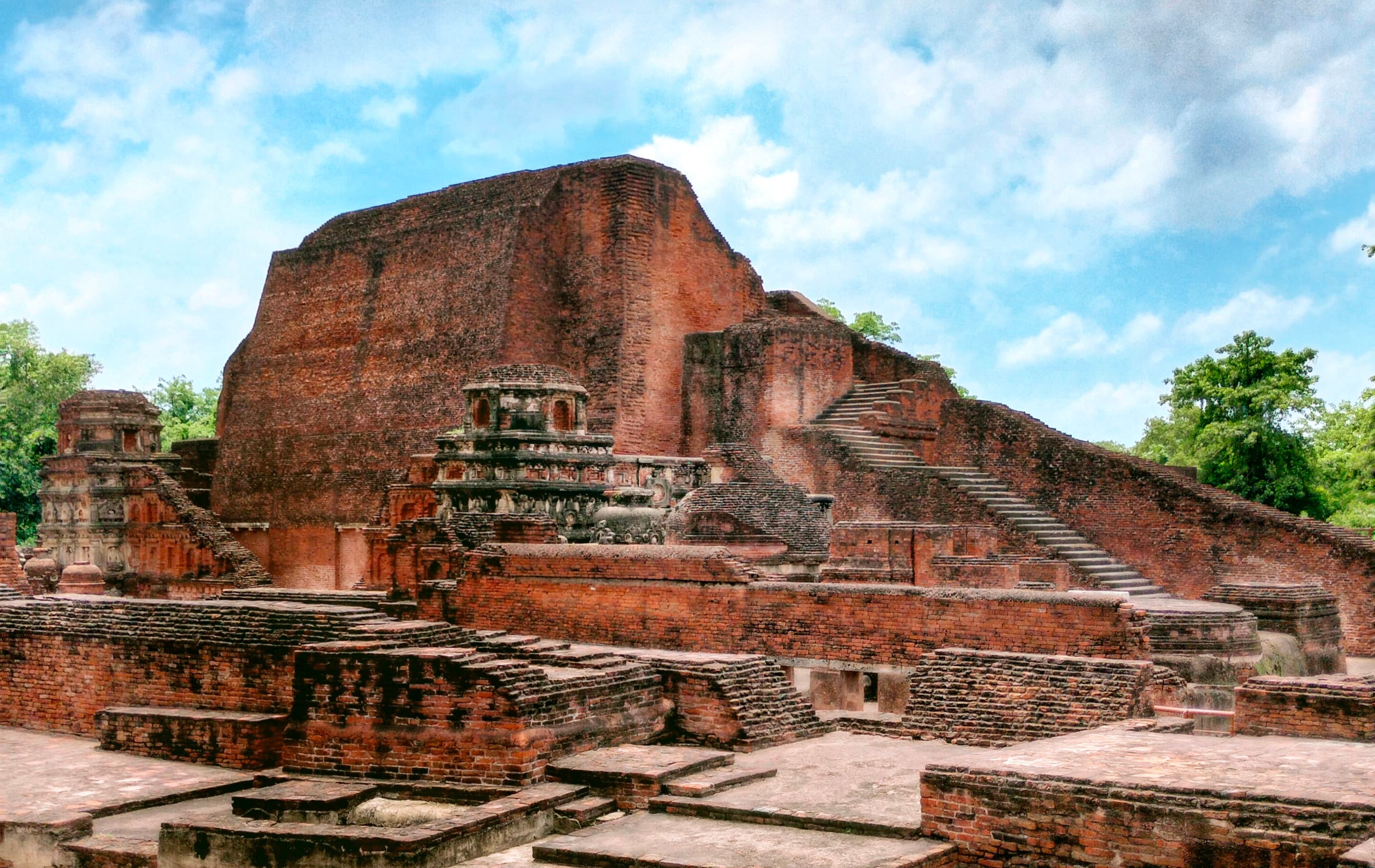
Nalanda was founded by the Gupta emperor Kumaragupta I around 427 CE near Rajagriha, on a site that Buddhist tradition associates with the Buddha himself and with Sariputta, who is said to have been born and died at the nearby village of Nalaka. Over the next seven centuries, under successive Gupta and Pala patronage, Nalanda became the largest and most influential monastic university anywhere in the world. At its height, in the seventh century, it had ten thousand resident students from across Asia, two thousand teachers, eight separate compounds, ten temples, and a library — the Dharma Ganja, the Mountain of Truth — housed in a three-building complex including a nine-story tower called the Ratnodadhi (Sea of Jewels). The Chinese pilgrim Xuanzang, who studied there from 637 to 642, has left the most detailed surviving account of its operation.
The curriculum was extraordinary. Students were examined at the gate; Xuanzang notes that two or three out of ten passed the entrance test. Inside, the program covered the entire Buddhist canon — sutra, vinaya, abhidharma, Madhyamaka, Yogacara, Pramana (Buddhist logic and epistemology) — alongside the brahmanical six Vedic sciences (grammar, phonetics, etymology, prosody, astronomy, ritual), as well as medicine, mathematics, and the fine arts. Daily routine included one hundred lecture sessions on the schedule. Debates were public; visiting teachers from outside India regularly came to test their positions. The university operated under a rotating leadership of senior scholars, the most famous of whom in the early period were Dignaga and Dharmakirti (the founders of Buddhist logic), Asanga and Vasubandhu (Yogacara), Buddhapalita and Bhavaviveka (the Madhyamaka split), Candrakirti (Prasangika Madhyamaka), and Santideva (author of the Bodhicaryavatara). In the later Pala period (eighth to twelfth centuries), the institutional center of gravity shifted somewhat toward Vikramasila, but Nalanda remained the great senior university; its abbots included Santaraksita (who carried the dharma to Tibet), Naropa (whose six yogas were carried to Marpa and on to Milarepa), and Atisa Dipankara Srijnana (who entered Tibet in 1042 and reformed it).
The scale of the place is what is hard to grasp. Xuanzang describes the principal lecture hall as accommodating thousands of monks at once. The Dharma Ganja library was so large that its destruction would, in the chronicler Minhaj-i-Siraj's telling, take three months of burning to consume — pages were said to drift on the wind for days, smoke covered the country. The institutional reach extended out to a network of related monasteries — Vikramasila (founded by Dharmapala in the late eighth century), Odantapuri, Somapura (in modern Bangladesh), Jagaddala, Vallabhi (the Yogacara stronghold in the west) — that together constituted the Mahayana research apparatus of late classical India.
The end came suddenly. In 1193, the Turkic general Bakhtiyar Khilji, in the wave of the early Delhi Sultanate's expansion eastward, reached Bihar with a small cavalry force. The monastic compound of Odantapuri fell first; Khilji is said to have mistaken it for a fortress because of its walls. Nalanda fell shortly after. The monks were killed or fled; the library was burned; the temples were demolished. Vikramasila was destroyed around 1203. Within a single generation, the institutional structure of Indian Mahayana Buddhism — built over seven centuries — was gone.
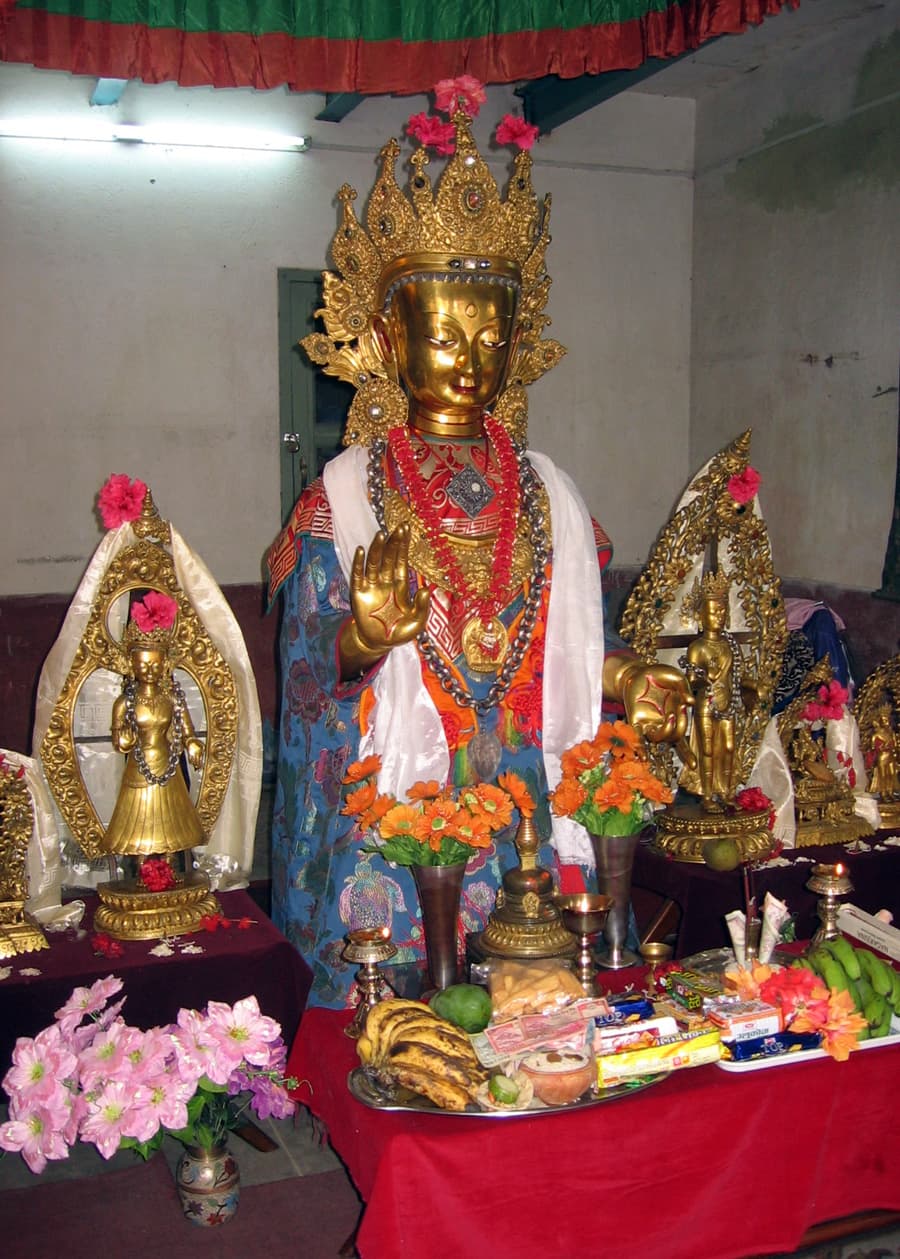
The transmission, however, did not die with the institution. Indian masters in the final centuries had carried the dharma outward. Naropa's student Marpa carried the Mahamudra to Tibet. Atisa had reformed Tibetan Buddhism a century and a half before the destruction. The Newar Vajracharyas of the Kathmandu Valley, in direct commerce with Nalanda and Vikramasila, received and preserved the Indic Sanskrit Mahayana–Vajrayana tradition that they still carry today. The Indian texts that survived in their Tibetan translation, in the Kangyur and Tengyur, would later be back-translated by twentieth-century scholars to recover Mahayana works whose Sanskrit originals were lost in the burning.
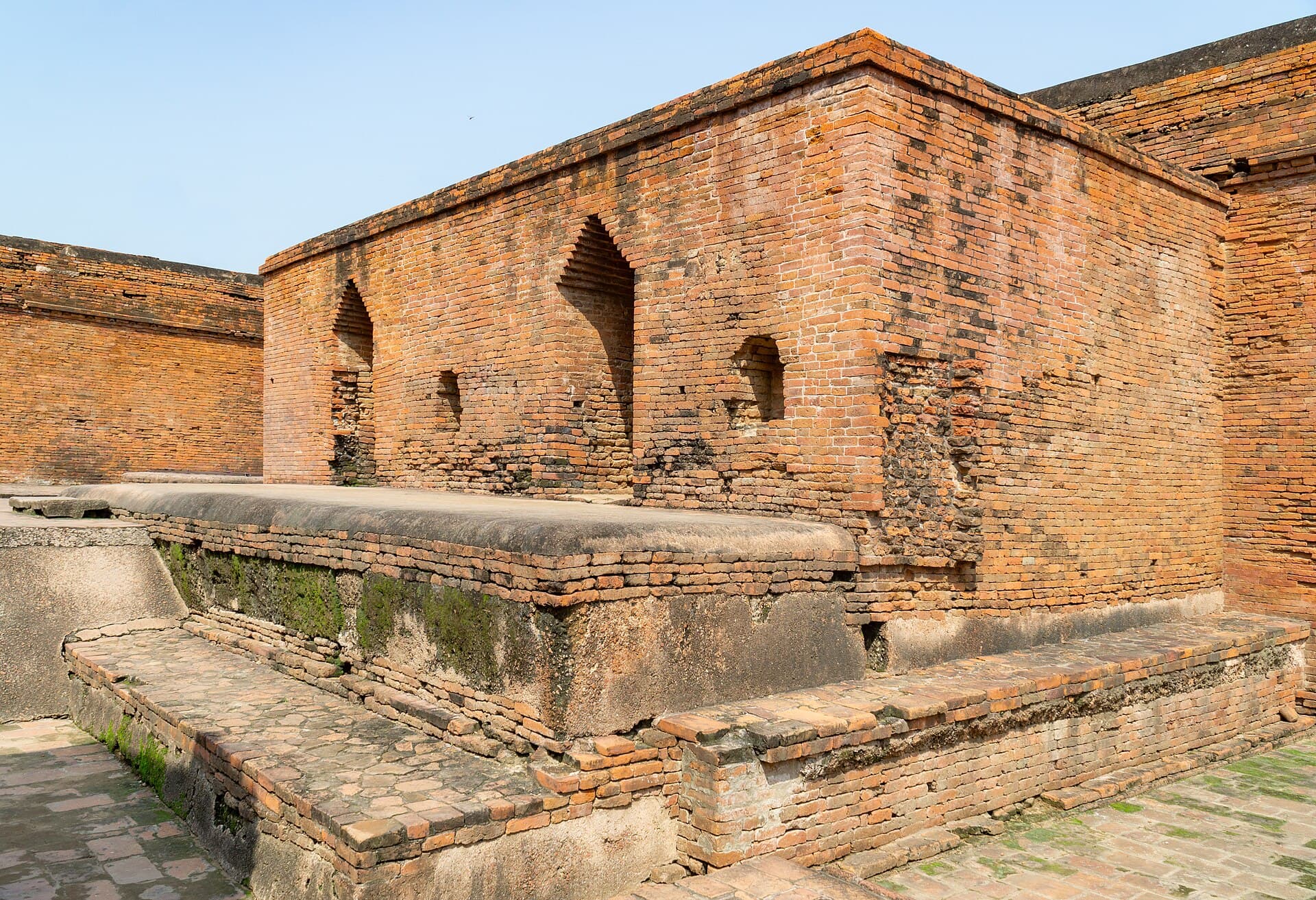
The modern revival of Nalanda began in 1951 with the founding of the Nava Nalanda Mahavihara by the Bihar government as an academic and Pali studies institute. In 2006 the Government of India and a consortium of East Asian states agreed to re-establish a fully international Nalanda University on a new site near the ancient ruins; the new university opened in 2014, with degree programs in Buddhist studies, philosophy, ecology, public policy, and international relations, drawing students from across Asia. The ruins themselves, on the original site, were excavated by the Archaeological Survey of India under Alexander Cunningham and later David Spooner; they have been a UNESCO World Heritage Site since 2016.
What Nalanda taught, more than any single doctrine, was an institutional culture — open debate, rigorous reasoning, multi-tradition dialogue, the integration of contemplative practice with philosophical analysis, and the willingness to host adversaries from outside the tradition and engage them seriously. It is a model repeatedly invoked in describing what twenty-first-century Buddhist universities should aspire to: not seminaries, but the seventeen great pandits of Nalanda, in conversation across centuries.