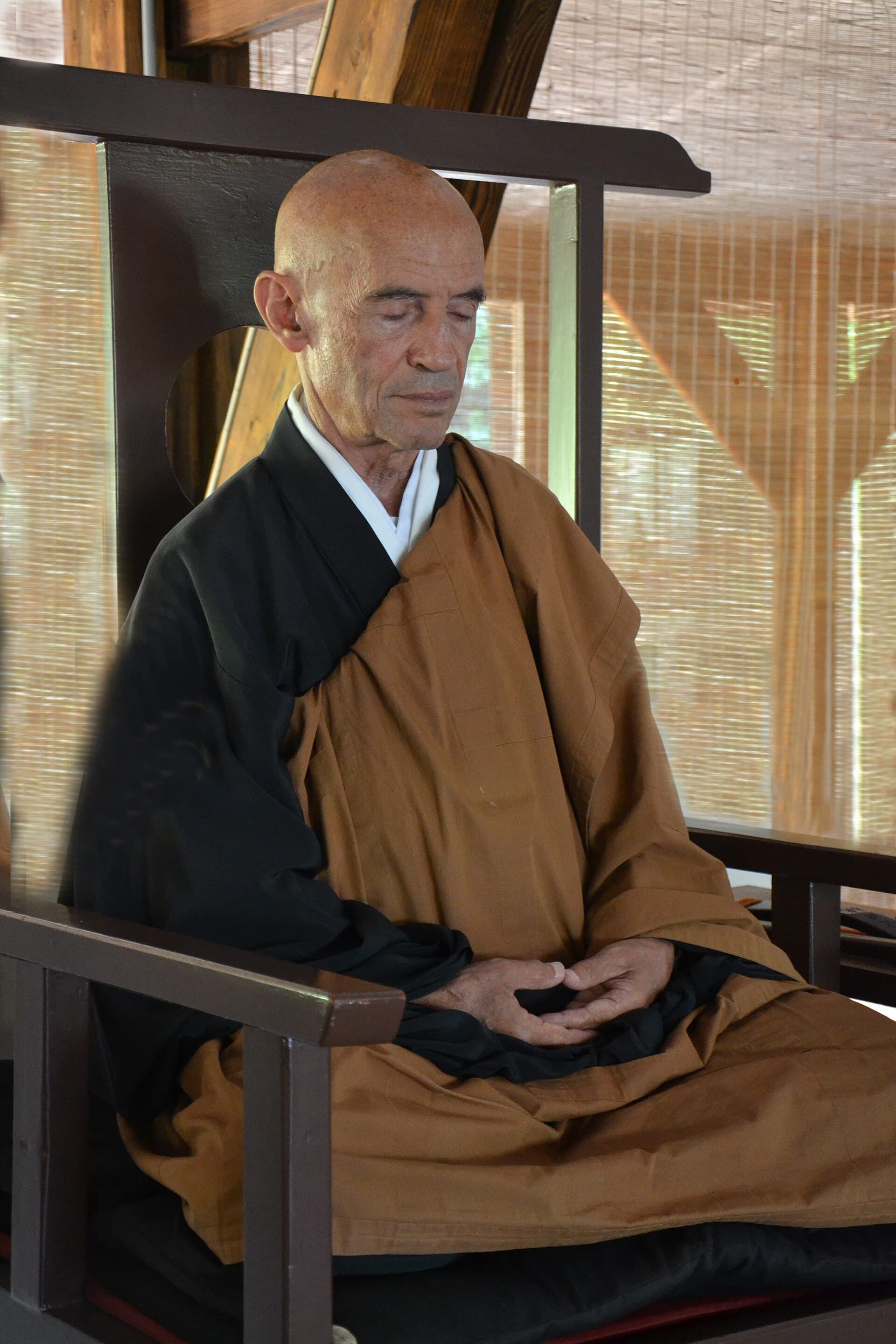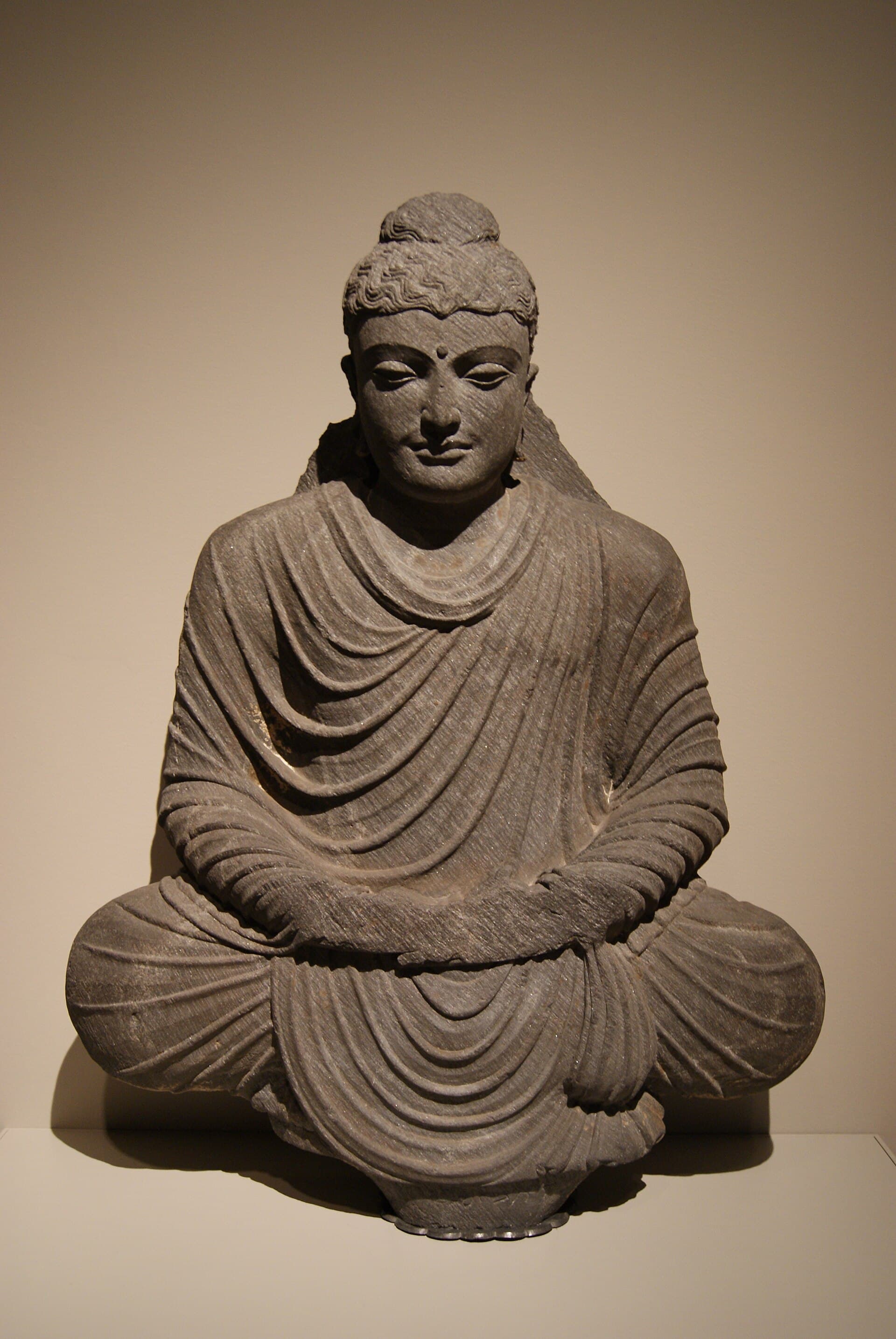
Zazen — 'seated meditation,' from the Chinese zuòchán (坐禪) and Japanese 座禅 — is the defining practice of the Zen tradition. In its Soto form, established by Eihei Dogen (1200-1253), zazen is shikantaza, which translates roughly as 'nothing but precisely sitting.' There is no koan to penetrate, no breath to count, no object to attend. There is only sitting — upright posture, half-lotus or full-lotus or seiza, hands in the cosmic mudra (hokkai-join), eyes lowered and slightly open, mouth closed, breathing through the nose. The mind does not chase thoughts; it does not push them away; it simply sits.
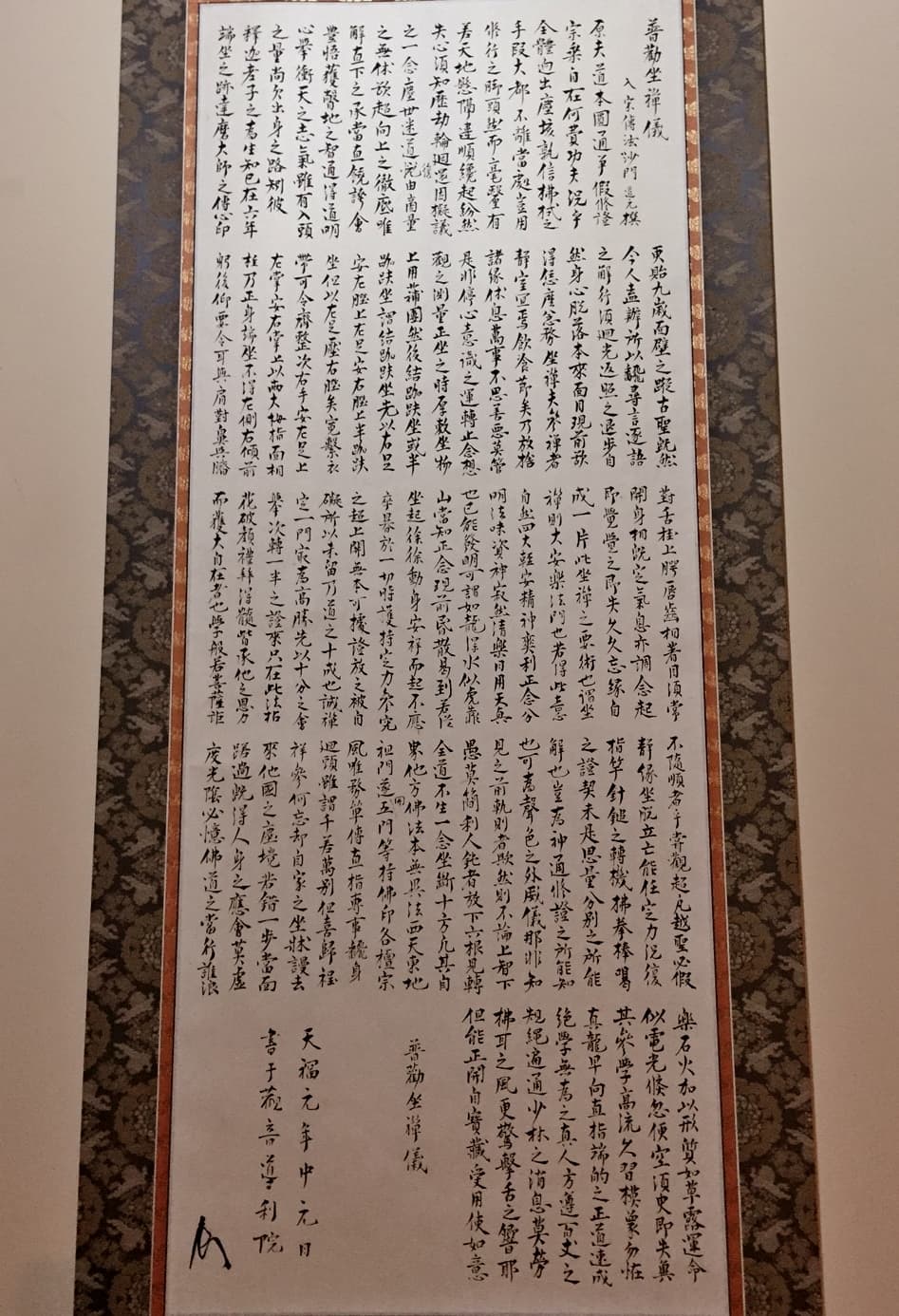
Dogen described the practice in the Fukanzazengi — 'Universally Recommended Instructions for Zazen' — which he composed in 1227, shortly after returning from China. 'Cease all worldly activity, suspend all judgments. Don't think of right and wrong. Don't engage in good and evil. Stop the movements of mind, intellect, and consciousness; cease evaluation by thought, opinion, or view. Don't seek to become a buddha. Slough off sitting and lying. Take a thick mat and put a round cushion on top of it. Sit either full-lotus or half-lotus. Settle yourself in steady, unmoving sitting. Think of not-thinking. How do you think of not-thinking? Non-thinking. This is the essential art of zazen. Zazen is not learning to do concentration. It is the dharma gate of great ease and joy.'
In the Rinzai school, established in China by Linji (d. 866) and brought to Japan by Eisai (1141-1215), zazen is often paired with koan introspection — meditation on a paradoxical phrase ('What is the sound of one hand clapping?', 'Mu', 'Show me your original face before your parents were born') intended to exhaust conceptual thought and break through to direct realization. The Rinzai sitting is often more dynamic, oriented toward kensho — the sudden experience of awakening.
In the Soto school, the orientation is different. Shikantaza is not preparation for awakening. It is, in Dogen's term, the manifestation of awakening itself. 'Practice and realization are not two,' he wrote in the Bendowa. Sitting is awakening. To sit zazen with the body upright and the breath natural and the mind not pursuing anything is already to express the awakened state of the Buddha. There is nothing to add.
The practice spread from Japan to the West primarily through Suzuki Shunryu (1904-1971), founder of the San Francisco Zen Center, whose 'Zen Mind, Beginner's Mind' (1970) remains the most widely read introduction. The Soto lineage today includes Joan Halifax at Upaya, Norman Fischer at Everyday Zen, and Brad Warner. The Rinzai lineage includes Joko Beck, Ruben Habito, and the Sanbo Zen tradition.