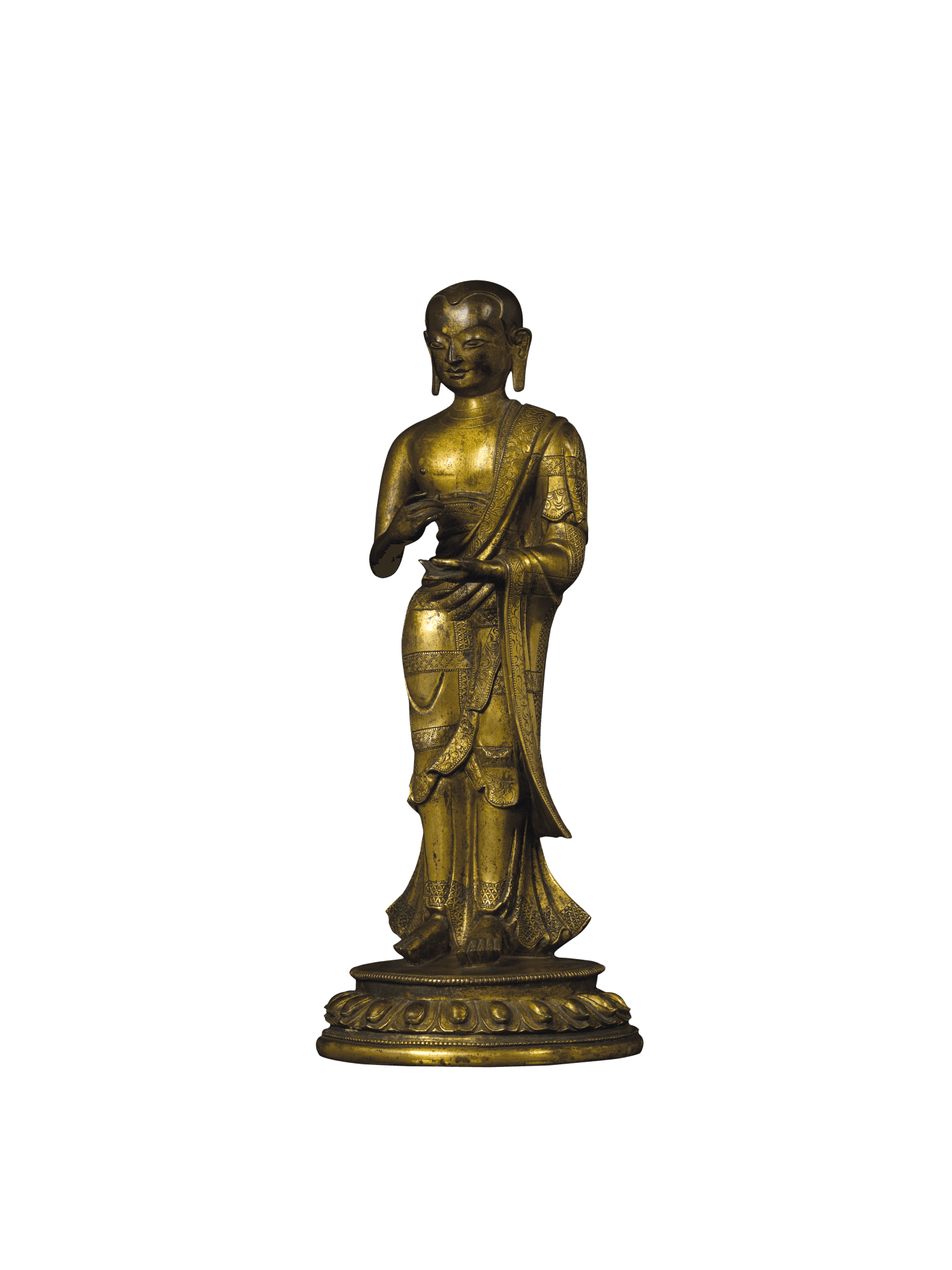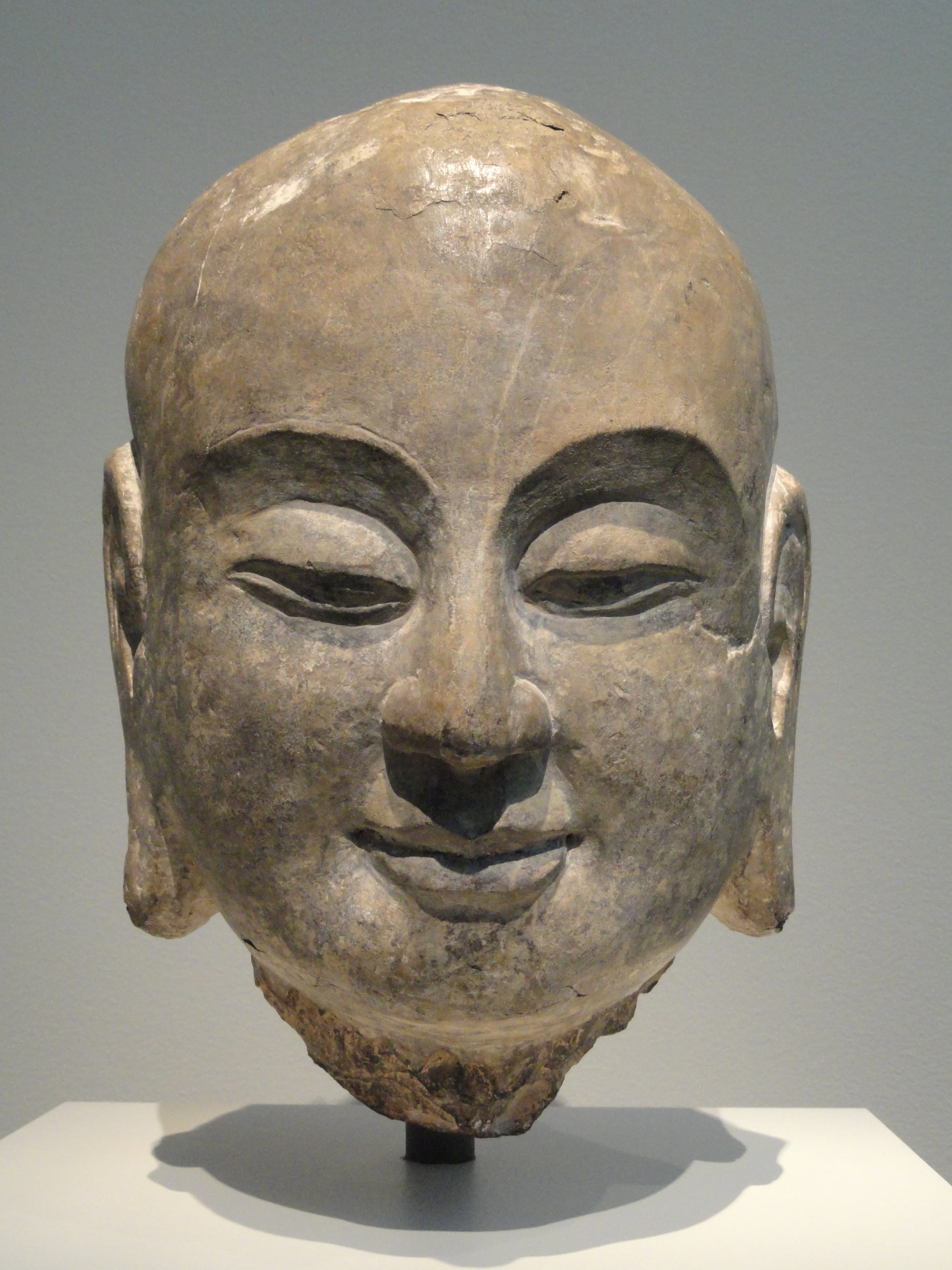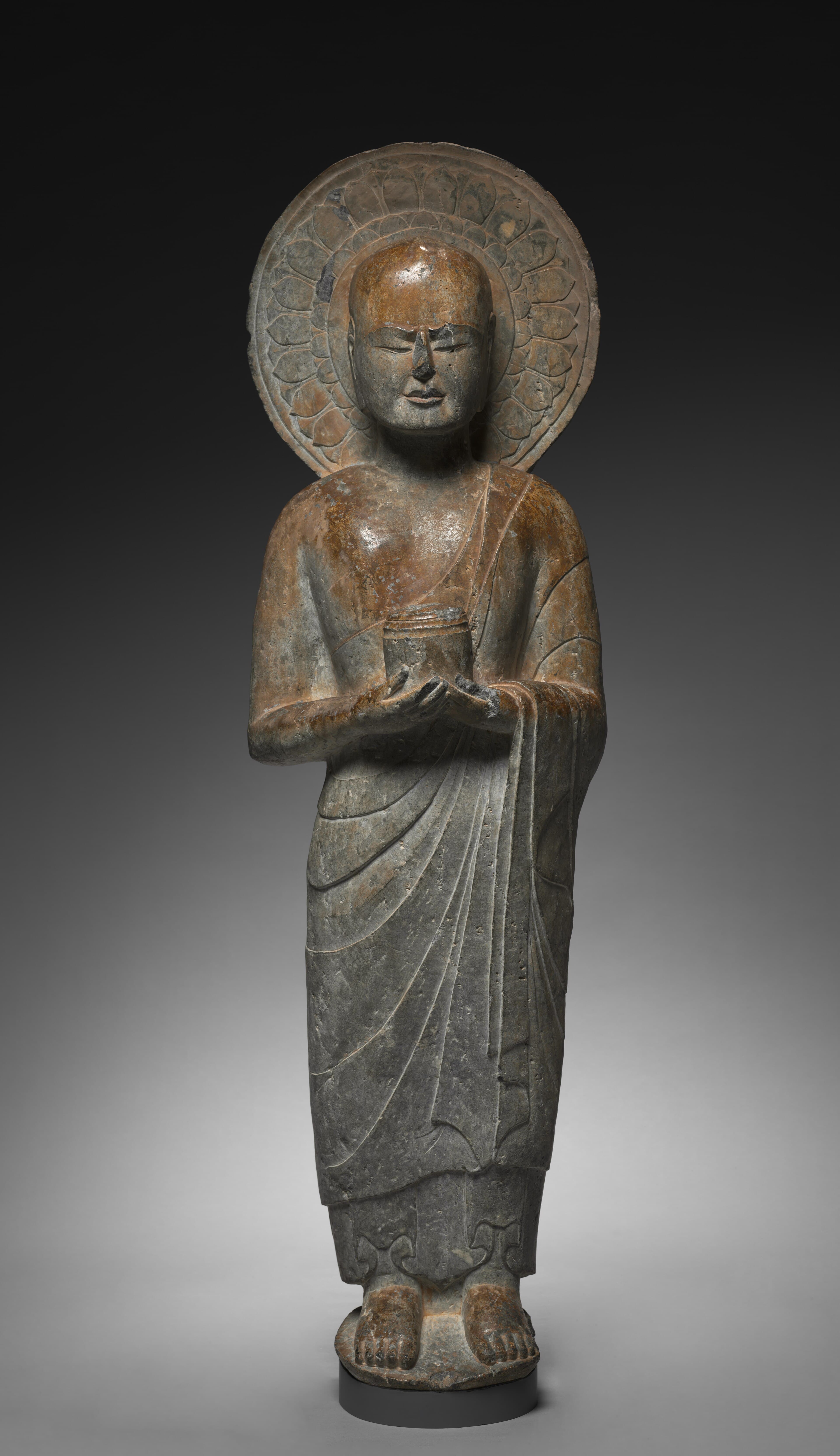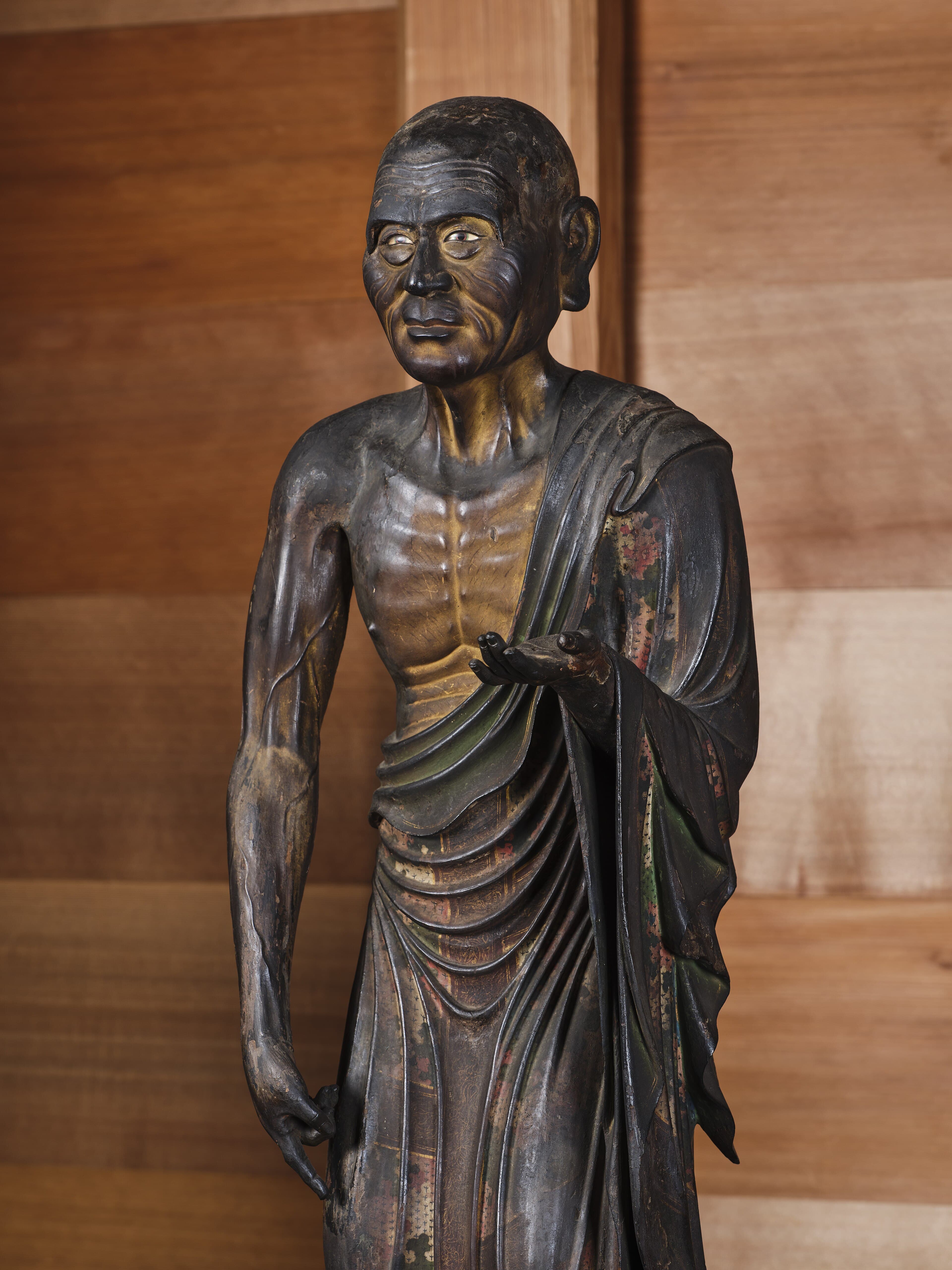
He was born Kolita, son of the headman of Kolitagama, the brahmin village next to Upatissa's. The two friends were inseparable from childhood. Their mothers were friends. They wore the same clothes, rode the same elephant, attended the same festivals. When Upatissa walked out of Sañjaya's school after meeting Assaji and brought back the four-line verse — "of phenomena that arise from a cause" — Kolita heard it and entered the stream the same evening. They took ordination together in the Bamboo Grove at Rajagaha.
Kolita's practice unfolded differently from Sariputta's. The Pacalayamana Sutta (AN 7.61) records the Buddha personally training him in seven techniques to combat drowsiness — including the famous instructions to look at the stars, to pinch the earlobes, to wash the face with cold water, and finally, "if all these fail, lie down on the right side, mindful." The teaching itself suggests how deeply Mahamoggallana drove his practice in the early weeks. He attained arahantship on the seventh day after his ordination — a week before Sariputta. Where Sariputta is the marshal of doctrinal analysis, Mahamoggallana becomes the master of the inner architecture of mind. He is, by the Buddha's designation in AN 1.190, foremost among the bhikkhus in supernormal powers (iddhi).
The iddhi he is recorded as possessing are not metaphors and not embellishment. The canonical formula gives them precisely: passing through walls, walking on water, flying through the air, traveling to other realms, knowing the minds of others, recollecting countless past lives. The suttas use him as the canonical witness to the other realms of existence. The Lakkhana Sutta (SN 19) is an extended dialogue in which Mahamoggallana, walking on the Vulture Peak with Lakkhana, sees a series of ghostly beings — a skeleton bird, a flayed butcher, a corrupt judge — and the Buddha, when asked, confirms that yes, those beings exist; Mahamoggallana has the eye to see them. The Maratajjaniya Sutta (MN 50) records him grabbing Mara by the belly and explaining to the demon what life was like in a previous aeon when Mahamoggallana himself had been a Mara. The Culatanhasankhaya Sutta (MN 37) records him visiting the Heaven of the Thirty-Three to test Sakka's understanding of the Buddha's brief teaching on the destruction of craving — and shaking the palace of the gods with his great toe to prove a point.
The shaking-with-the-toe is the gesture the tradition remembers him for. He is the bhikkhu who holds the visible world in his hands. The Saddhammapakasini commentary records him saving the city of Vesali during a plague by walking the boundaries with Ananda and reciting the Ratana Sutta. He goes to the hot hells and comes back with reports of the wrong-doers being burned there. He brings news of Kassapa Buddha's relics. He is the link between this world and every other.
His death is the most violent in the canon. By the final years of the Buddha's teaching career, the Jain order and several of the Brahmin schools had grown hostile to the Sangha's success. The Dhammapada commentary (Dhp-A 137-140) records that a group of naked ascetics, who blamed Mahamoggallana for the conversion of so many of their lay supporters, hired bandits to kill him. He was in retreat at Kala-silā near Rajagaha. The bandits came; he saw them coming through his psychic powers and three times rose into the air to evade them. On the fourth attempt he saw, through the same powers, that this was the working out of an old kamma — in a long-distant past life, the texts record, he had killed his elderly parents. He let the bandits come. They beat him until his bones were broken like grains of rice. Mahamoggallana, the canon insists, did not die from the beating; he survived long enough to drag himself by mental power to where the Buddha was teaching, paid his final respects, returned to his cell, and entered final parinibbana there. The bandits were caught and burned alive by King Ajatasattu's men.
He died about two weeks after Sariputta, in the same year. The Buddha, the Mahaparinibbana Sutta records, told the assembly: "The Sangha is empty for me now that Sariputta and Moggallana have gone. The directions, which were once bright, have darkened. Before, when these two great disciples were here, I felt at ease. Now I do not." The two friends had entered the dhamma together and left it together. They are buried in the great stupa at Sanchi, side by side, where their relics rest under the eastern gateway.