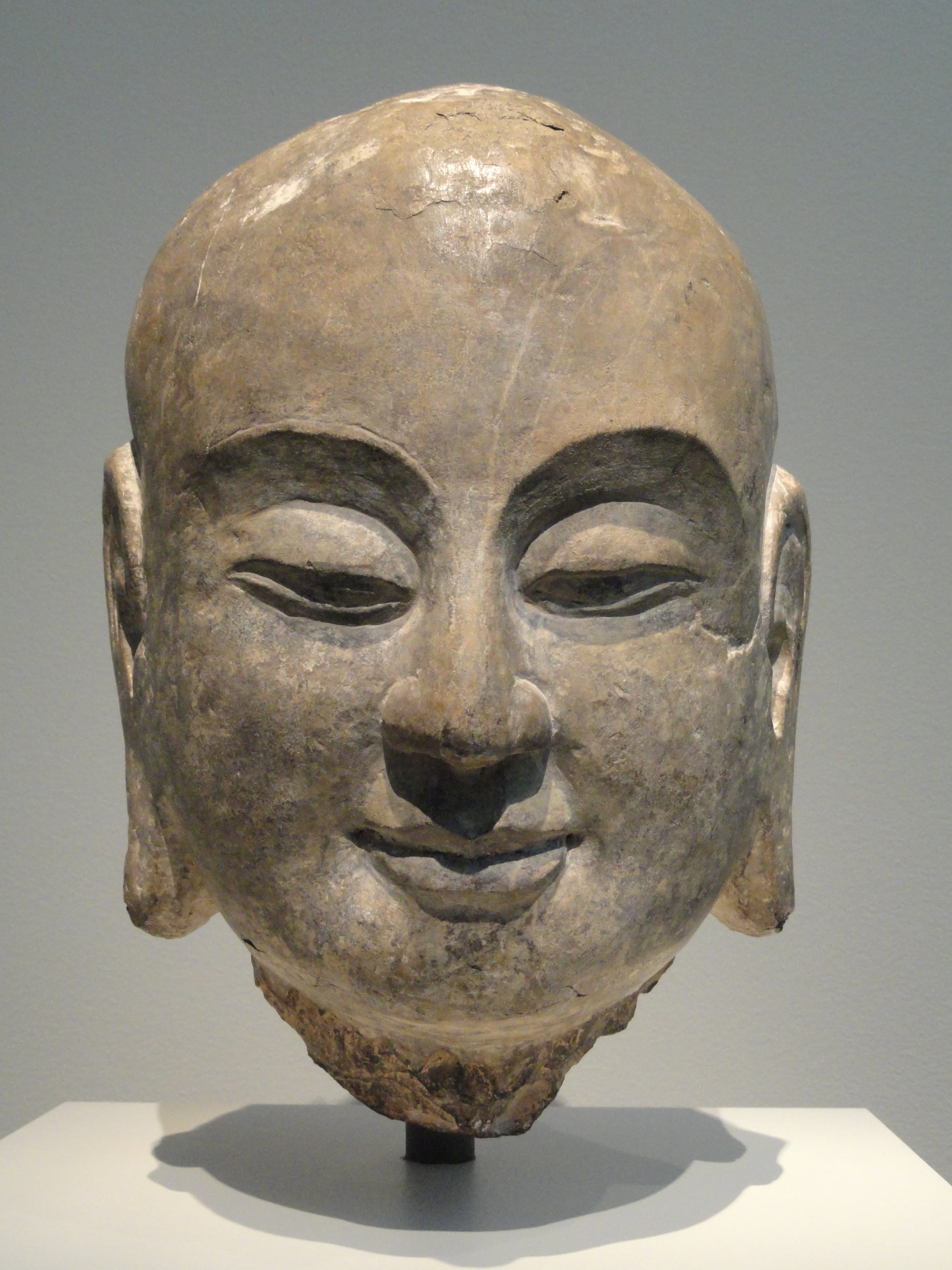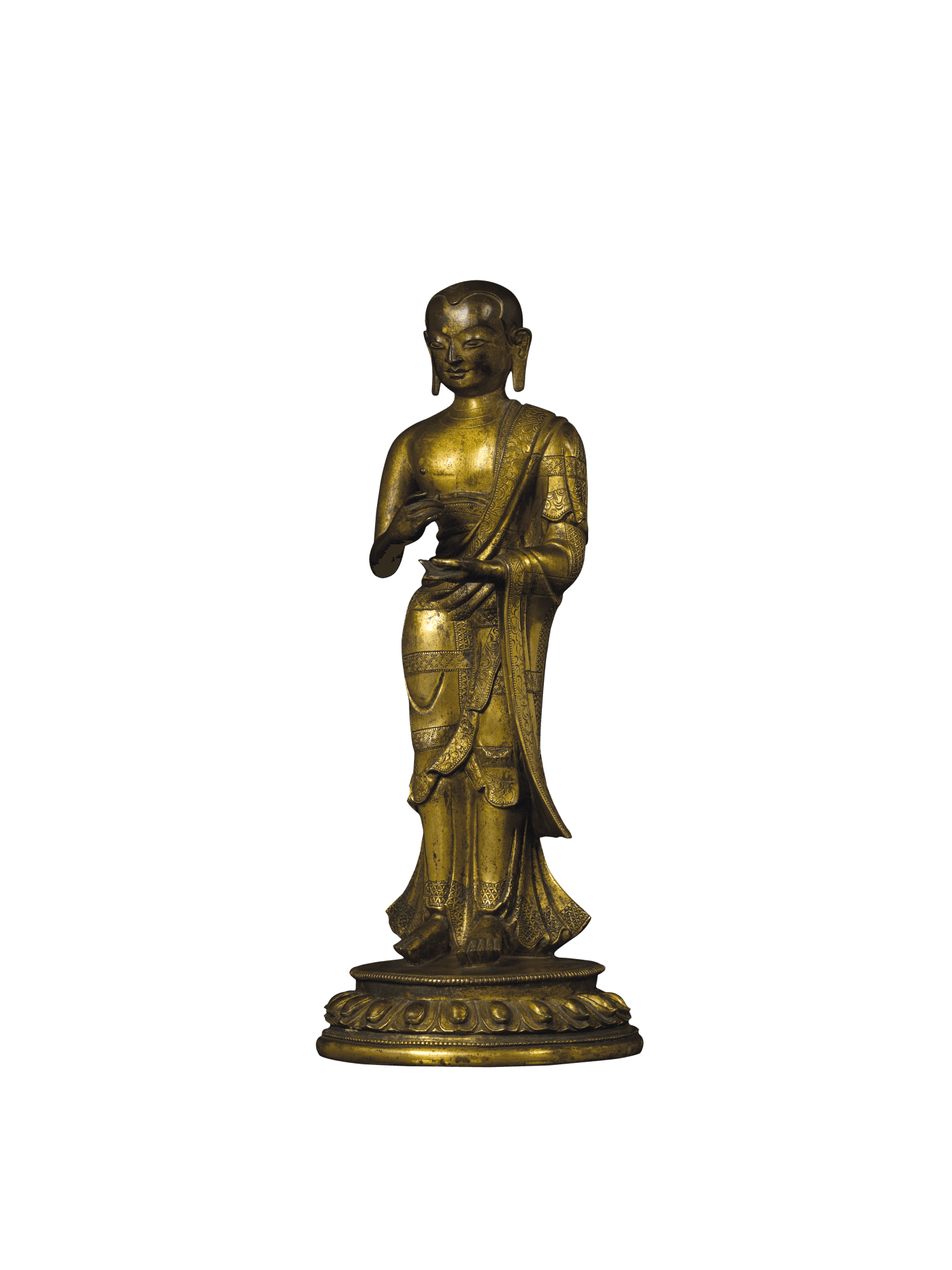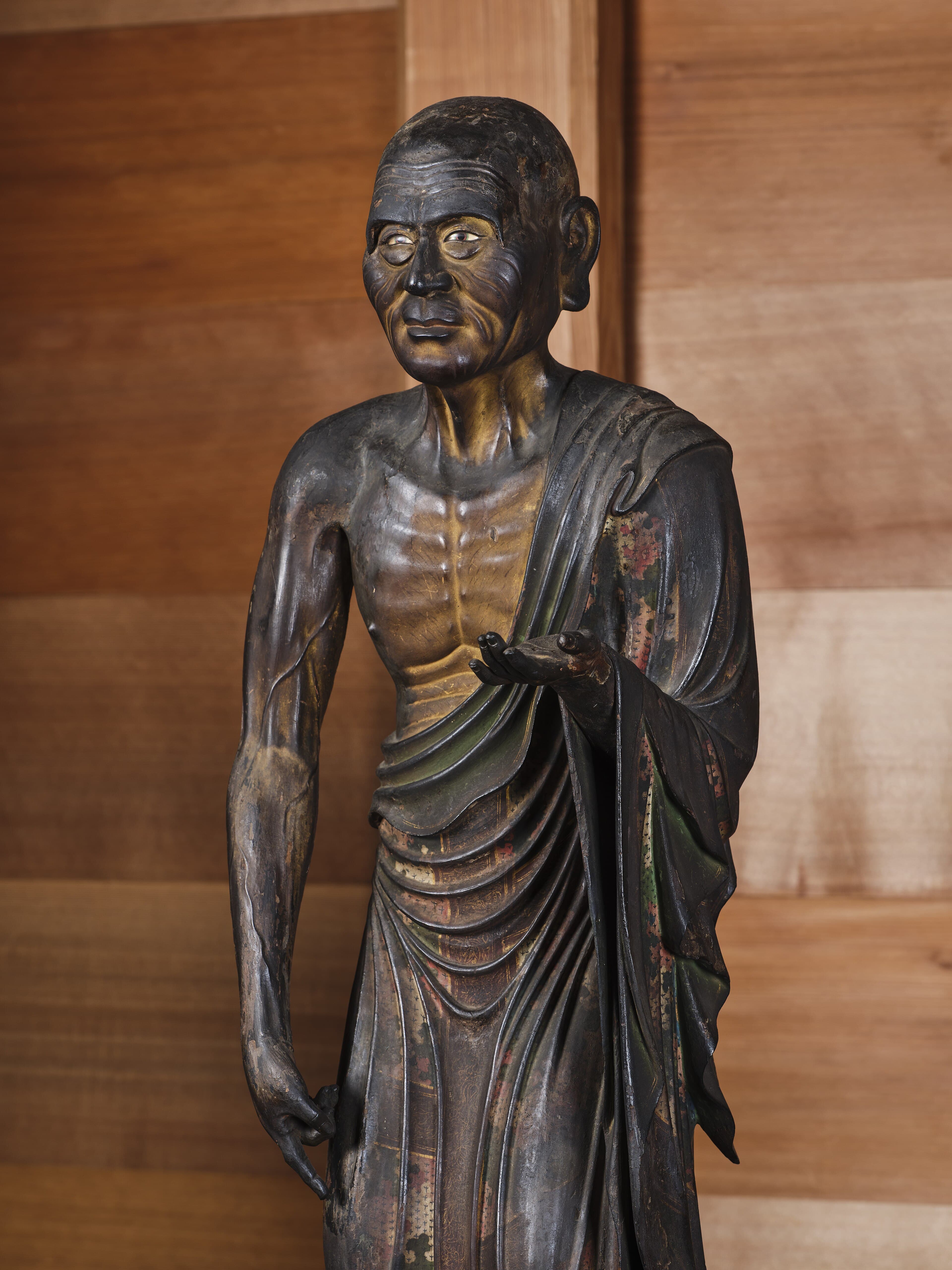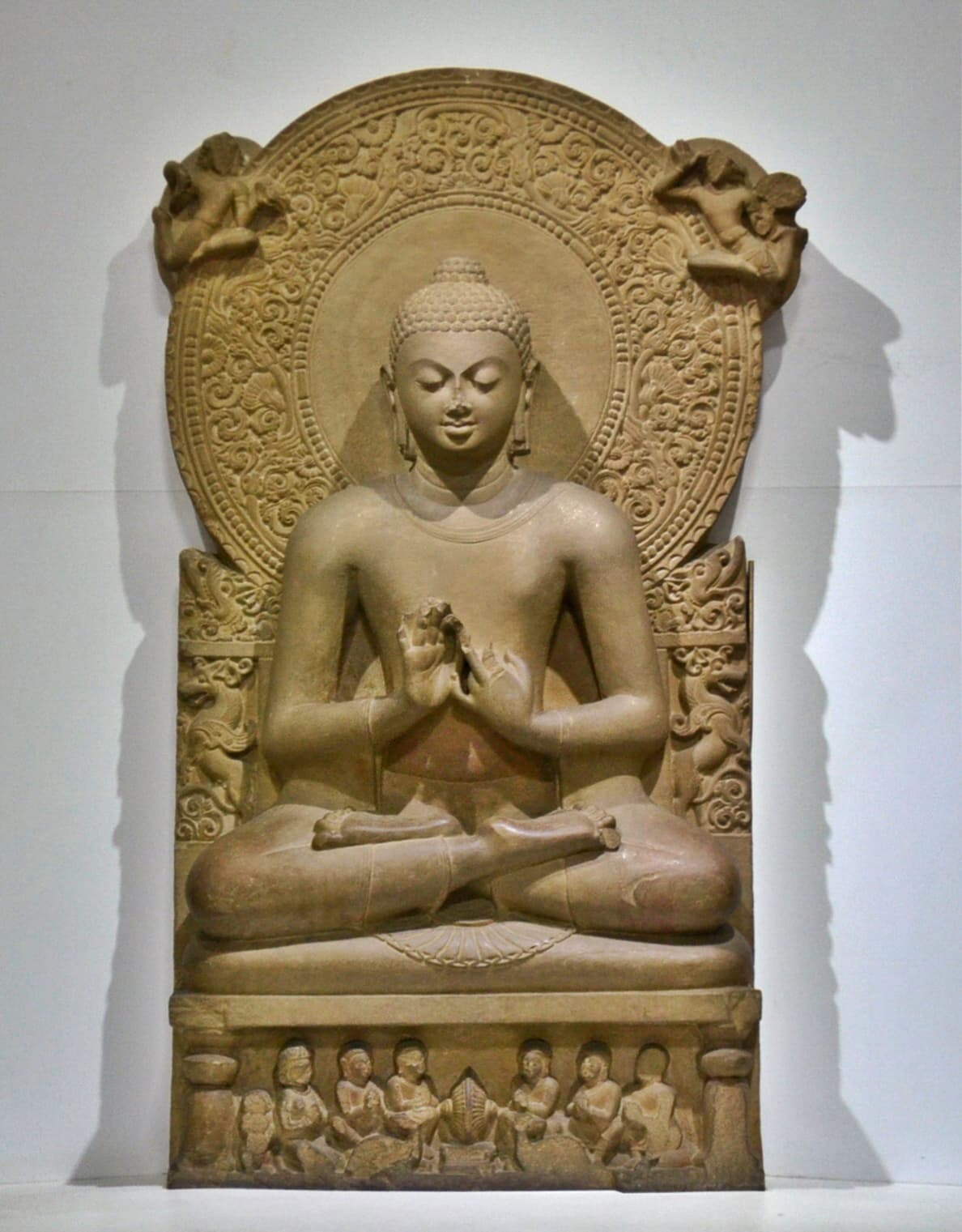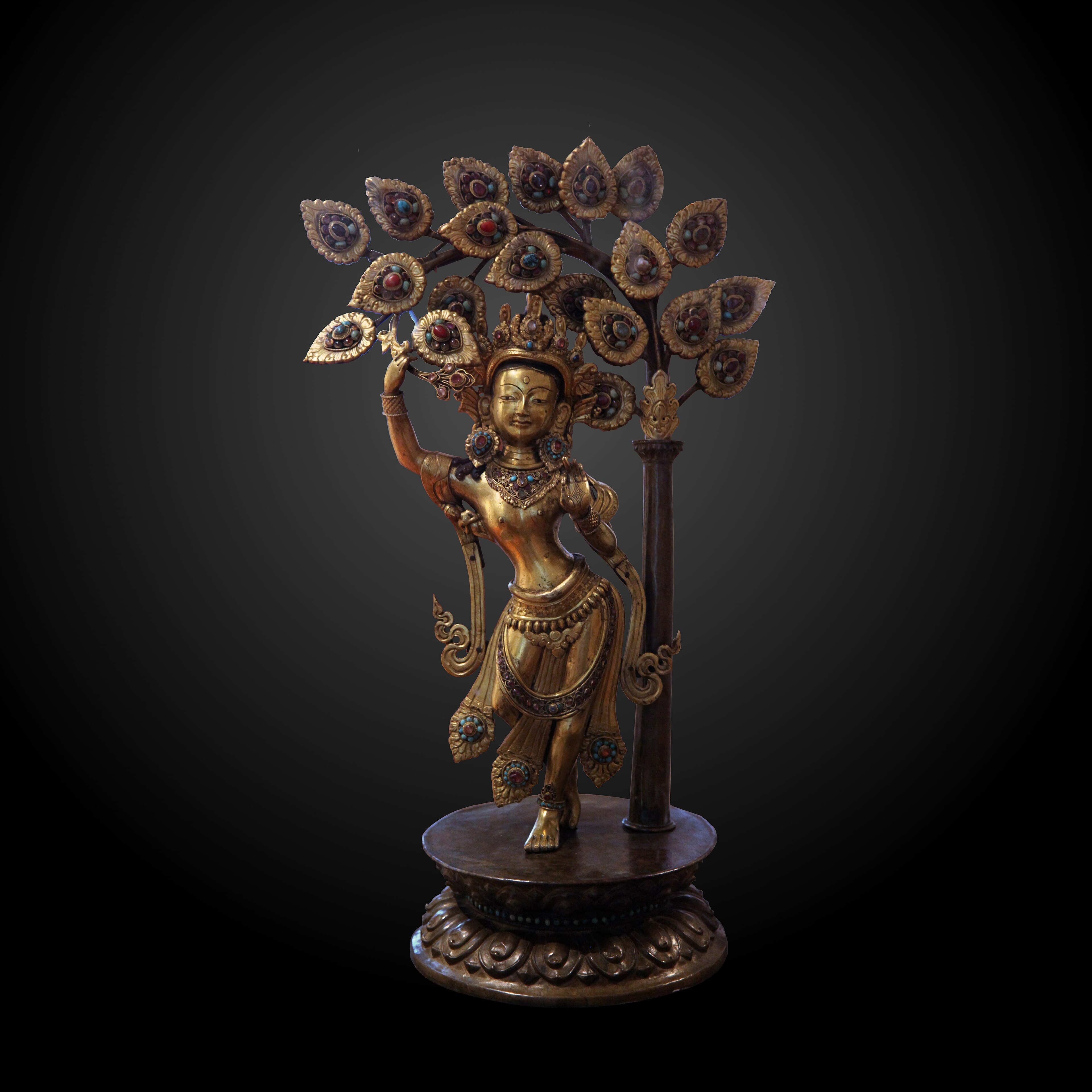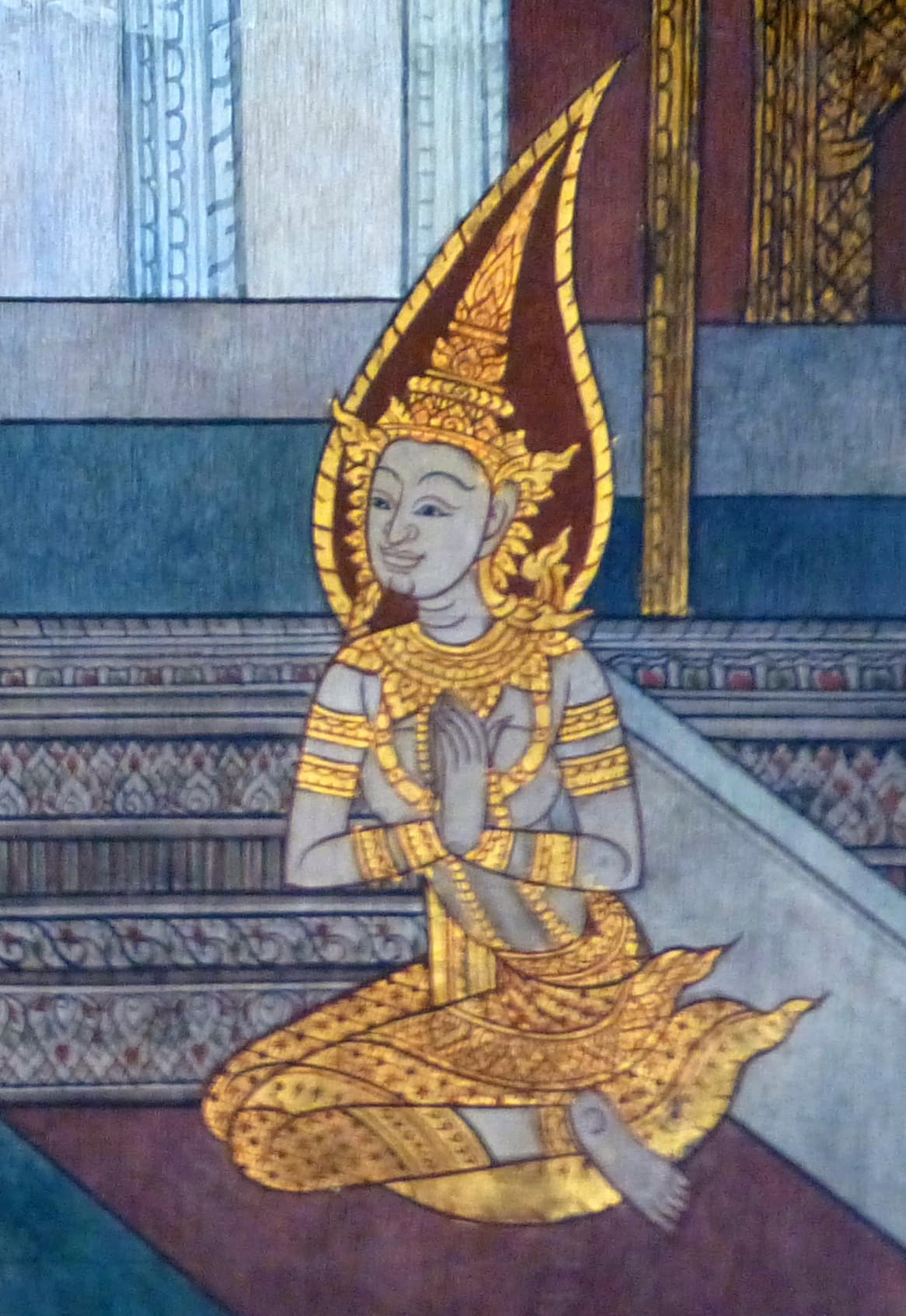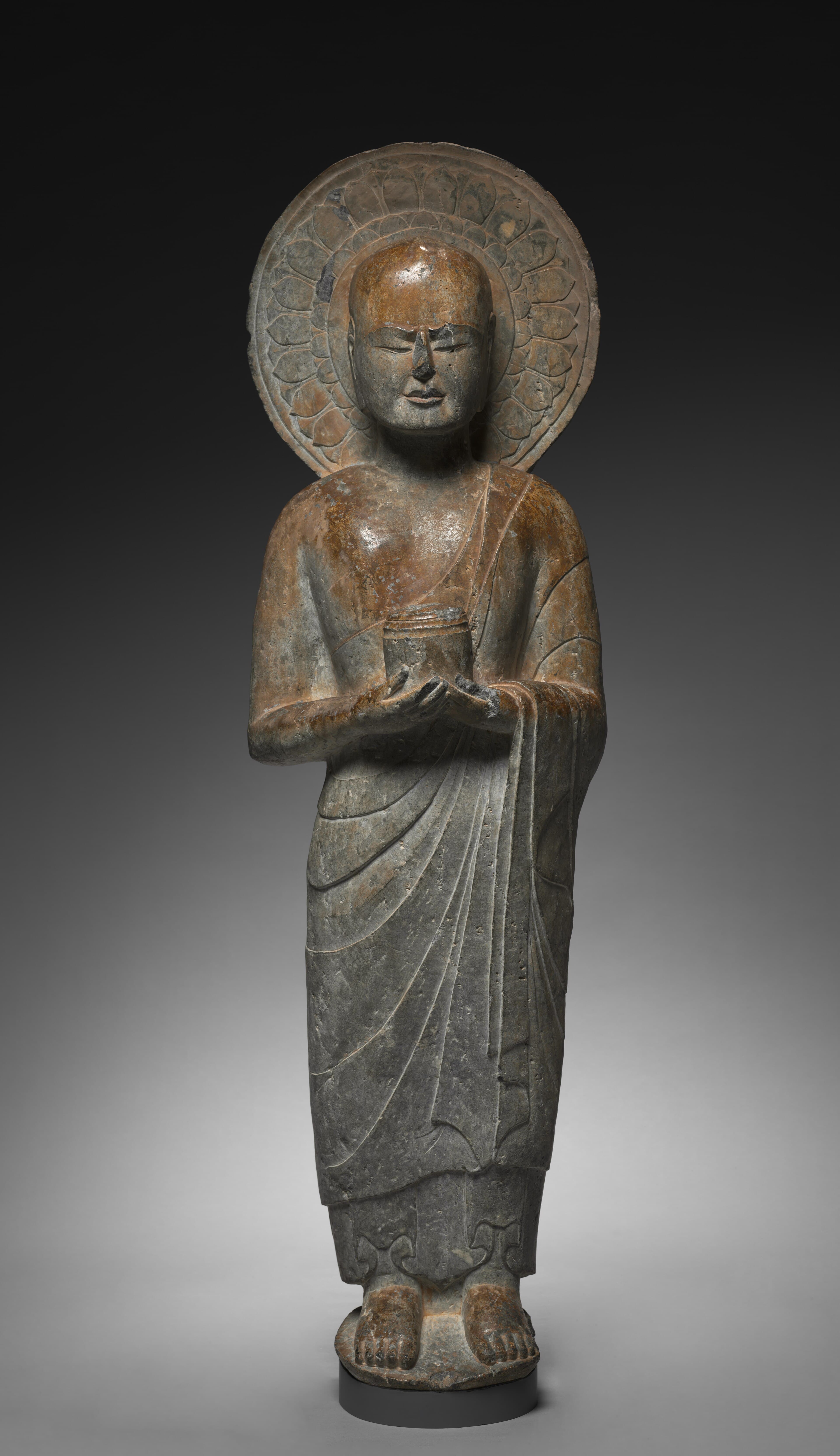
He was born Pippali Kassapa to a wealthy brahmin family in the village of Mahatittha in Magadha, around the time Siddhartha Gautama was reaching the end of his striving in the forest. The family wealth was so great, the commentaries record with relish, that his father owned sixteen villages. Pippali was a reluctant heir to all of it. He insisted on celibacy. When his parents arranged a marriage to a girl named Bhaddā Kāpilānī, the two of them — having corresponded and discovered they shared the same wish to renounce — lived together as brother and sister for years until both parents died. They then divided the household wealth among the dependents, shaved each other's heads, and walked out of the gate in opposite directions, agreeing to take separate paths into renunciation. Bhadda would in time be ordained by Mahaprajapati Gotami and become one of the foremost bhikkhunis. Pippali walked toward the Buddha.
He met the Buddha at a place between Rajagaha and Nalanda called the Bahuputtaka shrine. The Mahakassapa-saṃyutta (SN 16) records the encounter. The Buddha saw him coming, spread his robe at the base of a tree, and said, "Sit here, Kassapa." Pippali sat. They exchanged three teachings — on training, on shame and fear of wrongdoing, and on mindfulness of the body. The Buddha said, "Kassapa, you should train yourself thus." The exchange ended with the Buddha offering him his own patched robe in exchange for Kassapa's new one — the only instance in the canon of such a robe-exchange. Within seven days, the texts say, Pippali was an arahant. He is known thereafter as Mahakassapa, the great Kassapa.
What distinguishes him from the other senior disciples is the rigor. The Anguttara Nikaya (AN 1.191) places him as foremost among the bhikkhus in the dhutaṅga — the thirteen ascetic practices: wearing only refuse-rag robes, eating only food received on alms-round, dwelling at the foot of a tree, in a charnel ground, in the open air. He kept these practices until he was past a hundred years old. The Buddha repeatedly urged him to take a softer life. The Jīṇṇa Sutta (SN 16.5) records the Buddha asking him, "Kassapa, you are old now. These rough robes are heavy. Live near me; accept the householders' invitations." Mahakassapa replied: "I keep these practices for my own welfare and out of compassion for those who come after me. They will see how I lived and will say, the early disciples lived austerely; they reached the dhamma; so can we." The Buddha said only, "Good, Kassapa. Live for the welfare and happiness of many, out of compassion for the world."
He was not present at the parinirvana. He was on the road from Pava with five hundred bhikkhus when a naked ascetic he met carrying a coral-tree flower told him: "The recluse Gotama died seven days ago. I picked this up from the cremation ground." The younger bhikkhus wept. One of them, Subhadda, said, "Friends, do not grieve. We are well rid of the great recluse. Now we can do as we please." Mahakassapa heard. He said nothing then, but the words decided him: the dhamma had to be fixed in form before the Buddha's body had fully cooled.
He walked the rest of the way to Kushinagar, arrived as the funeral pyre was being prepared, paid his last respects, and — the tradition records — the pyre then ignited of itself, having waited for him. Within weeks, Mahakassapa had convened the First Buddhist Council at the Sattapanni cave at Rajagaha. Five hundred arahants were chosen. The Vinaya was recited by Upali. The suttas were recited by Ananda — whom Mahakassapa is recorded as having severely rebuked at the start of the council for several minor lapses in his service to the Buddha, and whom he had pressured into attaining arahantship the night before the council convened so that he would be eligible to recite. The canon as we have it is the canon Mahakassapa fixed.
The Pali tradition does not record his death; the commentaries say he entered parinibbana at the age of one hundred and twenty on Mount Kukkutapada near Gaya, his body preserved by his own meditative resolve until the coming of Maitreya, to whom he will hand the Buddha's robe. The Mahayana traditions developed this into the first patriarchal transmission. In the Chan/Zen lineage, the Flower Sermon at Vulture Peak — where the Buddha held up a single golden flower and said nothing, and only Mahakassapa smiled — is the founding gesture: the transmission of the dhamma outside the scriptures, mind to mind, beginning with him.