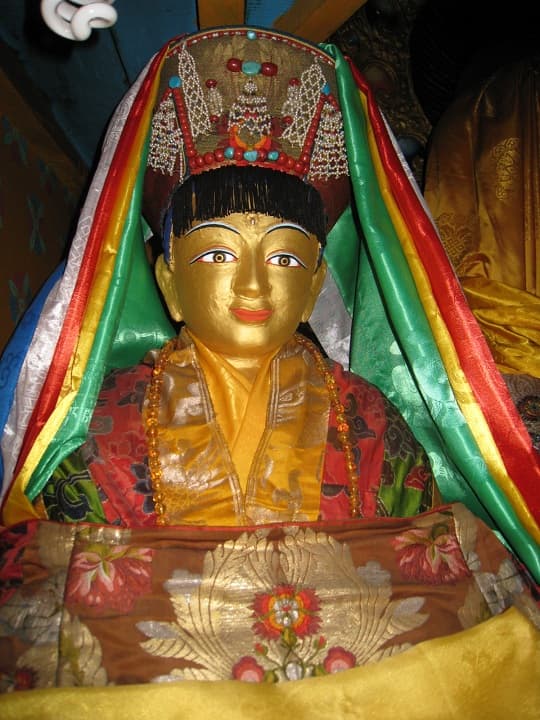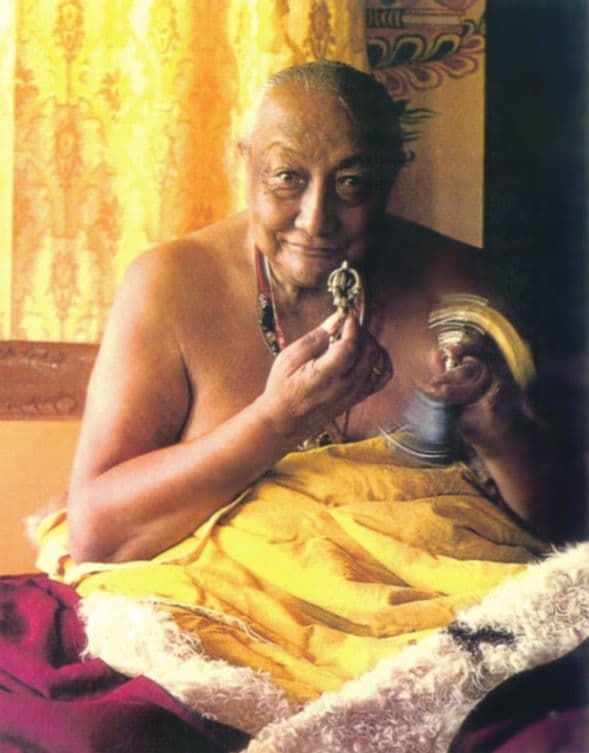
Tashi Paljor was born in 1910 in the Denkhok valley of Derge in Eastern Tibet, into a noble family with deep connections to both the Nyingma and Sakya traditions. At ten he was recognized as a mind-emanation of Jamyang Khyentse Wangpo — the great non-sectarian polymath of nineteenth-century Tibetan Buddhism — by Tertön Mipham Rinpoche, then again by other masters of the Khyentse line. He was enthroned at the Shechen Monastery in Eastern Tibet.
He spent his twenties in solitary retreat in the mountains of Kham — by his own account, around twenty-two years in cumulative retreat, beginning at fifteen. He completed the entire Nyingma cycle of preliminary, generation-stage, completion-stage, and Dzogchen practices under masters including Shechen Gyaltsab Pema Namgyal, Khenpo Shenga, Adzom Drugpa, and his root teacher Jamyang Khyentse Chökyi Lodrö. By his mid-thirties he was recognized as one of the most accomplished living Nyingma masters.
The Chinese invasion of Tibet in 1959 forced him into exile. He travelled first to Bhutan, where the royal family received him, and where he served as a senior chaplain to the throne for the remainder of his life. From Bhutan he travelled extensively — to Nepal, India, the United States, and Europe — transmitting the Nyingma cycles to the next generation. The list of his major students reads as a roll-call of the contemporary lineage: the Sixteenth Karmapa Rangjung Rigpe Dorje; Trulshik Rinpoche; Pema Wangyal Rinpoche; Sogyal Rinpoche; Matthieu Ricard, who became his personal attendant for the last seventeen years of his life and his biographer.
He was, in particular, the holder of the rinchen terdzö — the enormous collection of revealed treasure teachings of the Nyingma tradition, transmissions that traditionally take six months of daily teaching to complete — and he gave these transmissions multiple times in his lifetime, in Bhutan, in Sikkim, and in France. After the death of Dudjom Rinpoche in 1987 he was made the head of the Nyingma school until his own death in 1991.
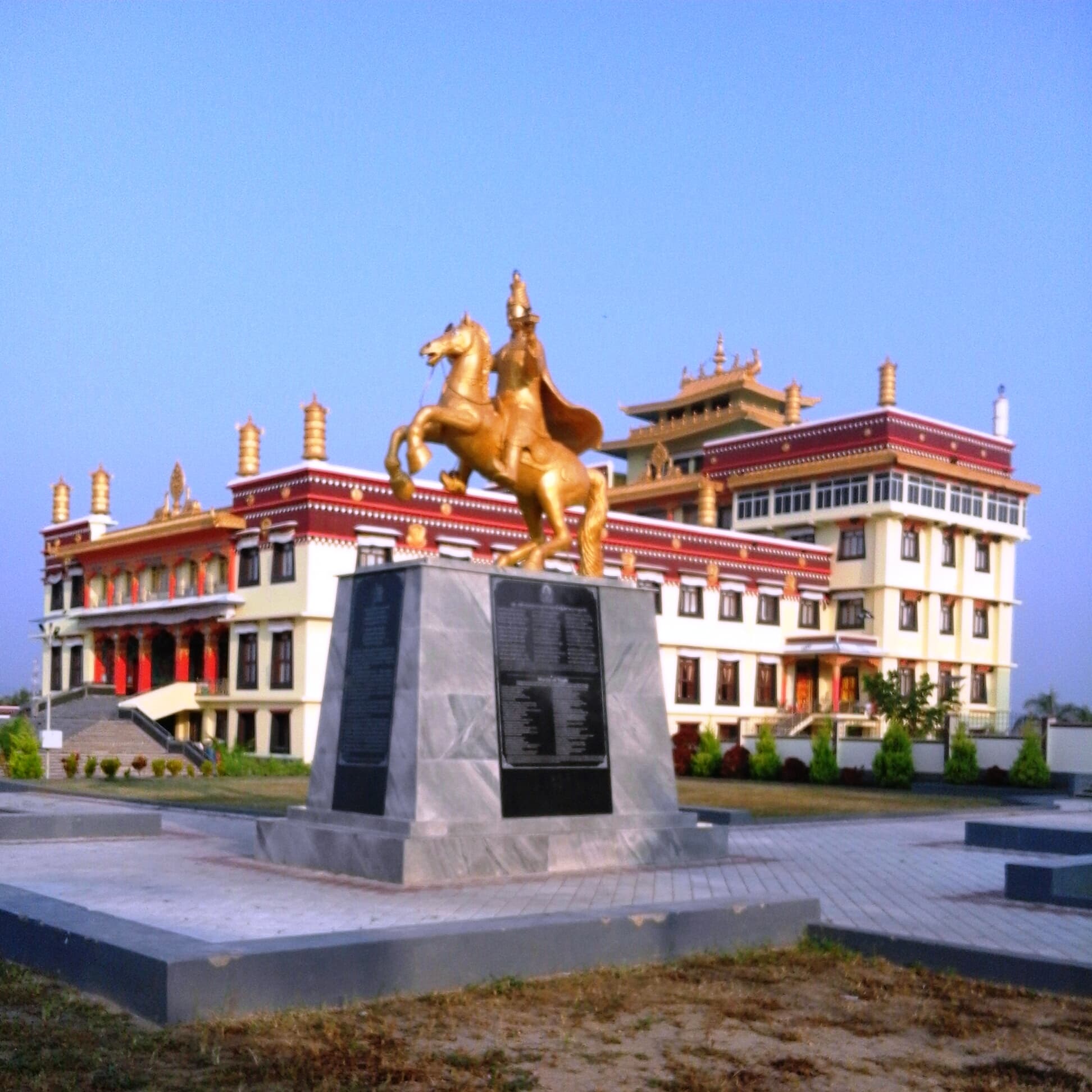
He re-established Shechen Monastery in exile, first in Bhutan and then at the larger seat in Boudhanath in Nepal in 1985, where his grandson and recognized incarnation Shechen Rabjam Rinpoche now presides. The Shechen Monastery at Boudhanath has become one of the major Nyingma seats outside of Tibet and the central place of pilgrimage for those who studied with him.
His writing — collected in The Heart Treasure of the Enlightened Ones (with commentaries on Patrul Rinpoche's text), The Hundred Verses of Advice, and Brilliant Moon (his autobiography) — combines extraordinarily precise Dzogchen presentation with the directness of a teacher who had spent twenty-two years in retreat. He died at Thimphu, Bhutan, in September 1991. His relics were divided between Bhutan, Shechen in Nepal, and Lerab Ling in France.