The dharma in the household — with partners, with children, with parents.
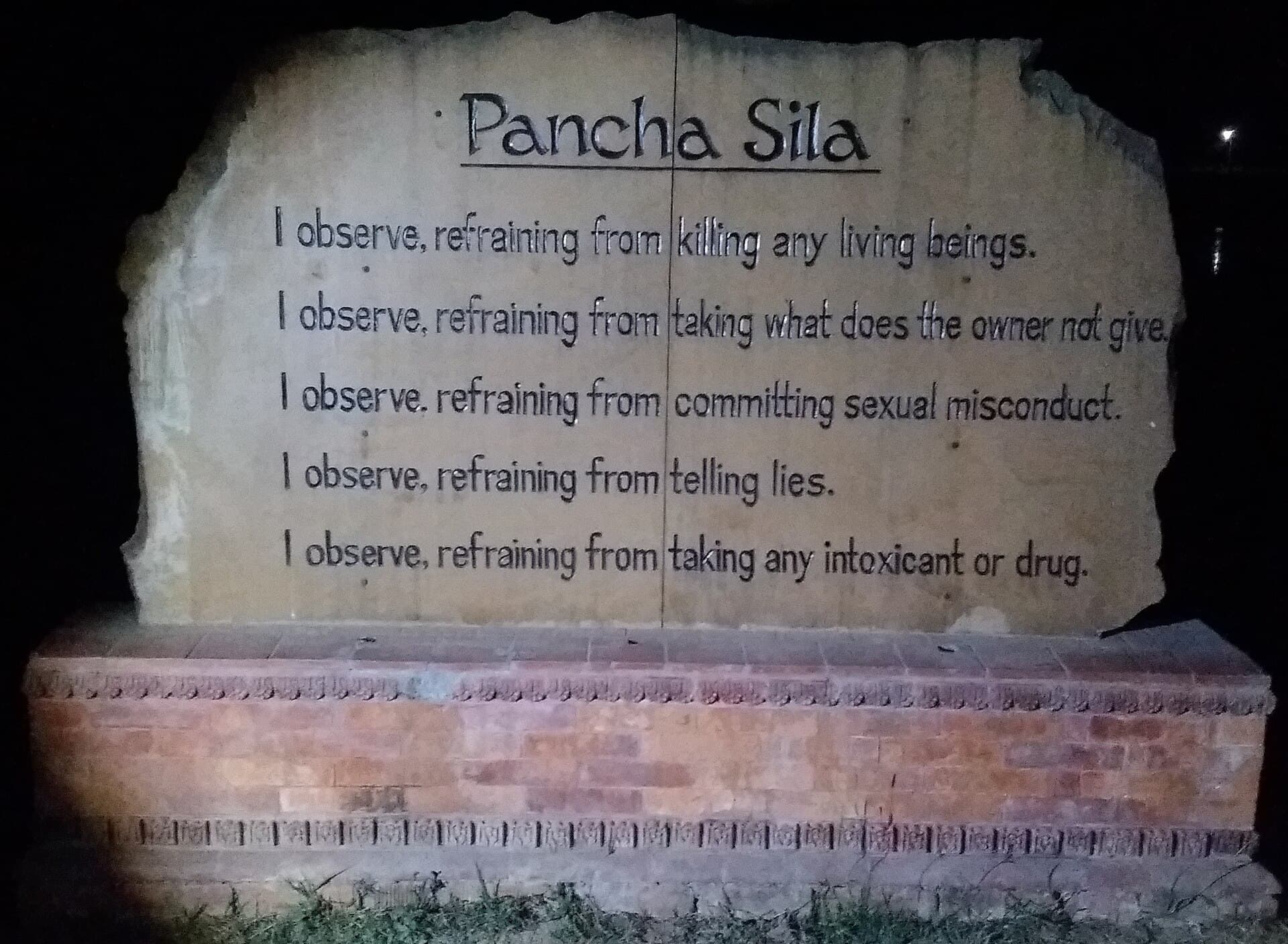
Five voluntary trainings undertaken by every lay Buddhist: to abstain from killing, stealing, sexual misconduct, false speech, and intoxicants. They are the minimum architecture of ethical life and the foundation on which all higher practice rests.
Samma-ajiva — right livelihood. The Buddha's direct teaching that one's means of earning a living is itself part of the path, and that certain occupations are incompatible with the dharma.
Wife of Siddhartha, mother of Rahula, princess of the Koliyas. Awoke one morning to find her husband gone in the night. Refused to remarry. Followed him into the order seven years after their son did, attained arahantship, and is recorded in the Therigatha as foremost in great supernormal powers.
Born on the night of the great renunciation, named "fetter" by his departing father. Ordained at seven — the first child novice in the order. Foremost among the Buddha's disciples in the desire for training. Died young; the Buddha did not outlive him.
On the necessity of dharma education for laypeople — not the preserve of monastics alone, but the inheritance of every person who walks the path.
The Tzu Chi Foundation's sixtieth anniversary observance at Lumbini — a triple festival of Buddha Day, Mother's Day, and the foundation's own founding, broadcast live from the birthplace of the Buddha.