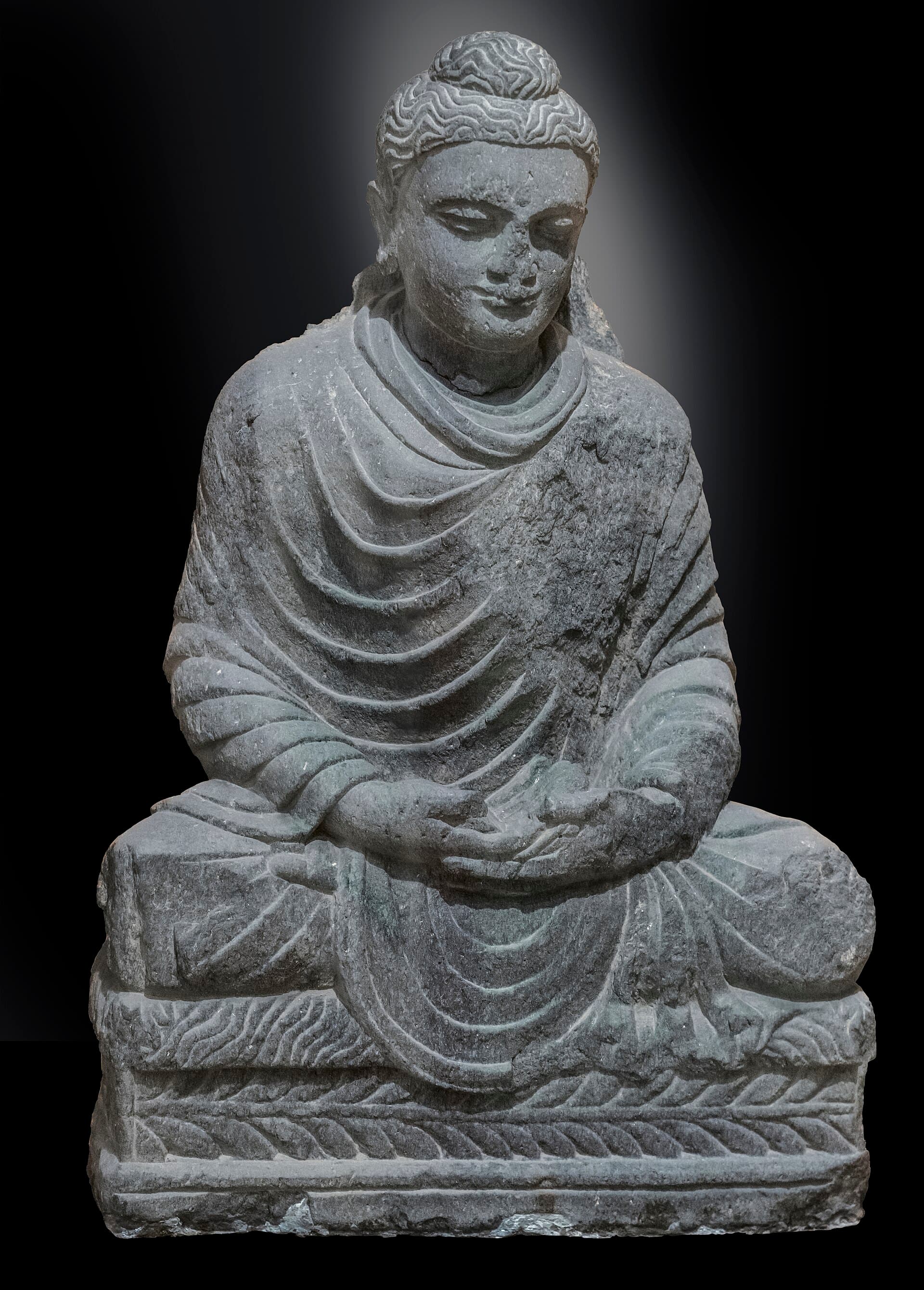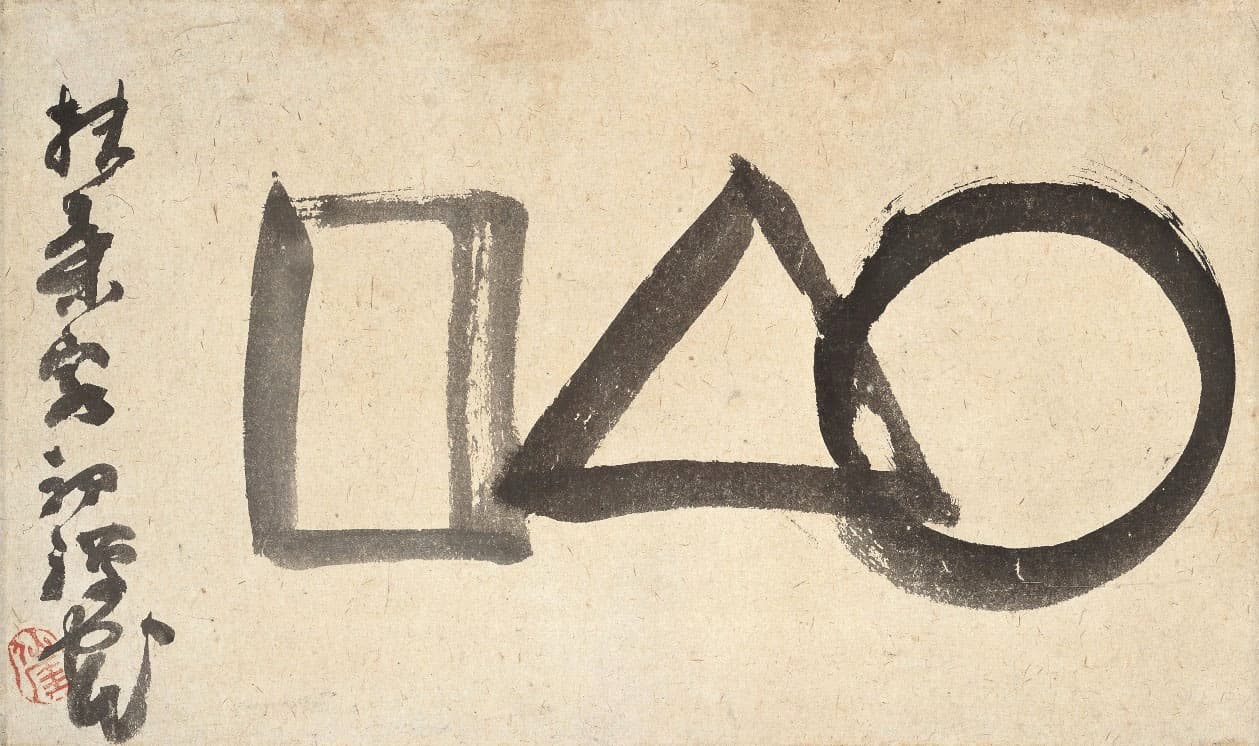
The Mahayana doctrine of tathagatagarbha — the buddha-embryo or buddha-matrix, the seed of awakening present in all beings — entered China in the fifth century with the translation of the Lankavatara Sutra and the Mahaparinirvana Sutra. In China it became the central doctrine of the Chan school. In Japan, where Chan became Zen, the doctrine took a particular and radical form: not that buddha-nature is a potential to be developed, but that it is already what one is — fully, completely, in this moment, without exception — and that practice consists in uncovering rather than producing it.
The most famous formulation in Chinese Chan is the koan from the Mumonkan: a monk asks Zhaozhou (Joshu in Japanese), "Does a dog have buddha-nature?" Zhaozhou replies "Mu" — meaning, on the surface, "no," but in context meaning to refuse the question, to cut off the dualism of has-or-doesn't-have. Mu became the foundational koan of the Rinzai tradition. The student is given the question and asked to sit with it for years if necessary until the question itself collapses.
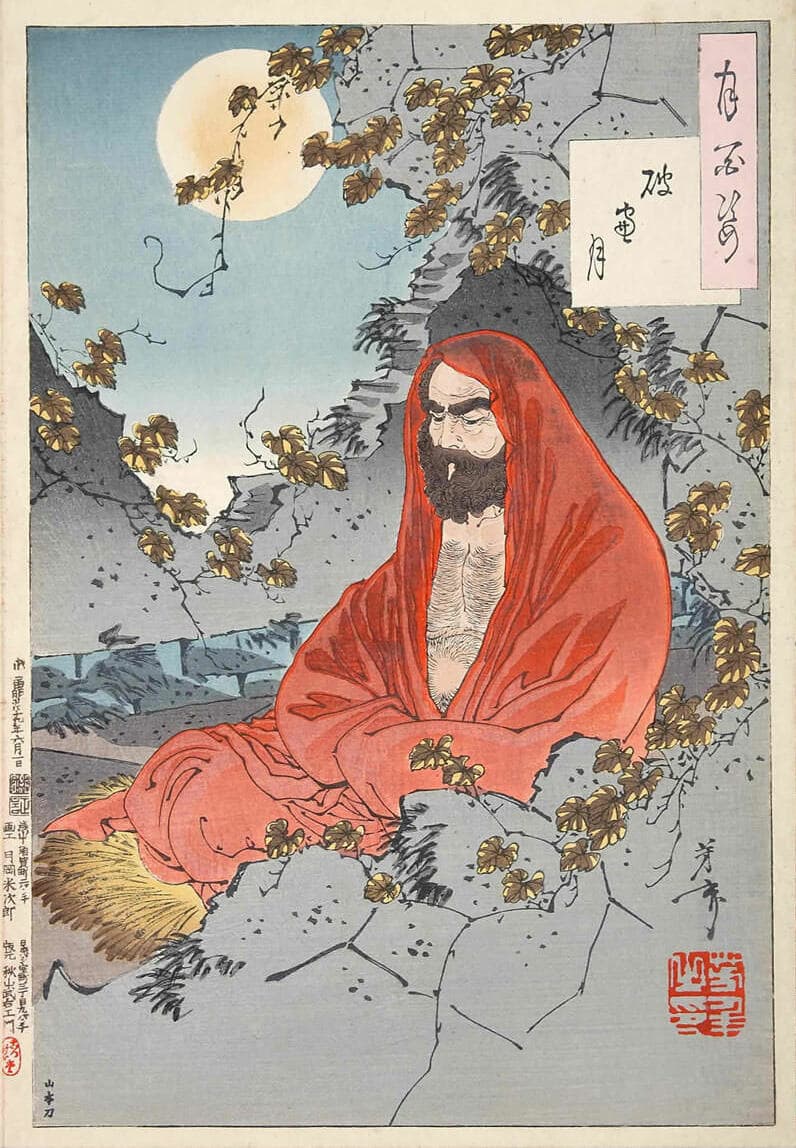
The Lankavatara Sutra — said in legend to have been the only sutra Bodhidharma brought to China — gave Chan its early scriptural foundation. The Sixth Patriarch Huineng's Platform Sutra of the seventh century is the text where the doctrine becomes fully Chinese. The famous mind-verse poem episode — Shenxiu writes that the mind is "like a clear mirror" requiring constant polishing, and Huineng (still a layman at the rice mill) writes in response that "from the beginning, no thing exists; where then is the dust?" — is the moment when Chinese Chan declares definitively that buddha-nature is not something to be cleaned up but the original ground that needs no cleaning.
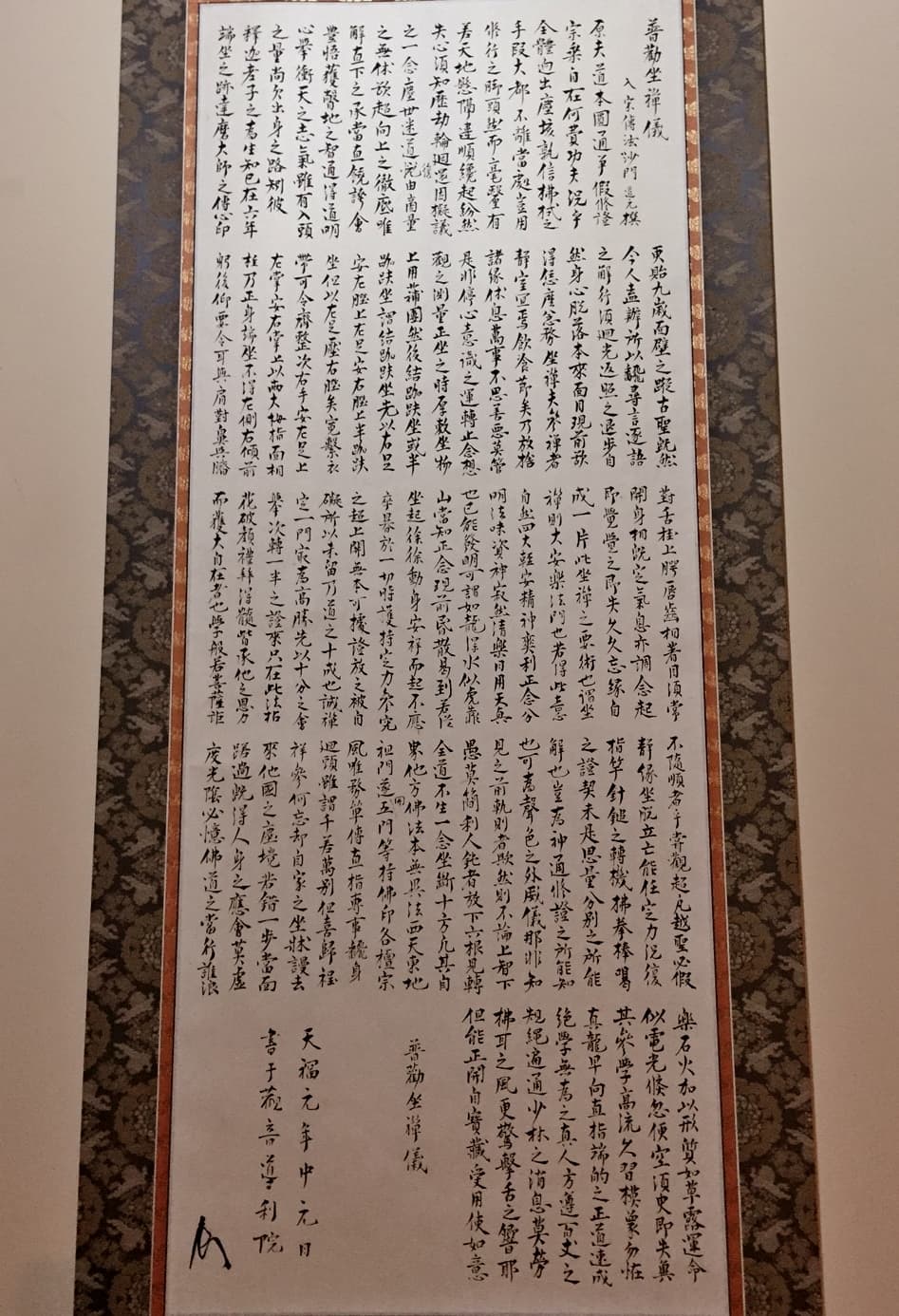
In Japan, Dogen Kigen (1200–1253) gave the doctrine its most sophisticated treatment in the Bussho fascicle of the Shobogenzo. Dogen takes the famous line from the Nirvana Sutra — "all sentient beings without exception have buddha-nature" — and re-reads it grammatically. Where the standard reading is "all sentient beings have buddha-nature," Dogen reads "all-existence is buddha-nature." The grammar is forced; the point is that buddha-nature is not a possession of beings but the very being of all that exists, including the cushion, the floor, the breath, and the act of sitting itself. This is why, for Dogen, zazen is not a practice that produces awakening; zazen itself is the activity of buddha-nature realizing itself as zazen. The famous formulation is shusho-itto, "practice and awakening are one."
The Rinzai tradition takes the same fundamental view but uses the koan rather than seated practice as the primary vehicle. The koan — Mu, the sound of one hand, your original face before your parents were born — is a question that cannot be answered conceptually because the questioner and the answer are the same thing. Sitting with the koan until the question and the questioner both dissolve is the practice. The breakthrough — kensho, seeing into one's own nature — is the moment buddha-nature becomes self-evident.
The doctrine is doctrinally close to but importantly different from the Indo-Tibetan tathagatagarbha. The Indo-Tibetan tradition tends to speak of buddha-nature as a seed or potential that requires cultivation. The Zen tradition, especially Dogen's Soto formulation, is closer to the Mahaparinirvana Sutra's most extreme statement: that buddha-nature is not a potential but the actuality, already complete, of every being and every phenomenon. The implication for practice is precise: there is nowhere to go, nothing to attain, and yet practice is the only way the recognition occurs.
The modern Zen tradition has tended to emphasize this doctrine in dialogue with both Western philosophy (Heidegger, in the work of Nishitani Keiji and the Kyoto School) and with comparative practice traditions (the Dzogchen rigpa-teaching, which has obvious resonances). Shunryu Suzuki's Zen Mind, Beginner's Mind opens with the line that has come to define popular Zen in English: "In the beginner's mind there are many possibilities; in the expert's mind there are few." The beginner's mind is buddha-nature seeing itself as a beginner.