The Mauryan emperor who, after Kalinga, turned the wheel of dharma into a polity.
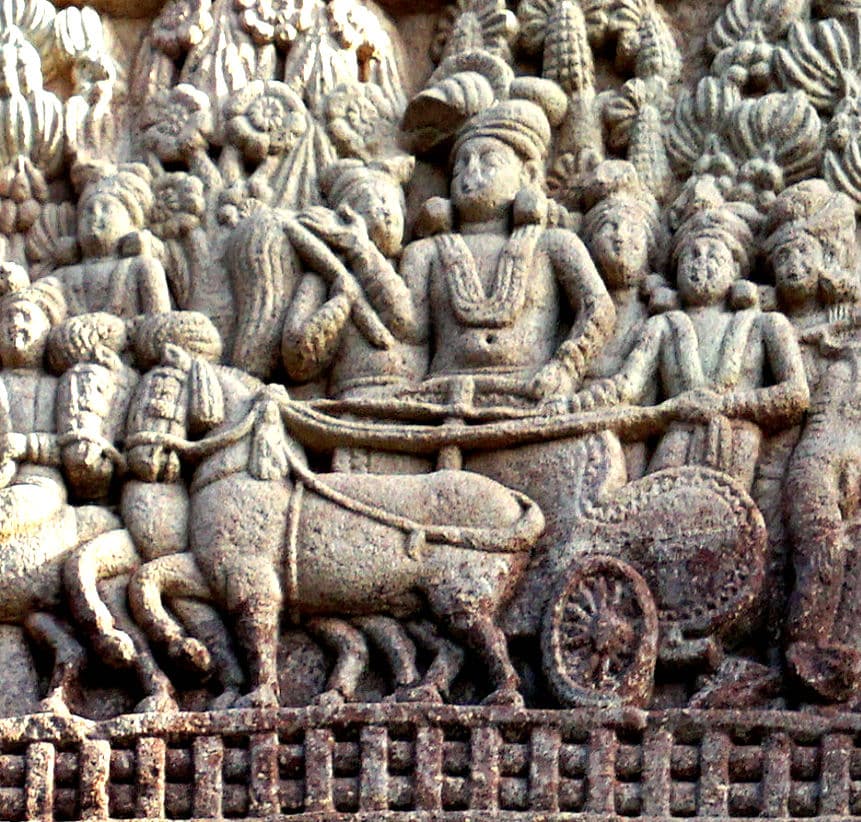
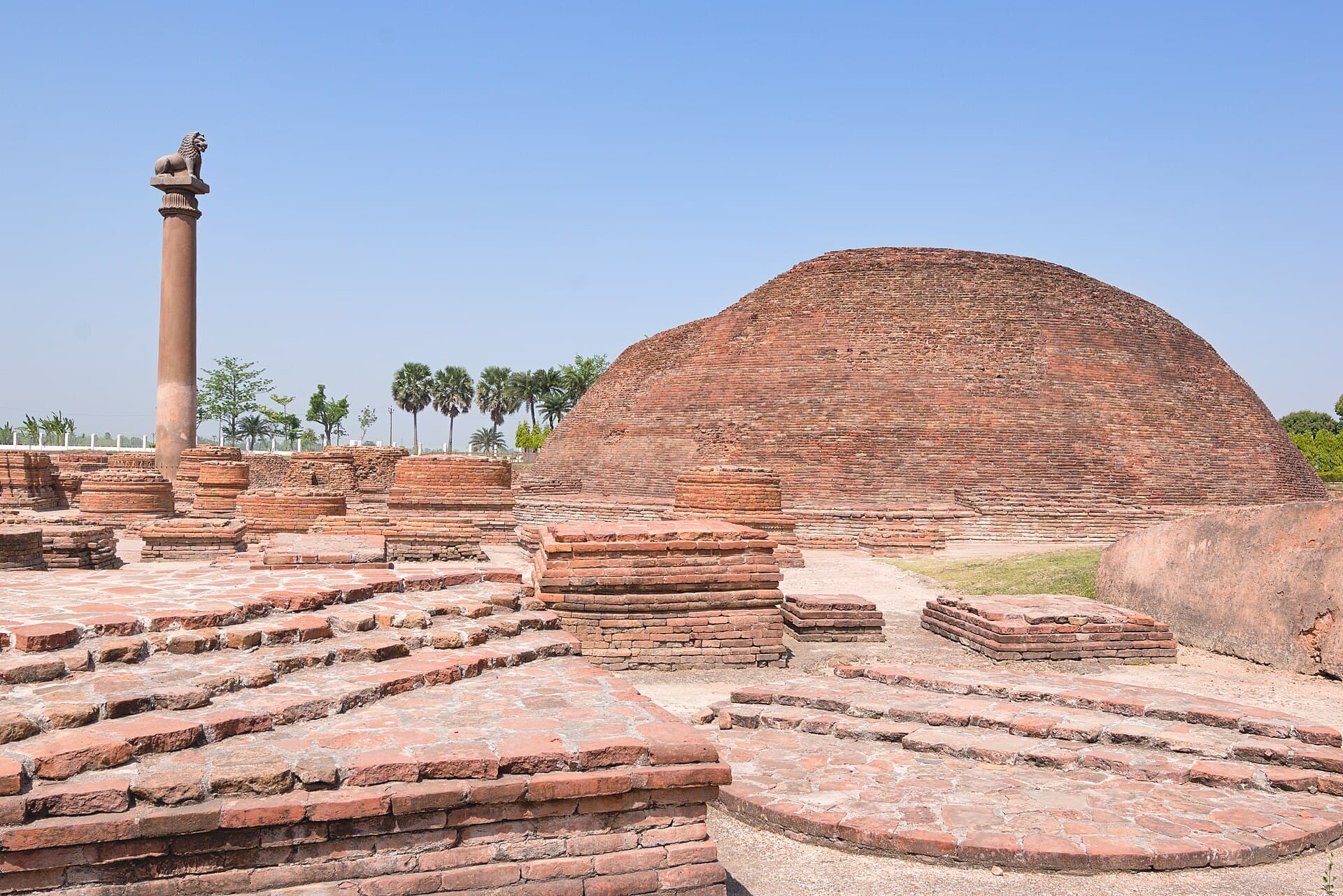
Third Maurya emperor, c. 268-232 BCE. Conquered Kalinga, was sickened by what he saw, and converted to the dharma. Inscribed thirty-three edicts on rocks and pillars across the subcontinent, sent missions as far as Greece and Sri Lanka, and is the reason — more than any other single figure after the Buddha — that the dhamma survived its first three centuries.
The three early councils — at Rajgir (c. 483 BCE), Vaishali (c. 383 BCE), and Pataliputra (c. 250 BCE under Ashoka) — that fixed the canon, produced the first schism between Sthaviravadins and Mahasamghikas, and dispatched the dharma across Asia.
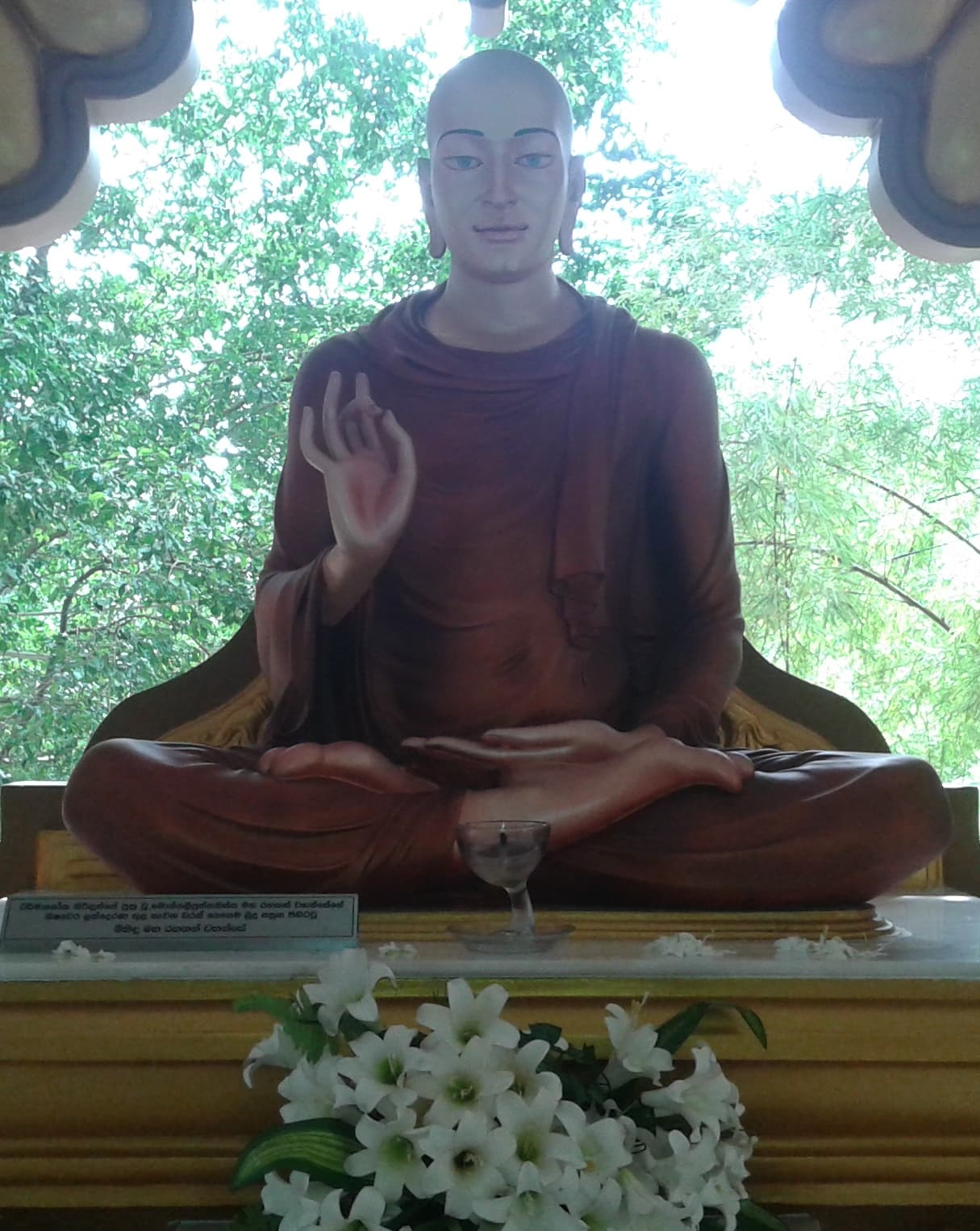
In 247 BCE the emperor Ashoka's son Mahinda — a fully ordained arahant — flew (in the chronicles) or walked (in history) to Sri Lanka and converted King Devanampiya Tissa under a mango tree at Mihintale. Three weeks later the Bodhi tree sapling arrived and the southern transmission was rooted.
The Birth.
The Undisturbed Relic.