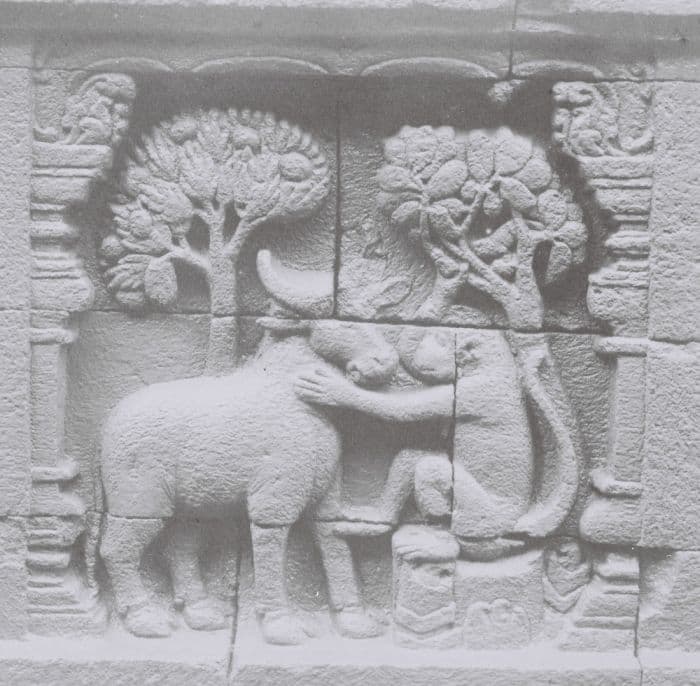
If bodhicitta is the seed of the Mahayana path, the six paramitas are the soil, water, and sunlight that bring it to fruit. The Sanskrit word pāramitā has been read in two ways — as "perfection" (from parama, "supreme") and as "gone to the other shore" (pāram-itā). Both readings are textually defended in the commentaries. The paramitas are the qualities that, when fully developed, carry the bodhisattva from the near shore of samsara to the far shore of complete buddhahood.
The list is fixed. Generosity (dāna), ethical conduct (śīla), patience (kṣānti), joyous effort (vīrya), meditative concentration (dhyāna), and wisdom (prajñā). The Prajñāpāramitā Sutras — composed from around the first century BCE onward and the foundational corpus of the Mahayana — present them as the six trainings of the bodhisattva. The Aṣṭasāhasrikā, the Perfection of Wisdom in 8,000 Lines, devotes whole chapters to each. Later Indian masters expanded the list to ten — adding skillful means (upāya-kauśalya), aspiration (praṇidhāna), power (bala), and primordial wisdom (jñāna) — to match the ten bodhisattva stages (bhūmis) of the Daśabhūmika Sutra. The six remain the core.
Generosity, the first paramita, is more than philanthropy. Śāntideva, in the Bodhicaryāvatāra, distinguishes three kinds: the giving of material things, the giving of fearlessness (protecting beings from danger), and the gift of the dharma — the highest because it addresses the root cause of suffering. The bodhisattva's generosity is structured by emptiness: there is no giver who is essentially a giver, no recipient who is essentially a recipient, no gift that is essentially a gift. The "three spheres" (trimaṇḍala) are seen as empty, and the giving is therefore unstained by self-reference.
Ethical conduct, the second, is the foundation that makes the other paramitas possible. In the Mahayana, śīla is structured into three: restraint from harmful action, the gathering of wholesome qualities, and acting for the welfare of beings. The Yogācārabhūmi attributed to Asaṅga elaborates each branch in detail. Without śīla, the canon insists, the higher paramitas cannot stabilise.
Patience, the third, is the most undervalued and the most difficult. Śāntideva's sixth chapter, on kṣānti, is the longest in the Bodhicaryāvatāra. He treats anger as the single most destructive force on the bodhisattva path — capable of destroying eons of accumulated merit in an instant. Patience operates in three modes: patience with harm done by others, patience with suffering encountered, and patience with the depth of the dharma itself, which is at first overwhelming to the mind.
Joyous effort, vīrya, is not grim discipline but the energy that arises naturally when one delights in wholesome action. The Bodhicaryāvatāra defines it as "enthusiasm for virtue." Śāntideva diagnoses its opposites — laziness in three forms: the laziness of putting things off, the laziness of attachment to lower aims, and the laziness of self-doubt — and prescribes specific remedies for each.
Meditative concentration, dhyāna, is the fifth paramita and the structural means by which insight stabilises. The bodhisattva's concentration differs from the śrāvaka's in that it is undertaken in the service of bodhicitta — its purpose is not the bliss of absorption but the cultivation of capacity for the work of liberating beings. The Mahayana retains the Theravada jhāna structure but reads it through the lens of compassion.
Wisdom, prajñā, is the sixth and culminating paramita. Without prajñā, the Aṣṭasāhasrikā says, the other five paramitas are like "men without eyes." Prajñā is the direct insight into emptiness — into the lack of inherent existence of self, of other, and of dharmas. The Heart Sutra is in this exact sense a poem in praise of the sixth paramita: prajñāpāramitā, the perfection of wisdom that perceives the five aggregates as empty and thereby crosses beyond all suffering.
The six paramitas form an integrated curriculum. The first three — generosity, ethics, patience — are predominantly outward-facing, the bodhisattva's ethical relation to others. The last three — effort, concentration, wisdom — are predominantly inward, the cultivation of the mind. The whole is held together by bodhicitta, which determines the orientation, and by emptiness, which transfigures every act. As the fifteenth-century Tibetan master Tsongkhapa writes in the Lamrim Chenmo, "The paramitas are the lineage of all the buddhas. Without them, awakening cannot ripen."