
Vajrayana
The Diamond Vehicle / Tantric Buddhism
The Vajrayana — the Diamond Vehicle, the Adamantine Path — is the third turning of the wheel of dharma, and it makes a claim no other tradition makes: that awakening is not a thousand-lifetime project but possible in this very life and in this very body, provided one is in the right transmission and receives the right empowerment (abhiseka, Tibetan wang) from a qualified lineage holder. The Vajrayana is the Mahayana practiced through tantra. It does not deny the bodhisattva path; it accelerates it.
The historical Vajrayana emerges in India between the sixth and twelfth centuries CE, alongside and within Mahayana monasticism. Its scriptures are the tantras — texts presented as having been taught by the Buddha in his sambhogakaya form, often in coded language (sandhya-bhasa, the twilight speech). The tantras are classified in different ways across the schools. The Nyingma scheme of Tibetan Buddhism organizes them into nine yanas, of which the highest three are mahayoga, anuyoga, and atiyoga (Dzogchen). The Sarma schools (Kagyu, Sakya, Gelug) organize tantra into four classes: kriya, carya, yoga, and anuttarayoga (the highest, including the Guhyasamaja, Cakrasamvara, Hevajra, and Kalacakra tantras).
The central practice is sadhana — a structured deity yoga in which the practitioner visualizes themselves as the awakened deity (yidam), recites the deity's mantra, and rests in the recognition that this divine form, this sound, and this awareness are not separate from one's own buddha-nature. The premise, drawn from the tathagatagarbha doctrine, is that buddhahood is already present in the mindstream; the work is to recognize, stabilize, and let it manifest. The path uses what the sutra path renounces: desire, anger, and ignorance are transmuted into the three buddha-families of wisdom rather than suppressed. This is why the Vajrayana requires lineage and empowerment — it is a path of speed and high voltage, and without a teacher who has stabilized the realization, the practice can ground out badly.
“The historical Vajrayana emerges in India between the sixth and twelfth centuries CE, alongside and within Mahayana monasticism.”
The great Indian Vajrayana figures are the mahasiddhas — the eighty-four 'great accomplished ones' of tradition, including Saraha, Tilopa, Naropa, Virupa, Luipa, Kanha, and the women siddhas Niguma, Sukhasiddhi, and Yeshe Tsogyal. Their songs of realization (dohas, caryagiti) are foundational. Their lineage carried into Tibet from the eighth century onward — Padmasambhava transmitting the Nyingma terma tradition, Atisa carrying the lamrim and Kadam, Marpa the Translator carrying the Mahamudra to Milarepa to Gampopa to the Karmapas, and Khon Konchog Gyalpo founding the Sakya line of the Hevajra Tantra and Lamdre.

Vajrayana today survives mainly in the four Tibetan schools — Nyingma (the Ancients), Sakya, Kagyu (Karma, Drikung, Drukpa, Shangpa, and other sub-branches), and Gelug (the school of Tsongkhapa) — together with the pre-Buddhist Bön tradition of Tibet, which absorbed Vajrayana method while retaining its own cosmology. The Newar Buddhism of Nepal's Kathmandu Valley is also Vajrayana, transmitted directly from late Indian masters through hereditary Vajracharya priests. The Shingon school of Japan, founded by Kukai (Kobo Daishi) in the early ninth century, preserves the older Yoga Tantra lineage; Tendai also carries esoteric Mikkyo. The Yungdrung Bön and Mongolian, Bhutanese, Sikkimese, and Ladakhi forms round out the living transmission.
Approximately 25 million Vajrayana practitioners are estimated worldwide, with the largest active sanghas in Tibet (under restriction), Bhutan, Mongolia, Ladakh, Sikkim, Arunachal Pradesh, Nepal, Bhutan, and the global Tibetan diaspora. The Vajrayana's distinctive cultural footprint — the thangka, the mandala, the chanted liturgy with horns and damaru, the mahasiddha sculpture, the prayer flag, the wrathful deity, the offerings of torma and amrita — is what most of the world recognizes as 'Tibetan Buddhism'. But the essence is interior: a lineage of mind-to-mind transmission, an empowerment, a samaya bond, and the practice of resting in the recognition that this very mind, just as it is, is the Diamond.
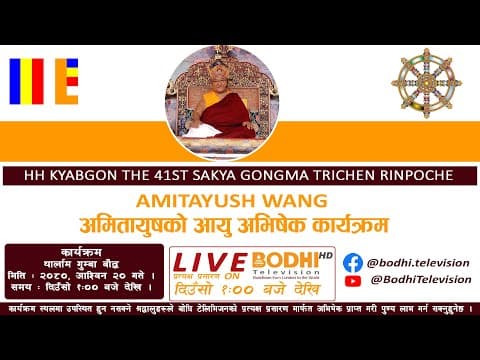
The Empowerment of Amitayus
A live transmission by HH the 41st Sakya Trichen Rinpoche
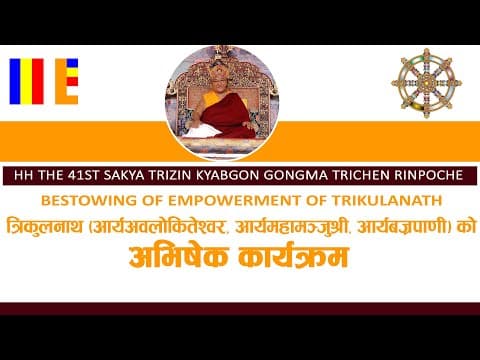
The Empowerment of Trikulanath — Session I
HH the 41st Sakya Trichen Rinpoche
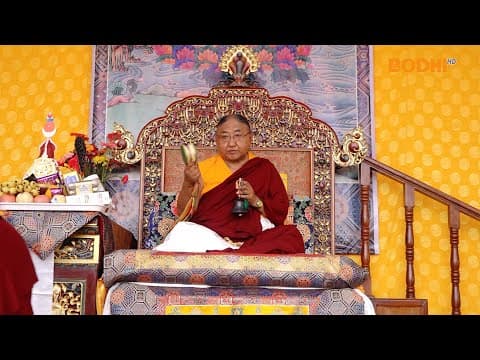
The Empowerment of Guru Padmasambhava
HH the 41st Sakya Gongma Trichen Rinpoche
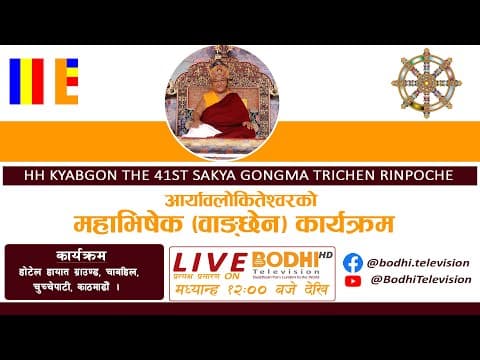
The Great Empowerment of Avalokiteshvara
HH the 41st Sakya Trichen Rinpoche · live transmission

