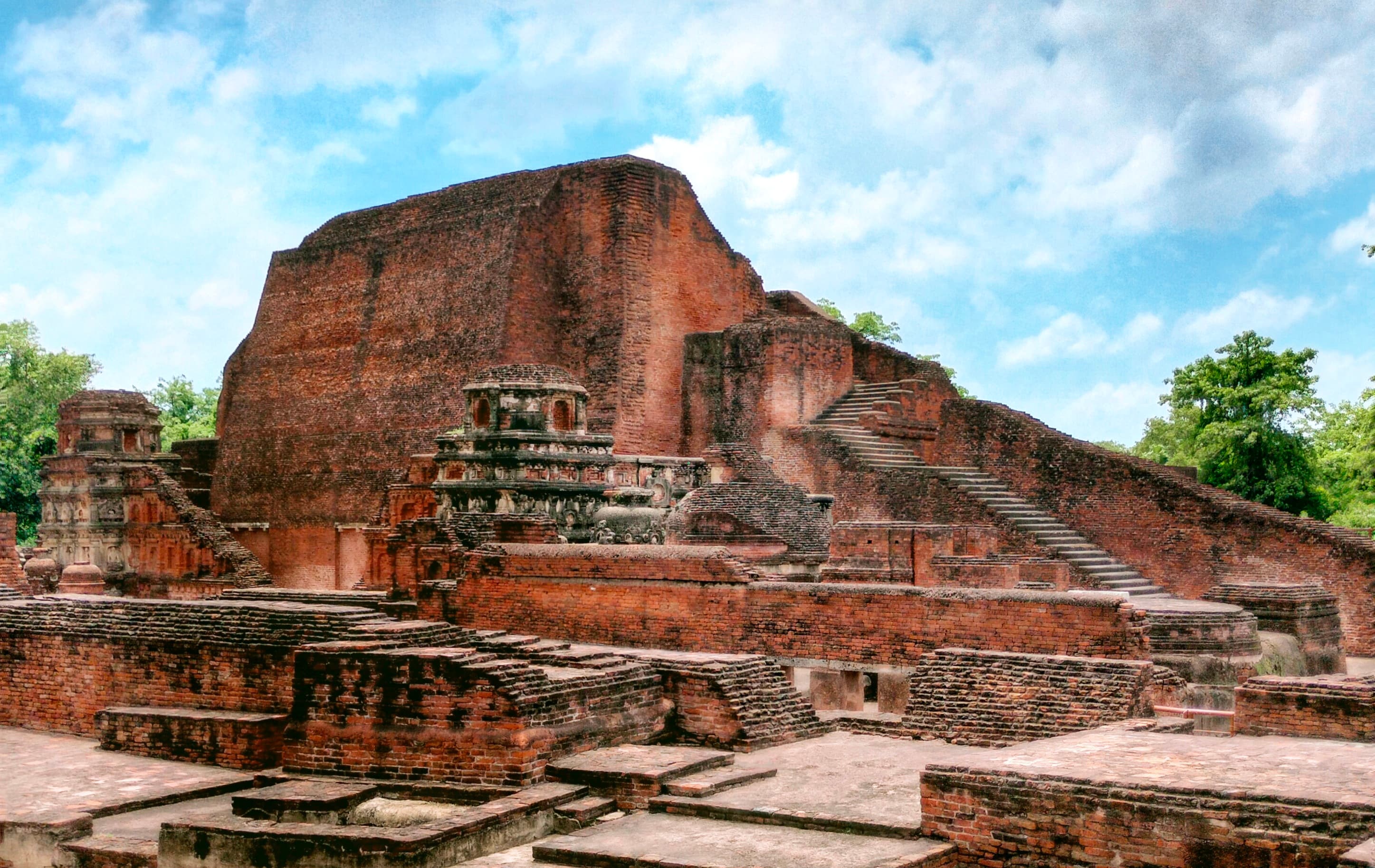
Milarepa
Tibet's great yogi-poet
He was born Mila Töpa Ga — "Mila Joyful to Hear" — in 1052 CE, in the village of Kya Ngatsa in Tsang province, western Tibet, the elder son of a moderately prosperous merchant. His father Mila Sherab Gyaltsen died when he was seven. The estate, by Tibetan custom, was placed in trust with his paternal uncle and aunt until the boy came of age. The uncle and aunt simply took it. They reduced the widow Nyangtsa Kargyen and her two children — Mila and his sister Peta — to indentured servants on what had been their own land. For ten years, the family lived in humiliation. When Mila came of age, his mother gathered what she could of the inheritance, hosted a coming-of-age feast, and demanded restitution. The uncle and aunt laughed at her. She then ordered her son — by his own account in the autobiography Tsangnyon Heruka recorded four centuries later — to take everything she had left, travel to a famous tantric master of black magic, learn the destructive arts, and revenge the family.
Mila did. He studied with a Nyingma master of sorcery in central Tibet, mastered the rituals for summoning hailstorms and conjuring demons, and returned to Kya Ngatsa during the wedding feast of his cousin — the son of the aunt who had stolen the estate. He brought down a roof on the wedding party. Thirty-five people died. His mother, the autobiography records, danced in the rubble. Mila then sent a second storm at the request of his patrons in a neighboring village and destroyed their crops. He had become the most feared black sorcerer in Tibet by his mid-twenties.
What followed is the part of the autobiography that defined him. Mila understood, with full clarity, that the karma he had created would send him to the deepest hells for many aeons. He resolved to find a teacher who could free him from what he had done. He found his way to Marpa Lotsawa — "Marpa the Translator" — a tantric master who had traveled three times to India, brought back the Mahamudra teachings of the Indian siddhas Naropa and Maitripa, and was teaching from a household in Lhodrak in southern Tibet. Marpa, when he saw Mila coming, knew what was at stake; he also knew that the karmic load was so heavy that ordinary purification practices would be inadequate. He set Mila to building a series of stone towers, by hand, alone — and demolishing each one before it was finished. The first was a circular tower. Marpa, when it was nearly done, announced he had given the wrong instructions and ordered it torn down. The second was a semicircular tower; same outcome. The third was triangular; same. The fourth, nine stories high, was the famous Sekhar Guthok — "Nine-Story Tower" — at Lhodrak; Marpa let it stand. By the end of these labors, Mila's back was a single open sore from carrying stones. Marpa's wife Dakmema repeatedly intervened on Mila's behalf, and Marpa repeatedly explained to her, in private, what he was doing: the load of negative karma could only be exhausted through this specific labor; nothing less would clear the way for the teachings.
“He was born Mila Töpa Ga — "Mila Joyful to Hear" — in 1052 CE, in the village of Kya Ngatsa in Tsang province, western Tibet, the elder son of a moderately prosperous merchant.”
When Marpa finally gave him initiation and instruction — the Mahamudra and the Six Yogas of Naropa — Mila left for the high caves of the Himalaya and meditated for the rest of his life. He survived, the autobiography records, on nettle soup for so many years that his skin turned green. He wore a single cotton cloth in the snow and generated tummo — the inner heat — to survive. He sang. The Mila Grubum — the "Hundred Thousand Songs of Milarepa" — preserves several hundred extempore verses he composed in the caves and in conversations with hunters, herdsmen, demons, his disciple Rechungpa, and the bandits and skeptics who came to test him. The songs are direct, plain-spoken, often funny, and metrically precise. They became, almost immediately, the most popular religious literature in Tibet — quoted in monasteries, sung by herders, used as texts for moral education for nine centuries.

His principal disciples were Rechungpa Dorje Drakpa — the "Cotton-Clad" Rechungpa, who became one of the founders of the Rechung Kagyu line — and Gampopa Sonam Rinchen, the physician-monk who synthesized Milarepa's yogic transmission with the monastic Kadampa tradition and founded the Dagpo Kagyu, from which all the Kagyu lineages of Tibet descend (Karma, Drikung, Drukpa, Taklung, and the others). The pattern Milarepa established — that enlightenment is attainable in a single lifetime through intense Mahamudra practice in solitary retreat — has been the founding standard of Kagyu practice ever since. Hermits in the Himalaya still cite him as the witness that a single lifetime is enough.
He died in 1135, at the age of eighty-three, in the Drin valley, poisoned by a jealous geshe who could not bear his reputation. The poisoner, after Milarepa's death, repented and asked to be taken as a disciple of the next teacher in the lineage. Milarepa's own life-story — the Mi la'i rnam thar, composed by Tsangnyon Heruka around 1488 — is the most read piece of Tibetan literature outside the scriptures themselves. He is the proof, in the Tibetan imagination, that the load of any past karma is exhaustible, and that the dharma can take a murderer to buddhahood within a single life.
The Three Supreme Practices for Daily Life — I
Kyabje Chokyi Nyima Rinpoche
The Three Supreme Practices for Daily Life — II
Kyabje Chokyi Nyima Rinpoche
The Three Supreme Practices for Daily Life — III
Kyabje Chokyi Nyima Rinpoche
Lamdre 2024 — Day 10
HH the 42nd Sakya Trizin Rinpoche · Lumbini