Nagarjuna
Founder of Madhyamaka, the second Buddha
The historical Nagarjuna is harder to fix than his philosophical position. The Tibetan tradition gives him a life of six hundred years, divides him into multiple figures, and credits him with everything from the Mulamadhyamakakarika to alchemical treatises and a recovery of the Prajnaparamita sutras from the underwater palace of the nagas. The Chinese tradition, less elaborate, places him in South India in the second century CE and identifies him with the author of the Mahaprajnaparamita-shastra (only attribution; the Sanskrit original is lost). The critical scholarly consensus is that the figure we can isolate as the author of the Mulamadhyamakakarika lived in the second century — perhaps between 150 and 250 CE — somewhere in the Andhra region of south India, probably near the Amaravati and Nagarjunakonda Buddhist complexes that bear his name.
The traditional biography, as preserved in Kumarajiva's Chinese translation of a Sanskrit life, gives him a brahmin birth in southern India, an early study of the Vedas, a youthful brilliance that allowed him to master the brahmanical sciences before he was twenty. The famous episode is a near-death encounter with the consequences of magical power: he and three friends, having mastered an invisibility spell, infiltrated a royal harem, were discovered when the guards slashed the air where they sensed presences, and the three friends were killed. Nagarjuna alone escaped — by, the texts say, hiding under the throne of the king at the moment when the swords swept the room. He emerged, the story records, with a single insight: that desire is the root of suffering, and that escape from desire is the only path. He took ordination, went to study with the Buddhist masters of the time, mastered the Tripitaka in ninety days, and concluded that the existing canon was incomplete. The remainder of his life was given to the recovery and exposition of the Prajnaparamita literature.
The legend gives him the nagas — the serpent-beings — as his second teachers. He descended, the Tibetan biographies say, into the naga realm under the ocean and was given the long Prajnaparamita sutras, which the Buddha himself had entrusted to the nagas because no human disciple was yet ready to receive them. He brought them back. This is the founding legend of the Mahayana scriptural tradition: that the sutras of the second turning of the wheel had been kept in trust until Nagarjuna recovered them. The name Nāgārjuna — "naga-Arjuna" — preserves the encounter.
“The Chinese tradition, less elaborate, places him in South India in the second century CE and identifies him with the author of the Mahaprajnaparamita-shastra (only attribution; the Sanskrit original is lost).”
The philosophy, by contrast, is the most precise and astringent work in the entire Buddhist tradition. The Mulamadhyamakakarika — "The Root Verses of the Middle Way" — is twenty-seven chapters and roughly four hundred and fifty verses of compressed Sanskrit argumentation. Its method is the prasanga or "consequence" approach: rather than asserting positions, Nagarjuna systematically demonstrates that every philosophical position one might hold about phenomena — that they exist, that they do not exist, that they both exist and do not exist, that they neither exist nor do not exist — generates internal contradiction. The motion of a moving thing cannot be analyzed without contradiction (chapter 2); the relation of fire to fuel cannot be analyzed without contradiction (chapter 10); the relation of cause and effect cannot be analyzed without contradiction (chapter 1); the four noble truths themselves, taken as ultimately real, generate contradiction (chapter 24). The conclusion in every case is the same: the apparent stability of the phenomenon dissolves under analysis. This dissolution is what Nagarjuna calls sunyata — emptiness. Emptiness is not nothingness; it is the absence of independent, self-standing existence. Everything arises dependently; nothing exists from its own side.

Chapter 24 is the philosophical hinge. An opponent objects: if everything is empty, then the four noble truths are empty, the Buddha is empty, the path is empty, and the entire dhamma collapses. Nagarjuna answers with the famous verse (MMK 24.18): "yaḥ pratītyasamutpādaḥ śūnyatāṃ tāṃ pracakṣmahe / sā prajñaptirupādāya pratipat saiva madhyamā" — "What is dependent arising, that we call emptiness; emptiness is a designation in dependence, and that itself is the middle way." Emptiness and dependent origination are not two doctrines but one. To say a thing is empty is precisely to say that it arises dependently. The middle way the Buddha taught between eternalism and annihilationism is reachable only by understanding emptiness in this sense. Without emptiness, Nagarjuna argues, neither the four truths nor the path nor the Buddha would be intelligible.
His other major works include the Vigrahavyavartani ("The Dispeller of Disputes"), an answer to the standard objection that emptiness is itself self-refuting; the Sunyatasaptati ("Seventy Verses on Emptiness"); the Yuktisastika ("Sixty Verses on Reasoning"); and the Ratnavali ("Garland of Precious Jewels"), a letter of advice to a southern king on the conduct of righteous rule. He died, the legend says, by his own consent: a young prince who needed his head to fulfill an oath received it; the head was severed by a blade of kusa grass, which alone could harm him. His direct disciple was Aryadeva. His school passed to Buddhapalita, Bhavaviveka, and Chandrakirti, and through them to Tibet and East Asia. He is the founding figure of the entire Mahayana philosophical tradition.
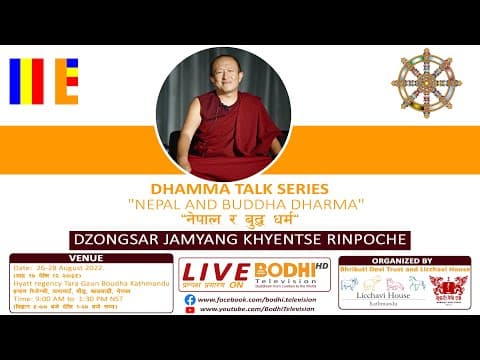
Nepal and the Buddha Dharma — Part IV
Dzongsar Jamyang Khyentse Rinpoche in Kathmandu
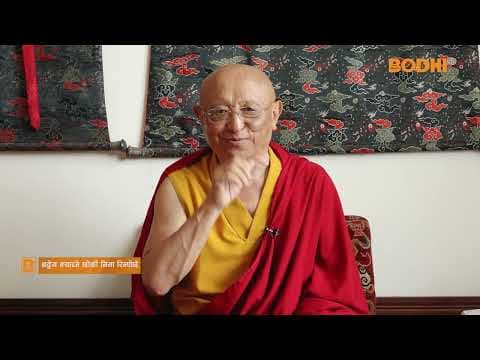
Without Knowing Emptiness, There Is No Freedom from Suffering
Kyabje Chokyi Nyima Rinpoche
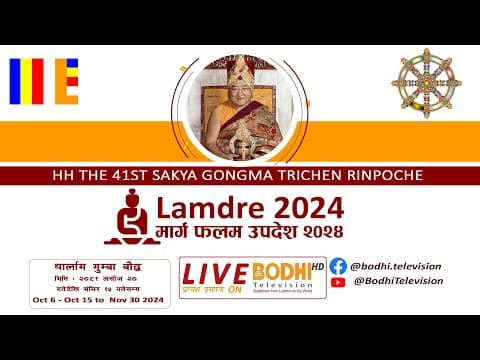
Lamdre 2024 — Day 9
HH the 42nd Sakya Trizin Rinpoche · Lumbini
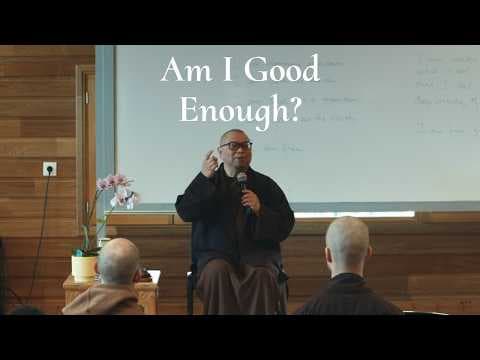
Courage to Come Home
Br. Bao Tang — Plum Village tradition