
Sunyata
Emptiness — the lack of inherent existence
Listen · 12:30Ven. YifaOf all the concepts in Buddhist thought, śūnyatā is the most easily misread. Translated as "emptiness" or "voidness," it lands in English with the connotations of absence, deficit, or nihilistic nothingness. None of these is what the Sanskrit term means. Emptiness in the Mahayana — and in the Madhyamaka in particular — is the precise philosophical claim that all phenomena lack svabhāva, "own-being" or inherent, independent existence. They are empty of self-essence, but they are not empty of existence in the conventional, dependently-arisen sense. To be empty is precisely to be dependently arisen.
The concept is implicit in the earliest strata of the dharma. The Theravada teaching of anatta — that no permanent self is to be found in any of the five aggregates — is already a teaching of emptiness, narrowed to the case of the person. The Cūḷa-suññata Sutta (MN 121) and the Mahā-suññata Sutta (MN 122) develop the term in the Pali canon, where suññatā is treated as a meditative entry into the truth of non-self. What the Mahayana does, beginning around the first century BCE with the composition of the Prajñāpāramitā literature, is universalise the analysis: not only persons but all dharmas — all phenomena, all elements of experience — are empty of inherent existence.
The decisive philosophical articulation is Nāgārjuna's Mūlamadhyamakakārikā, composed in the second century. The text's twenty-seven chapters subject every available metaphysical category — causation, motion, the aggregates, the elements, time, the self, nirvana itself — to a relentless dialectical analysis. In each case, Nāgārjuna shows that the supposed inherent existence of the category cannot be coherently maintained without contradiction. The famous dedicatory verses summarise the position: "Whatever is dependently arisen — that we call emptiness; that is dependent designation; that itself is the middle way."
“Translated as "emptiness" or "voidness," it lands in English with the connotations of absence, deficit, or nihilistic nothingness.”
This is the key move. Emptiness is not opposed to existence; it is opposed to the misperception of existence as inherent. A chariot, in the Milindapañha's example earlier appropriated by the Madhyamaka, is empty of being inherently a chariot — yet there it is, perfectly functional, conventionally real. The same is true of every phenomenon. The pen exists, the cup exists, the self exists conventionally; but none of them exists in the way the ordinary mind takes them to exist — namely, as self-sufficient, independently subsisting things. They exist by dependence: on causes, on parts, on conceptual designation.
Candrakīrti, the seventh-century master whose Madhyamakāvatāra became the standard Indian commentary on Nāgārjuna in Tibet, elaborates this into the Prāsaṅgika reading: emptiness is not a thesis the Madhyamika defends but a consequence shown to follow from any opponent's position. Tsongkhapa, in his fourteenth-century Lamrim Chenmo and the more advanced Lhag mthong (Special Insight) sections, reads Candrakīrti as the definitive interpreter and lays out emptiness as the union of two negations: the negation of inherent existence does not entail the negation of conventional existence.
The Yogācāra school, the other great Mahayana philosophical lineage, offers a different inflection. For Asaṅga and Vasubandhu, in texts like the Madhyāntavibhāga and the Triṃśikā, emptiness is the absence of subject-object duality in the field of consciousness. The "three natures" (trisvabhāva) doctrine distinguishes the imagined nature (parikalpita), the dependent nature (paratantra), and the perfected nature (pariniṣpanna) — and emptiness, in this reading, is the absence of the imagined in the dependent, revealing the perfected. The two schools have debated for centuries whether their readings are compatible or competing; modern scholarship tends toward the view that they address different operational levels.
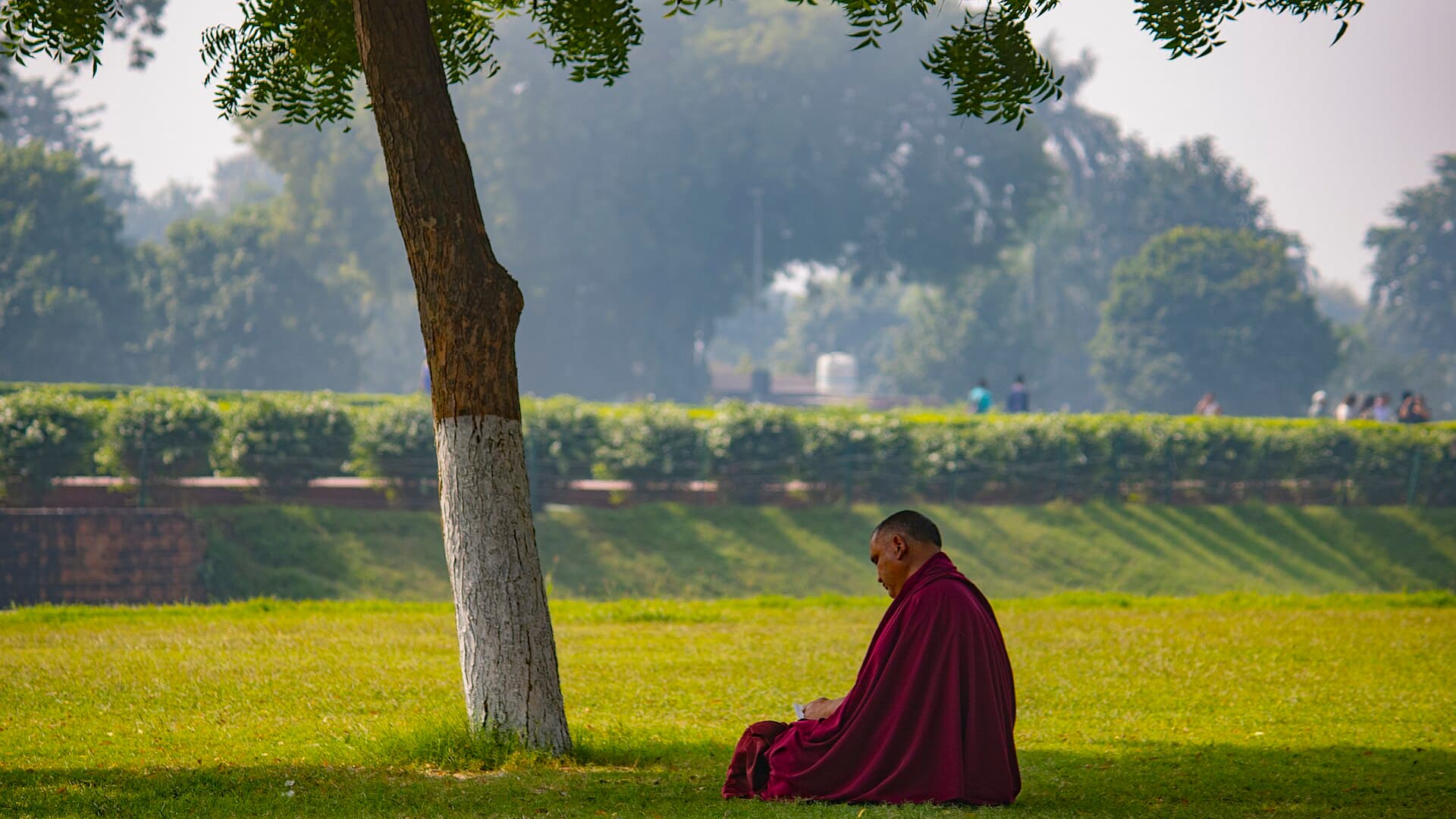
In Zen, emptiness is condensed into a single character — kū — and into pithy phrases: "Form is emptiness; emptiness is form" (the Heart Sutra refrain). The Soto master Dōgen, in the Shōbōgenzō, writes that "to study the buddha way is to study the self; to study the self is to forget the self; to forget the self is to be actualised by the myriad things." This is sunyata as lived recognition.
What emptiness opens is freedom. If nothing is fixed, then nothing is finally stuck. Suffering is empty of inherent existence; therefore it can end. The path itself is empty of inherent existence; therefore it can be walked. The Heart Sutra closes with the mantra of the perfection of wisdom — gate gate pāragate pārasaṃgate bodhi svāhā — "gone, gone, gone beyond, gone utterly beyond, awakening, so be it." It is a mantra of the emptied mind.
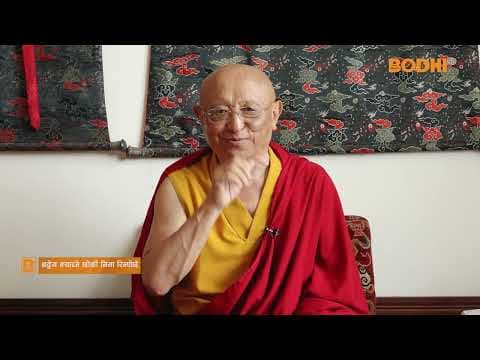
Without Knowing Emptiness, There Is No Freedom from Suffering
Kyabje Chokyi Nyima Rinpoche
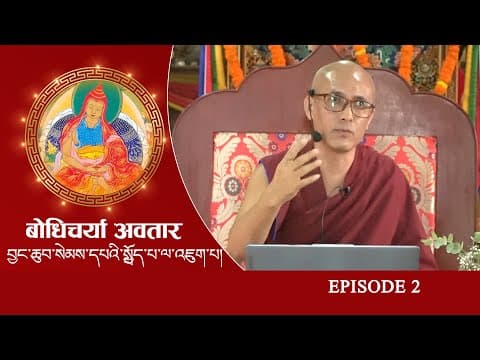
The Bodhicaryavatara — Episode 02
Shantideva's Way of the Bodhisattva
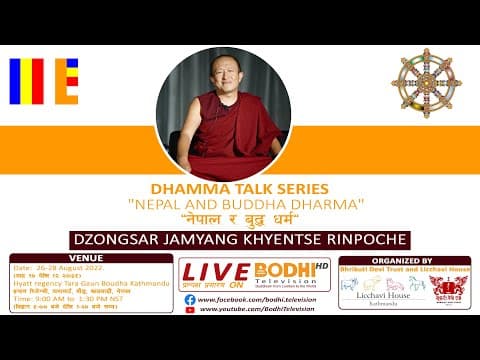
Nepal and the Buddha Dharma — Part II
Dzongsar Jamyang Khyentse Rinpoche in Kathmandu
Courage to Come Home
Br. Bao Tang — Plum Village tradition
