
The Two Truths
Conventional and ultimate — the architecture of reality
Listen · 14:00Karl BrunnhölzlIn Nāgārjuna's Mūlamadhyamakakārikā, chapter 24, verse 8, comes one of the most quoted sentences in all of Buddhist philosophy: "The Buddha's teaching of the dharma is based on two truths: the conventional truth (saṃvṛti-satya) and the ultimate truth (paramārtha-satya). Those who do not understand the distinction between these two truths do not understand the deep truth of the Buddha's teaching."
The doctrine has antecedents in the Pali Canon, where the commentaries distinguish nītattha (definitive meaning) from neyyattha (interpretable meaning), and where the Buddha is shown speaking sometimes in conventional language about persons, choices, and worlds, and sometimes in technical analytical language about aggregates, sense bases, and dharmas. But it is Nāgārjuna who promotes the distinction into a foundational philosophical principle and Candrakīrti, in the seventh century, who gives it its definitive Prāsaṅgika reading.
The conventional truth — saṃvṛti, from a root meaning "to cover" or "to obscure" — is the truth of everyday appearances. The cup is on the table. The mother loves her child. The path leads to the village. Conventional truth is not false. It is the level of reality at which language, intention, action, and ethics operate. Without it, the dharma could not be taught and the path could not be walked. The Buddha himself spoke at this level the vast majority of the time. When he said "this person performed wholesome actions and was reborn in a heavenly realm," he was not speaking ultimate truth — there is no inherently existing person, no inherently existing realm — but he was speaking entirely truly at the conventional level.
The ultimate truth — paramārtha-satya — is the truth of emptiness. At this level, no phenomenon is found to possess inherent existence. The cup is empty of being inherently a cup; the table is empty of being inherently a table; the relation between them is empty of being inherently a relation. To analyse any phenomenon with sufficient rigour is to discover that it does not exist in the way the ordinary mind takes it to exist. This is the level at which liberation operates, because suffering itself is found to be empty, and what is empty can be released.
“Those who do not understand the distinction between these two truths do not understand the deep truth of the Buddha's teaching.”
Crucially, the two truths are not two separate realities. They are two truths about the same reality. The same cup is conventionally a cup and ultimately empty. The same person is conventionally a person and ultimately a stream of dependently-arising aggregates with no inherent self. Nāgārjuna's point is that to grasp at either truth in isolation is to fall into error. Grasping only at conventional truth, one reifies appearances and remains in samsara. Grasping only at ultimate truth and ignoring conventional truth, one falls into nihilism — denying karma, ethics, and the relative reality of the path itself.
Candrakīrti, in the Madhyamakāvatāra, refines the doctrine into the famous "four conditions" for a coherent Madhyamaka: emptiness does not destroy conventional appearances, conventional appearances do not contradict emptiness, the path requires both, and the realisation of buddhahood is the seamless integration of the two. Tsongkhapa, the fourteenth-century Tibetan master, made this integration the centerpiece of his Lamrim Chenmo and the entire Gelugpa philosophical curriculum. He insists that emptiness must be understood precisely as the lack of inherent existence — neither too much (denying conventional reality) nor too little (preserving some subtle inherent essence).
The Yogācāra school presents a parallel doctrine in the framework of the three natures (trisvabhāva): the imagined nature (parikalpita), which is the false superimposition of subject-object duality and inherent existence; the dependent nature (paratantra), which is the actual flow of cognitive arising; and the perfected nature (pariniṣpanna), which is the dependent nature seen rightly, free of the imagined. Some Tibetan masters read the three natures as compatible with the two truths; others as competing accounts.
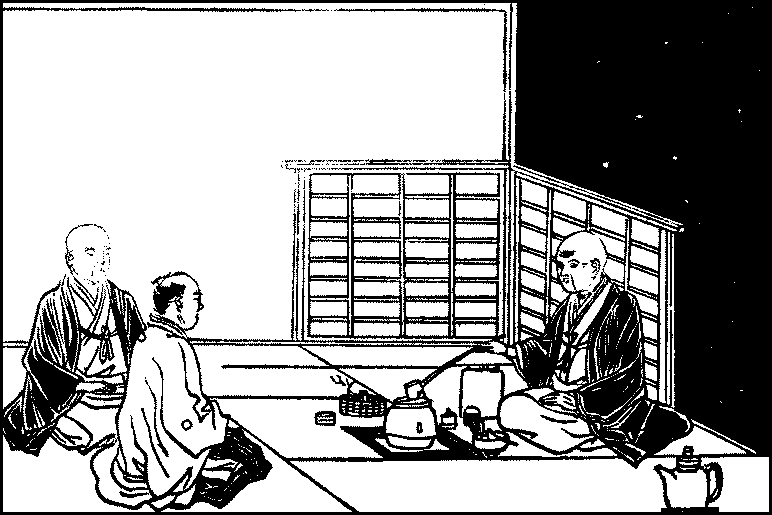
In Zen and Chan, the two truths collapse into the single phrase that recurs throughout the Heart Sutra: rūpaṃ śūnyatā śūnyataiva rūpam — "form is emptiness; emptiness is form." The conventional and the ultimate are not two. The practitioner of zazen sits in the conventional posture, in the conventional zendo, breathing conventional breath — and the sitting is itself, at the ultimate level, empty and free. Dōgen's "practice-realisation are not two" is the same recognition in temporal terms.
What the two truths preserve is the lived integrity of the path. The bodhisattva acts compassionately, ethically, energetically — at the conventional level. The bodhisattva sees the emptiness of agent, action, and recipient — at the ultimate level. These two are not in tension. They are, in the awakened mind, one seamless movement.
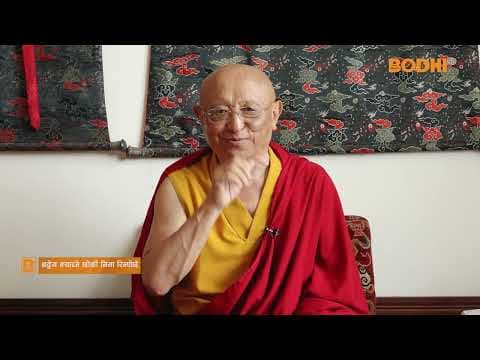
Without Knowing Emptiness, There Is No Freedom from Suffering
Kyabje Chokyi Nyima Rinpoche
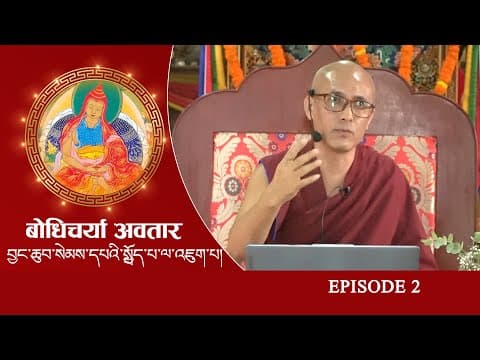
The Bodhicaryavatara — Episode 02
Shantideva's Way of the Bodhisattva
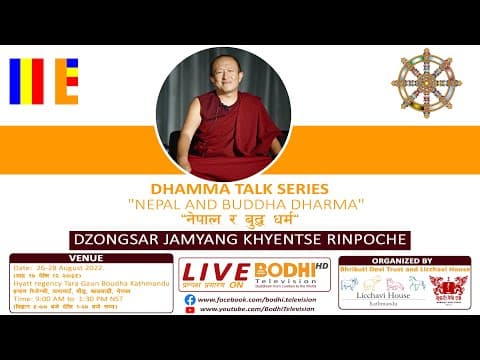
Nepal and the Buddha Dharma — Part IV
Dzongsar Jamyang Khyentse Rinpoche in Kathmandu
Courage to Come Home
Br. Bao Tang — Plum Village tradition
