Padmasambhava
Guru Rinpoche, the Lotus-Born
The historical Padmasambhava is a figure briefly mentioned in the Old Tibetan Annals as one of several Indian tantric masters brought to Tibet during the reign of King Trisong Detsen (r. 755-797 CE) to consecrate the new monastery at Samye. The Padmasambhava of devotional tradition is a vastly larger figure — a being born from a lotus on Lake Dhanakosha in the kingdom of Uddiyana (modern Swat valley, in present-day Pakistan), discovered as a child by King Indrabhuti, adopted as crown prince, renounced the throne, mastered the entire tantric corpus under Sri Simha and other Indian siddhas, and was already several centuries old when Trisong Detsen's emissaries reached him. The biographical text the tradition relies on is the Padma Kathang — the "Lotus Chronicle" — composed by the great fourteenth-century terton Orgyen Lingpa, but drawing on earlier termas, especially the Zangling-ma ("Copper Temple") biography revealed by Nyangral Nyima Özer in the twelfth century, which itself claims to record the words of Yeshe Tsogyal, Padmasambhava's Tibetan consort and chief disciple.
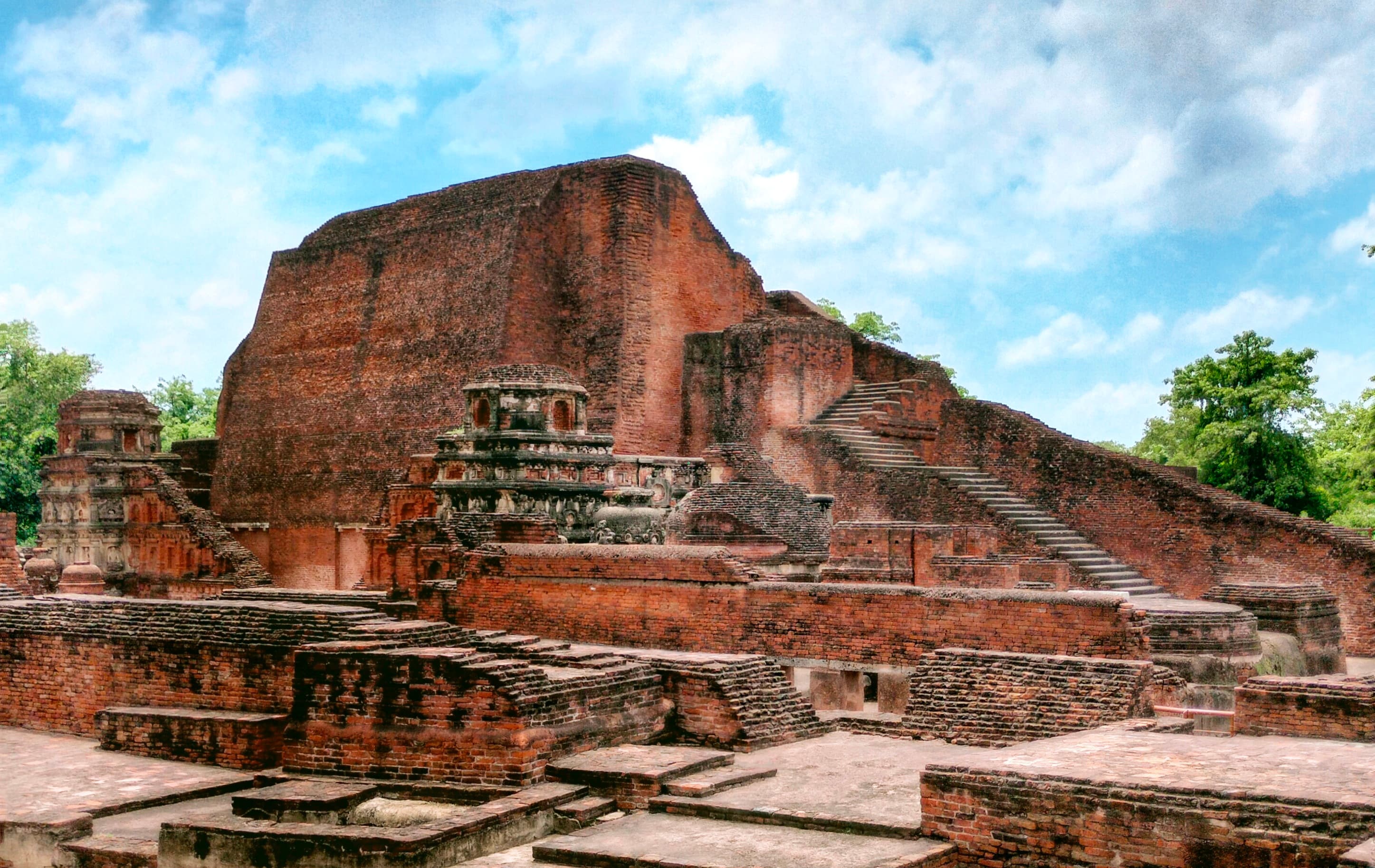
The situation in Tibet when Padmasambhava arrived was specific. Trisong Detsen had inherited from his father Songtsen Gampo the slow integration of Buddhism into a Tibet that was still substantially a Bön-shamanic civilization. The king had invited the great Indian scholastic Shantarakshita of Nalanda to oversee the building of Samye, Tibet's first monastery. Construction had repeatedly failed. The local spirits — the lu (nagas), the tsen, the protectors of the mountains and rivers — were said to tear down by night what the builders raised by day. Shantarakshita, a Madhyamika philosopher of the most refined kind, was not equipped for spirit subjugation. He told the king: send for Padmasambhava in Uddiyana; what is needed is a tantric master, not a scholar.
Padmasambhava came. The journey is recorded in the Padma Kathang as a sequence of subjugations: at every pass, every river, every threshold, the local spirit rose up against him; in every case, the master pacified rather than destroyed. The pattern is critical to the tradition. Padmasambhava did not kill the protectors of Tibet; he converted them. He bound the twelve tenma sisters and the twelve guardian goddesses of the land under oath to defend the dharma instead of opposing it. He left, at every site where he subjugated a spirit, a hidden teaching — a terma — to be revealed at the moment when sentient beings would be ready to receive it. Samye was completed in 779 CE under his supervision, modeled on Odantapuri, with Shantarakshita as the first abbot, Padmasambhava as the tantric master, and the king himself as the patron. Seven young Tibetans were chosen as the first monks — "the seven men of trial" — and the Tibetan dharma was inaugurated.
“The historical Padmasambhava is a figure briefly mentioned in the Old Tibetan Annals as one of several Indian tantric masters brought to Tibet during the reign of King Trisong Detsen (r.”
His Tibetan disciples were twenty-five — the "twenty-five disciples of Chimphu," the cave complex above Samye where the inner transmissions were given. Of these, Yeshe Tsogyal — born around 757 CE, the consort first of the king and then of Padmasambhava himself — became the principal repository of the secret teachings. She is said to have memorized everything the master taught, transcribed it onto yellow parchment, and concealed the texts in caves, lakes, walls, and pillars across the Tibetan plateau. These are the gter ma — the treasures — that would be discovered, over the subsequent twelve centuries, by the gter ston (tertons), the treasure-revealers, each life-revelation contributing a stream to the Nyingma curriculum.

The practical impact of Padmasambhava's Tibet residency — which the texts variously give as fifty-five years, or as a brief stay of months, depending on the source — is the establishment of the Vajrayana as a Tibetan tradition. The Eight Heruka sadhanas, the Vajrakilaya cycle, the Dzogchen "great perfection" teachings transmitted through Vimalamitra and reorganized through Padmasambhava's lineage, and the entire architecture of the Nyingma school descend from him. The Nyingma — the "ancient ones" — distinguish themselves from the later Sarma ("new translation") schools precisely by their preservation of the early Padmasambhava lineage.
He is said to have left Tibet for the southwestern continent of Cāmaradvīpa — a magical land identified with the southwest direction from the Himalaya — where, the Padma Kathang records, he reigns in the Copper-Colored Mountain palace (Zangdok Palri) and continues to teach. His departure date is not historicized; the legend treats him as not dead but withdrawn. The Tibetan calendar celebrates him on the tenth day of every lunar month (tsechu); the great masked dance festivals at Hemis, Paro, and Bhutan's Punakha are public commemorations of his life. He is, after the Buddha, the most depicted figure in Tibetan iconography. The eight manifestations — Padmasambhava in eight forms, each named, each iconographically distinct — visualize the eight stages of his Tibetan work. In the Nyingma imagination, he is not a historical predecessor but a living presence. He is Guru Rinpoche — the precious teacher — without further specification, because there is only one.
The Empowerment of Guru Padmasambhava
HH the 41st Sakya Gongma Trichen Rinpoche
The Blessing of Guru Padmasambhava
HH the 41st Sakya Gongma Trichen Rinpoche
The Three Supreme Practices for Daily Life — III
Kyabje Chokyi Nyima Rinpoche
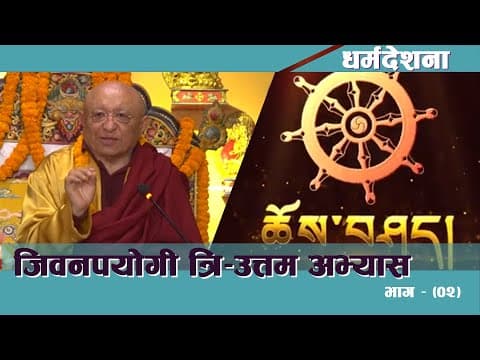
The Three Supreme Practices for Daily Life — II
Kyabje Chokyi Nyima Rinpoche