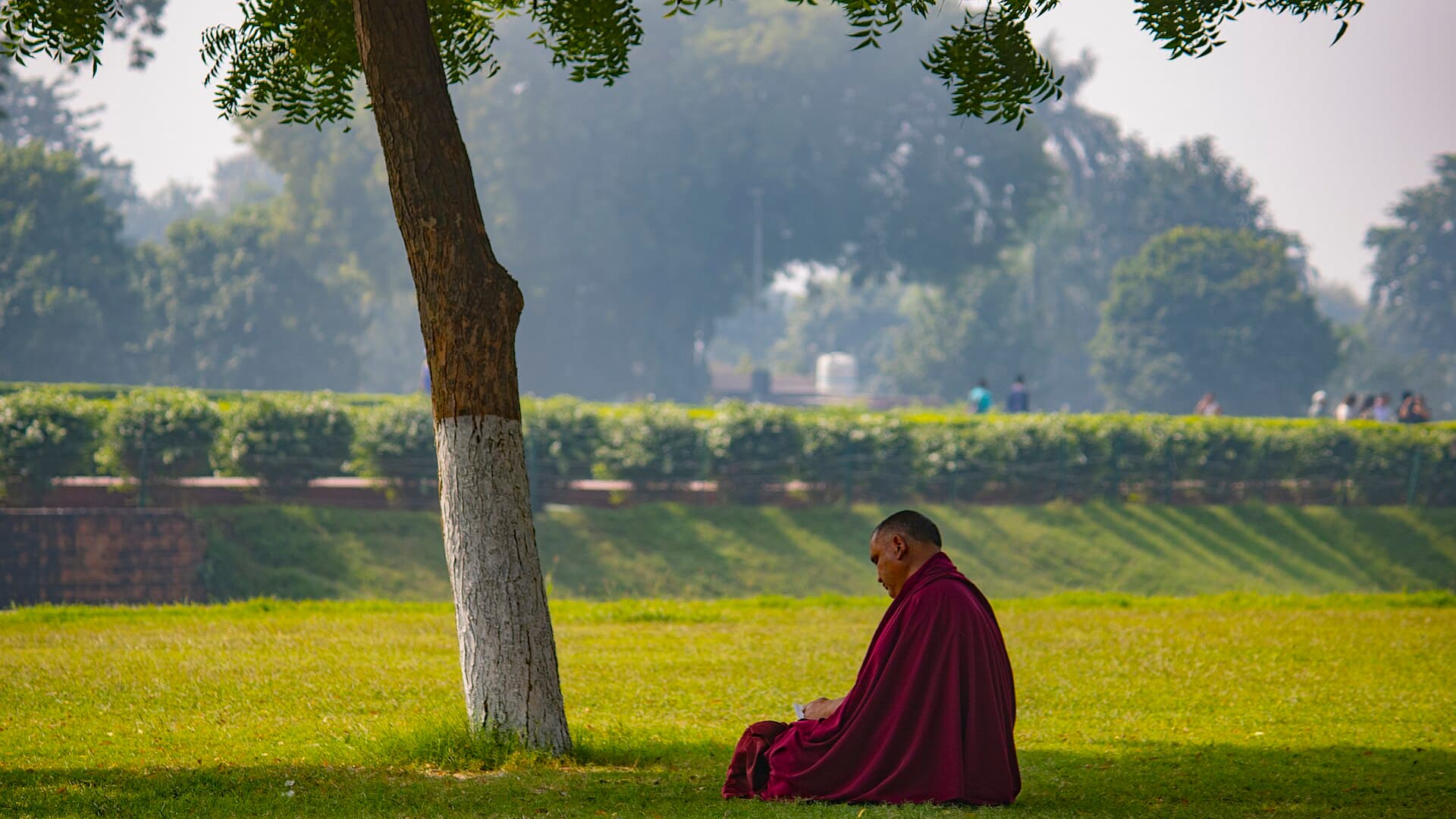
Mantra Recitation
Sacred sound as practice
Mantra — from the Sanskrit man (mind) + tra (instrument or protection) — is a syllable, word, or phrase whose recitation is itself the practice. In the Vajrayana, mantra is one of the three doors of practice (body, speech, mind), alongside mudra (gesture) and visualization. The recitation is held to align the practitioner's energy with the deity or quality that the mantra invokes; the syllables themselves, in the tantric understanding, are not arbitrary signifiers but vibrations whose direct effect on consciousness is the practice.
The most widely recited mantra in Buddhism is Om Mani Padme Hum (oṃ maṇi padme hūṃ), the six-syllable mantra of Avalokiteshvara, the bodhisattva of compassion. Tibetan tradition holds that each syllable corresponds to one of the six realms of samsara, and that recitation purifies rebirth in each. The mantra is recited continuously by lay practitioners, inscribed on prayer wheels (in spinning, the mantra is recited mechanically), painted on stones (mani stones), printed on prayer flags, carved into the cliffsides of the Tibetan plateau.
In the Pure Land tradition, the practice is recitation of the name of Amitabha Buddha — Namo Amituofo in Chinese, Namu Amida Butsu in Japanese, Namo A Di Da Phat in Vietnamese. The practice (nianfo, nembutsu, niệm Phật) consists of recitation, sometimes counted on the mala, sometimes called out aloud, sometimes silent. The intention is single-pointed: that at the moment of death, Amitabha will appear and lead the practitioner to rebirth in the Pure Land of Sukhavati, where awakening is assured.
“Mantra — from the Sanskrit man (mind) + tra (instrument or protection) — is a syllable, word, or phrase whose recitation is itself the practice.”
In the Nichiren tradition, the recitation is of the title of the Lotus Sutra in Japanese: Namu Myoho Renge Kyo — 'Homage to the Wonderful Dharma Lotus Sutra.' Nichiren held that the recitation of the title alone, in the degenerate age, is sufficient for awakening.
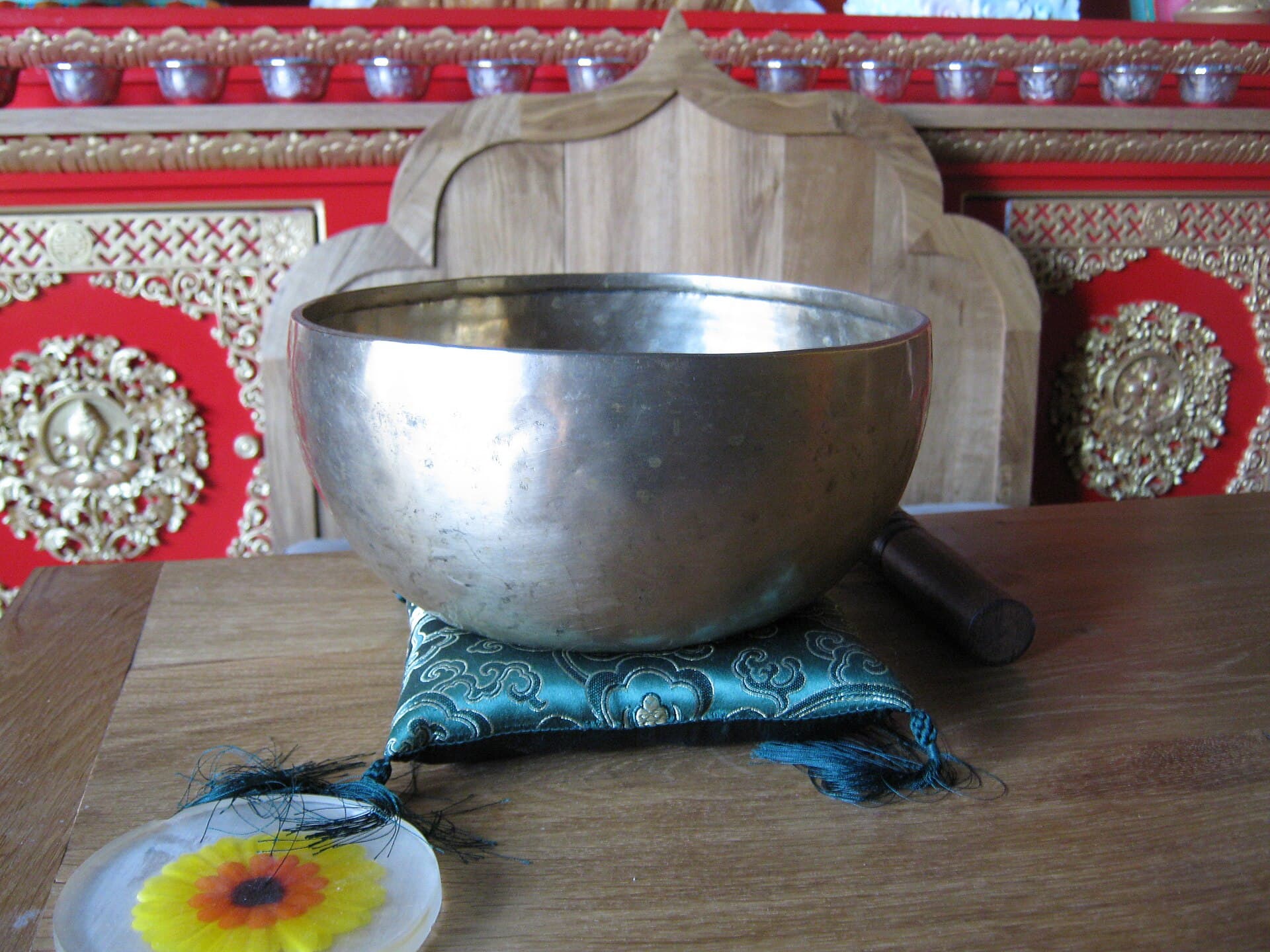
In the Newar tradition, the recitation includes the Sanskrit mantras of the Pancha Buddha — Vairochana, Akshobhya, Ratnasambhava, Amitabha, Amoghasiddhi — and the dharanis of the Mahayana sutras. The mantras are recited in the morning and evening pujas at the bahas and bahis of the Kathmandu Valley.
In every tradition where mantra is practiced, the count matters. The traditional commitment is 108 repetitions (one mala), 100,000 repetitions (for a deity practice), or one million repetitions (for foundational practices like the Vajrasattva hundred-syllable mantra in the ngondro of Tibetan Buddhism). Time spent reciting is time not spent in distraction. The mind that has recited Om Mani Padme Hum one hundred thousand times is not the mind that began.
Nepal and the Buddha Dharma — Part I
Dzongsar Jamyang Khyentse Rinpoche in Kathmandu
Nepal and the Buddha Dharma — Part II
Dzongsar Jamyang Khyentse Rinpoche in Kathmandu
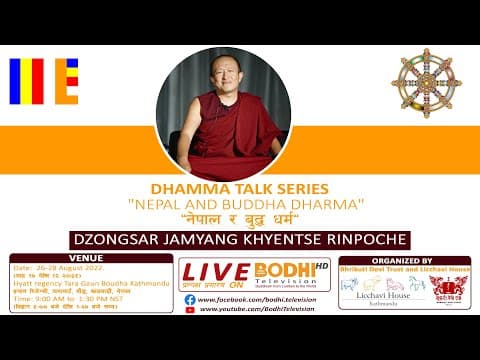
Nepal and the Buddha Dharma — Part III
Dzongsar Jamyang Khyentse Rinpoche in Kathmandu
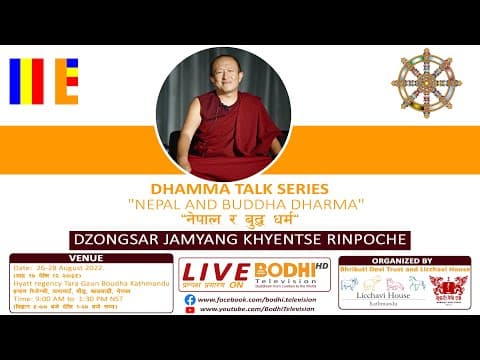
Nepal and the Buddha Dharma — Part IV
Dzongsar Jamyang Khyentse Rinpoche in Kathmandu

