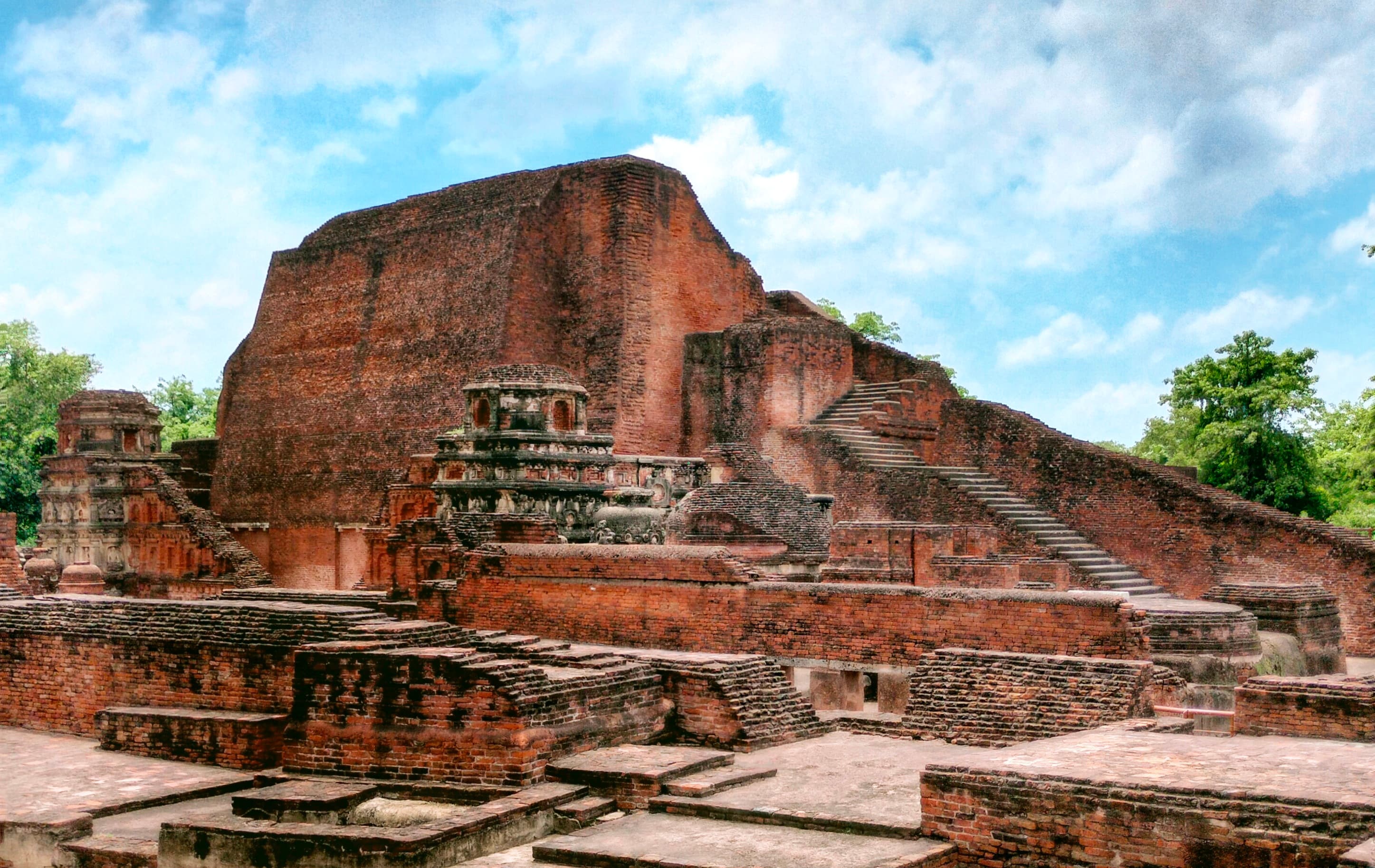
Nichiren
Lotus Sutra fundamentalism — Namu Myoho Renge Kyo
Nichiren Buddhism is the most uncompromising school in the East Asian Buddhist canon. Where most Mahayana traditions embrace many sutras and many paths, Nichiren (1222–1282) — a Tendai-trained monk who studied at Mt. Hiei, then at Mt. Koya, then withdrew into solitude — concluded after decades of study that the Buddha's final and complete teaching was contained in one sutra alone: the Saddharma Pundarika, the Lotus Sutra. All other sutras and all other practices were preliminary expedients; the Lotus alone delivered the full revelation that all beings already possess buddha-nature and can attain buddhahood in this very lifetime, in this very body. And in the degenerate age of mappo, Nichiren held, the sufficient practice was the chanted invocation of the sutra's title itself: Namu Myoho Renge Kyo — Devotion to the Wonderful Dharma of the Lotus Flower Teaching.
The context of Nichiren's mission was Japan in crisis. Earthquakes, famines, epidemics, and the looming threat of Mongol invasion (which did come, in 1274 and 1281) led Nichiren in 1260 to compose his Rissho Ankoku Ron — Establishing the Correct Teaching for the Peace of the Land — and present it to the Hojo shogunate. The argument was political-theological: Japan suffers because Japan has abandoned the true dharma (the Lotus) in favor of false teachings — Pure Land nembutsu, Zen meditation, Shingon esotericism, and corrupt monasticism. Restore the Lotus, Nichiren said, and the land will be at peace. He was twice exiled — to Izu in 1261 and to Sado Island in 1271 — and almost executed at Tatsunokuchi the same year. His followers were persecuted alongside him. Out of these years come his fiercest writings: the Kaimoku Sho (Opening the Eyes), the Kanjin no Honzon Sho (The Object of Devotion for Observing the Mind), and the calligraphic Gohonzon mandala that became the central object of veneration.
The Gohonzon is one of the school's most striking inventions. Down the center is written Namu Myoho Renge Kyo flanked by the names of Shakyamuni Buddha and the bodhisattva Many Treasures (Prabhutaratna) — the two buddhas of the Lotus Sutra's Treasure Tower chapter — and around them in calligraphic mandala arrangement are the Four Great Bodhisattvas of the Earth, the four Kings, the protective deities, and Nichiren's own signature at the base. To chant before the Gohonzon is to enter the assembly of the Lotus Sutra and to actualize the buddhahood of the chanter.
“Nichiren Buddhism is the most uncompromising school in the East Asian Buddhist canon.”
After Nichiren's death the lineage divided. The Nichiren Shu, headquartered at Mt. Minobu where Nichiren spent his last years, became the more moderate mainstream school, holding Nichiren as a great teacher of the Lotus without overturning the traditional Mahayana cosmology. Nichiren Shoshu (the True Nichiren School), centered at Taiseki-ji, took the stricter view that Nichiren himself was the true Buddha of mappo and that only the Daigohonzon enshrined at Taiseki-ji is the authentic object of worship. From Nichiren Shoshu came, in the early twentieth century, the most influential modern Nichiren movement: Soka Gakkai, founded by Tsunesaburo Makiguchi and Josei Toda in 1930 as a lay educational reform society, and developed under the third president Daisaku Ikeda (1928–2023) into a global organization with eleven million members in 192 countries, the political party Komeito in Japan, and a presence (Soka Gakkai International, SGI) that has made Nichiren Buddhism the most numerically successful Buddhist export of the twentieth century outside Tibetan Vajrayana and Vipassana. Soka Gakkai broke formally from Nichiren Shoshu in 1991 and now operates independently.

The practice is daily and elemental. Practitioners chant Daimoku — Namu Myoho Renge Kyo — for sustained periods, twice a day in formal Gongyo recitations that also include portions of the Lotus Sutra's second and sixteenth chapters. The conviction is that the chant changes karma in real time, brings the mind into alignment with the buddha-state, and progressively transforms not only the practitioner but the surrounding world. The school holds, against the more apophatic schools of Buddhism, that human flourishing — health, relationships, economic well-being, peace among nations — is a legitimate fruit of Buddhist practice and a sign of buddha-nature actualized.
Nichiren Buddhism has perhaps 30 million adherents worldwide, the great majority through SGI. Its critics have called it sectarian, exclusivist, and politically activist; its defenders have called it the most courageous reading of the Lotus Sutra and a Buddhism that engages society without compromise. What is undeniable is the singular concentration of the practice: one sutra, one mantra, one mandala, one path.
Courage to Come Home
Br. Bao Tang — Plum Village tradition
Grief and Loss: A Sacred Doorway
Sr. Dao Nghiem — Plum Village tradition
Neuroscience Meets Buddhist Psychology | Joann Rosen & Yousef Gaber
Plum Village monastic, in the Thich Nhat Hanh tradition
Young Scientists: The Future is Now
Plum Village monastic, in the Thich Nhat Hanh tradition