
The Lotus Sutra
The Saddharma-Pundarika
The Lotus Sutra — Saddharma-Pundarika Sutra in Sanskrit, Miaofa Lianhua Jing in Chinese, Myoho Renge Kyo in Japanese — is the central scripture of the East Asian Mahayana tradition. In China it became the foundation of the Tiantai school (Zhiyi, 538-597). In Japan it gave rise to Tendai and, through Nichiren (1222-1282), to the Nichiren schools that today claim tens of millions of followers worldwide.
The sutra presents itself as a discourse delivered by the Buddha on Vulture Peak at Rajgir to an immense assembly of monks, bodhisattvas, and devas. The opening teaching is the doctrine of the One Vehicle (ekayana): the three paths previously taught — shravaka (hearer), pratyekabuddha (solitary realizer), and bodhisattva — are not three separate destinations but skillful means (upaya), gradients of a single path. All beings are destined for full buddhahood.
“The Lotus Sutra — Saddharma-Pundarika Sutra in Sanskrit, Miaofa Lianhua Jing in Chinese, Myoho Renge Kyo in Japanese — is the central scripture of the East Asian Mahayana tradition.”
The second great teaching is the eternity of the Buddha. In Chapter 16, 'The Lifespan of the Tathagata,' the Buddha reveals that his apparent birth at Lumbini and death at Kushinagar were skillful means, displays for the benefit of beings who would not appreciate a Buddha who never departed. In reality, he has been continuously teaching since 'innumerable, boundless, unimaginable kalpas ago' and will continue to teach for that long again. The historical Buddha is one expression of an eternal dharma-body (dharmakaya).
The sutra is structured around dramatic parables — the burning house (ch. 3), the lost son (ch. 4), the rain that falls on all plants alike (ch. 5), the magic city (ch. 7), the jewel in the robe (ch. 8), and the physician (ch. 16) — each illustrating the doctrine of skillful means. The 'Devadatta chapter' (ch. 12) controversially affirms that even the Buddha's most antagonistic disciple, and the eight-year-old dragon-princess, can attain buddhahood. The 'Universal Gateway' chapter (ch. 25), devoted to Avalokiteshvara, is recited as a stand-alone text across East Asia.

Kumarajiva's Chinese translation (406 CE) became the standard East Asian version. Burton Watson's 1993 English translation (Columbia) is the standard contemporary access. Gene Reeves's 2008 translation (Wisdom) and the Bukkyo Dendo Kyokai translation (2007) are also widely used. Donald Lopez's 2016 'The Lotus Sutra: A Biography' (Princeton) traces the sutra's life across two thousand years.
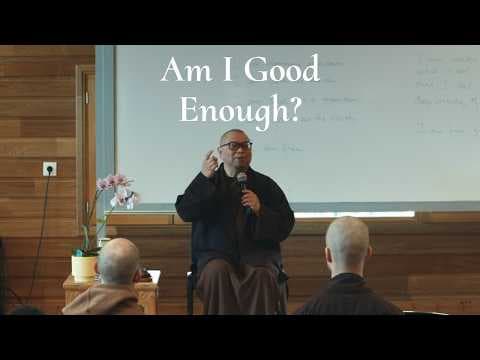
Courage to Come Home
Br. Bao Tang — Plum Village tradition
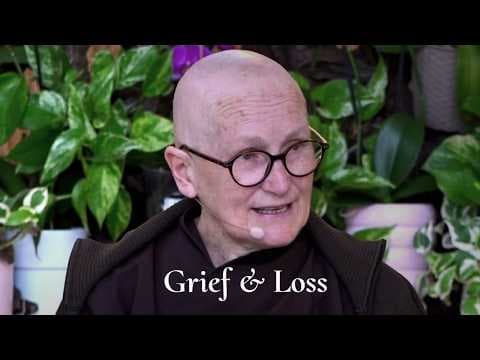
Grief and Loss: A Sacred Doorway
Sr. Dao Nghiem — Plum Village tradition
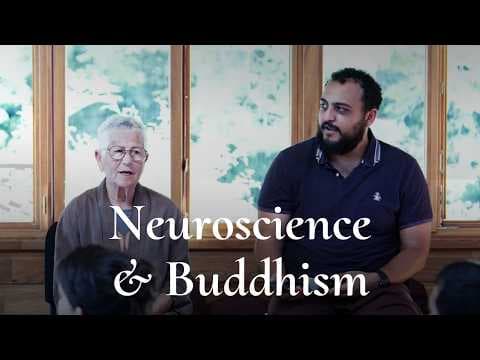
Neuroscience Meets Buddhist Psychology | Joann Rosen & Yousef Gaber
Plum Village monastic, in the Thich Nhat Hanh tradition
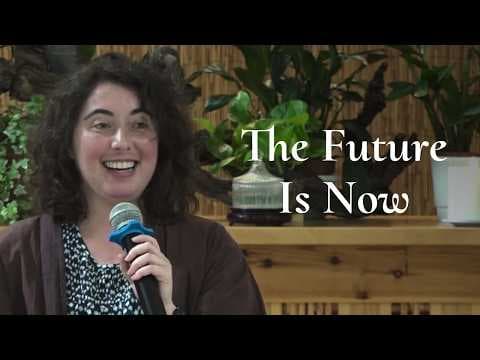
Young Scientists: The Future is Now
Plum Village monastic, in the Thich Nhat Hanh tradition
