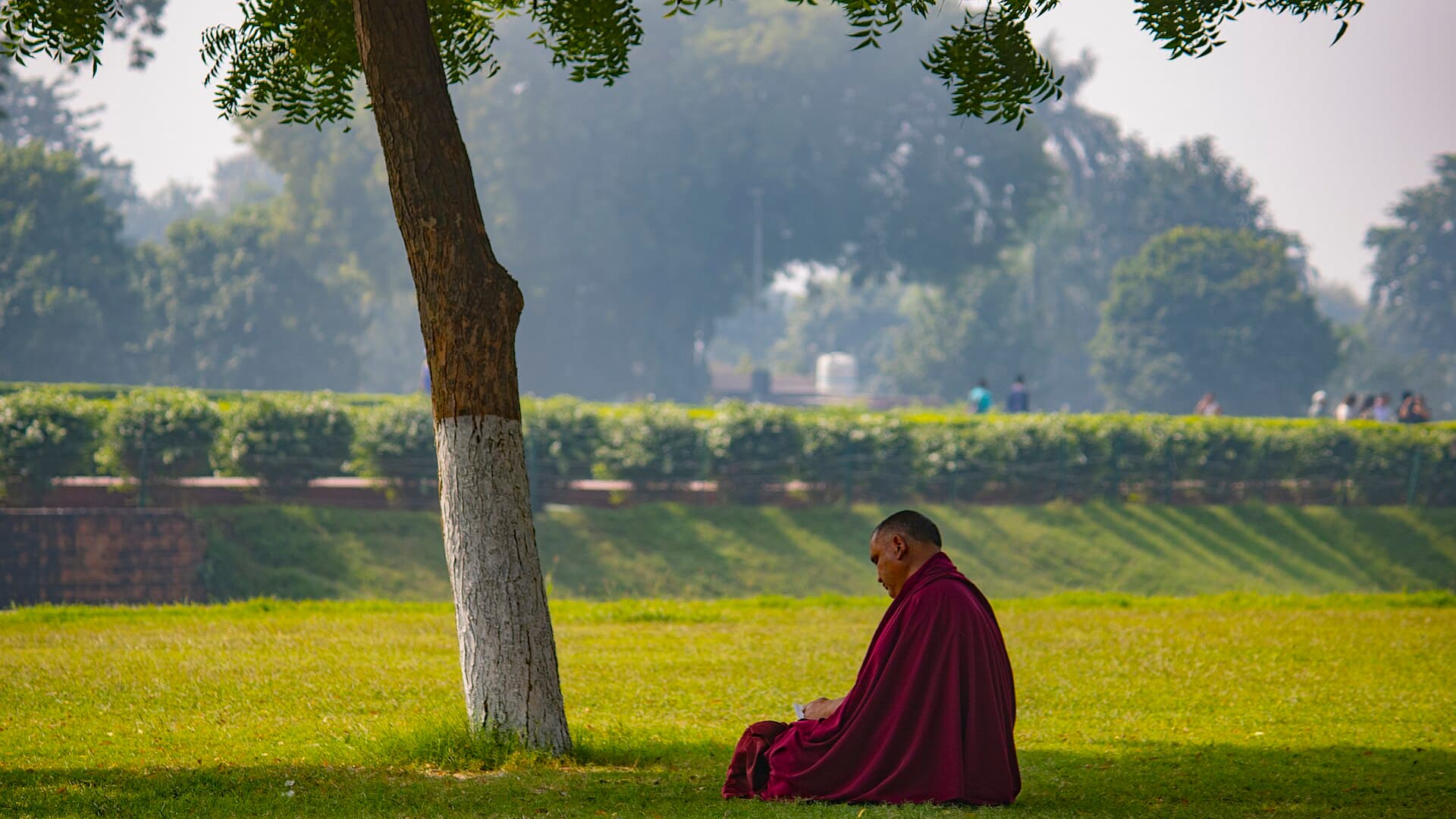
Tonglen — Giving and Taking
Breathing in the suffering of others
Tonglen — the Tibetan word means 'giving and taking' (gtong len) — is the heart of the Mahayana mind-training (lojong) tradition. The practice was transmitted from India to Tibet by Atisha (982-1054), who brought it from his teacher Serlingpa in Sumatra. Atisha taught it to his disciple Dromtonpa; the practice was preserved in the Kadampa lineage and articulated in Geshe Chekawa's 'Seven Points of Mind Training' (12th century) and Langri Tangpa's 'Eight Verses of Mind Training.' It became central to the Gelug, Kagyu, and Nyingma practice traditions, and in the modern era has been brought to Western practitioners primarily through Chögyam Trungpa and Pema Chödrön.
The practice is the deliberate reversal of the ordinary impulse. The ordinary impulse, when meeting suffering, is to push it away and reach for happiness. Tonglen does the opposite. As you breathe in, you imagine taking on the suffering of beings — your own suffering first, then the suffering of someone you love, then the suffering of someone neutral, then the suffering of someone difficult, then the suffering of all beings. You imagine the suffering entering you as a dense black cloud, a heat, a heaviness. As you breathe out, you send out happiness, light, ease, well-being — to those same beings, in that same expanding sequence.
“Tonglen — the Tibetan word means 'giving and taking' (gtong len) — is the heart of the Mahayana mind-training (lojong) tradition.”
The practice can be done on the cushion as a formal meditation. It is also done in daily life as a 'tonglen on the spot' — when you encounter someone in pain, instead of looking away, you breathe in their pain and breathe out your wish for their relief. Pema Chödrön has taught the practice extensively in this on-the-spot form: a child crying on the subway, an elder struggling at a grocery store checkout, the suffering disclosed by a friend over coffee. You don't have to do anything outwardly. You just don't turn away.
The purpose of tonglen is not to literally absorb others' suffering — the Tibetan masters are clear that this is not magical pain-transference. The purpose is to reverse the habit of self-protection that keeps the heart small, and to cultivate bodhicitta, the awakening mind that places others' welfare before one's own. Chögyam Trungpa called tonglen 'the practice of exchanging self for other' — the literal meaning of Geshe Chekawa's seventh point: 'Practice the alternating exchange of self and other.'

The practice can feel strange or even frightening at first. It is reasonable for the practitioner to begin small — taking in their own pain and sending out their own healing. From that foundation, the practice expands outward, slowly and naturally, until the bounded sense of self that does the breathing becomes less and less identifiable.
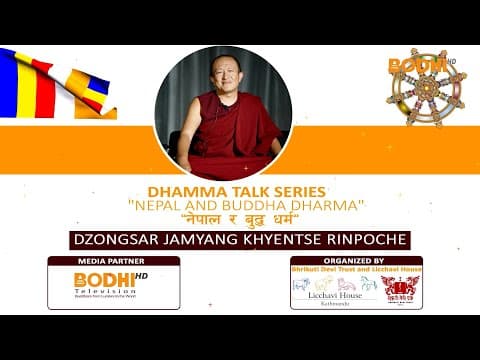
Nepal and the Buddha Dharma — Part I
Dzongsar Jamyang Khyentse Rinpoche in Kathmandu
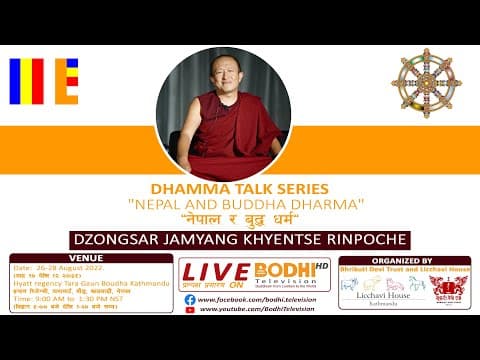
Nepal and the Buddha Dharma — Part II
Dzongsar Jamyang Khyentse Rinpoche in Kathmandu
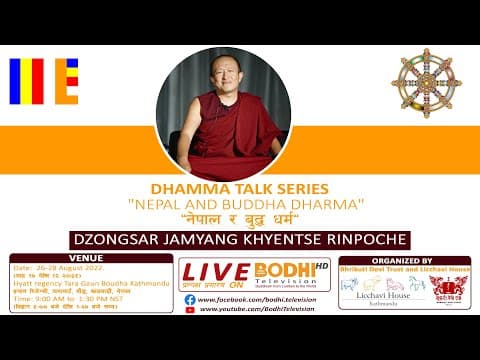
Nepal and the Buddha Dharma — Part III
Dzongsar Jamyang Khyentse Rinpoche in Kathmandu
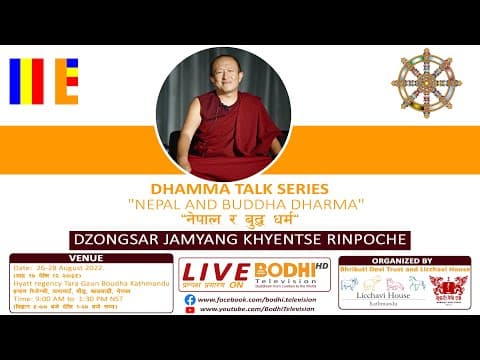
Nepal and the Buddha Dharma — Part IV
Dzongsar Jamyang Khyentse Rinpoche in Kathmandu