Metta — Loving-Kindness
The boundless heart
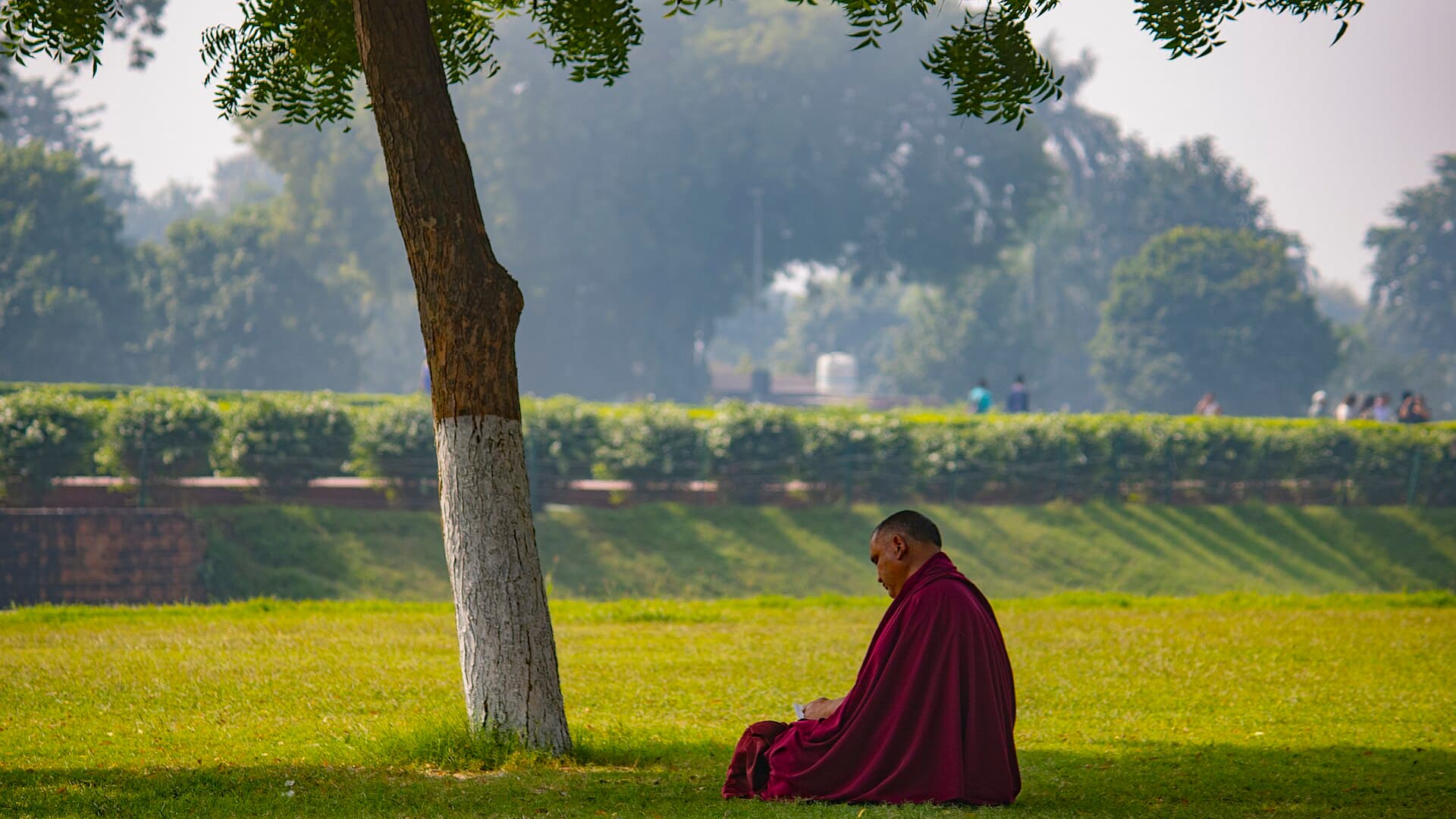
The Karaniya Metta Sutta — the Discourse on Loving-Kindness That Should Be Done — opens with a story. A community of monks went into the forest for the rains retreat. The tree-spirits of the forest, displeased at the disturbance, manifested terrifying forms to drive the monks out. The monks returned to the Buddha at Jetavana. He gave them a discourse — and an instruction. 'May all beings be happy. May they be safe. May they be at ease.' He sent them back into the forest with this practice. The tree-spirits, met now by waves of unconditional good-will, welcomed the monks. The monks stayed.
The Karaniya Metta Sutta (Sutta Nipata 1.8) is one of the most often-recited Pali texts. It begins: 'This is what should be done by one who is skilled in goodness and who knows the path of peace: let them be able and upright, straightforward and gentle in speech, humble and not conceited, contented and easily satisfied, unburdened with duties and frugal in their ways.' The discourse then turns into the formal practice: 'Just as a mother would protect with her life her own son, her only son, so toward all beings let one cultivate a boundless heart. Above, below, and across, without obstruction, without hatred, without enmity.'
“The Karaniya Metta Sutta — the Discourse on Loving-Kindness That Should Be Done — opens with a story.”
The practice is straightforward. Begin with yourself: 'May I be happy. May I be safe. May I be at ease. May I be at peace.' Stabilize the feeling. Then extend to a benefactor — someone who has been unequivocally kind. Then to a neutral person — someone you have no strong feeling about. Then to a difficult person — someone with whom there is friction. Then outward in all directions to all beings, without exception. This is called 'breaking the barriers,' because if metta is real, no being is excluded — not the friend, not the stranger, not the enemy, not the self.
Metta is the first of the four brahmaviharas — the 'divine abidings' — taught by the Buddha. The others are karuna (compassion, the response of metta in the face of suffering), mudita (sympathetic joy, the response in the face of another's happiness), and upekkha (equanimity, the stillness that holds all four). In the Visuddhimagga, Buddhaghosa describes metta as the brahmavihara that has the function of removing ill-will and the manifestation of the disappearance of resentment. Its near enemy is selfish attachment; its far enemy is hatred.

In the modern teaching of Sharon Salzberg, Bhante Gunaratana, Ajahn Brahm, and the Plum Village community, metta has become the contemplative entry point for many Western practitioners. The Karaniya Metta Sutta is recited as a chant at the close of countless retreats. Its concluding line is perhaps the dharma's most quoted aspiration: 'May all beings be happy. May they be safe. May they be free from suffering.'