
The Lotus
Born in mud, blooming in light
The lotus rises from mud, blooms in clear water, and bears no trace of where it came from. The Buddha used the image to describe his own state and the state of any practitioner who has gone beyond the world while remaining within it: 'Just as a lotus, born in the water, grown up in the water, rises above the water and remains unsoiled by the water, so I, born in the world, grown up in the world, having overcome the world, dwell in the world unsoiled by the world' (Anguttara Nikaya 4.36).
Across Buddhist art, the lotus appears as throne — Buddha and bodhisattva figures stand or sit on lotus pedestals. The first depictions of the Buddha in human form, at Mathura and Gandhara in the 1st-2nd centuries CE, show him seated on a stylized lotus. By the Gupta period (4th-6th centuries), the lotus throne had become standardized: an inverted bell of petals descending from a broad upper rim, often with a smaller upturned bell of petals above. The bodhisattva Padmapani — 'the lotus-bearer,' an epithet of Avalokiteshvara — holds the lotus as his defining attribute.
In cosmology, the lotus structures the universe. The Mahayana sutras describe the worlds of the buddha-fields as arrayed on lotus petals; the Pure Land of Amitabha is reached when the practitioner is reborn from a lotus in the western paradise of Sukhavati. The eight-petalled lotus mandala — the foundational form of the tantric mandala — orders the cosmos as a central buddha surrounded by eight directional buddhas, each on a petal.
“The lotus rises from mud, blooms in clear water, and bears no trace of where it came from.”
In iconography, the lotus has color codes. White symbolizes the purity of mind (Avalokiteshvara in his White Tara aspect, Shadakshari). Pink is reserved for the historical Buddha. Red is the color of compassion (Avalokiteshvara). Blue is the color of prajñā wisdom (Manjushri, the Blue Lotus of Wisdom). Each color carries its own symbolic load.
In Vajrayana iconography, the lotus is the symbol of Padmasambhava — the 'Lotus-Born' — who was, according to legend, born from a lotus in the Dhanakosha Lake in present-day Pakistan. The padmasana ('lotus-seat') is the standard meditation posture. The padma-mudra — the hand gesture of opening lotus petals — is the symbol of the unfolding of the awakening mind.
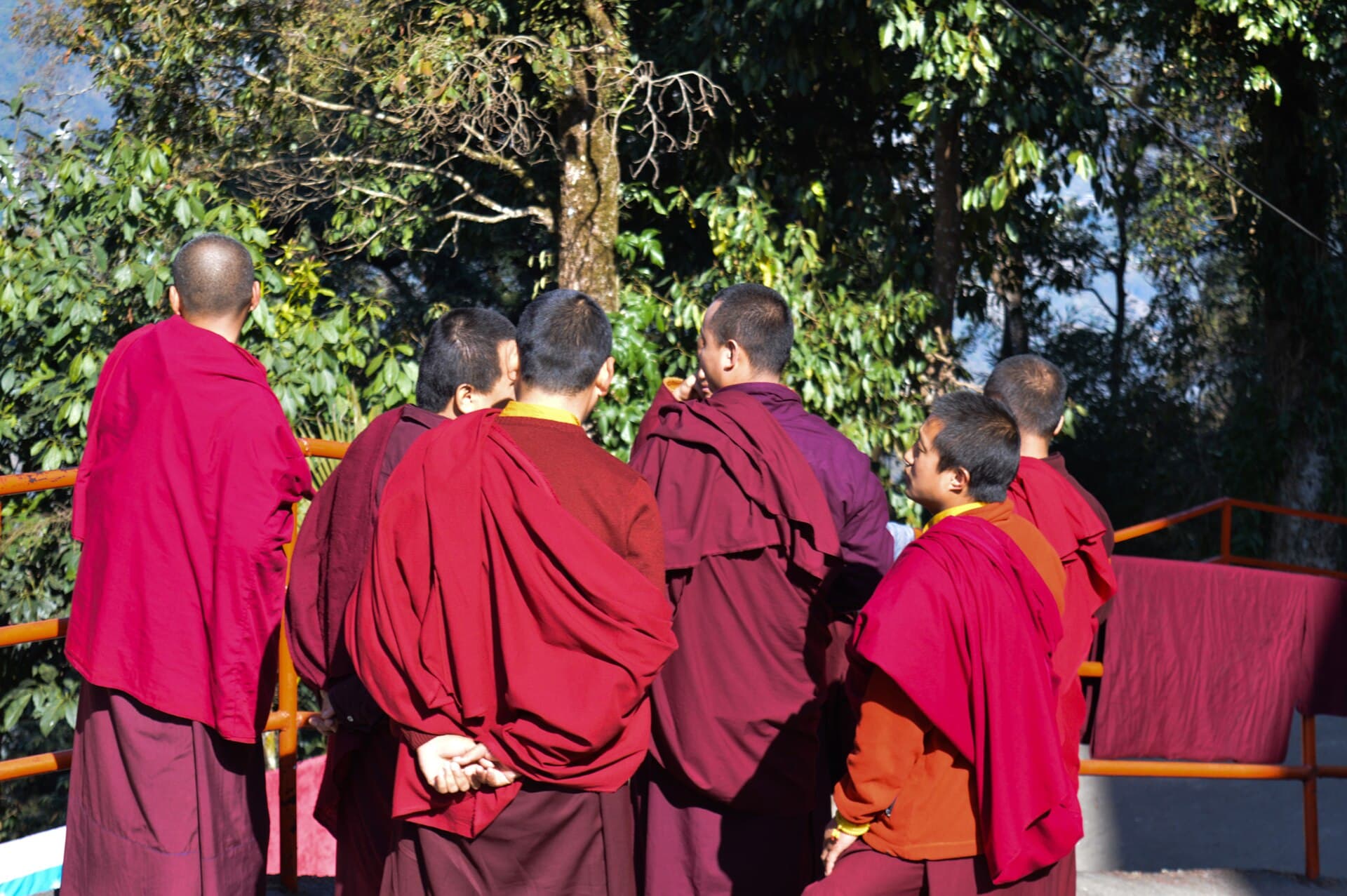
In Newar Buddhism, the lotus motif structures the eight-petalled Pancha Buddha mandala of the Kathmandu Valley. The mandala is built into the floor plans of Newar temples, traced in turmeric and rice powder on courtyard pavements during festival days, and embedded in the metalwork of every Newar Vajracharya's ritual implements.
The flower is everywhere in the dharma because the metaphor is exact. To grow in the mud and yet not be soiled is a possibility the lotus demonstrates botanically. The Buddha's teaching is that the same possibility is open to consciousness.
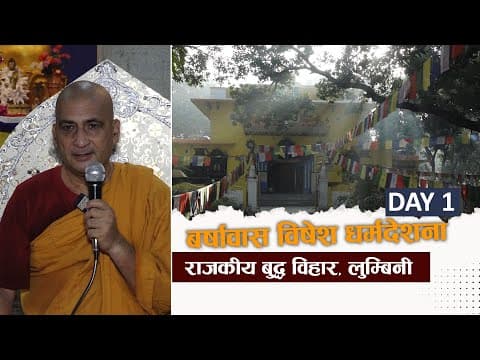
How to Free Oneself from Depression
Vassa Discourse · Day 1 · Rajkiya Buddha Vihara, Lumbini
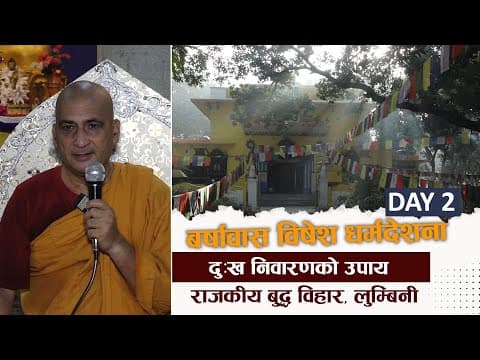
The Means to End Suffering
Vassa Discourse · Day 2 · Rajkiya Buddha Vihara, Lumbini
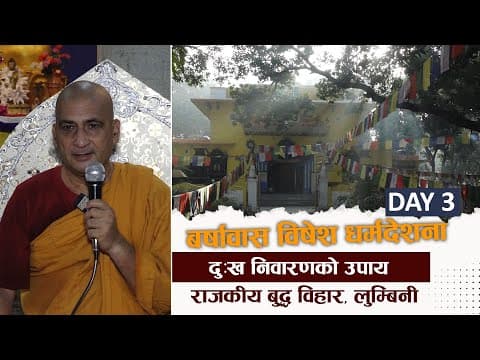
The Means to End Suffering — Day 3
Vassa Discourse · Rajkiya Buddha Vihara, Lumbini
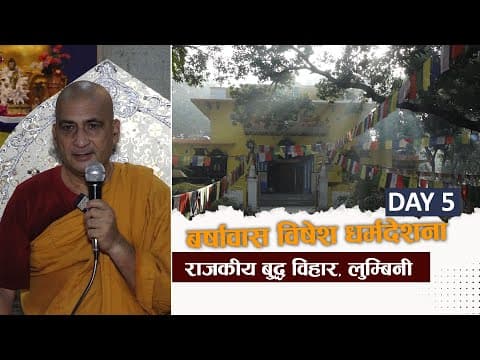
Holding Suffering in a Positive Light
Vassa Discourse · Day 5 · Rajkiya Buddha Vihara, Lumbini

