The Spread to Southeast Asia
Suvannabhumi, Pagan, Sukhothai, Angkor, Luang Prabang
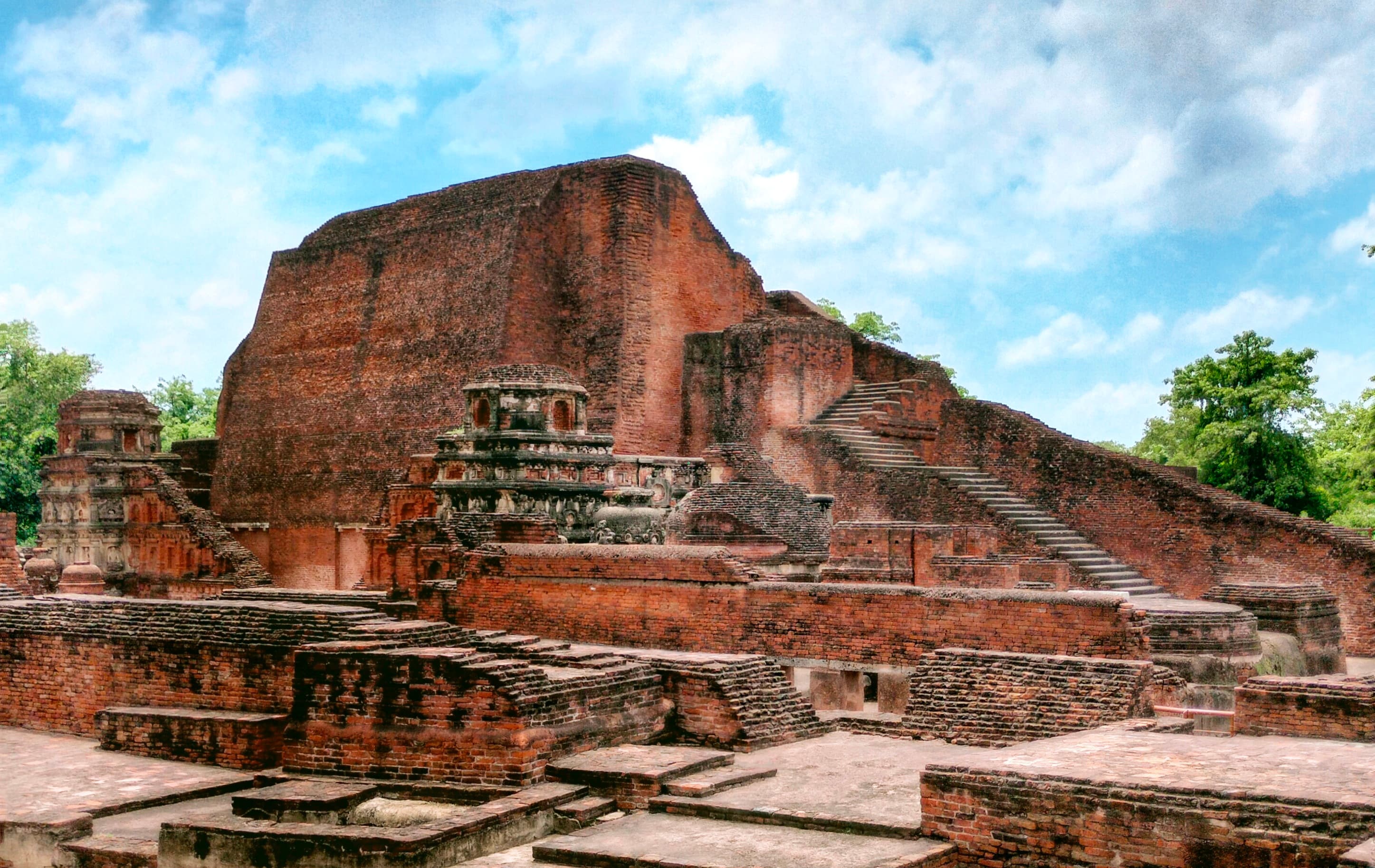
The dharma reached Southeast Asia along two principal lines and in two great waves. The early line was Indianization through trade — Bay of Bengal merchants carrying both Buddhism and Brahmanism into the Mon and Khmer kingdoms from the third century BCE onward. The Ashokan missions named in the Mahavamsa include Sona and Uttara, sent to Suvannabhumi — the Golden Land, identified in Burmese tradition with Thaton in Lower Burma and in Mon-Thai tradition with Nakhon Pathom in central Thailand. By the fifth century CE the Mon city of Sri Ksetra (Prome) on the Irrawaddy was already a Buddhist center with a Pyu population practicing both Theravada and Sarvastivada. The Cham kingdoms of central Vietnam, the Funan kingdom of the lower Mekong, and the Srivijaya maritime empire of Sumatra and Java (which the Chinese pilgrim Yijing visited in 671 and praised as a great center of Sarvastivada study) were all early Buddhist powers, often holding Mahayana and Hindu cults simultaneously. Borobudur, the largest Buddhist monument in the world, was built by the Sailendra dynasty in central Java between roughly 780 and 825; its 504 Buddha statues and 2,672 relief panels lay out the Mahayana cosmology in stone.
The second wave is the Theravada consolidation. It begins in the eleventh century in Burma. King Anawrahta of Pagan (r. 1044–1077), under the influence of the Mon monk Shin Arahan, took the Theravada as his state religion and conquered the Mon kingdom of Thaton in 1057, bringing back the Pali Tipitaka in thirty-two elephant loads along with the Theravada sangha. Pagan flourished for two and a half centuries, building over ten thousand monuments on the plain along the Irrawaddy; the city was the largest and densest concentration of Buddhist temples ever built. Pagan fell to the Mongols in 1287; the dharma did not. The Burmese sangha continued through the Ava, Toungoo, and Konbaung dynasties; the Fifth Buddhist Council was convened at Mandalay in 1871 by King Mindon, and the entire Pali Canon was inscribed on 729 marble slabs at the Kuthodaw Pagoda — the world's largest book. The Sixth Council was held in Rangoon in 1954–1956 under U Nu and produced the modern Chattha Sangayana edition of the Tipitaka.
“The dharma reached Southeast Asia along two principal lines and in two great waves.”
The Thai consolidation came through Sukhothai (1238–1438), founded by Ramkhamhaeng who imported the Lankan Theravada sangha lineage through the southern Thai port of Nakhon Si Thammarat. Sukhothai was succeeded by Ayutthaya (1351–1767), the longest-lived of the Thai kingdoms and one of the wealthiest cities in seventeenth-century Asia; the destruction of Ayutthaya by the Burmese in 1767 nearly destroyed the Thai sangha, but King Rama I, founding the Chakri dynasty in Bangkok in 1782, immediately reconstituted the sangha and the canon. The Thai reform movements that followed — King Mongkut's Dhammayuttika Nikaya in the nineteenth century, separating from the older Mahanikaya — and the Thai Forest Tradition of Ajahn Sao, Ajahn Mun, Ajahn Chah, and their disciples have made Thai Theravada one of the most globally influential Buddhist transmissions today, with affiliate forest monasteries from Australia to England to the western United States. Approximately 95 percent of the 70 million people of Thailand identify as Theravada Buddhist; the king is constitutionally required to be a Buddhist; the sangha numbers over 350,000 ordained bhikkhus.
Cambodia and Laos were Mahayana and Hindu in their classical phases — Angkor Wat, built in the early twelfth century by Suryavarman II, was originally a Vishnu temple, and Bayon under Jayavarman VII at the end of the same century is the supreme Mahayana monument of mainland Southeast Asia, dedicated to Avalokitesvara as the king-bodhisattva. The Theravada transmission from Lanka and Burma reached Cambodia in the thirteenth and fourteenth centuries; by the time the Chinese envoy Zhou Daguan visited Angkor in 1296–1297, Theravada was already dominant. Laos received the Theravada through the kingdom of Lan Xang founded by Fa Ngum in 1353 at Luang Prabang. The twentieth century brought catastrophic disruption: the Khmer Rouge genocide of 1975–1979 specifically targeted monks, killed an estimated 25,000 of Cambodia's 80,000 bhikkhus, destroyed or desecrated most of the country's monasteries, and burned much of the Khmer Tipitaka manuscript heritage. The sangha was reconstituted after 1979 with assistance from Thailand; the Pali Canon has been re-edited and re-printed; pagodas have been rebuilt; the tradition survives.
The pattern across Southeast Asia is the long durability of Theravada under multiple disruptions — Mongol invasions, European colonization (Burma, Cambodia, Laos under the British and French; Thailand uniquely uncolonized), Japanese occupation, Cold War wars, communist suppression in Laos, and the Khmer Rouge in Cambodia. In every case the sangha has been re-rooted, sometimes from neighbor to neighbor (Lankan to Burmese to Thai to Lao to Cambodian, in repeated cycles), and the Pali Canon and the daily morning alms round have outlasted every empire and every regime that has tried to extinguish them.
A Discourse at Buddha Vihara, Bhrikutimandap
Ven. Kondanya Mahathero
A Discourse on the Householder's Path
Ven. Kondanya Mahathero · in English
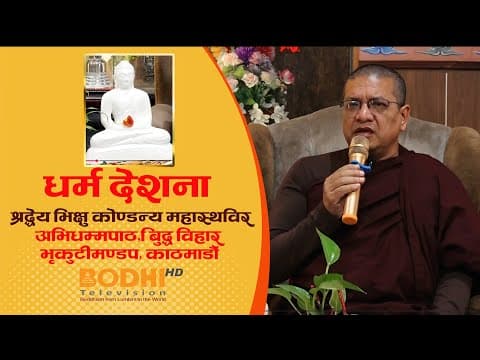
The Path of the Abhidhamma — Session I
Ven. Kondanya Mahathero
How to Free Oneself from Depression
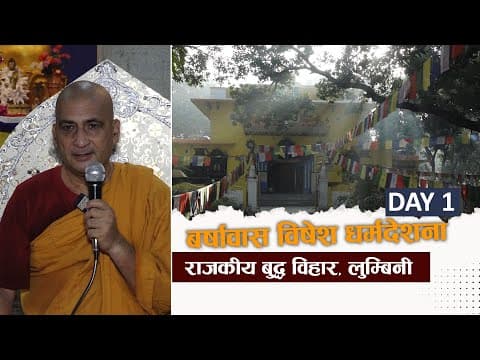
Vassa Discourse · Day 1 · Rajkiya Buddha Vihara, Lumbini


