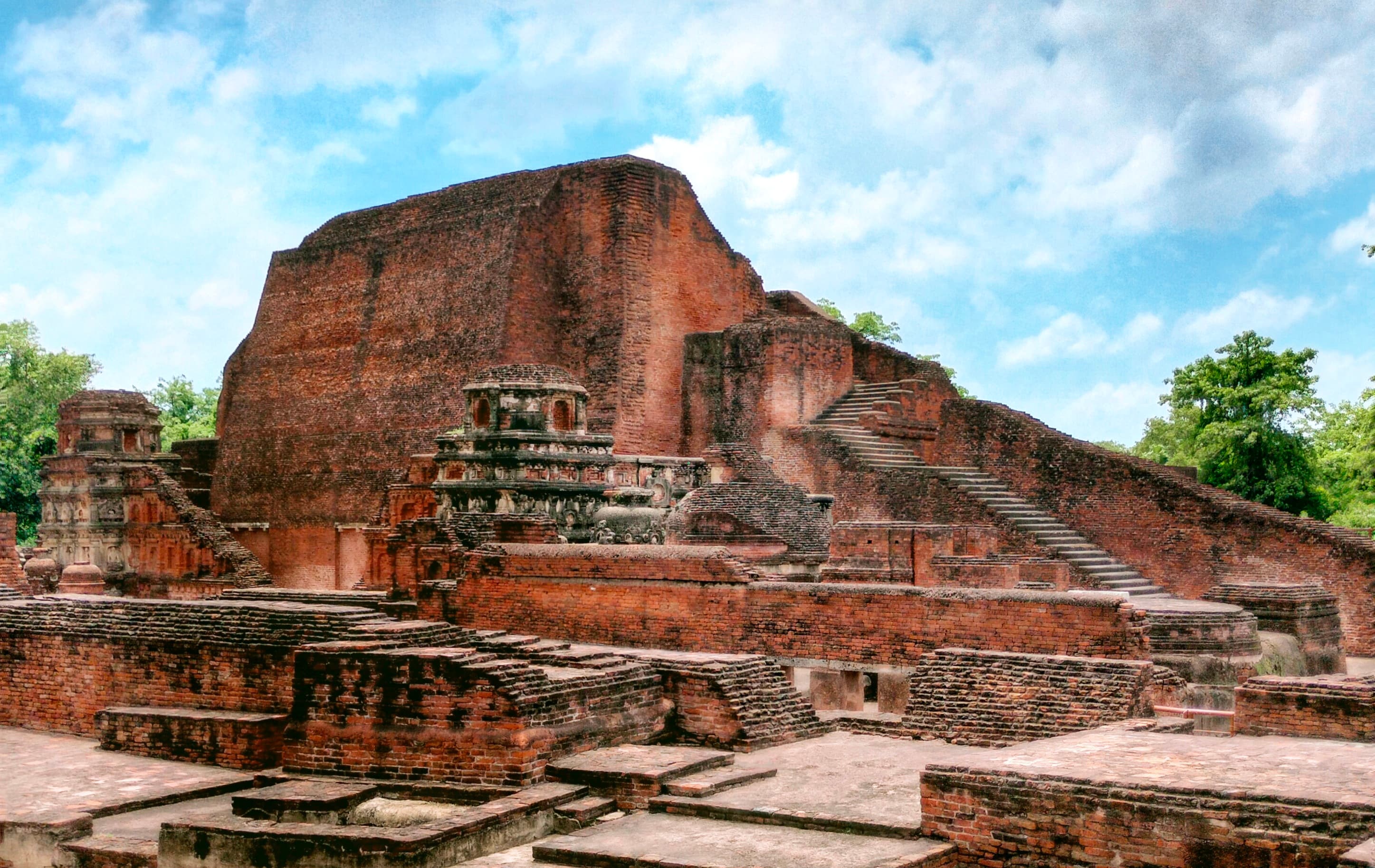
Ashoka the Just
Emperor who spread the dharma
He was the grandson of Chandragupta Maurya, who had taken India from the heirs of Alexander, and the son of Bindusara. He came to the Maurya throne at Pataliputra around 268 BCE, after — the Sri Lankan chronicles insist, and the Indian Puranas confirm — eliminating ninety-nine of his brothers. The early years of his reign were the years of the conqueror. He inherited an empire that already stretched from Bengal to Kandahar, from the Himalayan foothills to the Krishna river, and he set out to complete the unfinished work: the kingdom of Kalinga, the wealthy coastal state on the Bay of Bengal that his predecessors had failed to take.
The Kalinga war took place in the eighth year of his reign, around 261 BCE. The Thirteenth Rock Edict, which Ashoka had carved a few years later on stones across the subcontinent, gives the only record we have from his own hand — and it is unprecedented in the history of imperial inscription, because what it records is regret. "A hundred and fifty thousand were deported, a hundred thousand were killed, and many times that number died. Then, the Beloved of the Gods, having conquered the Kalingas, came to feel a strong inclination towards the Dhamma, love for the Dhamma, and instruction in the Dhamma. Now the Beloved of the Gods feels a deep remorse for having conquered the Kalingas." The conqueror who had finished his grandfather's work spent the rest of his reign undoing the kind of work he had done.
The sources for what followed split. The Pali tradition — the Mahavamsa and the Dipavamsa, written in Sri Lanka — gives a sequential story: Ashoka encountered a young samanera, Nigrodha, on the street, was struck by the boy's composure, took the dhamma seriously, and was formally initiated as an upasaka under the elder Moggaliputta Tissa. He convened the Third Buddhist Council at Pataliputra around 250 BCE to purify the Sangha of those who had taken ordination only for the prestige of imperial patronage. He sent nine missions to nine countries: Majjhantika to Gandhara and Kashmir, Mahadeva to Mahisamandala, Rakkhita to Vanavasi, Yonaka-Dhammarakkhita to Aparantaka, Maha-Dhammarakkhita to Maharastra, Maharakkhita to the Yona country, Majjhima to the Himalayas, Sona and Uttara to Suvannabhumi, and his own son Mahinda — with his daughter Sanghamitta following — to Sri Lanka, where they established the Theravada dispensation that survives unbroken in Anuradhapura to this day.
“He was the grandson of Chandragupta Maurya, who had taken India from the heirs of Alexander, and the son of Bindusara.”
The edicts themselves are the more historical record. Thirty-three of them have survived: fourteen Major Rock Edicts, seven Minor Rock Edicts, seven Pillar Edicts, and a handful of cave inscriptions. They are carved in Brahmi, Kharoshthi, Greek, and Aramaic across an arc that runs from Kandahar in modern Afghanistan to Karnataka in the south, and from Sopara on the western coast to Dhauli in Odisha. They are the oldest deciphered writing in India. They proclaim the principles by which Ashoka believed an empire should be governed: respect for living beings, restraint in speech, generosity to brahmins and shramanas alike, the appointment of dharma-mahamattas — officials responsible specifically for the welfare of the people — the planting of medicinal herbs along the trunk roads of the empire, the digging of wells, the building of rest-houses, the prohibition of certain animal sacrifices in the capital, the punishment of officials who abused authority, and the explicit honoring of all religious traditions: "the Beloved of the Gods honors all sects and both ascetics and laymen." The Eighth Rock Edict announces that, in the tenth year of his reign, the emperor undertook the first imperial pilgrimage — not to the temples of state but to Bodh Gaya, the place of the awakening.

The pilgrimage included Lumbini. The pillar he raised there in his twentieth regnal year — around 248 BCE — carries the inscription that fixed the Buddha's birthplace for the next two millennia: "Twenty years after his coronation, the Beloved of the Gods, King Piyadasi, visited this place in person, because here was born the Buddha Shakyamuni. He had a stone enclosure built and erected this stone pillar. Because the Lord was born here, the village of Lumbini has been made tax-free and required to pay only one-eighth of its produce." The pillar still stands.
Ashoka's historicity was largely forgotten in India after the collapse of his dynasty, around 185 BCE, and was rediscovered only in the nineteenth century when James Prinsep deciphered the Brahmi script of the edicts. What re-emerged was an emperor who had governed about a fifth of the world's population for nearly forty years on principles drawn directly from a forest religion that had been twelve generations old when he ascended the throne. He did not make Buddhism the state religion of his empire; the edicts are explicit about parity. But he made the dhamma the language of his kingship, the standard against which his administration could be judged, and — by sending his son and daughter to Sri Lanka — he made the survival of the Pali Canon possible. The Theravada world owes him its existence. He is the only emperor in human history whose surviving inscriptions are public confessions of remorse for war.
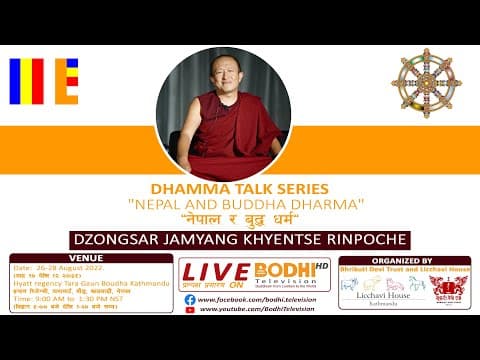
Nepal and the Buddha Dharma — Part II
Dzongsar Jamyang Khyentse Rinpoche in Kathmandu
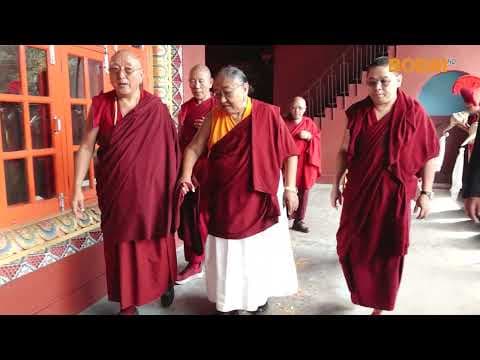
A Portrait of the Sakya Throne-Holder
HH the 41st Sakya Trizin Kyabgon Gongma Trichen Rinpoche
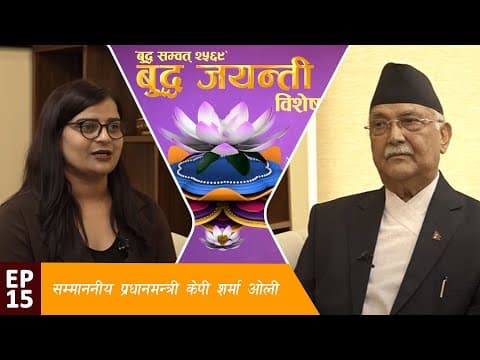
A Vesak Address from the Prime Minister
Vesak Bisise 2082 · Rt. Hon. KP Sharma Oli
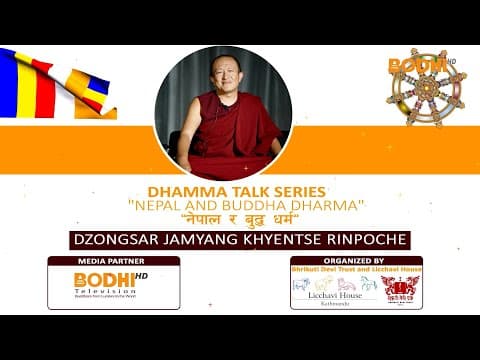
Nepal and the Buddha Dharma — Part I
Dzongsar Jamyang Khyentse Rinpoche in Kathmandu