Dana — The Practice of Generosity
The first paramita, the first practice
Dana — Pali and Sanskrit for 'generosity' or 'giving' — is the first practice the Buddha taught lay practitioners. Before sila (ethics), before bhavana (meditation), the layperson begins with dana. The teaching is preserved across the canon: the Buddha would, addressing a lay audience, begin with a 'progressive talk' — first praising the merit of generosity, then ethical conduct, then the heavens, then the danger of sensual pleasures, then the benefit of renunciation. Only after this graduated foundation, when the audience's heart had become receptive, would the Buddha give the higher teaching on the four noble truths.
The Itivuttaka (1.26) preserves the Buddha's words: 'If beings knew, as I know, the results of giving and sharing, they would not eat without having given, nor would the stain of stinginess overcome their minds. Even if it were their last bite, their last morsel, they would not eat without having shared, if there were anyone to receive their gift.'
Dana is taught at three levels. Material dana (amisa-dana) is the gift of food, robes, lodging, medicine, money, anything that supports the welfare of another. Dharma dana (dhamma-dana) is the gift of teaching — explaining the dharma, giving books, supporting a teacher, sharing what one has understood. The Buddha said that of all gifts, the gift of the dharma surpasses every other gift. The third and highest is the gift of fearlessness (abhaya-dana) — the protection of life, the assurance of safety, the freedom from threat. To save a life, to spare an animal, to free a captive — these are dana of the most precious form.
“Dana — Pali and Sanskrit for 'generosity' or 'giving' — is the first practice the Buddha taught lay practitioners.”
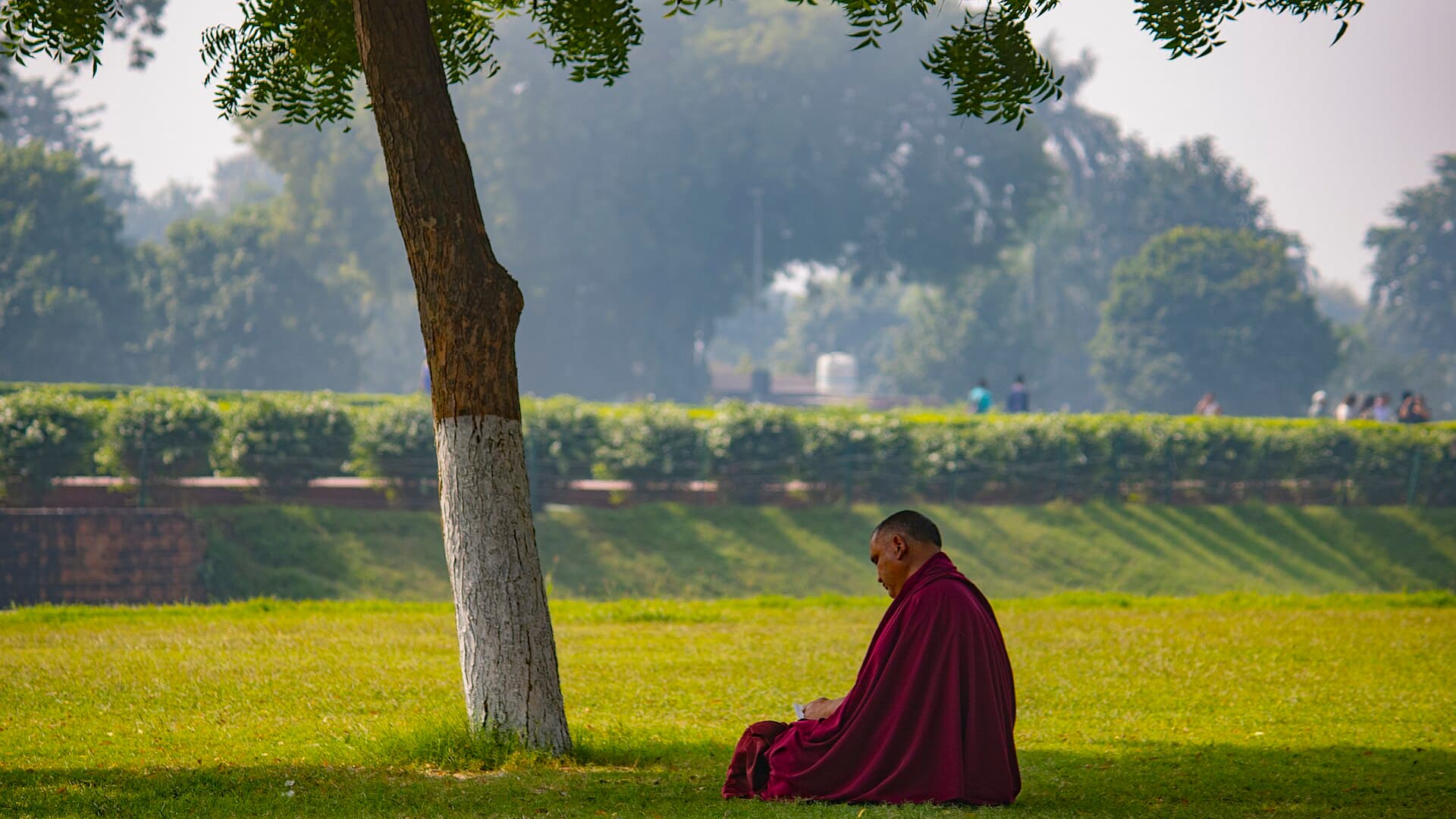
The Buddhist monastic life is structured around dana. Monks and nuns own nothing beyond their robes and bowl. They eat only what laypeople offer; they live in dwellings laypeople build for them; they study from texts laypeople preserve. In exchange, they offer dharma — they teach, they chant, they meditate on behalf of the whole community. The relationship is reciprocal and ancient: the layperson supports the monastic so the monastic can practice; the monastic supports the layperson so the layperson can attain a higher rebirth and eventually walk the path themselves.
The practice on the lay side is concrete. Anathapindika, the merchant of Sravasti, purchased the Jetavana grove from Prince Jeta by covering it with gold coins and built the Buddha a monastery — the Jetavana — where the Buddha spent twenty-five of his forty-five rains retreats. Visakha, the great female lay patron, built the Pubbarama. The Buddha said of both that they had reached the highest level of lay attainment — sotapanna, stream-enterer — partly through the depth of their generosity.
Dana is not charity. It is not the donor's pity for the recipient. It is the donor's own practice — their training in releasing the grip of self-clinging. Every act of giving weakens the boundary between self and other. Every gift is, in the strictest sense, given to oneself.