The Three Jewels
Buddha, Dhamma, Sangha — the threefold refuge
Listen · 9:20Sister Dang NghiemTo become a Buddhist, in any tradition from Theravada to Zen to Vajrayana, is to take refuge in the three jewels. The formula is preserved without significant variation in the earliest strata of the canon: Buddhaṃ saraṇaṃ gacchāmi, Dhammaṃ saraṇaṃ gacchāmi, Saṅghaṃ saraṇaṃ gacchāmi — "I go for refuge to the Buddha, to the Dhamma, to the Sangha." It is recited three times. The triple repetition is the formal act of becoming a follower of the path.
The word saraṇa, "refuge," carries the sense of a shelter, a protection, a thing relied upon. The Dhammapada (verses 188-192) opens the discussion by noting that frightened people seek refuge in mountains, forests, parks, sacred trees — and these are not safe refuges, because they cannot release one from suffering. The true refuge, the verses continue, is the Buddha, the Dhamma, the Sangha, for one who takes these refuges and sees with right wisdom the Four Noble Truths "is released from all suffering."
The first jewel is the Buddha. In its narrowest sense this means the historical Siddhartha Gautama who awakened beneath the bodhi tree at Bodh Gaya around the fifth century BCE. In its broader sense, especially in the Mahayana, it means the principle of awakening itself — the buddhahood that is the deepest nature of every being. The Theravada distinguishes the Buddha as the supreme teacher (satthā) and the awakened one (sammā-sambuddha). The Mahayana elaborates the trikāya — the three bodies — distinguishing dharmakāya (the body of truth), saṃbhogakāya (the body of bliss), and nirmāṇakāya (the body of manifestation). To take refuge in the Buddha is to take refuge in awakening as a real possibility, instantiated.
“To become a Buddhist, in any tradition from Theravada to Zen to Vajrayana, is to take refuge in the three jewels.”
The second jewel is the Dhamma (Pali) or Dharma (Sanskrit). The word is one of the most polysemous in Indian thought. In this context it has at least two layers. It is the teaching — the corpus of instruction the Buddha gave in his forty-five years of public life, preserved in the Pali Canon and the Mahayana sutras. And it is, more deeply, the truth that the teaching points to — the way things actually are, the unconditioned reality of nibbana. To take refuge in the Dhamma is to take refuge in the truth itself, with the teaching as the means of access.
The third jewel is the Sangha. Narrowly, it is the monastic community — the bhikkhus and bhikkhunīs who renounced household life to follow the path full-time. In the most formal reading it is the ariya-saṅgha, the community of noble ones who have attained at least the first of the four stages of awakening (stream-entry, once-returner, non-returner, arahant). In broader usage, especially in the lay traditions of East Asia and the West, it is the fourfold community of monks, nuns, laymen, and laywomen who together carry the dharma forward.
The three jewels are not three separate things but three aspects of one reality. The Buddha is the teacher of the dhamma; the dhamma is what makes the Buddha a Buddha; the sangha is the body that preserves and embodies the dhamma. To take refuge in one is implicitly to take refuge in the three.
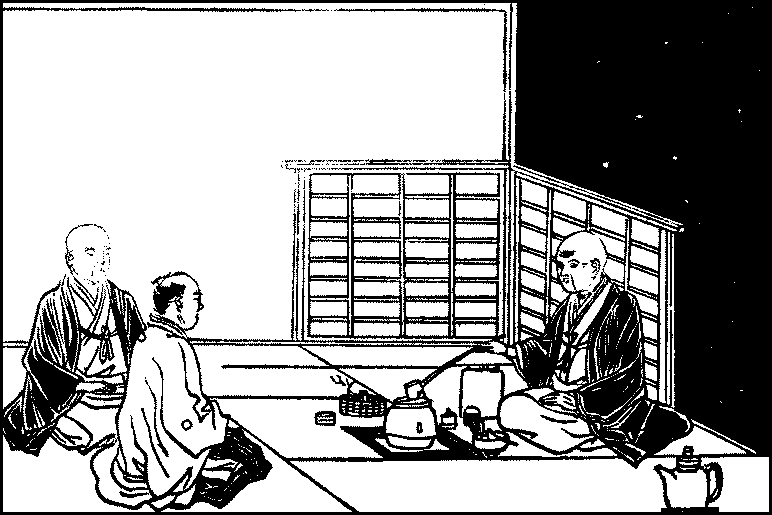
In the Vajrayana, the threefold refuge is sometimes expanded to a sixfold — the three jewels plus the three roots: the guru, the yidam (meditation deity), and the dakini or dharma protector. But the underlying structure is preserved. As Patrul Rinpoche writes in The Words of My Perfect Teacher, the threefold refuge is the door through which one enters the dharma, and "without it, even if one practises for a thousand years, one is not a Buddhist."
The act of taking refuge is renewed daily. In monasteries across Asia, the three lines are the first chant of the morning. The renewal is not a formality. It is the practitioner remembering, each morning, that the shelters of the conditioned world are no shelter — and that the path begins again, today, with this recitation.